


Two separate incidents, one in Gaza and the other in the occupied West Bank, reveal a pattern that goes beyond the details of each event: soldiers, officers and settlers accused of causing the deaths of civilians or assaulting them, in exchange for limited or absent accountability, and in some cases an explicit defence of the acts after they occurred.
In Gaza, the Israeli strike that killed seven workers of World Central Kitchen in April 2024 has returned to the spotlight following statements by the Israeli officer who ordered the bombing. In the West Bank, Israeli and Palestinian reports present a different scene in method, but one close in outcome: settlers attacking Palestinians in the town of Qusra near Nablus, while Israeli soldiers stand at the scene without arresting the attackers.
What the two incidents have in common is not only the absence of effective protection for civilians, but the broader question of the limits of accountability within the Israeli system itself.
"I am not sorry": an officer justifies a strike that killed aid workers
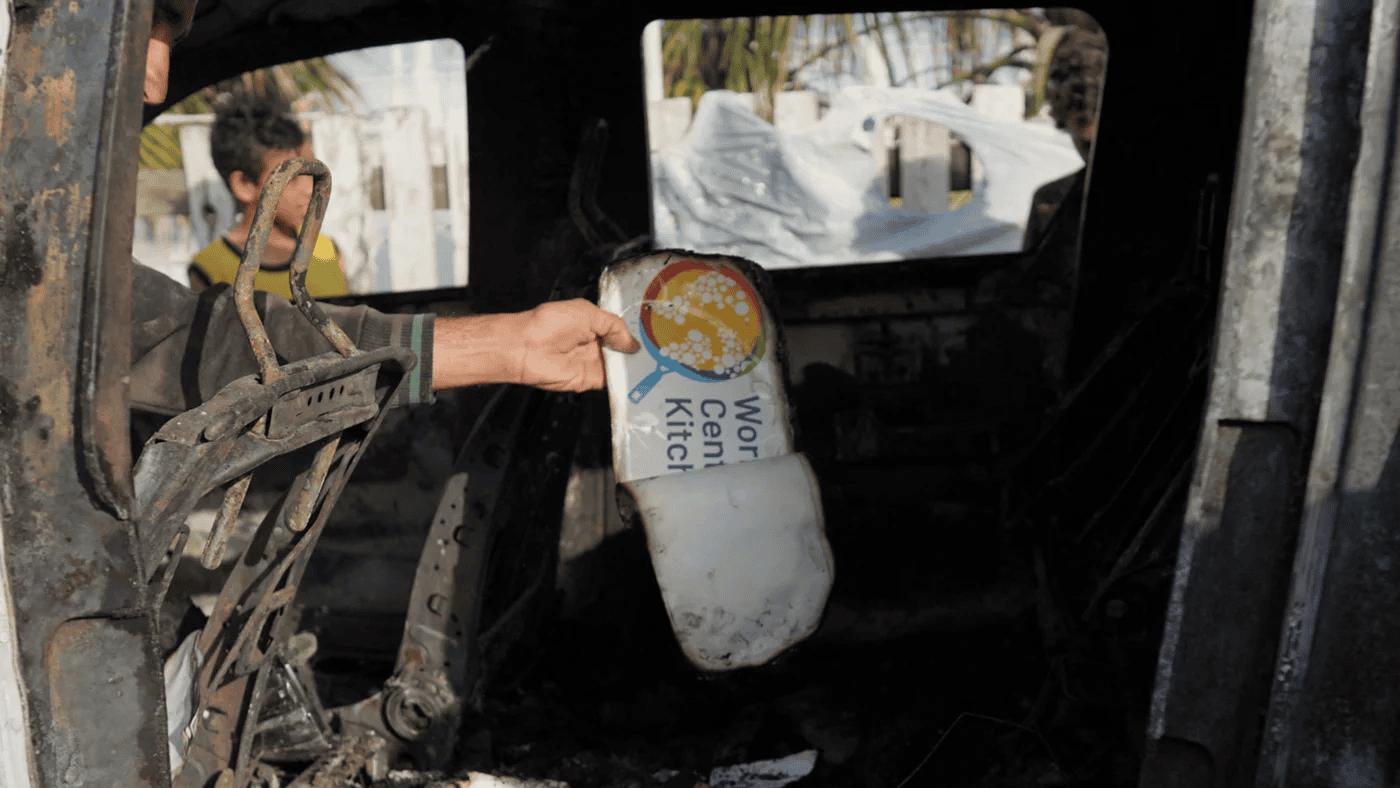
On 1 April 2024, Israeli drones targeted a convoy belonging to World Central Kitchen in Gaza, killing seven humanitarian workers, among them Palestinians, British nationals, an Australian, a Canadian and a Pole.
According to a report published by Middle East Eye on 28 August 2026, Colonel Nuwi Mandel, who was responsible for the operation, said in an interview with the Australian Broadcasting Corporation (ABC) that he was the one who made the decision to carry out the attack.
Mandel said he did not intend to kill the organisation's staff, but he clearly added that he is "not sorry" for what he did, affirming that he bears responsibility for issuing the order.
The Israeli army had removed Mandel from his post as chief of staff of the Nahal Brigade after the incident, once a military investigation concluded that the strike resulted from a series of failures, including violations of rules of engagement and standard operating procedures.
However, more than two years after the attack, the Israeli army decided not to open a criminal investigation into the case. This prompted joint condemnation from Britain, Canada and Australia, which described the decision as "shameful" and said the victims' families deserve justice and accountability.
The fundamental paradox here is that the military establishment itself acknowledged failures and breaches of procedure, and removed the officer from his post, but did not move the case into the criminal track.
An attempt to shift responsibility onto the organisation
In his interview, Mandel went further than defending his military decision: he assigned part of the responsibility to World Central Kitchen, claiming there was an overlap between members of the organisation and Hamas elements on the night of the attack.
The organisation categorically rejected these accusations, describing them as "false and disgraceful", and considered them a new attempt to shift responsibility for the decisions of the Israeli army.
It also pointed out that the officer himself was directly involved in the decisions that led to the strike, and that the army removed him from his post because of serious failures and violations of procedures.
This dispute reveals a recurring element in the handling of incidents in which civilians are killed: a move from examining the decision to open fire itself to questioning the victim or the civilian party targeted, thereby widening the space for military justification.
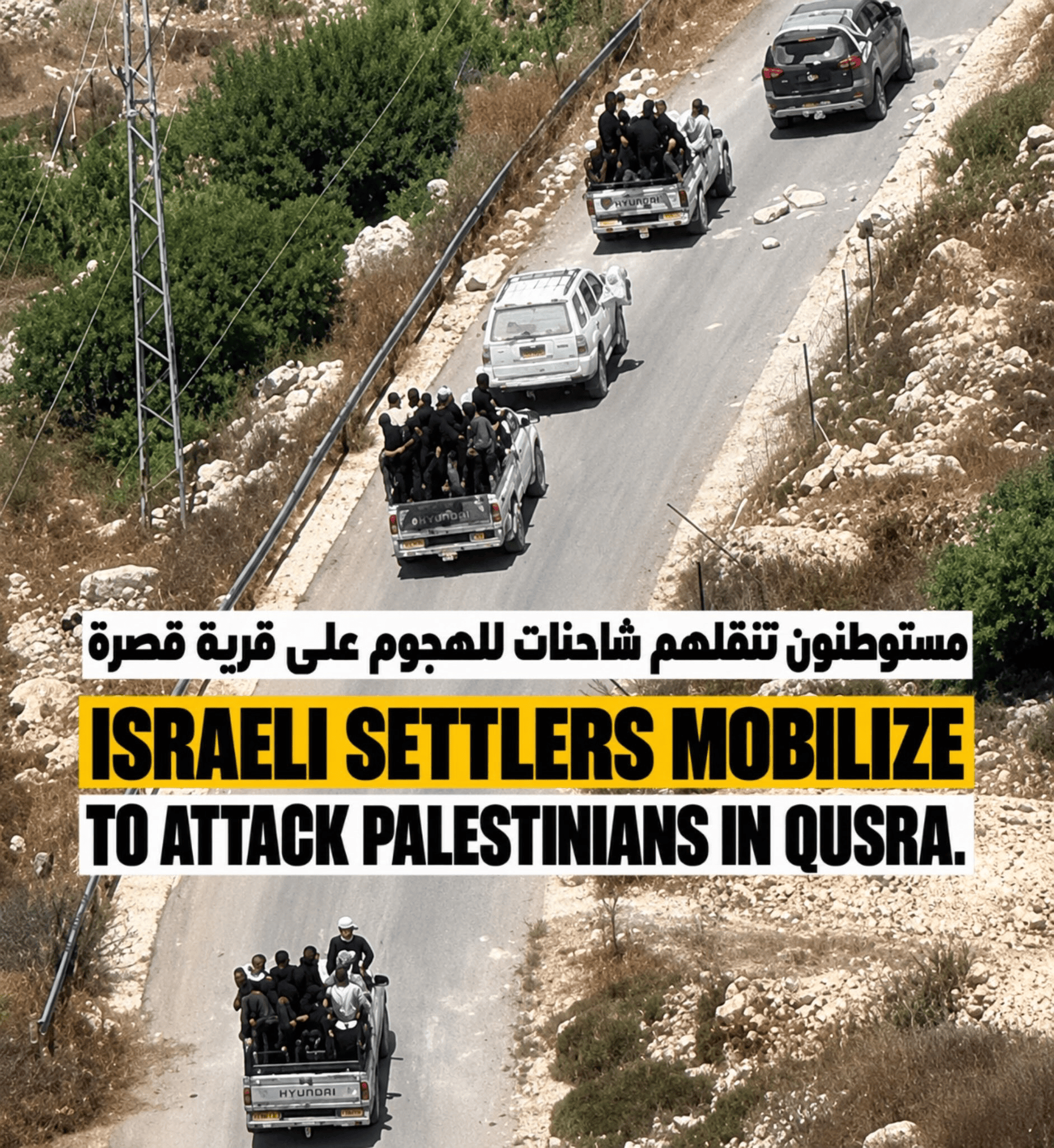
In the West Bank, soldiers "stood and watched"
At roughly the same time the aid workers' case returned to discussion, the town of Qusra near Nablus witnessed a new attack by Israeli settlers.
According to a report published by The Cradle on 30 August, no arrests were recorded in connection with the attack, despite the publication online and in Israeli media of images of some of the settlers who took part in it.
Israeli reports stated that dozens of settlers attacked a house in the town, while Palestinian families had been living for weeks under continuous siege and pressure.
Most serious, according to what Israeli media outlets reported, Israeli forces were called to the scene but did not arrest the attackers; instead they "stood aside" while the settlers continued to attack a house on the outskirts of the town.
The information in the report indicates that some Palestinian families in Qusra had remained besieged in their homes for weeks, alongside attacks that targeted water and electricity supplies and attempts to establish new outposts in the area.
From non-intervention to indirect protection
The difference between the Gaza incident and the West Bank incident is significant. In Gaza, we are dealing with a direct military decision that resulted in the deaths of seven aid workers. In Qusra, the main accusation is not that the soldiers carried out the attack themselves, but that they did not prevent it and did not arrest its perpetrators despite being present at the scene.
Yet the practical outcome in both cases is similar: civilians are killed or assaulted, while accountability remains limited.
The Qusra case points to a problem deeper than individual "negligence". When attacks recur in areas where the army is present, and settlers continue to move without deterrence, the question becomes whether non-intervention turns into a form of indirect protection.
This question gains further importance from the fact that the forces present in the area did not prevent additional attacks, while the siege of Palestinian families in the town continued.
The victim is held to account more than the attacker
A further contradiction appears in a separate incident. In the town of Umm al-Khair, armed settlers detained a British activist before handing him over to the Israeli police, who said they arrested him and were investigating settlers' claims that he had assaulted a minor.
By contrast, according to the report, footage shows that the activist was trying to prevent settlers from harassing Palestinian residents.
These facts alone do not establish the innocence or guilt of any party, but they highlight a clear political and security paradox: while settlers who took part in documented attacks are not arrested, a foreign activist who intervened to confront them may end up in Israeli custody.
Administrative accountability is not criminal accountability
One of the most important points the World Central Kitchen case reveals is the difference between internal procedures and judicial accountability.
Removing an officer from his post or reprimanding him administratively is not the same as opening an independent criminal investigation, and it does not answer questions about legal responsibility for the killing of civilians.
The case becomes more sensitive when the officer responsible then comes out to affirm that he feels no remorse for the decision, while the military establishment closes the door on a criminal investigation.
The culture of "justification after the act"
The facts also combine two patterns of discourse. In Gaza, the officer justified the strike by saying the operational environment was complex, and levelled accusations against the humanitarian organisation.
In the West Bank, settler attacks are often described as "friction" incidents or local disputes, even when the power balance is unequal and the army is present at the scene.
This language is not a mere media detail; it shapes how responsibility is understood.
When every incident is turned into an "operational error", a "complex environment" or a "clash", it becomes easier to break the event down into a chain of individual mistakes rather than view it as part of a broader pattern.
The West Bank and Gaza: two different contexts, one mechanism?
Gaza and the West Bank should not be equated in terms of the nature of military and political operations, but both incidents raise a single question: what happens when the prospect of accountability after the use of force becomes weak?
In such an environment, the problem lies not only in the punishment that did not occur, but in the message that reaches those who will face a similar situation in the future.
If an officer knows that the most he may face is removal from a military post, and if a settler sees that soldiers may stand a few metres away without arresting him, then the legal deterrent function itself becomes weaker.
This is what makes the case of the World Central Kitchen workers larger than a single incident, and what makes what happened in Qusra larger than a settler attack in one village.
A crisis rooted in the structure of accountability
Ultimately, the issue is not whether what is called "Israel" opens internal investigations; it does so in a number of cases. The question is where these investigations end up.
When the military establishment acknowledges violations of procedure, then decides not to open a criminal investigation, and when the identities of settlers who took part in a known attack are public without being followed by arrests, a gap appears between documenting a violation and assigning responsibility for it.
The figures on attacks in the West Bank add another dimension to this picture. According to a report by the Palestinian Colonization and Wall Resistance Commission cited by The Cradle, around 89% of arson attacks on Palestinian property in the West Bank since the beginning of 2023 were attributed to settlers and Israeli forces. This is a figure issued by a Palestinian body, not an independent Israeli count, but it reflects the scale of the accusations levelled at both sides in this file.
From here, the two incidents can be read as part of a larger issue: not only who fires or who attacks, but who investigates, who holds to account, and what happens when accountability does not come.
The longer-term danger lies not only in the killing of seven aid workers or the storming of a Palestinian home by settlers, but in the risk that repeated exceptions become the rule, and that impunity becomes an element that reproduces violence instead of halting it. This is happening continuously in occupied Palestine.


