


The goals of the wars the United States wages can no longer be read only through aircraft carriers and intercontinental missiles. They have acquired a declared ideology, expressed through the decisions and language of its leaders, and even through the "tattoos" they bear on their bodies, as well as the rules imposed on soldiers' faces inside military barracks.
Those following the decisions of the U.S. military find that the Department of Defense, under its secretary Pete Hegseth, has imposed stricter restrictions on religious exemptions relating to growing beards within the military. The decision appeared to some to be administrative, but for its critics it carries deeper implications concerning the identity of the U.S. military institution itself.
According to a report published by The Intercept, a memorandum issued by the defense secretary did not stop at reassessing previous exemptions. It required soldiers to provide detailed explanations of their religious beliefs and to prove their "sincerity," while granting military commanders the authority to evaluate soldiers' personal convictions. American human rights and religious organisations considered this a serious overreach toward politicising religious identity within the U.S. military.
The beard is not the issue
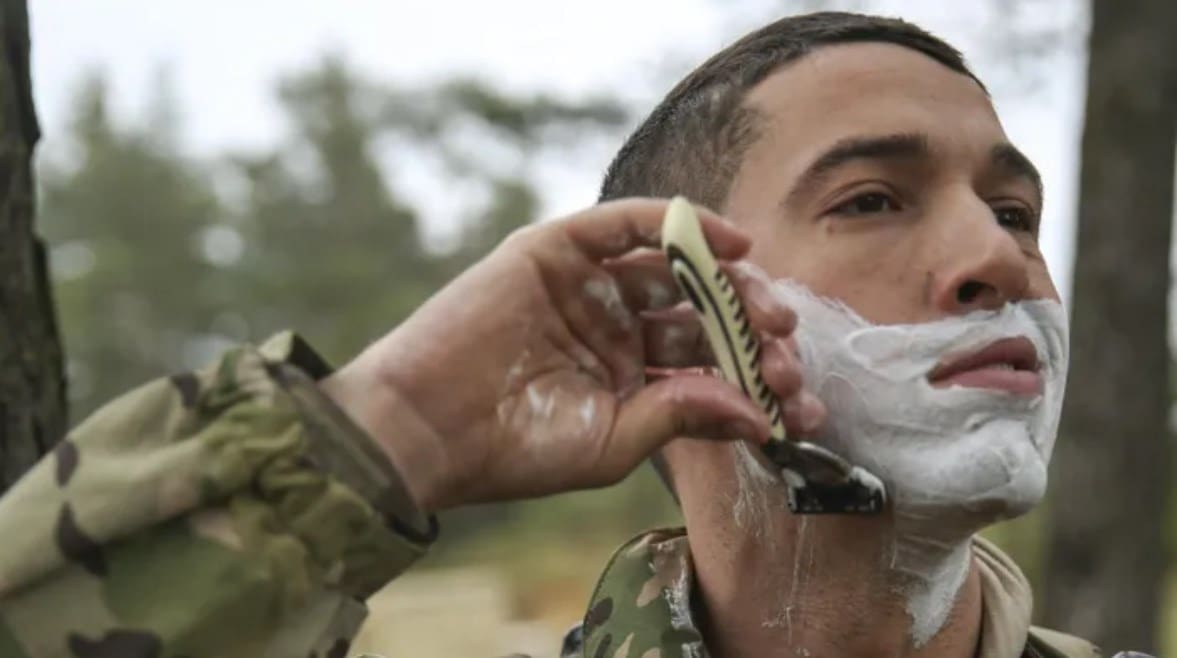
On its surface, the decision concerns standards of military appearance, but it has opened a wider debate about the intellectual shifts within the American defence establishment, particularly with Hegseth's arrival at the Department of Defense.
The man, who comes from a conservative military and media background, does not conceal his sharp ideological orientations. In his book "The American Crusade," published in 2020, he presented a vision based on the premise that the United States is fighting a civilisational and moral battle that transcends traditional political calculations, calling for the reshaping of U.S. foreign policy along more confrontational lines.
Some of his ideas later became a source of controversy in Washington, particularly with the circulation of images of tattoos he bears linked to symbols of the Crusades. These symbols raised concern among human rights groups, which saw them as signals of a militant religious discourse creeping into the heart of the military institution.
The military and religious identity in the United States
The new restrictions raised concerns among Muslim and Sikh communities, whose religious beliefs require the growing of beards. The Sikh Coalition stated that servicemembers from these communities had served for decades in the U.S. military without their religious practices posing any threat to combat effectiveness or military discipline.
Critics, however, see what is happening today as going beyond mere professional rules, relating to an attempt to reshape the "cultural identity" of the U.S. military at a time when the United States is witnessing political and religious polarisation unprecedented in its recent history.
Members of the U.S. Congress have spoken of fears that these policies could push members of religious groups out of service, weakening diversity within the armed forces and sending negative messages to allies and minorities alike.
Old wars with new faces
Notably, this debate comes amid rising American rhetoric on Middle Eastern files, especially Iran, where doctrinal discourse has resurfaced in some circles of the conservative American right.
Observers argue that some influential figures within the current administration now view international conflicts as an extension of a civilisational and cultural battle, not merely as traditional geopolitical disputes.
For this reason, debate within the United States is no longer confined to war policies, but extends to the "spirit" guiding those wars.


