


Ceremonies honouring war criminal Ratko Mladić, former commander of the Bosnian Serb army, in Serbia have sparked a fresh wave of controversy and outrage, days after his death while serving a life sentence for genocide, crimes against humanity and war crimes, including his role in the killing of more than 8,000 Muslim men and boys in Srebrenica in 1995.
On Saturday, a memorial service for Mladić was held at the "House of the Army" in central Belgrade, attended by hundreds of people, along with members of his family, military and political figures, most notably Serbian Justice Minister Nenad Vujić and President of the Republika Srpska Siniša Karan.
The ceremony followed the return of Mladić's body from The Hague to Belgrade aboard a government plane, a step that drew wide criticism in Europe. Soldiers of the Serbian army took part in carrying the coffin upon its arrival, which was wrapped in the Serbian flag, before it was transferred under police guard to a military hospital in the capital.
The Justice Minister had initially spoken of granting Mladić military and official honours, before the authorities backed away from this amid mounting external criticism. According to European reports, he is scheduled to be buried in Belgrade on Monday without official or military burial rites, although this did not prevent prominent officials from attending his memorial service on Saturday.
Europe protests the "glorification" of Mladić
The repercussions of the case extended beyond Serbia. EU Commissioner for Enlargement Marta Kos cancelled a planned visit to Belgrade in protest at the handling of Mladić's death and the accompanying displays of glorification.
Kos said the "glorification" surrounding his death runs counter to the values on which Serbia's path towards EU membership is based, stressing that this path requires confronting the past, achieving genuine reconciliation and respecting the victims of war crimes.
Serbian President Aleksandar Vučić responded to her decision by criticising her position, a new sign of the depth of the dispute between Belgrade and European institutions over how to deal with the legacy of the wars that engulfed the Balkans during the 1990s.
Mladić is still regarded as a hero by sections of Serb nationalists in Serbia and in Republika Srpska, despite final international rulings that convicted him of genocide, crimes against humanity and war crimes.
Stadium chants for a convicted genocide perpetrator
The glorification of Mladić was not limited to the memorial service.
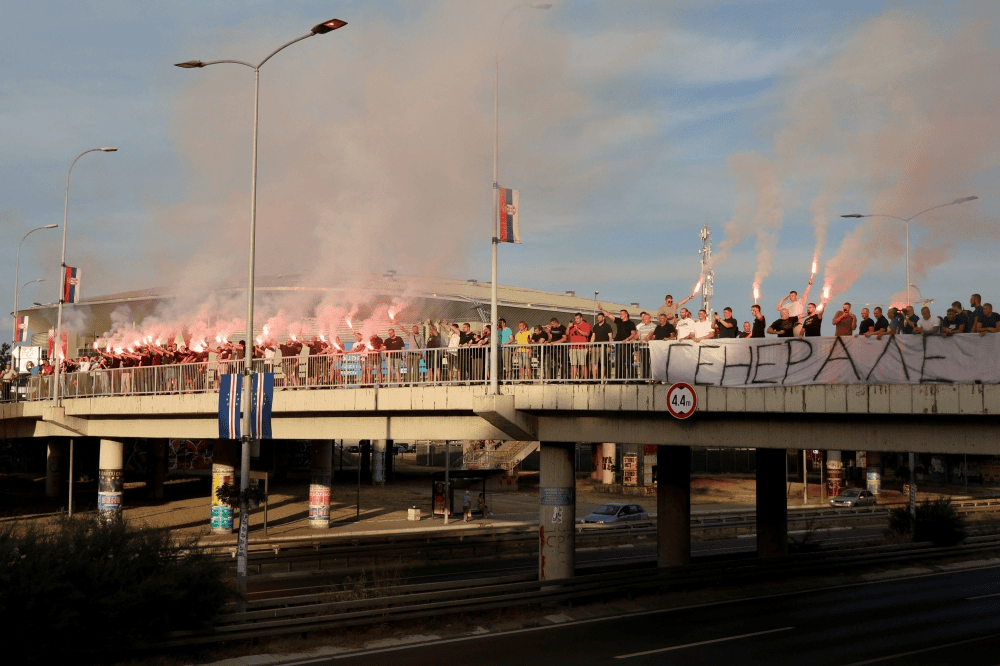
The Union of European Football Associations (UEFA) announced a fine of €90,000 against Red Star Belgrade after its supporters chanted Mladić's name, raised a banner praising him and performed salutes in his honour during a European League match against Czech side Viktoria Plzeň on 27 August, the same day Mladić died in The Hague.
The body also decided to bar the club from selling tickets to its supporters for its next European away match, after deeming the chants and accompanying conduct violations involving racist or discriminatory behaviour.
These displays reveal the continued presence of Mladić's figure in part of Serbian nationalist discourse, more than three decades after the war in Bosnia, despite international court rulings that documented his responsibility for some of the worst crimes committed in Europe since the Second World War.
The Srebrenica genocide
Mladić was the military commander of the Bosnian Serb army during the Bosnian war between 1992 and 1995.
His name is especially associated with the Srebrenica massacre in July 1995, when Bosnian Serb forces seized the area that the United Nations had declared a "safe area", separated Muslim men and boys from women and children, and killed more than 8,000 of them in mass executions.
International courts have officially classified what happened in Srebrenica as genocide, and in 2024 the United Nations General Assembly designated 11 July as the International Day of Reflection and Commemoration of the Srebrenica Genocide.
Mladić was also convicted of crimes linked to the siege of Sarajevo, which lasted for years and resulted in the deaths of thousands of civilians, in addition to the persecution, killing and forcible deportation targeting non-Serbs during the war.
He was sentenced to life imprisonment and remained in detention in The Hague until his death on 27 August 2026, at the age of 84.
The crime has ended, but the battle over memory continues
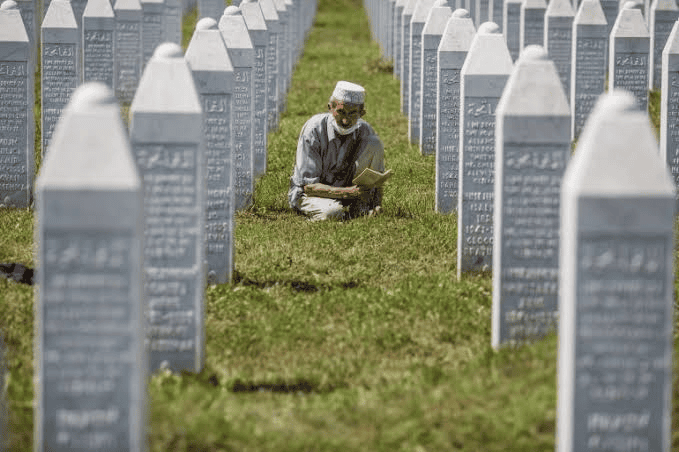
More than thirty years after the Srebrenica genocide, the scenes of Mladić's body being received and hundreds gathering for his memorial, alongside football fans chanting his name, show that the struggle over the memory of the war has not yet ended.
For the families of the thousands of Muslims killed in Srebrenica and other towns in Bosnia, the dispute is not merely about a man who died in prison, but about how societies and states treat perpetrators of crimes after their conviction.
While victims' families seek to keep the names of the dead and the war crimes present in memory, the displays glorifying Mladić in Serbia and Republika Srpska continue to reopen the wounds of a war more than three decades old, a war that has never left the memory of Bosnia's Muslims.


