


Four migrants at least die while trying to cross the English Channel
French authorities confirmed the deaths of two women and two men after they attempted to cross the English Channel from France to the United Kingdom. Local newspapers reported concerns that more bodies could be seen washing up on the shore, and local authorities said the situation remains under investigation.
Rescue teams received a report in the early hours of Thursday (9 April) that a boat had arrived at the French beach of Équihen. Christian Fourcroy, mayor of Équihen, told Agence France-Presse that the boat, which was experiencing difficulties, had broken down and a number of migrants fell into the water at around 7 a.m.
The boat that ran into difficulties was described as a "taxi boat", a type of vessel smugglers typically use to carry migrants from the shore or the channels to other boats waiting for them in deeper waters, in order to avoid being intercepted by the authorities.
In a press statement issued on Thursday morning, the French authorities said that "the situation is still being assessed and is subject to change".
However, François-Xavier Lauch, prefect of the Pas-de-Calais region, told journalists that the four people who died "tried to board a taxi boat, but the water currents, which can be dangerous here, swept them away".
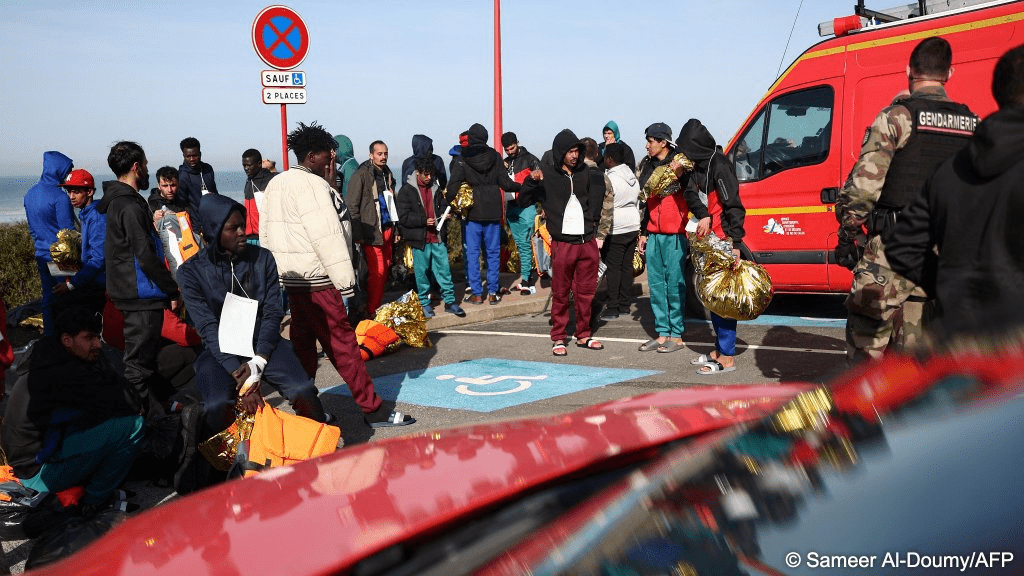
According to local officials, 37 migrants were brought to the shore and received treatment after the tragic incident.
Cécile Grissier, the local public prosecutor, told Agence France-Presse that all the victims reported so far are adults. Their nationalities have not yet been disclosed. Last week, two people also died while attempting to cross the English Channel.
Grissier said the boat "continued its journey" after a group of migrants failed to board it. It is believed to have been carrying around 30 people.
According to Prefect Lauch, another person received treatment for hypothermia, and 37 people were taken into the care of rescue teams. Among the survivors, a woman carrying an infant was seen.
Difficulties boarding the boats
After weeks of poor weather, the English Channel appeared to have calmed in recent days, and a large number of migrants were seen in the area waiting to board the boats.
Photographs taken on the morning of the incident at Équihen beach show migrants trying to board boats that were already overcrowded from relatively deep water.
Water reaches the shoulders or necks of most of the men standing near the boat, and some may have begun swimming before attempting to climb aboard. It is a task that requires considerable strength to climb onto a slippery, overcrowded rubber boat, especially while wearing wet clothing.
On Wednesday, French rescue teams conducted a training exercise at Équihen beach, simulating possible scenarios to ensure the best capacity to save lives. Just one day later, the simulation turned into a "harsh reality", as commented by the newspaper "La Voix du Nord".
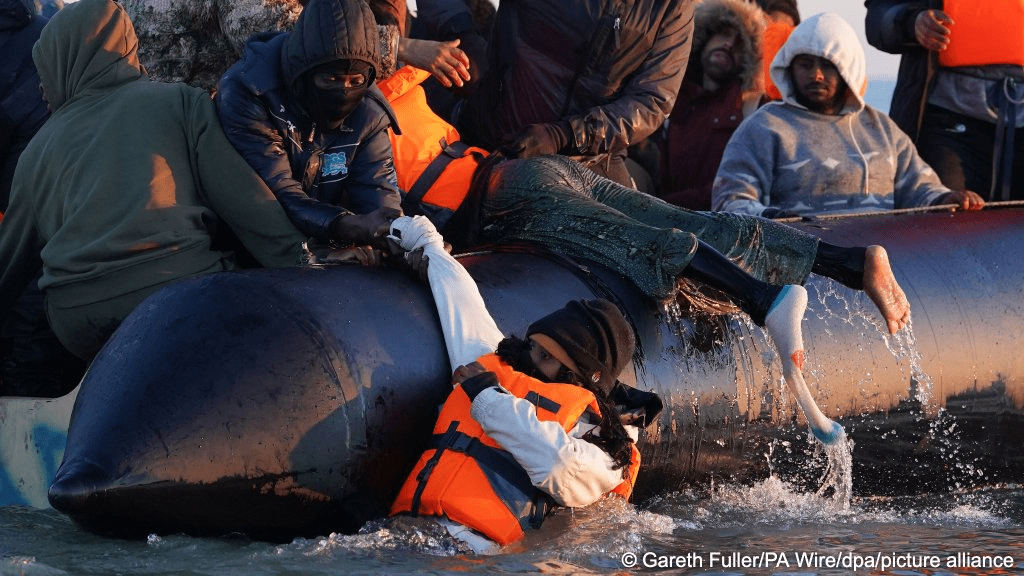
Attempting to climb onto a slippery, overcrowded boat from relatively deep water, fully clothed, is difficult even for the strongest and fittest people.
A new agreement under negotiation
Last week, the current agreement between Britain and France on managing migration along the French coast was due to expire. It was extended for two months in its final hours, to give both sides time to negotiate a new agreement.
The British government, according to reports, is seeking "better value for money" and clear targets for the new funding. The French side has repeatedly stressed that some of the harsher interventions, such as attempting to stop boats from leaving the shore while they are in the water, could lead to accidents and even deaths, which it seeks to avoid at all costs.
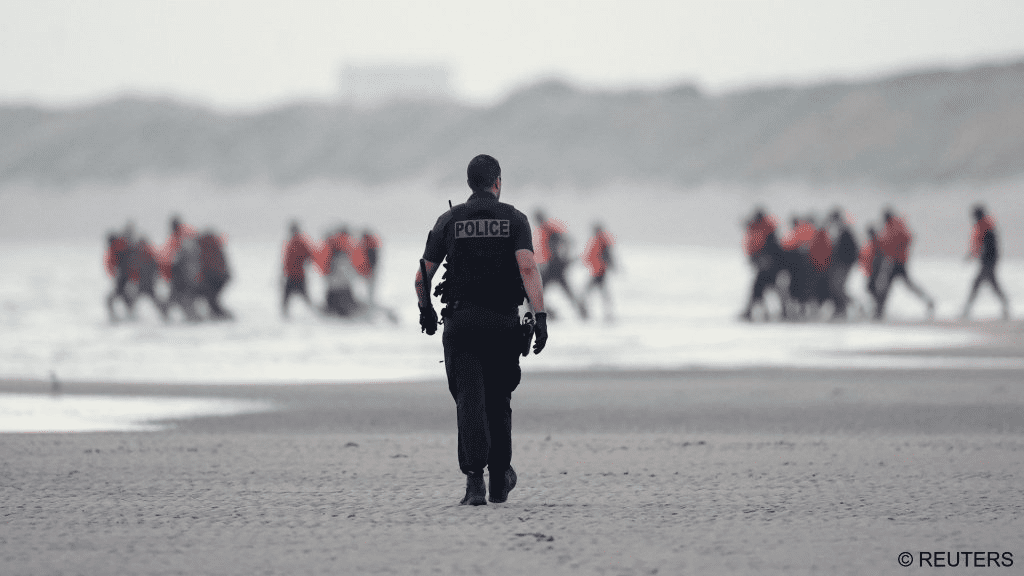
Archive photo: French police attempt to stop a group of migrants walking along the beach while trying to board a rubber boat to cross the English Channel to reach Britain.
Lauch told Agence France-Presse that in the case of the incident on Thursday morning, police did not intervene to intercept the boat because the intervention was considered too dangerous.
A series of rescues
On 8 April, the French maritime prefecture responsible for the Channel and the North Sea (Préfecture Maritime de la Manche et de la Mer du Nord) confirmed in a press statement that several different boats carrying migrants were spotted leaving Calais and the surrounding area.
The maritime prefecture said that on the night of Tuesday to Wednesday, a boat was found off the coast of Dunkirk heading towards Malo-les-Bains to rescue other migrants. The operations of this boat were described as "chaotic". Initially, 12 people were rescued from the semi-rigid boat, but shortly afterwards the boat's engine failed, requiring the rescue of the remaining 67 people. All 79 passengers were brought to the shore and assistance was provided.
Later that night, another boat was spotted in the Bay of Somme. A surveillance aircraft was sent to monitor the situation. Twenty-three people on board requested assistance and were taken to the port of Boulogne.
In total, French rescue teams provided assistance to four different boats between 7 and 8 April, rescuing and bringing 102 people to shore, according to a press statement issued by them.
Surveillance and monitoring: In a second press statement issued on 8 April, the authorities said several boats had been dispatched to monitor vessels and ensure their safety. In the early hours of Wednesday morning, rescue teams were called to assist a boat that had set off from the Belgian coast. A second boat, which also appears to have set off from Belgium, ran into difficulty, and two people were rescued from it. The remaining migrants on board, who were determined to continue their attempt to reach the United Kingdom, refused assistance and tried to continue their journey.
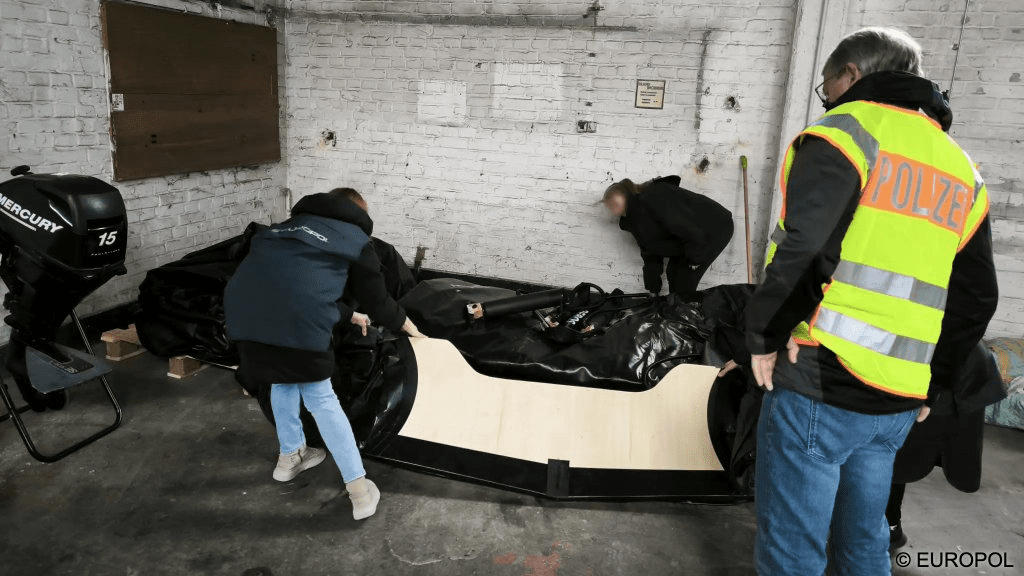
Archive photo for illustration: Reports are increasing of smugglers using Belgium as a departure point for migrants crossing the English Channel.
The maritime prefecture said that they only requested assistance after the situation had reached "maximum emergency". It added that the boat was "overloaded", and therefore the rescue teams decided not to force them aboard French rescue boats, for fear of causing an accident or death.
Later, three other people were rescued from a migrant boat and taken to the shore to receive assistance.
Lithuania: 30 migrants detained after attempting to enter the country from Belarus
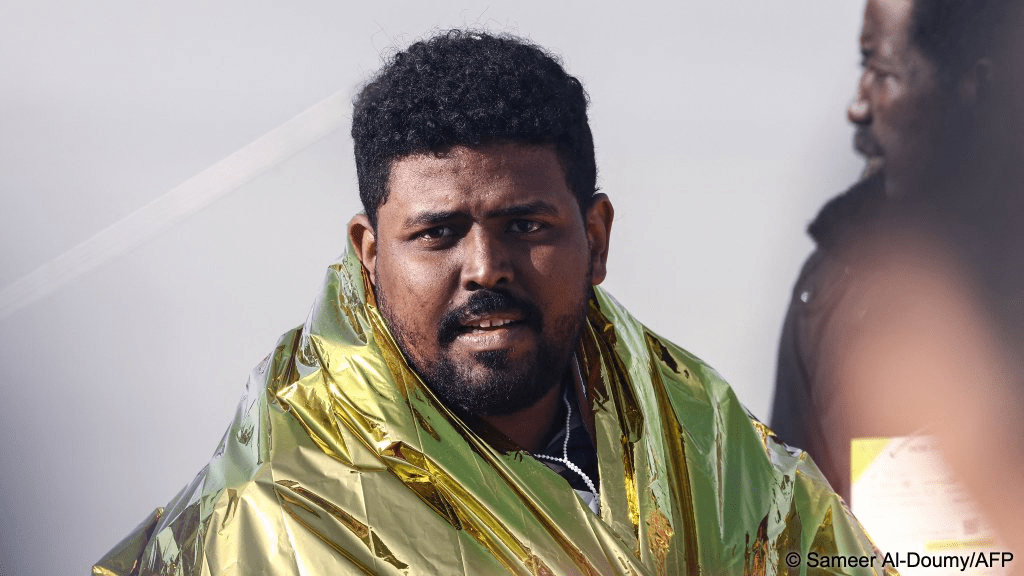
Reports indicate that the migrants who died may have suffered cardiac arrests, and at least 37 migrants were taken to the shore and assisted by the authorities.
Last year, at least 29 people were recorded as dead in the English Channel. The French authorities continue to warn of the dangers of this relatively short waterway. Water temperatures remain low for most days of the year, and winds and currents blow most of the time, making long-term survival difficult in the event of falling into the water, even for healthy people.
Investigators have also reported that life jackets and flotation devices sometimes provided to migrants, or used by them on these journeys, often fail to meet safety standards.
Their safety standards may not help you, even if you encounter a problem.
InfoMigrants with Agence France-Presse and Reuters


