

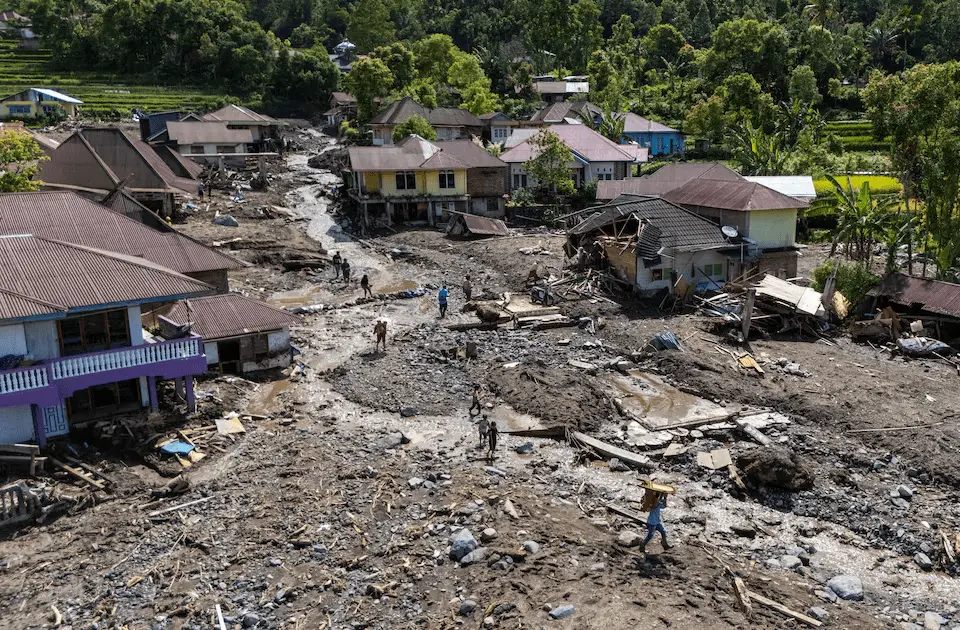
Flood-hit regions in Indonesia face fuel shortages and a lack of funding for relief efforts
Flood-control authorities on the Indonesian island of Sumatra, where some 800 people have died this week, have appealed to the central government for more support to address shortages of funding, food and fuel.
Floods and landslides caused by the cyclone have left 463 people missing across three provinces: West Sumatra, North Sumatra and Aceh, according to revised government figures, while local officials said power cuts and transport routes are preventing aid from reaching affected areas.
In East Aceh, fuel has remained limited for days, and aid has arrived by boat, while some residents in isolated areas face an imminent risk of famine, according to the region's head, Iskandar Usman Al-Farlaky.
He said: "Food stocks in three districts are about to run out and hunger is approaching rapidly," calling on the central government to declare a national state of emergency, adding that the regional budget is limited.
National data shows that 135,000 people in East Aceh have been affected by the disaster.
In Central Aceh, where 21 people were killed and 54,000 were affected by the floods, its head, Haili Yoga, who is also among four regional leaders calling on the central government to declare a national state of emergency amid rising public anger, said fuel and rice supplies are running out.
Presidential spokesperson Prasetyo Hadi said Indonesia's budget for disaster relief, amounting to 500 billion rupiah (30 million dollars), is sufficient, adding that the amount could be increased if necessary.
These statements were followed by remarks the President, Prabowo Subianto, made to journalists this week, in response to a question about declaring a national state of emergency, saying the situation is improving and the current arrangements are adequate.
The head of the Bener Meriah district in Aceh, Sibral Malasi, said fuel supplies had also been limited.
KompasTV reported that residents of Aceh Tamiang were cleaning up and drinking muddy flood water due to the lack of fresh water.
Jonathan Victor Rimbeth, an official at the Disaster Mitigation Agency, said a national state of emergency could be declared if regional governments announce that they are unable to respond to the disaster, which has not yet happened.
The law stipulates that the president may declare a national state of emergency, which allows additional funds to be made available for relief and rescue.
On social media, Indonesians criticised the central government for not declaring a state of emergency, pointing to cuts in the budget of the Disaster Mitigation Agency, which official data show fell by 50% this year compared with last year.
Indonesian Home Affairs Minister Tito Karnavian said he had asked regional governments in areas not affected by the floods to donate unused funds to those affected.
Mohammad Baron, spokesperson for the state-owned energy company Pertamina (PERTM.UL), said the company faces challenges distributing fuel in "most" of the flood-affected areas and is looking for alternative routes, but delivery will take time.
Environmental groups attribute the worsening of the disaster to deforestation and illegal logging.
(1$ = 16,625.0000 rupiah)
Reuters.


