

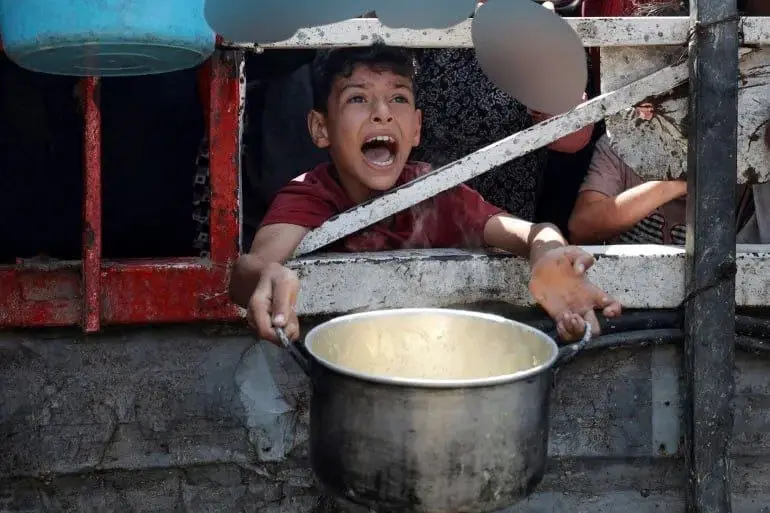
Famine Declared in Gaza: Hunger Turned into a Weapon of War
In a tragic historic first, the United Nations, through the Integrated Food Security Phase Classification (IPC), announced that the Gaza Strip is officially experiencing famine, after conditions there met the three criteria for famine: acute food shortage, widespread malnutrition, and rising mortality rates linked to hunger.
A Tragic Reality
Hundreds of thousands of civilians, most of them women and children, are living in conditions described as "catastrophic." Reports from humanitarian organisations confirm that families are subsisting on meals insufficient for survival, and that scenes of emaciated and sick children have become part of daily life.
International Warnings
The United Nations and its partner agencies – including the World Food Programme and the World Health Organization – described the situation as a "man-made catastrophe," calling for an immediate halt to military operations and the opening of crossings to aid without restrictions. Secretary-General António Guterres said that "starving civilians is a prohibited weapon, and using it is a stain on the conscience of the world."
Reactions
• The Israeli occupation hastened to reject the report, describing it as a "politicised claim," and insisted on holding Hamas responsible. • Arab and Islamic countries, by contrast, considered the declaration of famine evidence of a policy of collective punishment, calling for urgent action to save civilians. • International human rights organisations described the global silence as "complicity in a slow-motion genocide."
Voices from Within
On the streets of Gaza, one displaced person sums up the tragedy: "We are not only dying from the bombing… we are dying from hunger every day," while medical reports point to a rise in child deaths due to shortages of food and medicine.
The declaration of famine in Gaza was not so much a shock as an acknowledgement of a reality that has been taking shape for months. Hunger has become part of the strategy of war, and civilians are its most prominent victims. While the parties trade accusations, more than half a million people remain trapped in an open-ended tragedy, awaiting an international will that puts an end to the bleeding of lives.


