


For many years in exile, six correspondents of the Uyghur Service of Radio Free Asia have devoted their efforts to reporting news that is blocked and documenting human rights violations under the brutal Chinese rule in their homeland in northwestern China. Today, dozens of their family members living in what China calls the "Xinjiang Uyghur Autonomous Region" have become, involuntarily, part of the radio's largest reporting. They have become inmates in a sprawling network of political detention and "re-education" camps, sharing the fate of nearly one million Uyghurs held without trial and for unclear reasons, as part of Beijing's brutal campaign against what it calls religious extremism and separatism.
Profiles of Radio Free Asia correspondents whose family members have disappeared or been detained
Gulchehre Hoja, a former presenter of a children's television programme on the history of East Turkistan, has worked as a correspondent in the Uyghur Service of Radio Free Asia for seventeen years. Twenty-four members of her family have been detained in Urumqi, the capital of East Turkistan, and in the city of Gulja (Yining) in the Ili Kazakh Autonomous Prefecture.
Her brother Qeyser Abdukeyum was among those detained. Chinese police took him from the Tengritagh (Tianshan) neighbourhood of Urumqi in 1439 AH (October 2017), and his whereabouts have been unknown since then.
However, most of her family members were detained in 1439 AH (1 February 2018) during simultaneous raids, among them her mother, Qumangul Zakir, aged seventy-four, as well as her aunts, uncles and cousins. Her mother was released after nine days spent in a re-education camp, where guards kept her shackled hand and foot throughout her detention, on the pretext of health problems. Her medical condition requires regular medication, but the authorities deprived her of it for the entire period of her detention.
It is believed that the family members who are still missing, including an aunt in her sixties, are held either in prisons or in re-education camps, without the authorities disclosing any information about their fate or conditions.
Her father, Abdukeyum Hoja, a former professor of archaeology aged seventy-seven who suffers from hemiplegia, was placed under police supervision in hospital while his relatives were missing, and he is unable to care for himself.
Her mother stated that the authorities informed her that they knew of her daughter's work in the Uyghur Service of Radio Free Asia, adding that this was the reason for her brother's detention.
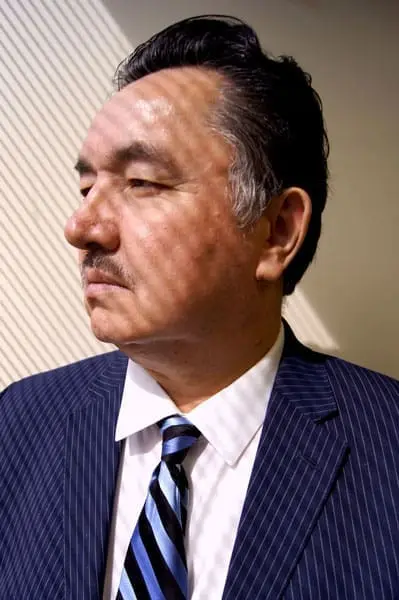
Shohrat Houshur, from the Ili Kazakh Autonomous Prefecture.
Shohrat Houshur, from the county of Qorghas (Huocheng) in the Ili Kazakh Autonomous Prefecture, has spent the last ten years as a correspondent of the Uyghur Service of Radio Free Asia.
In 1436 AH (August 2014), the authorities imprisoned his brothers Showkat Houshur, aged fifty-seven, Ruxim Houshur, forty-one, and Todakhun Houshur, forty-three. Todakhun was sentenced to five years in the Qarabogra detention centre in the county of Kunas (Xinyuan), in the same prefecture, on the charge of "threatening state security".
In 1437 AH (30 December 2015), Showkat Houshur and Ruxim Houshur were released following pressure from the American government, but they were detained again in 1439 AH (September 2017) and placed in the "Love School" re-education camp in the county of Qorghas.
Since then, a number of other members of his family have been sent to the "Love" camp or to three other camps located in the towns of Qingshuihe and Shuidong within the county, including Todakhun Houshur's wife, Sanniye, aged forty-one; Ruxim Houshur's wife, Arzigul, thirty-nine; Showkat Houshur's two sons, Ilshat Showkat, aged twenty-eight, and Ilyar Showkat, aged twenty-seven; as well as his son-in-law Tursen, forty-seven. His sister Minyar Houshur, forty-five, and Showkat Houshur's wife, Rashide Rozi, were also recently notified that they must be prepared to be detained at any time.
The justice bureau authorities in the county of Qorghas informed Shohrat Houshur's relatives that Showkat Houshur and Ruxim Houshur had been sent to a re-education camp "because they are former detainees", while the justification for detaining the others was that they "belong to a family listed on the blacklist". The police have repeatedly urged them to ask Shohrat Houshur to stop making calls into China.
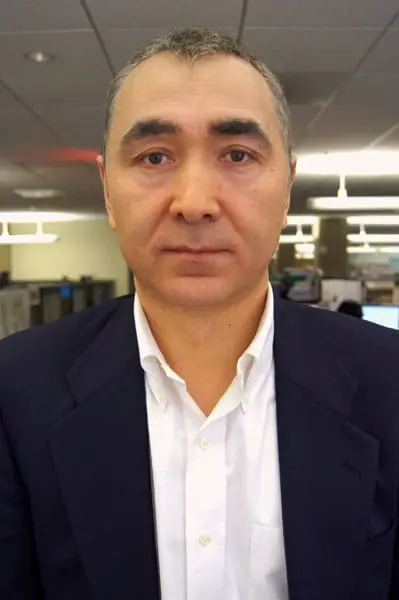
Mamtchan Juma, from Kashgar (Kashi), a former teacher who currently serves as deputy head of the Uyghur Service of Radio Free Asia, where he has worked for eleven years.
In early 1431 AH (2010), his brother Abdukadir Juma, in his late thirties, began calling him, trying to persuade him to return home, claiming that local authorities had offered him a prestigious job and that conditions in East Turkistan had improved markedly in favour of the Uyghurs.
However, the calls have recently taken on a more tense character, as Abdukadir threatened to cut off contact with him if he did not return, which Mamtchan believes is the result of coercion and pressure exerted on his brother.
In 1438 AH (May 2017), the authorities detained Abdukadir Juma and his other brother, Ahmetjan Juma, aged forty. Abdukadir, who worked in advertising and translation, is held at the First Detention Centre in Urumqi, while Ahmetjan, the principal of a secondary school and a professor of comparative literature between English and Chinese, is believed to be held somewhere in Kashgar Prefecture, where he lives. Ahmetjan suffers from a heart condition that requires regular medical care.
Mamtchan Juma's father died in 1439 AH (October 2017), while his mother is repeatedly taken to hospital because of ongoing health problems. However, he cannot communicate with his family, as he fears that doing so would expose them to further danger.
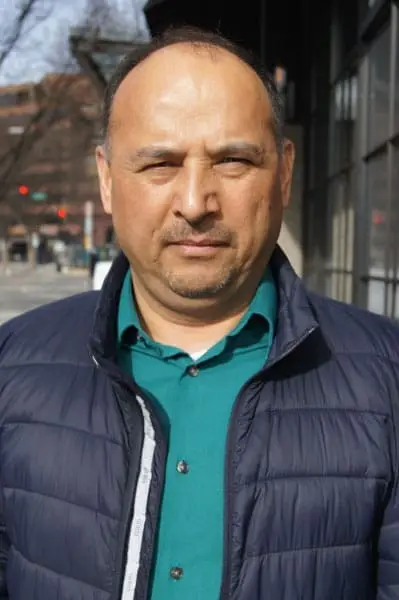
Jilil Kashghari, a former history professor who taught in Urumqi, has worked as a correspondent of the Uyghur Service of Radio Free Asia for nineteen years.
In 1438 AH (February 2017), Kashghari learned that four of his cousins in Gulja had been detained: Sidihemt Yunus, aged forty, Sidiyalim Yunus, in his mid-thirties, Tursenmemt Yunus, fifty-five, and Kerim Yunus, in his early forties.
Sidihemt Yunus had previously spent sixteen years in prison for taking part in protests against Chinese rule in Gulja in 1418 AH (1997).
In 1438 AH (March 2017), his nephew Nurmemt, aged nineteen, who had returned in 1436 AH (2015) from two years of study in Egypt, was detained in Gulja.
His brother's wife, Asiya Yasin, aged fifty, disappeared from Gulja in 1438 AH (April 2017), and it has recently emerged that she was sent to a re-education camp.
Two sons of another cousin, Abdulhamid Ablit and Abdurasul Ablit, both in their twenties, were also detained in Gulja at some point in 2017.
Authorities have repeatedly requested information about Kashghari from his relatives, although they denied knowing anything about the nature of his work.
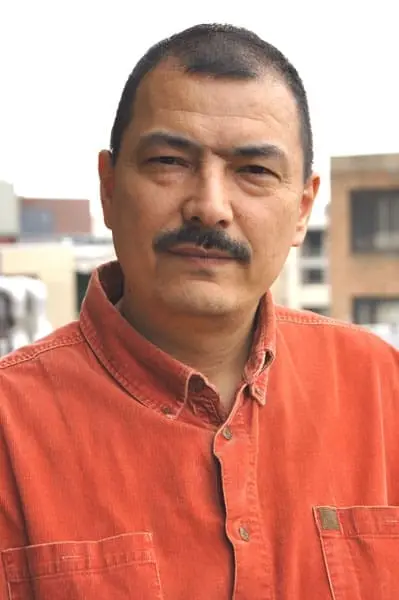
Qurban Niyaz, from the county of Bugur (Luntai) in the Bayingholin Mongol Autonomous Prefecture, spent ten years in the United States, and for the last three years worked as a journalist in the Uyghur Service of Radio Free Asia.
In 1438 AH (May 2017), his younger brother, Hasanjan Niyaz, aged forty-five, a copy shop owner in the county of Bugur, was detained.
In 1439 AH (July 2017), his family was summoned to attend a court session at which his brother was sentenced to six years in prison on a charge of "carrying ethnic hatred". Family members observed that Hasanjan appeared emaciated and bony, likely as a result of poor and insufficient nutrition during detention.
In late September 2017, Qurban Niyaz lost contact with his sister, who had sent him photographs via the WeChat application documenting his brother's arrest and the notice of sentence, and they fear that she may have been placed in a re-education camp.
During a call with the family in September, he learned that his mother had died of a chronic illness, but subsequent calls did not take place, and he has not since spoken with his eldest sister, believing that she will not answer his calls out of fear of causing problems for the rest of the family.
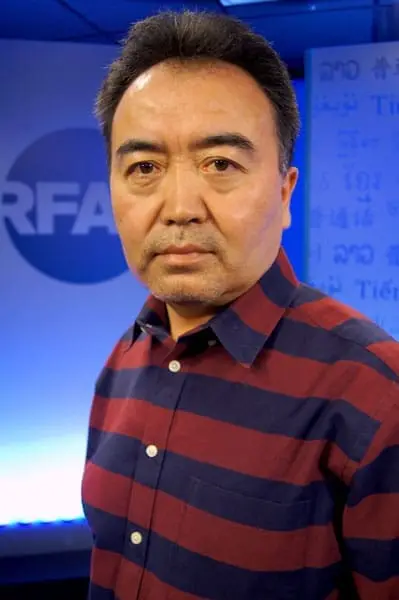
Esit Suleyman, from the Komul (Hami) Prefecture, has worked as a correspondent for Radio Free Asia since 1434 AH (2013).
In 1436 AH (2015), after Suleyman inquired about authorities forcing Uyghurs to relocate their homes to make way for a Chinese mining company in Komul, police questioned his eldest brother, Ehet Suleyman, a school principal, and his mother, who was in her seventies and suffered from a chronic illness, several times. They denied knowing of Suleyman's work.
Later, his family members called him to ask why he was in the United States, saying that the authorities had urged them to bring him back and had offered him a good job, but he refused to give them details and reduced contact in order to protect his relatives.
In 1439 AH (July 2017), he lost complete contact with his family and was only able to learn of their circumstances through a relative living in Sweden.
In October 2017, his brother Ehet Suleyman, his wife's mother, Saadet Kishik, and her husband, Memtili Sopi, both retired and both formerly employed by the regional government, were sent to re-education camps in Komul.
He is no longer able to obtain any information about his younger brother or any of his other relatives. In 1439 AH (February 2018), he learned from his relative in Sweden that his mother had died after receiving treatment in Urumqi, and he remains unable to contact any family member.
Radio Free Asia.


