


A Reuters report has found that Ethiopia is hosting a secret camp for training thousands of fighters on behalf of the Rapid Support Forces (RSF) paramilitary in neighbouring Sudan, the latest indication that one of the world's most dangerous conflicts is drawing in regional powers from Africa and the Middle East.
The camp is the first direct evidence of Ethiopian involvement in the Sudanese war, a potentially serious development that would provide the RSF with a significant supply of new fighters as fighting escalates in South Sudan.
Eight sources, including a senior Ethiopian government official, said the United Arab Emirates financed the construction of the camp and provided military trainers and logistical support for the site. The same view appeared in an internal memorandum from Ethiopia's intelligence service and in a diplomatic cable reviewed by Reuters.
The news agency was unable to independently verify the UAE's involvement in the project or the purpose of the camp. In response to a request for comment, the UAE Ministry of Foreign Affairs said it is not a party to the conflict and is not "involved in any way" in hostilities.
The war in Sudan broke out in 1444 AH (2023 CE) following a power struggle between the Sudanese Armed Forces and the Rapid Support Forces, shortly before a planned transition to civilian rule. The war has led to famine and racially motivated atrocities, while millions of refugees have fled to Egypt, Chad, Libya and South Sudan.
Both sides draw their strength from international backers, which fuels the war and increases the risk of the fighting spreading to neighbouring countries.
The news agency spoke with 15 sources familiar with the construction and operation of the camp, including Ethiopian officials and diplomats, and analysed satellite images of the area. Two Ethiopian intelligence officials and satellite imagery provided information confirming the details of the security memorandum and the diplomatic cable.
The location and size of the camp, and detailed allegations of UAE involvement, had not been reported before. The images show the new development, up until the past few weeks, alongside construction work on a ground control station for drones at a nearby airport.
Satellite images showed that activity at the camp, located in the remote western area of Benishangul-Gumuz near the border with Sudan, had escalated in October.
The camp becomes a new training area for RSF fighters in Ethiopia
Neither the official spokesperson of the Ethiopian government, the army, nor the RSF responded to detailed requests for comment on the findings of this report. On 6 January, the UAE and Ethiopia issued a joint statement calling for a ceasefire in Sudan, while celebrating relations that they said serve the defence of each other's security.
The Sudanese Armed Forces also did not respond to a request for comment.
The Sudanese army has previously accused the UAE of supplying weapons to the RSF, a claim that UN experts and some US lawmakers have found credible.
Abu Dhabi has been a strong supporter of the government of Ethiopian Prime Minister Abiy Ahmed since the beginning of his rule in 1439 AH (2018 CE), and the two countries have built a military alliance in recent years.
Six officials said recruits at the camp are mostly Ethiopian, but there are also citizens of South Sudan and Sudan, including members of the Sudan People's Liberation Movement-North (SPLM-N), a rebel group that controls territory in the Blue Nile state bordering Sudan. Reuters was unable to independently verify the identities of those at the camp or the conditions of recruitment there. A senior SPLM-N leader, who declined to be named, denied that his forces are present in Ethiopia.
Six officials said the trainees are expected to join the RSF, which is fighting battles against the Sudanese army in Blue Nile state, which has emerged as a key front in the struggle for control of Sudan. Two of the officials added that hundreds of fighters have crossed the border in recent weeks to support the paramilitary forces in Blue Nile.
An internal security memorandum indicated that General Getachew Gudina, head of the Defence Intelligence Department of the Ethiopian National Defence Force, was responsible for establishing the camp. A senior Ethiopian government official and four diplomatic and security sources confirmed Getachew's role in launching the project. Getachew did not respond to a request for comment.
Construction of the camp
The camp was carved out of forested land in an area known as Manji, about 20 miles (32 km) from the border, and its location is strategic at the junction of the borders of the two countries and South Sudan, according to satellite images and the diplomatic cable.
The first signs of activity in the area appeared in April, with clearing of forest and construction of buildings with metal roofs on a small area north of the current camp site, which contains tents; work began in the second half of October.
The diplomatic cable, dated November, described the camp as capable of accommodating up to 10,000 fighters, noting that activity began in October with the arrival of dozens of Land Cruisers and heavy trucks, RSF units and trainers from the UAE. Reuters did not disclose the state that issued the cable in order to protect the source.
Two officials described seeing trucks bearing the logo of the Emirati logistics company "Gorica Group" heading through the town of Assosa towards the camp in October. Gorica did not respond to a request for comment.
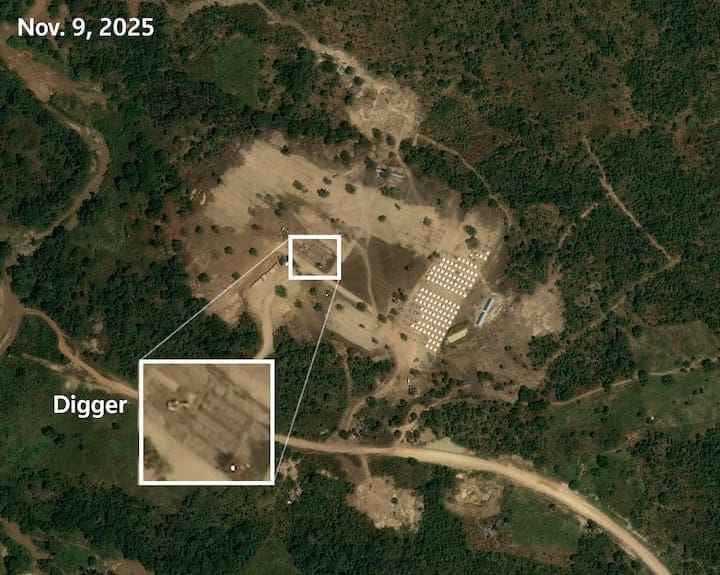
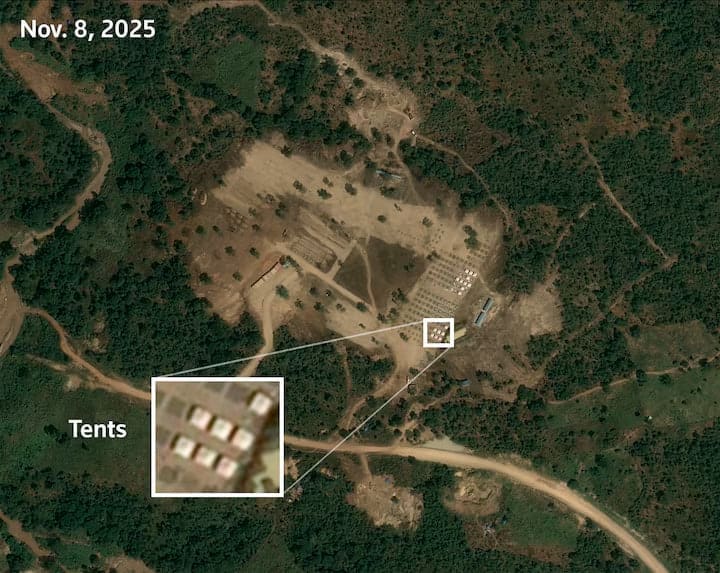
The news agency was able to match elements of the timeline specified in the diplomatic cable with satellite images. Images from Airbus Defence and Space show that after the initial clearing of forest, tents have been filling the area since early November, and the images also show several excavators at the site.
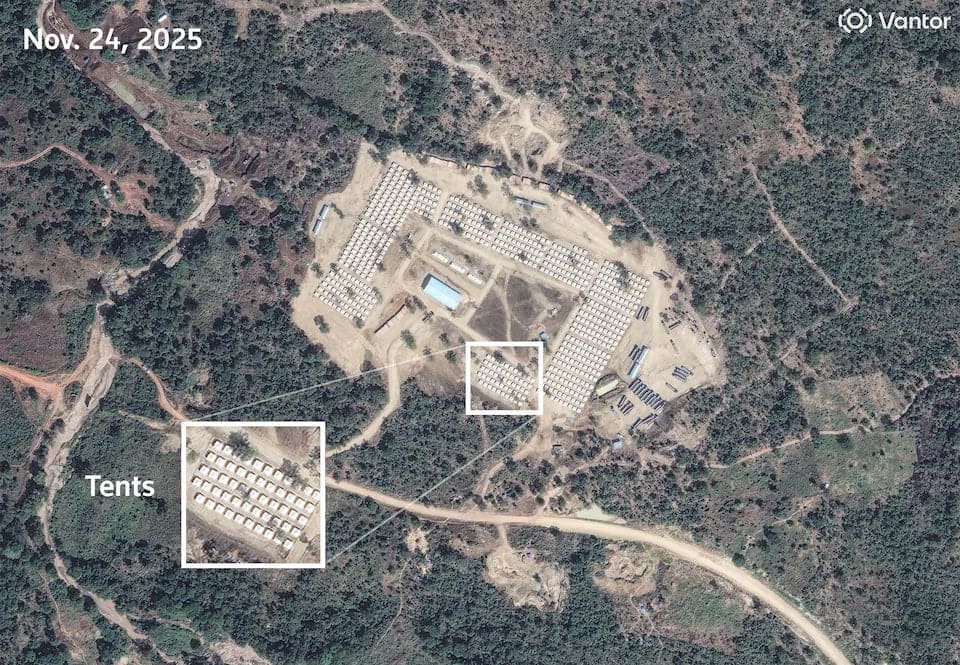
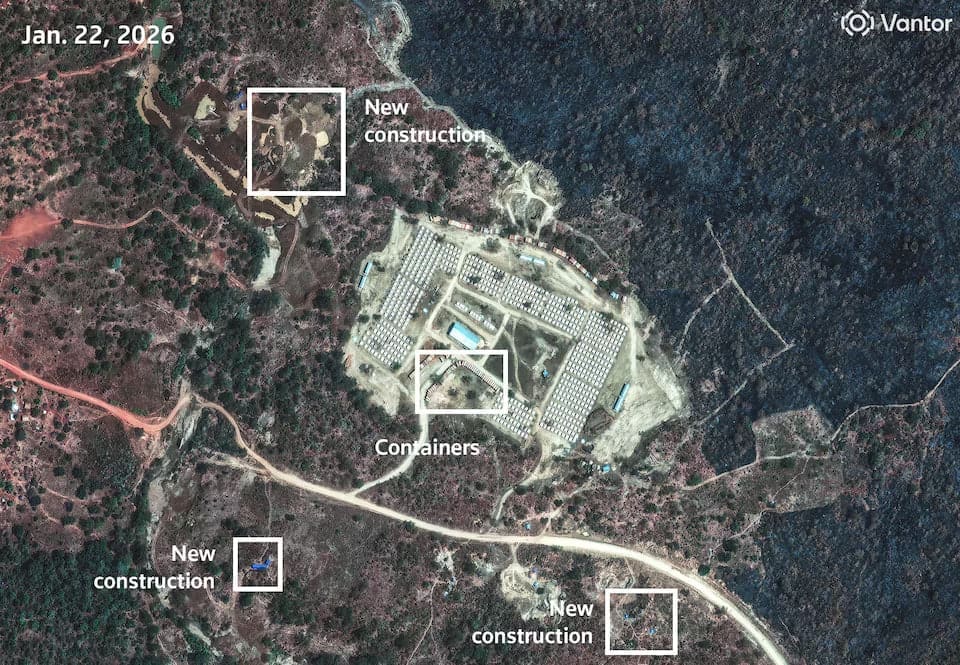
An image taken by the US space technology company "Vantor" on 24 November showed more than 640 tents at the camp, each covering roughly four square metres. According to an analysis of satellite images conducted by the defence intelligence firm "Janes", each tent could accommodate four people along with some individual equipment, meaning the camp is capable of housing at least 2,500 people.
"Janes" added that it cannot confirm, based on its analysis of the images, that the site is military.
Two senior military officials reported observing new recruits arriving at the camp in mid-November. The two officials, who witnessed the convoys, told Reuters that on 17 November, a convoy of 56 trucks carrying trainees travelled along dirt roads in the remote area, with each truck carrying between 50 and 60 fighters, according to the officials' estimates. Two days later, the officials saw another convoy of 70 trucks carrying soldiers heading in the same direction.
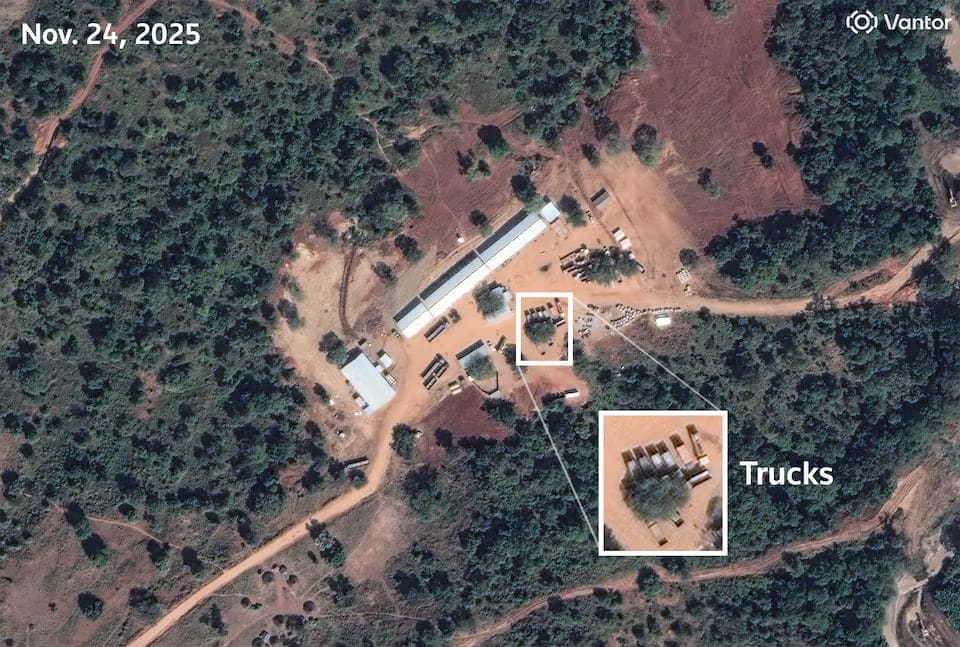
An image from 24 November shows at least eighteen large trucks at the site. According to Reuters' analysis, the size and design of these vehicles match models repeatedly used by the Ethiopian National Defence Force and its allies to transport soldiers. The news agency was unable to independently verify what the trucks were carrying or determine whether they are the same ones the two military officials saw in the convoys a few days earlier.
Images from "Vantor" showed development work continuing in late January, including new forest clearing and excavation in the riverbed north of the main camp, as well as dozens of shipping containers lined up around the camp, according to an image dated 22 January. A senior Ethiopian government official said construction at the camp is ongoing but did not detail future construction plans.
An Ethiopian government official added that equipment used to build the training camp, including bulldozers and excavators, is transported daily through the nearby town of Assosa.
Assosa airport
Assosa airport, which lies 33 miles (53 km) from the camp, has seen new construction since August 2025. Satellite images show the construction of a new hangar and paved areas near the runway known as the "apron", as well as what Wim Zwijnenburg, a military technology expert at the Dutch peace organisation "PAX", identified as a ground control station for drones and a satellite antenna. A Reuters review of the available images showed that the drone support infrastructure visible in the images resembles arrangements at two other drone bases in Ethiopia.
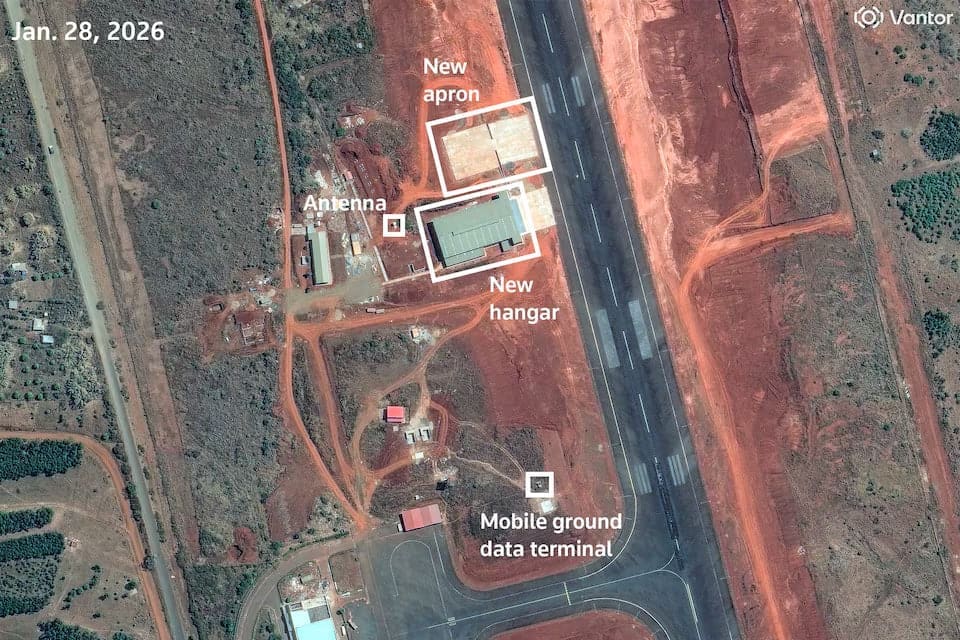
A senior Ethiopian government official and one of the senior military officials said the Ethiopian army plans to convert Assosa airport into a drone operations centre, in addition to at least five other drone centres they know of across the country.
A diplomatic source said the airport renovation is part of a broader Ethiopian army plan to move air bases towards the western wing of the country to confront potential threats along the border with Sudan and to protect vital infrastructure such as the Grand Ethiopian Renaissance Dam (GERD).
Three regional officials and diplomats said they were concerned by the proximity of the Manji camp to the Grand Dam, Africa's largest hydroelectric dam, fearing that it could be damaged or targeted if fighting breaks out in the area. The new camp is about 63 miles (101 km) from the dam. The government that owns the dam did not respond to a request for comment.
A Western military analyst, a regional security expert and a senior Ethiopian official said the airport construction work is linked to an increased presence of RSF forces in the area. The analyst and the expert said the airport has become a key tool for supplying the RSF across the border in Sudan.
The senior Ethiopian government official and a regional security analyst added that the airport renovation was also financed by the UAE, though Reuters was unable to independently verify the source of the airport's funding.
Months after Abiy Ahmed took power, the UAE pledged aid and investments totalling $3 billion, signalling confidence in and support for the new leader, including $1 billion allocated to the Central Bank of Ethiopia to help ease the country's acute shortage of foreign currency.
In 2025, the UAE and Ethiopian air forces signed a memorandum of understanding to develop each other's air and defence capabilities, according to news reports at the time.
Reuters.


