


Relations between Ethiopia and Eritrea have entered a highly dangerous phase after Addis Ababa announced, on 1 October, the closure of its embassy in Asmara and the expulsion of 10 Eritrean diplomats, including the chargé d'affaires and diplomats accredited to the African Union, giving them 48 hours to leave.
The Ethiopian Ministry of Foreign Affairs said the decision was a response to what it described as "direct and indirect hostile and warlike acts" by Eritrea, and that the expelled diplomats had engaged in activities that constitute "a direct threat to Ethiopia's national security."
Asmara's response was swift and more political: Eritrea severed diplomatic relations with Ethiopia, rejected the Ethiopian accusations and described them as surprising.
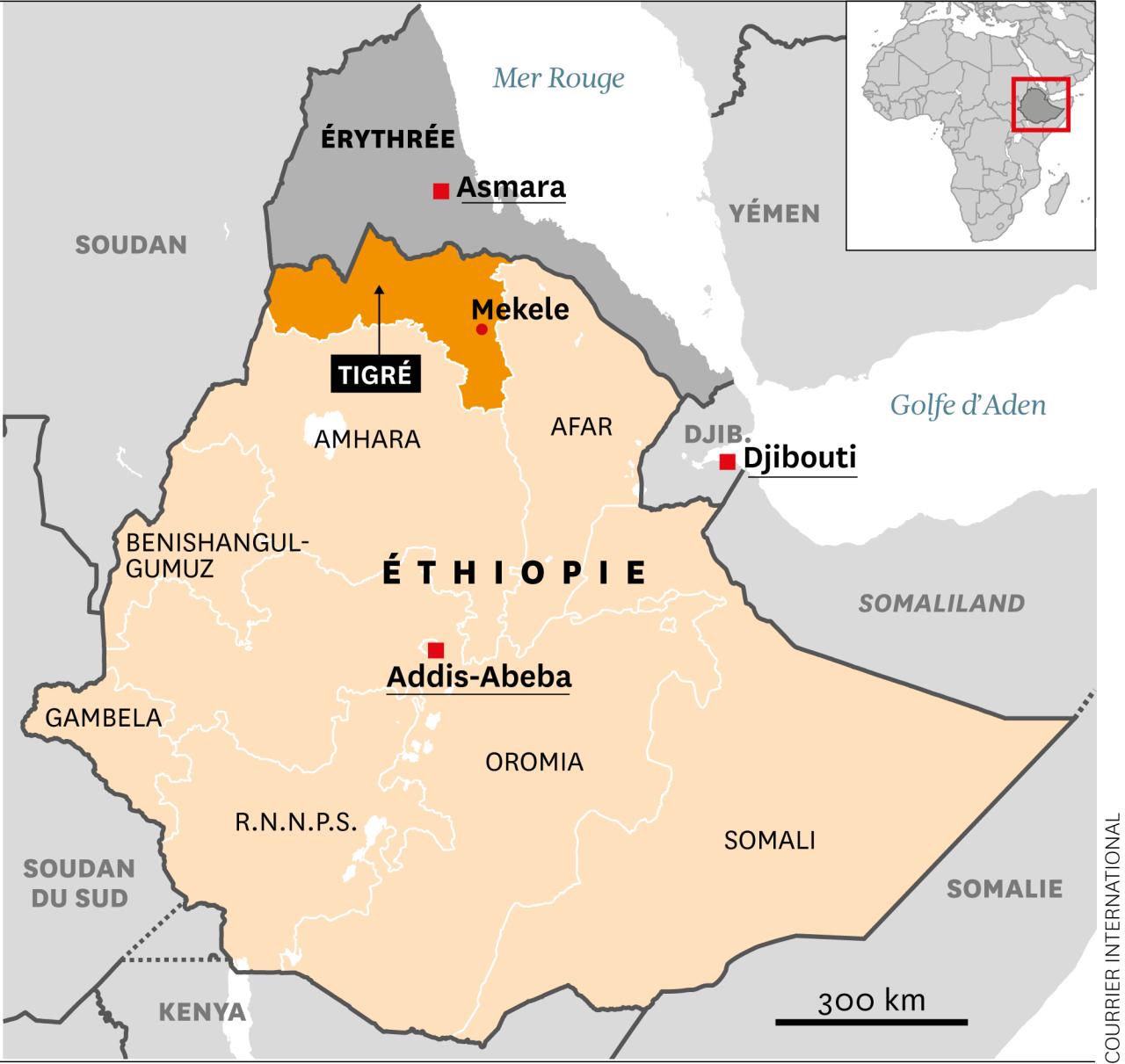
The dispute, which had been escalating for years over Tigray, the border, and Ethiopia's access to the Red Sea, has thus moved from tension to a formal rupture between the two countries.
The Current Spark: The Return of War in Northern Ethiopia
To understand the crisis with Eritrea, one must first look at the war that has erupted again inside Ethiopia.
During the last week of September, wide-scale clashes broke out between Ethiopian federal forces on one side, and Tigray forces and armed groups allied with them on the other.
Tigrayan forces launched a broad offensive extending from Tigray into areas of Afar and Amhara, while the Tigray People's Liberation Front described it as a "defensive war" in response to government attacks using artillery and drones.
The Ethiopian army and its allied forces then launched a broad counteroffensive, and government forces advanced northward into Tigray. By 1 October, Al Jazeera reported that government forces were about 40 kilometres from Mekelle, the capital of Tigray, while Tigrayan forces withdrew to new positions and some of their leaders left the city.
Thousands of civilians began leaving Mekelle for fear that fighting would reach it, amid power and internet outages.
The fighting now extends to areas near the borders of Eritrea and Sudan, making it a real possibility that Ethiopia's internal war could become a regional conflict.
What Does Ethiopia Accuse Eritrea of Doing?
The Ethiopian accusation goes beyond mere political support.
Ethiopian Army Chief of Staff General Birhanu Jula accused Eritrea of financing and supporting the Tigray People's Liberation Front and the armed groups allied with it. Officials in the Afar region went further.
Regional administration officials accused the Eritrean army of directly participating in the offensive alongside forces opposed to the Ethiopian government. Reports also emerged alleging the deployment of Eritrean forces near the border with Afar. However, this point is critically important editorially: the direct participation of the Eritrean army is an Ethiopian allegation and has not been independently verified so far.
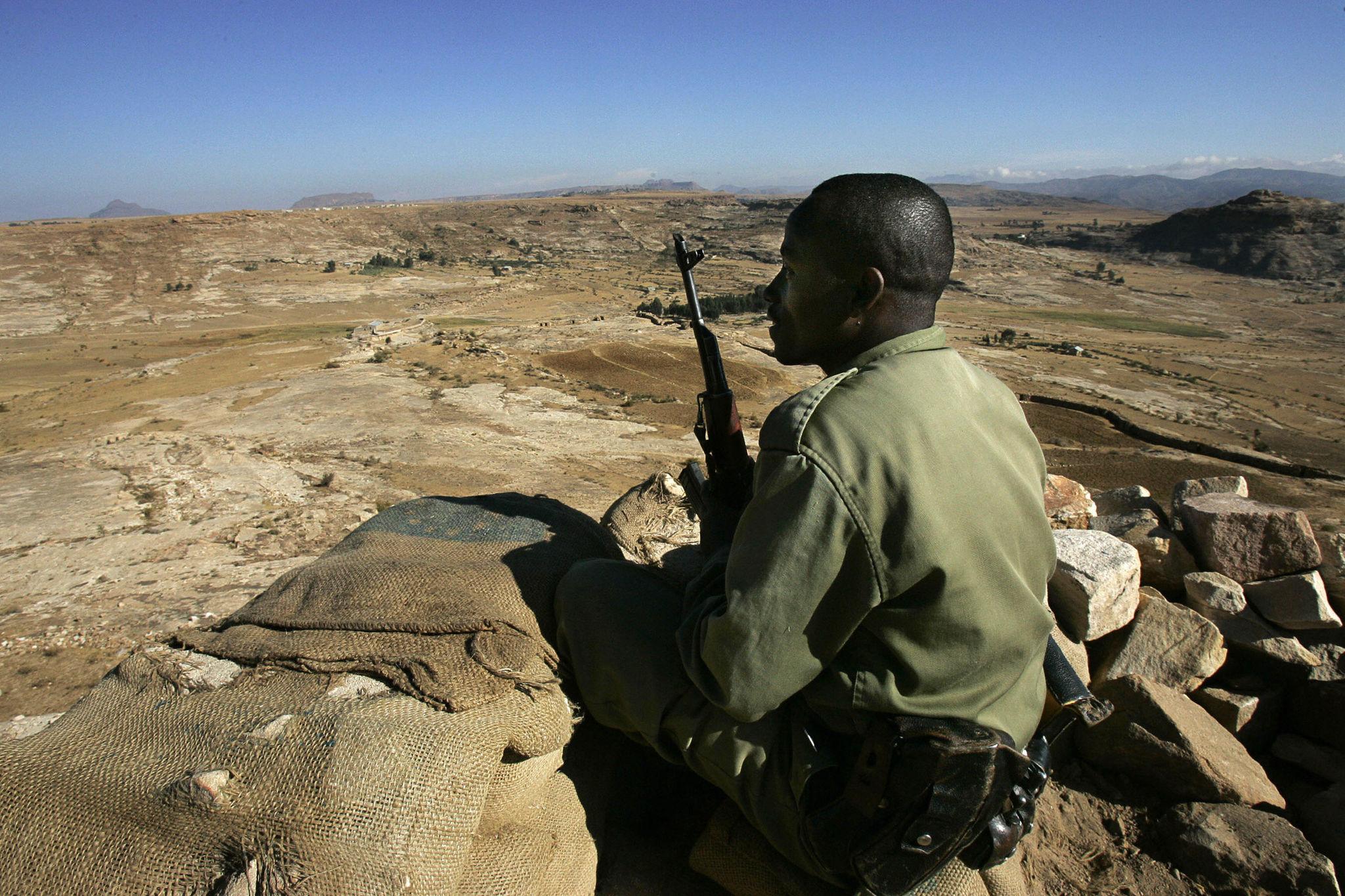
Eritrea denies these accusations and has accused Abiy Ahmed's government of attempting to place responsibility for its internal crisis on Asmara.
Notably, the picture has been reversed compared with the 2020 war. At that time, the Eritrean army was fighting alongside the Ethiopian army against the Tigray People's Liberation Front. Now, Ethiopia accuses Eritrea of supporting the Tigrayans against the Ethiopian government itself.
Egypt and Sudan Enter the Accusations
Addis Ababa places the crisis within a larger regional network.
Birhanu Jula accused Eritrea, Sudan and Egypt of supporting the armed forces fighting the government, and said Eritrea plays the role of a link between these external powers and the armed groups inside Ethiopia.
The army chief said that Eritrea and the Tigray People's Liberation Front cannot achieve their goals on their own, without support and supplies from Sudan, Egypt and other external powers.
However, Eritrea, Sudan and Egypt have denied these accusations, and therefore the existence of an armed Eritrean-Egyptian-Sudanese alliance against Ethiopia cannot be presented as an established fact.
The political meaning of the accusation nonetheless matters, because Ethiopia now views the northern war not only as an internal rebellion, but as part of a regional struggle over its security, its position, and its interests in the Red Sea and the Nile.
Then explosions reached Addis Ababa
The most serious development came on the night of 30 September/1 October. Three diplomatic sources told Reuters that they had heard explosions in the Ethiopian capital, Addis Ababa.
Hours earlier, authorities had imposed a ban on drone flights over the capital and its surroundings.
A source linked to an armed coalition opposed to the government told Reuters that the coalition had carried out several drone attacks inside Addis Ababa, including attacks targeting a military headquarters.
If it is confirmed that the armed opposition was indeed able to strike military targets in the capital with drones, this would represent a major shift in the war, since the fighting is no longer confined to Tigray, Afar and Amhara.
Why Did the Alliance Between Abiy Ahmed and Isaias Afwerki Collapse?
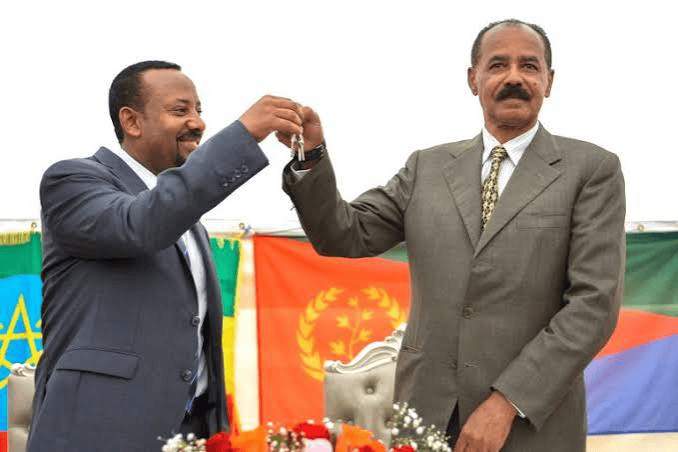
The paradox is that Ethiopian Prime Minister Abiy Ahmed and Eritrean President Isaias Afwerki were, only a few years ago, in a close alliance.
After the Ethiopia-Eritrea peace agreement of 2018, relations between the two countries shifted from decades of hostility to a major rapprochement.
When the Tigray war broke out in November 2020, Eritrean forces entered the war on the side of the Ethiopian federal army against the Tigray People's Liberation Front.
The fundamental turning point, however, came with the Pretoria Agreement of November 2022, which ended the war between Abiy Ahmed's government and the Tigray forces.
Eritrea was not a party to the agreement.
Disputes between Asmara and Addis Ababa began to widen after it, especially over the future of Tigray, the presence of Eritrean forces there, and post-war arrangements. By 2024, relations had deteriorated severely; Ethiopian Airlines suspended its flights to Eritrea after its bank account in Asmara was frozen.
In March 2025, fears reached a new level when Eritrea ordered nationwide military mobilisation, while Ethiopia moved forces toward the border.
In other words, the current crisis did not begin last week; it is the result of accumulated deterioration since the Pretoria Agreement.
The Red Sea and Assab: The Other Knot
Another file is no less important: Ethiopia's search for access to the Red Sea.
Ethiopia has been landlocked since Eritrea's independence in 1993, and relies very heavily on Djibouti for its foreign trade.
In recent years, Abiy Ahmed has made access to the sea a national strategic priority, and has called for a settlement that would give his country sustainable access to the sea.
Eritrea has a long coastline on the Red Sea, and among its most important points is the port of Assab, which was historically of great importance to Ethiopia.
However, the growing Ethiopian discourse about the sea has raised Eritrean concerns that economic demands could ultimately turn into territorial or military demands.
In March 2025, Abiy Ahmed sought to allay these fears, affirming before parliament that Ethiopia does not intend to invade Eritrea in order to reach the Red Sea, and that the issue must be resolved through dialogue, understanding and mutual benefit.
Yet the fact that he felt compelled to issue this denial illustrates how sensitive the issue is.
Afar Has Become a Highly Dangerous Front
The front that should now be watched particularly closely is Afar.
The region lies between Tigray, Djibouti and Eritrea, and vital lines linking Ethiopia to Djibouti pass through it.
The offensive launched by Tigrayan forces toward Afar does not carry only local military significance; deep advances into the region could threaten the transport routes on which Ethiopia depends to reach the port of Djibouti, through which most of its international trade and fuel supplies pass.
Here, Eritrea becomes extremely important: if it is confirmed that its forces are directly participating on this front, the war would effectively shift from an internal Ethiopian conflict with external interventions into a regional military confrontation.
The Specter of the 1998–2000 War
The fear of an Ethiopian-Eritrean confrontation is not theoretical. The two countries fought a very bloody border war between 1998 and 2000, following a dispute over the town of Badme and other border areas. A state of "no war, no peace" then persisted for nearly two decades until the reconciliation of 2018.
Therefore, the presence of large forces and multiple armed groups on both sides of the border today, coinciding with the collapse of diplomatic relations, greatly raises the likelihood of miscalculation.
Any large-scale direct clash between the two armies could reopen old border files whose sensitivity has not fully disappeared.
The Humanitarian Dimension Is Emerging Quickly
The crisis is not only political and military.
Estimates conveyed by international agencies indicated the displacement of around 150,000 people in Afar during the latest escalation, although precise figures remain difficult to obtain because of the fighting and communication outages. Médecins Sans Frontières also spoke of hospitals receiving hundreds of wounded within a short period.
Telephone and internet services in Tigray have also been disrupted. These developments have raised fears of a repetition of the siege the region experienced during the 2020–2022 war, when electricity, banking services and aid deliveries were widely cut off.
Reports also described civilian casualties from drone strikes.
Where Do the Two Countries Stand Now?
The most dangerous indicator would be the emergence of documented evidence that units of the Eritrean army have entered Ethiopian territory, or direct clashes between the two armies. This is the line that separates the current crisis from a new Ethiopian-Eritrean war.
The second indicator is Mekelle. The approach of the Ethiopian army to the Tigrayan capital raises the likelihood of a major battle, and if Eritrea intervenes directly around Tigray, the shape of the war could change entirely.
The third is Afar and the Djibouti corridor. If anti-government forces manage to threaten Ethiopia's main trade route to Djibouti, the matter becomes an economic and strategic threat to the Ethiopian state, not merely a war in the north.
The fourth is the Red Sea and Assab. If Ethiopian statements about access to the sea shift from calls for negotiation to military steps or mobilisation near the Eritrean border, the risk of war between the two states would rise sharply.
Conclusion
The current situation can be described as three crises merged into one: the return of war between the Ethiopian government and Tigray forces and their allies; the collapse of the former alliance between Ethiopia and Eritrea and its transformation into hostility; and a wider regional struggle to which files on the Red Sea, Sudan and Egypt are linked.
Accordingly, the diplomatic rupture of 1 October 2026 is not in itself the most dangerous development; rather, it is an indicator that the last political barrier between Addis Ababa and Asmara has begun to collapse while an actual war unfolds close to their borders.


