


Developments in the Gulf linked to the US-Iranian war have revived a question long present in energy security calculations: what happens if the Strait of Hormuz is disrupted, and do Arab oil and gas producers have real means of exporting their output away from this vital corridor?
The answer revealed by the map of Arab pipelines and ports appears more complex than simply finding another route on the map. Alternatives do exist, but they are spread across the Gulf states and are designed mostly to serve each country's own production, rather than forming an integrated regional network that all producers could turn to when the strait is closed.
This means the Gulf's ability to bypass Hormuz is not evenly distributed. Saudi Arabia and the UAE possess today the most prominent ready alternatives, while Iraq, Kuwait, Qatar and Bahrain face geographic and structural constraints that make disengaging from the strait more difficult.
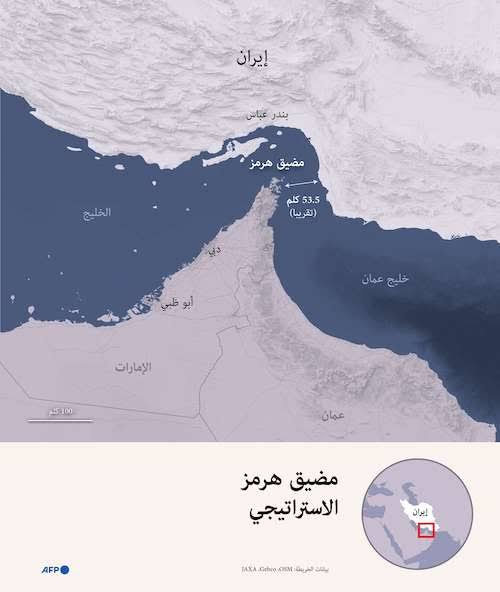
Hormuz: a bottleneck that is hard to replace
Before looking for alternatives, it is necessary to understand the role the strait plays in global energy trade. The Strait of Hormuz is one of the most important maritime routes for exporting oil and gas from the Gulf region to international markets. Before the recent disruptions, roughly one-fifth of global oil and liquefied natural gas trade passed through the region.
But Hormuz's importance is not only a matter of the volume of oil passing through it. Most Gulf oil infrastructure was historically designed on the assumption that this route would be available.
Building an alternative is therefore not merely a matter of constructing a pipeline or a port, but of reshaping the entire network of production, transport, storage and export.
Saudi Arabia: holder of the strongest alternative
Saudi Arabia possesses the largest existing Arab capacity to bypass Hormuz. The story begins in the Eastern Province, where the Abqaiq hub connects to the East-West pipeline known as "Petroline", which carries oil across Saudi territory to Yanbu on the Red Sea coast.
The line's basic capacity is around 5 million barrels per day, but Saudi Arabia has managed to raise its maximum capacity to about 7 million barrels per day by using lines previously dedicated to transporting gas liquids.
In the first quarter of 2026, Aramco announced that flows through the line had reached its maximum capacity of 7 million barrels per day, with exports diverted away from Hormuz. US Energy Information Administration estimates indicate that around 5 million barrels of this capacity can be allocated to exports, while the remaining quantity is used to meet domestic market needs.
The Red Sea: an alternative facing challenges
Reaching Yanbu takes oil out of Hormuz, but it does not mean it reaches Asian markets directly. Tankers heading to Asia would conventionally need to pass through Bab al-Mandab, meaning the crisis moves from one strategic chokepoint to another.
Saudi Arabia can overcome this obstacle for some shipments by sending oil north in the Red Sea and then using the Suez Canal or the Egyptian SUMED pipeline to reach the Mediterranean.
Here lies the paradox: Saudi Arabia has a strong alternative route, but it cannot automatically use it to secure its neighbours' exports, because Kuwaiti, Qatari or Iraqi crude cannot simply enter Petroline. Current transport networks do not connect these countries' fields to the Saudi line with the capacity needed to shift large volumes of production.
The UAE: the shortest route to open sea
If Saudi Arabia has the largest alternative, the UAE has one of the most direct. The Abu Dhabi Crude Oil Pipeline runs from Habshan to Fujairah on the Gulf of Oman, that is, outside the Strait of Hormuz.
The line entered service in 2012, extends about 404 kilometres, and has a design capacity of around 1.5 million barrels per day, with the possibility of raising it to roughly 1.8 million barrels per day.
Once oil reaches Fujairah, tankers can head directly towards the Indian Ocean and Asian markets without passing through Hormuz or Bab al-Mandab.
For this reason Abu Dhabi has begun implementing a second line to Fujairah. ADNOC announced in May 2026 that the project had reached about 50% completion, with the aim of doubling export capacity via Fujairah by 2027.
Iraq: a route to the sea exists, but the oil is in the wrong place
In theory, Iraq has an important alternative outside the Gulf. The Iraq-Turkey pipeline allows oil to be transported from northern Iraq to the Turkish port of Ceyhan on the Mediterranean, far from the Strait of Hormuz.
Exports from the Kirkuk fields resumed via this route in March 2026, and in August of the same year Baghdad and Ankara concluded a provisional agreement to extend the line's operation.
However, the volume of flows has remained limited, at around 170,000 barrels per day, with a preliminary target of raising them to about 250,000 barrels per day.
In other words, the existence of a line to Ceyhan does not mean that the millions of barrels produced in the south can reach it. Iraq therefore needs to rebuild an internal network linking the south with the north before it can shift its production away from Hormuz on a large scale.
Iraq's longest project: from Basra to the Mediterranean
Within Baghdad's future plans, routes linking Basra to Haditha and then Kirkuk and Ceyhan are under study, as well as another route extending from Basra via Haditha towards Baniyas in Syria.
The Iraqi government approved studies for both routes in July 2026. The vision for the Syrian route targets a capacity that could reach 2 million barrels per day, but it is a massive project that, according to estimates in the report, would require around four years and investments of no less than $15 billion.
Kuwait: no ready outlet outside Hormuz
Kuwait's problem is more evident. The country currently has no national pipeline carrying its oil production to an open seaport outside Hormuz.
For this reason, the option of linking to the Saudi network, particularly the East-West line, has emerged, so that part of Kuwaiti oil could in future be moved to Saudi ports on the Red Sea. This option, however, remains tied to negotiations, investment and cross-border infrastructure.
Qatar: the gas crisis is harder than the oil crisis
Qatar may be among the countries most exposed to constraints if Hormuz is disrupted, because Doha exports not only oil but relies mainly on liquefied natural gas, which forms one of the pillars of its foreign trade.
In the first half of 2025, total liquefied natural gas flows through Hormuz rose to more than 20% of global trade.
The problem here is that a new oil pipeline cannot solve Qatar's predicament. Gas is produced, processed and liquefied in facilities at Ras Laffan, inside the Gulf. A lasting exit from Hormuz would require building an entirely new liquefaction and export infrastructure outside the Gulf, whether in Saudi Arabia, the UAE or the Sultanate of Oman.
This means enormous investments and a long timeframe, not a solution that can be switched on as soon as the strait is disrupted.
Bahrain: links to Saudi Arabia do not eliminate the problem
Bahrain is connected to Saudi energy networks, but at present it does not have an independent outlet that would allow it to export its maritime shipments outside the Gulf without passing through Hormuz.
Accordingly, a potential Bahraini solution is also tied to Saudi capacity to transport crude or products to ports lying outside the strait's range.
This places Bahrain closer to a model of "linking to a neighbour's network" rather than possessing an independent national route.
Oman: the ideal location without a regional network
On the map, the Sultanate of Oman may appear to be the easiest solution. Ports such as Duqm lie on the Arabian Sea, outside Hormuz, on open sea lanes linking the Gulf with the Indian Ocean.
But owning a port outside the strait is not enough on its own. For Oman to become an outlet for Kuwaiti, Qatari or Iraqi oil, those supplies would need to reach its territory through cross-border pipelines, pumping and storage stations, and complex commercial and political arrangements.
No network of this scale exists today. Duqm therefore remains an important strategic option for the future, but it is not a ready-made solution that Gulf states can use as soon as Hormuz is closed.
The real problem: no shared Arab network
The map of Arab alternatives reveals a more important truth than the names of pipelines and ports.
The Arab world has multiple alternatives, but it does not have a unified Arab alternative. Saudi Arabia can move millions of barrels to the Red Sea, the UAE can export a large part of its crude via Fujairah, Iraq can use Ceyhan in limited quantities, and Oman has ports open to the Arabian Sea.
But these infrastructures are not connected to each other in a way that would allow them to form an integrated Arab energy network.
Saudi oil cannot automatically rescue Kuwaiti exports, the UAE line does not provide an outlet for Iraq, the Ceyhan line cannot absorb most of southern Iraq's oil, and Omani ports are not currently linked to a cross-border Gulf network.
Qatar's predicament is fundamentally different, because most of its strategic exports are liquefied gas, which requires liquefaction and export facilities rather than merely pipelines for transporting crude.
Who benefited from early investment?
The 2026 crisis provided a practical test of this map. Countries that invested early in bypass lines had greater capacity for manoeuvre.
Saudi Arabia was able to use Petroline and move large quantities to the Red Sea coast, and the UAE was able to benefit from the Abu Dhabi-Fujairah line.
Countries lacking ready alternative lines, by contrast, found themselves facing limited or costly options, such as provisional agreements, waiting for normal navigation to resume, or seeking massive investments in new infrastructure.
Energy security therefore depends not only on the size of reserves, but also on where a country can export its oil when the main route is disrupted.
Iraq exposed the clearest paradox
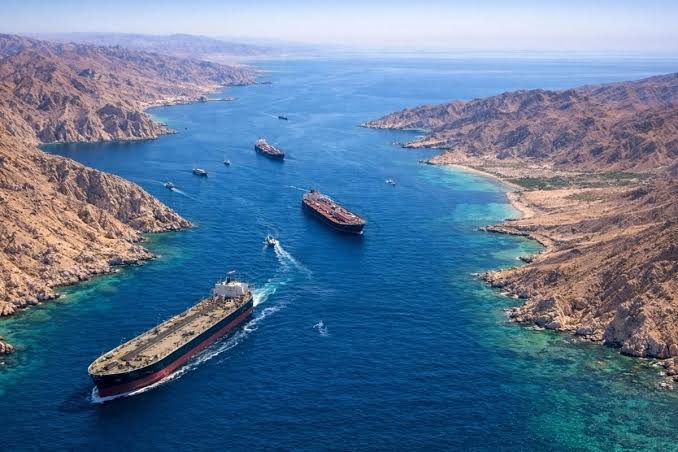
To sum up the problem, Iraq can be taken as an example. The country has vast oil reserves and production, yet in August 2026 it found itself obliged to obtain a special Iranian permit for a number of its tankers to pass through the Strait of Hormuz.
The paradox is that Iraq is not without oil, ports or export pipelines, but it lacks sufficient connection between its major production areas and the alternative routes.
This illustrates why drawing a line on the map does not suffice to constitute an "alternative to Hormuz."
Can a genuine Arab alternative be built?
From an engineering and economic standpoint, a more integrated Arab network can be envisaged, linking Gulf fields with pipelines passing through Saudi Arabia, Iraq and Oman, extending to the Red Sea, the Mediterranean and the Arabian Sea.
But establishing such a network requires billions of dollars, long-term political understandings, and security stability across wide areas of the region.
Cross-border pipelines also cannot be separated from political calculations: they require sovereign agreements, security guarantees, rules for sharing transport fees, and mechanisms for dealing with emergencies and wars.
Consequently, building a "Hormuz alternative network" is not merely an engineering project, but a complete Arab political and economic project.
Hormuz will remain important even with alternatives
The existence of alternatives does not mean the Strait of Hormuz has lost its importance. On the contrary, the crisis reveals that even the largest bypass lines cannot simply replace the strait for all producers and under all conditions.
Saudi Arabia can bypass Hormuz to a large degree, and the UAE to a significant degree, but Kuwait, Qatar and Bahrain remain more exposed, while Iraq needs years and enormous investments to redesign its internal and external transport network.


