


Sistan and Baluchestan province in southeastern Iran is witnessing a rise in armed attacks against the army, police and Revolutionary Guard, amid reports of deaths and injuries in scattered operations that targeted security patrols, police headquarters and a military bus. The escalation comes at a time when Tehran faces growing military and economic pressure due to the war with the United States, raising questions about the ability of Baloch armed groups to open a front of internal attrition in one of Iran's most sensitive regions in both security and geographic terms.
A report published by The Cradle on 9 October 2026 cited the deaths of seven Iranian military and security personnel and the injury of four others, according to a toll it attributed to the Baloch rights organisation Haal Vash, which recorded four armed attacks between the evening of Wednesday 7 October and the evening of Thursday 8 October.
The attacks targeted sites in Sistan and Baluchestan and the neighbouring province of Kerman, while the Popular Fighters Front, an alliance of Baloch armed groups, claimed responsibility for operations in Nikshahr, Nosratabad and Jaleq.
These developments are part of a wave of confrontations that has been escalating in the region for several weeks, including attacks on police patrols and Revolutionary Guard positions, and Iranian security responses targeting sites where gunmen are believed to be positioned.
Attack on a military bus in Nikshahr
Among the most prominent recent attacks was the targeting of a small bus carrying members of the ground forces of the Iranian army in the Nikshahr area of southeastern Iran on Thursday 8 October.
Public relations for the 88th Armoured Division of the Iranian army announced that gunmen targeted the bus while transporting military personnel to change their work shifts, as part of the forces deployed along the Makran coast.
According to the statement carried by the Iranian news agency Tasnim, the attack resulted in the death of soldier Mohammad Reza Okati and the injury of three others.
The Cradle report had cited a toll of two soldiers killed and three injured, but the official army statement confirmed one death, without announcing an additional toll for the same incident.
In a separate attack, police officer Vahid Enayat was killed when a police patrol from the Special Unit in Nosratabad came under gunfire on the Lashkhak–Zahedan road.
Iranian police said patrol members returned fire at the attackers, wounding several of them before they withdrew, and noted that operations had begun to pursue those responsible for the attack.
The Jaleq area, part of the border county of Gulshan, also witnessed an attack on a police headquarters, in which, according to local reports, rocket-propelled grenades and light and medium weapons were used.
Iranian police announced that an explosion occurred as two security units were leaving the headquarters, followed by an exchange of gunfire, which resulted in the death of one attacker and the injury of others.
For its part, Haal Vash stated that the clashes were more widespread, including the targeting of a vehicle carrying security reinforcements, but acknowledged that it could not independently verify the number of victims.
Rising tempo of attacks in October
The operations are not limited to the attacks of 7 and 8 October.
On 5 October, two Iranian police officers were killed and a third was wounded in an armed attack that targeted a patrol on the road linking Bampur and Iranshahr, according to Iranian media.
Other clashes had occurred during September, including attacks on Revolutionary Guard and police personnel, and clashes between government forces and gunmen in border and mountainous areas.
On 23 September, Brigadier General Hossein Zarifi, commander of the Imam Sajjad operational base of the Revolutionary Guard in Saravan, was killed along with an intelligence official at the base during clashes with Baloch gunmen, according to media reports.
A tally compiled by Long War Journal, a publication that tracks armed conflicts, records at least 37 armed incidents in Sistan and Baluchestan from the beginning of 2026 until 9 October, including attacks carried out by armed groups and operations launched by government forces.
Among these incidents, the report documented 11 attacks attributed to the Popular Fighters Front alliance, compared with 19 incidents for which no group claimed responsibility.
These figures do not mean that all incidents resulted in deaths, but they reflect the widening scope and recurrence of confrontations during the current year.
New attack and killing of a senior security official
The escalation continued after the publication of The Cradle report.
On 9 October, Nosrat Eftekhari, deputy for cultural and social affairs in the Sistan and Baluchestan police command, was killed when an explosive device detonated on the side of a road in the Cheshmeh Ziarat area near the city of Zahedan.
Iranian authorities confirmed Eftekhari's death, while the Popular Fighters Front announced its responsibility for the attack.
In a more recent development, Haal Vash reported on the morning of Monday 12 October that gunmen attacked a police post in Mortan in the Barud area of Rask county, leading to fierce clashes.
No confirmed toll of victims was available for the latest attack, and no group had claimed responsibility for it at the time the initial information was published.
The continuation of operations, despite Iranian security campaigns, points to the continued ability of armed groups to carry out scattered attacks in different parts of the province.
The Iranian authorities' response to the rising attacks has not been limited to reinforcing army and Revolutionary Guard forces. Human rights and media reports have referred to the deployment of fighters from Shiite militias loyal to Tehran, most notably the Afghan Fatemiyoun and the Pakistani Zainabiyoun, in various areas of Sistan and Baluchestan, including Zahedan, Saravan, Rask and Chabahar.
According to the rights organisation Haal Vash, hundreds of Fatemiyoun fighters have spread across the province and have taken over some local Basij headquarters, while members of the group were subjected to armed attacks that resulted in deaths during September and October 2026. This deployment drew criticism from Sheikh Abdolhamid Ismaeelzahi, Sunni Friday prayer leader in Zahedan, who warned against relying on foreign forces rather than local residents.
The use of these formations reveals the expansion of the security mobilisation to confront Baloch armed groups, at a time when Tehran faces external military pressure, although no independent official data are available specifying the size and precise tasks of the deployed forces.
Who stands behind the attacks?
The name Popular Fighters Front has emerged in recent months as an armed alliance comprising several Baloch organisations opposed to the Iranian authorities.
The alliance was formed in December 2025 and includes groups among them Jaish al-Adl, the Baloch Peoples' movement (Bada Baloch), the Baluchistan Nasr movement, and the Mohammad Rasulullah group.
Jaish al-Adl is the most prominent armed component of the alliance. It emerged around 2012 after the decline of Jundallah, which was led by Abdolmalek Rigi, whom the Iranian regime executed in 2010.
The groups within the alliance say they seek to confront the Iranian authorities over their policies towards the Baloch population, particularly what they describe as ethnic and sectarian discrimination and political repression.
The alliance also declares its opposition to the system of velayat-e faqih (guardianship of the jurist), and its military activity is presented as part of a broader confrontation with the Iranian political system.
On the other side, the Iranian authorities classify these groups as terrorist organisations and hold them responsible for attacks on security forces and government institutions.
The Popular Fighters Front has claimed responsibility for a series of operations during October, including attacks on police patrols, security sites and army personnel.
However, not every attack in the region is confidently attributed to the alliance: some incidents have not been claimed by any party, and others are subject to differing accounts from the authorities and local media.
Sistan and Baluchestan: a border region troubled for years
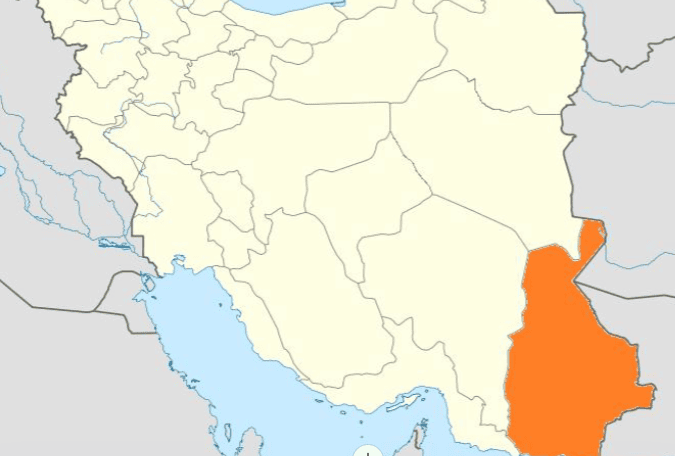
Sistan and Baluchestan province lies in southeastern Iran, bordered by Pakistan and Afghanistan, and extends southward towards the Gulf of Oman.
Large parts of it are inhabited by the Baloch minority, most of whose members follow the Sunni school of Islam, in a country where Shiites form the majority of the population.
The province is among Iran's poorest regions and one of those that have benefited least from development projects, despite its strategic location and its resources and commercial potential.
According to a report issued by the International Crisis Group in August 2025, the region suffers from accumulated problems including poverty, weak infrastructure, unemployment and water scarcity, alongside complaints of discrimination and the under-representation of Sunni Baloch in state institutions.
The report argues that these conditions have widened the gap of trust between residents and the central authorities, and have provided an environment that armed groups exploit to recruit members and justify their activities.
In Zahedan on 30 September 2022, one of the bloodiest episodes of repression during the Iranian protests occurred, when security forces fired on protesters and worshippers in events known as "Bloody Friday".
Human rights organisations documented the deaths of dozens of people in those events, which have remained a feature of the tension between the authorities and sections of the Baloch community.
However, the existence of these grievances does not mean that all residents of the province support armed activity. Researchers and observers distinguish between the political and social demands of the population and the activities of organisations that resort to arms.
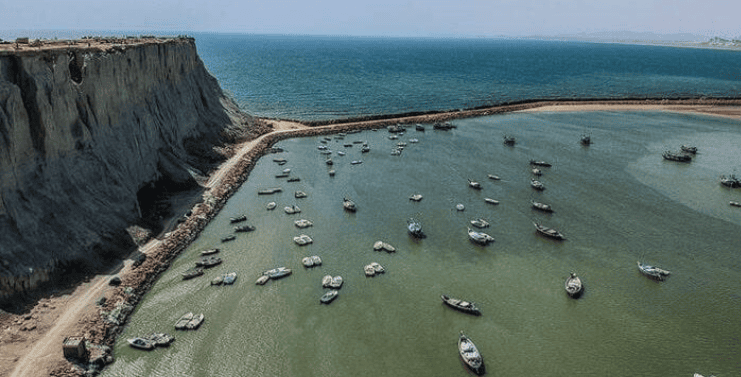
Chabahar Bay and fishing boats
Iranian accusations against the United States and "Israel"
The escalation of attacks coincides with the continuing military confrontation between Iran and the United States, which has led Iranian officials and analysts to link armed activity in border areas to external pressure on Tehran.
The Cradle reported that Iranian security officials believe Washington benefits from the movements of armed groups in border peripheries to weaken domestic stability, drain security forces, and create conditions favourable to additional pressure or military operations against the country.
The report also noted Iranian accusations that Israeli intelligence has played a role in fuelling the armed insurgency, and claims that some Gulf parties have provided financial or logistical support to certain groups.
However, the available sources did not attach independent evidence sufficient to prove direct American or Israeli support for the recent attacks. Nor are the demands of armed groups in Iran new; they predate the recent war.
It therefore remains necessary to distinguish between the accusations put forward by the Iranian authorities, the responsibility claimed by armed groups for their operations, and the evidence that can be independently verified.
Why do the Makran coasts hold particular importance?
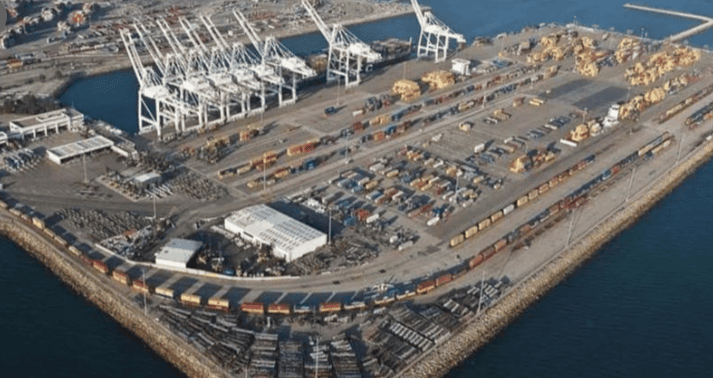
Chabahar port, a strategic port
The importance of Sistan and Baluchestan extends beyond the internal conflict, as it includes part of the Makran coast overlooking the Gulf of Oman and the Arabian Sea, along with the port of Chabahar, Iran's strategic outlet to open waters outside the Strait of Hormuz.
The port is one of the projects on which Iran relies to expand its trade with Central Asia, Afghanistan and India, and to reduce its dependence on trade routes passing through the Gulf.
This site has gained additional importance as the American war on Iran continues and restrictions are imposed on the activity of its ports.
In this context, targeting soldiers deployed along the Makran coast, as occurred in the Nikshahr attack, raises concerns about the security of the coastal area and transport and supply networks.
This does not mean that armed groups have become able to control or disrupt the port, but it illustrates the strategic sensitivity of any prolonged security disturbance in the areas surrounding it.
Tehran thus faces the challenge of securing its southeastern border and coasts, while needing to distribute its military and security resources across other fronts.
Tensions extend to relations with Pakistan
The long border between Iran and Pakistan adds a regional dimension to the crisis.
On previous occasions, Tehran has accused Baloch armed groups of using border areas inside Pakistan as refuges from which to organise operations against Iranian forces.
In January 2024, the two countries exchanged airstrikes across the border, after Iran struck sites it said belonged to Jaish al-Adl inside Pakistani territory, and Islamabad responded by striking sites inside Iran that it said were used by separatist Baloch groups.
Although the diplomatic crisis was contained at the time, the question of armed groups and border control has remained a source of tension between the two countries.
On 11 October 2026, Tasnim criticised Pakistan's security performance, questioning how effective the measures it takes are in preventing armed groups from using its territory to carry out attacks inside Iran.
These criticisms reflect Iran's concern over the continuation of armed operations despite declared border coordination, but they do not necessarily prove the involvement of Pakistani authorities in supporting those groups.
Is Baluchestan heading towards a wider confrontation?
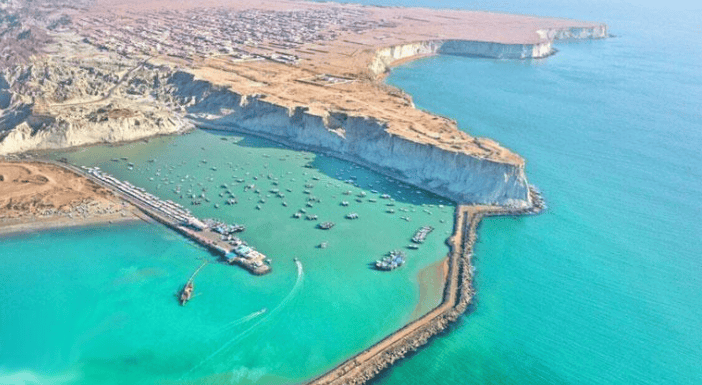
The Makran coast on the Gulf of Oman
The recent attacks reveal that the security tension in Sistan and Baluchestan is no longer limited to scattered clashes with border patrols, but now includes the targeting of security sites, soldiers and local officials, and the repetition of operations within short periods.
At the same time, these developments are not sufficient to conclude that Baloch groups have acquired the capacity to control large areas or wage a conventional war against the Iranian army.
The operations announced so far rely mainly on ambushes, explosive devices and limited armed attacks, against government forces that hold a considerable advantage in numbers and armaments.
However, the continuation of these operations may compel the Iranian authorities to allocate more forces and resources to protect facilities, roads and military bases, at a time when they face growing external pressure.
The roots of the internal crisis remain a decisive factor in the future of the confrontation; specialised studies indicate that a security approach alone has not ended the tensions that have accumulated in the region over the past years.
Thus, the escalating attacks in Sistan and Baluchestan represent a dual test for Tehran: its ability to contain armed groups active in a sensitive border region, and its ability to address the political, social and economic causes that have made the province one of Iran's most turbulent regions.
As the external war and economic pressure on Iran continue, the persistence of armed conflict in its southeast could turn this region into an additional front of attrition, even if the confrontations do not develop into a full-scale war.
Sources and references
- The Cradle – Iranian troops, police targeted by deadly attacks across southeastern Sistan-Baluchestan region, 9 October 2026.
- Haalvsh (Baluch human rights organisation), reports on attacks and clashes in Sistan and Baluchestan, October 2026.
- Tasnim News Agency (Iran), statement by the 88th Armoured Division on the Nikshahr attack, 8 October 2026.
- Rudaw – Dozen Iranian forces killed, injured in 24 hours, 9 October 2026.
- Rudaw – Gunmen attack police post as clashes intensify in southeast Iran, 12 October 2026.
- Long War Journal – Insurgent attacks surge in southeastern Iran, 9 October 2026.
- International Crisis Group, report "Grievances and Misgovernance in Iranian Balochistan", 19 August 2025.
- Reuters, report on the killing of an Iranian police official in a bombing near Zahedan, 9 October 2026.


