


Energy Crisis Between the United States and Iran Spreads to Asia and Reshapes the Global Economy
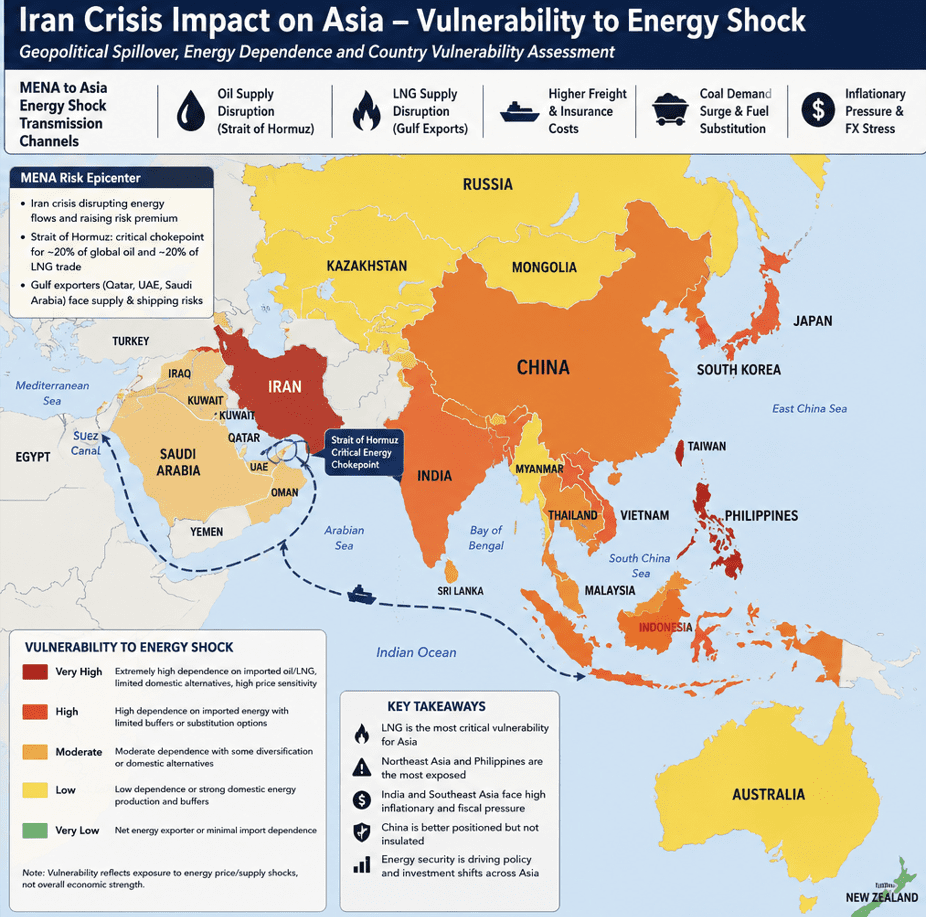
Global energy markets are experiencing rising turbulence as a result of the crisis linked to tensions between the United States and Iran. It is no longer a temporary shock to oil and gas prices; it has become a structural reshaping of the global energy market, with the greatest impact concentrated in Asia, as the region most dependent on imports of oil and liquefied natural gas (LNG).
According to a recent economic analysis, the current crisis is working through several main channels, including a higher risk premium on oil, reduced supplies through the Strait of Hormuz, and a deeper crisis in the LNG market, which is more sensitive than oil in terms of supply and stability.
Mounting Pressure on Gas and Oil Markets
Data indicate that disruptions in the Strait of Hormuz have reduced a significant portion of global energy flows, causing a large drawdown of oil inventories and pushing prices to between 90 and 100 dollars per barrel during periods of tension, with the possibility of exceeding that level if the crisis worsens.
However, the greatest impact was in the LNG market. Estimates indicate that up to 20% of global supplies were disrupted at the peak of the crisis, which pushed gas prices in Asia sharply higher and forced countries such as Japan, South Korea and China to resort to emergency purchases and measures to curb consumption.
Coal Temporarily Returns to the Fore
As gas market stability declined, many Asian countries increased their reliance on coal as a alternative and quick source of electricity generation, particularly in China, India and Southeast Asian countries.
Despite this temporary rise in coal use, analyses confirm that the general trend toward renewable energy has not stopped. China and India continue to invest in clean energy projects, but the current crisis has reordered priorities in favour of energy security at the expense of rapid environmental transition.
Wide-Ranging Economic Repercussions in Asia
Asian economies are facing mounting pressure as a result of rising energy prices, which have led to higher inflation rates and a decline in the value of local currencies in a number of energy-importing countries.
Central banks in the region have also been compelled to tighten monetary policy unexpectedly in an attempt to contain inflationary pressures, which further slowed industrial growth in energy-intensive sectors such as petrochemicals, steel and fertilizers.
Estimates indicate that a prolonged crisis could reduce global growth by between 1 and 2 percentage points in 2026 and 2027, with indirect effects on the United States, Europe and Japan through a decline in Asian demand for industrial exports.
Varying Impact of the Crisis Across Asian Countries
The severity of the crisis's impact differs from one country to another. Japan and South Korea are among the most affected, given their heavy reliance on LNG imports, which led them to accelerate the operation of nuclear power plants and increase consumption efficiency.
China faces a dual challenge of higher energy costs and pressure on heavy industries, but in response it relies on a mix of coal and renewable energy to reduce risks.
In India, abundant domestic coal helped ease the crisis, despite rising government subsidy costs and inflationary pressures.
Meanwhile, Southeast Asian countries suffer from high sensitivity to energy prices, which has led to the postponement or cancellation of some LNG projects, along with a temporary increase in reliance on coal.
Strategic Shifts in the Global Energy Market
The current crisis is driving three main shifts in the global energy market:
- First, a move away from expanding LNG toward focusing on reducing the risks associated with it.
- Second, giving top priority to energy security over policies of rapid transition away from fossil fuels.
- Third, accelerating investment in renewable energy and electricity storage systems as a strategic element of future stability.
Future Scenarios
Projections point to three possible scenarios for the period 2026–2027:
- Partial stability scenario: continued tension with markets remaining under pressure, with oil prices between 85 and 105 dollars per barrel.
- Improvement scenario: if diplomatic efforts among the major powers succeed, prices may fall and the global economy may gradually stabilise.
- Escalation scenario: if the conflict in the Gulf expands, prices may rise to record levels exceeding 140 dollars per barrel, with acute supply shortages and economic recession in some regions.
Overall developments indicate that the energy crisis linked to US-Iranian tensions is no longer merely a market crisis; it has become a geopolitical factor reshaping the global economy. With supply remaining fragile and Asia's reliance on imported energy growing, the future of global growth remains dependent on stability in the Gulf region and the ability of the major powers to contain escalation.


