


In a few short years, the world has changed at a pace that almost exceeds human capacity to absorb it. What was considered an exception in international relations a decade ago has become part of the daily landscape. The global order is no longer experiencing a passing crisis but is undergoing a comprehensive reshaping, in which wars, economic crises, geopolitical rivalry and climate disasters intersect in a single picture that redraws maps of influence and balances of power.
In the Middle East, the military confrontation between the United States and Israel on one side and Iran on the other has opened a new chapter of regional conflict, while the Russian-Ukrainian war continues to drain Europe politically, economically and militarily, and has returned an arms race to the continent after decades of its end. In East Asia, China continues to expand its military capabilities and economic influence, and to build a network of partnerships and alliances that competes with the system led by the United States since the end of the Cold War, while North Korea continues to develop its military capabilities in a highly tense regional environment.
At the same time, the war in Sudan continues to generate one of the largest humanitarian crises in the world, while other parts of Africa witness armed conflicts, coups and growing international competition over resources and influence. The Islamic world, for its part, is living through an unprecedented state of ferment in light of the Jewish attacks on the Gaza Strip, the escalating tension in the Palestinian territories amid settlement expansion, and the repercussions of regional turmoil on the security and economic and strategic stability of the Gulf states.
The conflict is no longer confined to battlefields; it has extended to the global economy, where fears are growing of slowing growth, rising debt levels, disrupted supply chains, and intensifying competition over energy, rare minerals, advanced technology and artificial intelligence. At a time when unprecedented heatwaves, devastating floods and wide-scale fires are striking multiple regions of Europe, climate change has become a factor affecting security, the economy and politics, rather than merely an environmental issue.
These are not separate crises but links in a single chain, indicating that the world is entering an unprecedented transitional phase, in which the model of unipolar hegemony is receding and competition among the great powers over leadership of the coming international order is intensifying.
Only three decades ago, it seemed that history had been decided in favour of a single power. With the collapse of the Soviet Union in 1412 AH / 1991 CE, the United States emerged as the sole superpower, and the belief prevailed that the Western liberal order had become the final model that would lead the world for decades to come. However, history, as its repeated experiences show, knows no stability; what appeared to be a definitive victory gradually turned into a relatively short transitional phase in the life of nations.
Today, amid successive events, a markedly different world is taking shape: a world in which unipolar hegemony is receding and the great powers are competing to redraw spheres of influence, while the foundations of the globalisation that governed the economy and politics since the end of the twentieth century are cracking.
The Clash of Empires
When empires are mentioned, Rome, the British state, the Ottoman state or the Russian Empire come to mind. But the modern empire does not need direct occupation or raising its flags over capitals; it is enough to possess the capacity to control the political, economic, technological and military decisions of other states.
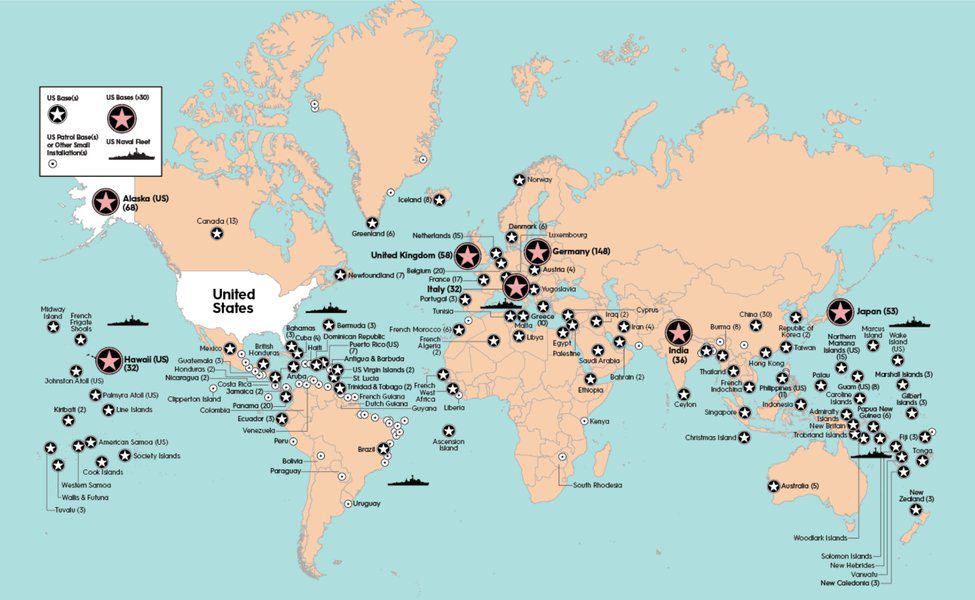
The tools of influence have changed, but the goal has remained one: managing the international system in a way that serves the strategic interests of the great powers. The United States has built an unprecedented network of military bases, alliances and global financial institutions, while China has chosen a different path based on investment, infrastructure and trade, and Russia focuses on restoring its sphere of influence and expanding its security and military influence in its region and beyond. In other words, the tools of influence are no longer military alone; they also include the economy, technology, diplomacy and soft power. This means that the world is not returning to empires in their old form, but to the logic of empires.
Why the American System Has Begun to Lose Its Monopoly
By the "material" logic, the United States still possesses the strongest army in the world, the widest network of military bases and the largest political alliances, and the dollar retains its central position in the global economy. But possessing elements of power does not necessarily mean the continuation of absolute hegemony.
Over the past two decades, Washington has faced accumulating challenges, among them long and costly wars, intensifying economic competition with China, the growing public debt, internal political divisions, and the declining ability of the United States to impose its will unilaterally on a number of international files. Accordingly, high debt, the erosion of alliances and internal challenges have become among the most prominent pressure points on the American Empire.
It is noticeable that most modern American strategies no longer speak of "sole leadership" but of "managing competition" with rising powers, and this shift in language reflects a deeper shift in the balance of power.
China: The Empire That Does Not Invade
If ancient empires expanded through armies, China has chosen a different path. Since the end of the twentieth century, Beijing has focused on building a huge economy and turning itself into the world's factory, then began exporting investment and infrastructure through the "Belt and Road" initiative, which extends to Asia, Africa, the Middle East and Europe.
Instead of sending soldiers, China sends companies, engineers, ports, railway lines and technology centres; instead of military occupation, it seeks to create long-term economic dependence that makes many states part of its trade and investment network. This means that Chinese tools of influence rest essentially on direct investment, trade, financing and technology transfer, with infrastructure projects used as a means of strengthening geopolitical influence.
Therefore, in the Chinese case, we can say that it is building an "economic empire" through which it strengthens its military empire, whose power has not yet appeared except in the field of armaments.
Russia and the Restoration of Its Sphere of Influence
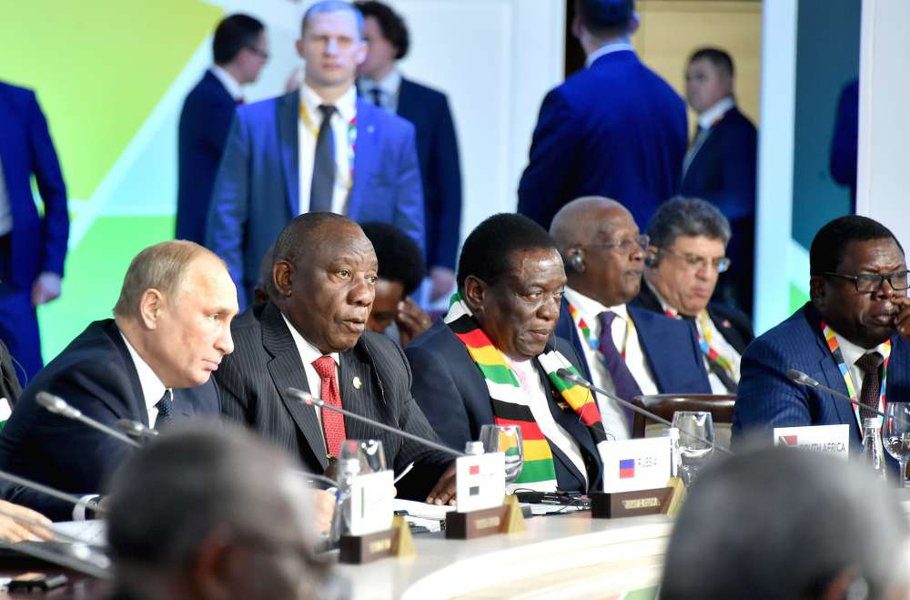
As for Russia, it does not hide that its priority is protecting what it considers its vital sphere. After years of decline following the collapse of the Soviet Union, Moscow has worked to rebuild its military capabilities and strengthen its presence in Eastern Europe, the Middle East and Africa.
Russia does not rely on the economy to the same extent as on other tools, such as military force, energy, security diplomacy, cyber warfare and the media.
Moscow also views its geographic surroundings as a strategic priority, and uses a mix of hard power and unconventional tools of influence to safeguard its interests.
Thus, the tools differ, but the goal is one: expanding influence and securing interests.
From the Nile to the Euphrates?
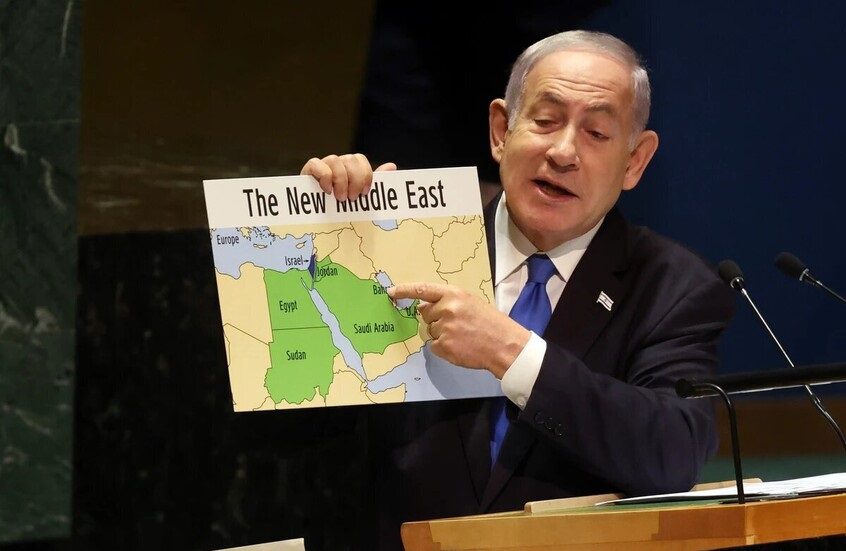
On the other side, in the heart of the Middle East, the Jews seek to realise their dream of a state "from the Nile to the Euphrates." Since the establishment of what is called the "State of Israel" in 1367 AH / 1948 CE, its project has not been limited to building a superior military force; it has sought to entrench a broad regional influence through a mix of military superiority, technological progress, international alliances, and political and economic influence.
These moves are carried out according to a vision that goes beyond its current borders, declared in the battles, attacks and massacres it carries out, namely the dream of a land extending "from the Nile to the Euphrates." Accordingly, in recent days we have seen an acceleration of settlement expansion in the West Bank, repeated military strikes beyond its borders, the occupation of the Gaza Strip, and attempts to build a network of security and political influence extending to various areas of the Middle East.
Battles That Will Determine the Fate of the World
Some may think the conflict revolves only around what has been discussed in the preceding lines, but the truth is that the major rivalry is also being fought over the lands, corridors and waters of other states.
The Middle East, Ukraine, the South China Sea and Africa have all become arenas where the interests of the great powers intersect. These regions are not merely geography; they are keys to energy, global trade, maritime routes, natural resources and political influence.
For this reason, many regional crises cannot be understood in isolation from the competition among the great powers, each of which seeks to secure its position in the coming international order. These regions represent the most prominent lines of contact in the emerging global system.
Are We Facing a New World War?
Despite rising tensions, some may rule out the world moving toward a comprehensive world war on the model of the two World Wars, because economic interdependence, nuclear deterrence and the cost of direct confrontation make a full-scale military clash an extremely dangerous option.
But this does not mean the absence of conflict. Wars today take different forms: economic sanctions, cyber warfare, a race for artificial intelligence, a struggle over semiconductors, competition over supply chains, and battles for influence in developing countries.
In other words, the world is living through a war by new means, even if it has not been formally declared, and what is happening today is not a passing crisis or a series of separate events, but a historic transformation reshaping the international system.
States that recognise this transformation early will seek to reposition themselves, build their alliances and develop their tools of power. States that merely watch the scene may find themselves, after some years, facing a new global order formed without them having any role in shaping it.
The Window of Historic Opportunity: Is the Islamic World Facing a Moment That May Not Recur?
Major transformations in history have never been mere changes in the names of great powers; they have always been moments that redistributed influence among nations. Each time a dominant power weakens and another emerges to rival it, a space opens that allows new powers to rise, provided they possess vision, will and the tools for action.
Strategy scholars call these moments "windows of opportunity," transitional periods that do not last long but give states and societies a chance to reposition themselves before the international system settles anew.
Today, the world appears to be approaching one of these moments. The competition between the United States and China, the return of Russia as a major player, the growing role of regional powers, and the decline of the model of open globalisation are all indicators that the system established after 1412 AH / 1991 CE no longer operates on the same mechanisms, and that the world is moving toward greater plurality in centres of power.
This shift toward a multipolar system opens new opportunities and challenges, as power is distributed among several influential states instead of the hegemony of a single pole, which leads us to ask: who will be ready to benefit from this change?
Power Is Not the Only Measure
Whoever thinks that owning wealth alone makes nations, or that population size is enough to build influence, is mistaken, especially since history is full of small states that affected the course of the world because they possessed a clear vision, while other nations possessed all the elements of power but remained unable to convert them into real influence. Hence there is a difference between latent power and effective power.
Latent power is what a state possesses in terms of population, wealth and geographic location; effective power is the ability to employ these elements within a coherent political, economic and scientific project.
Here the question of the Islamic world arises. Looking at the map, it becomes clear that the Islamic world possesses many of the elements of power that geopolitical theories speak of.
It stretches across the heart of the world, linking Asia, Africa and Europe, overlooks the most important maritime routes, and holds a large share of oil and gas reserves, in addition to a human mass exceeding two billion people, most of them young.
If geographic location, human resources, natural wealth and civilisational heritage represent the most prominent foundations of renaissance when well invested, owning these foundations is one thing, and converting them into influence is another.
For if wealth alone sufficed, resource-rich states would not remain at the bottom of development indicators, and if population size were enough, the most populous states would always be the strongest.
The problem is not a lack of capacity but how it is managed, and the existence of a project around which the nation rallies, beyond nationalism and sectarianism.
Why Have These Capacities Remained Idle?
Reviewing the past decades, a number of challenges stand out that prevented these foundations from being converted into a comprehensive renaissance project.
Foremost among them is the absence of an Islamic project and frame of reference, which has led, as a consequence, to political divisions, internal conflicts, weak economic integration, and wide reliance on outside powers for technology and industry, as well as the absence of a shared strategic vision among many members of the Islamic nation.
Although some Muslims have achieved notable progress in recent years in industry, technology, infrastructure, education and the economy, these achievements remain scattered and have not developed into a broad integrated project reflecting the weight of the Islamic world as a whole.
Not an Opportunity Due to Others' Weakness
A common mistake is the belief that the decline of American hegemony automatically means the rise of other powers, because history is not measured so simply. The collapse of an empire does not mean its heir is ready; it merely gives others the chance to compete.
Therefore, the present stage represents a "window of opportunity," but it is not a guarantee of success; it is an opportunity conditional on preparedness and the capacity to act.
Awareness Before Power
Power is often reduced to weapons, but true power lies in the awareness that is absent among members of the Islamic nation, and in their distance from reading their history, which speaks of when, how and where Islam ruled the world.
For this reason, strategic awareness has become the first condition for renaissance. By awareness here is meant not the accumulation of information, but understanding how the international system works, recognising the interests of the great powers, the ability to read transformations, and building policies on a long-term basis rather than merely reacting. Successful nations do not move because they were caught off guard by events, but because they were preparing for them before they occurred.
The Islamic Vision: Between Values and Building Civilisation
From the perspective of Islamic thought, renaissance is not separable from the reform of the individual and society. The Holy Quran links civilisational change to inner change. He, the Exalted, says: "Indeed, Allah will not change the condition of a people until they change what is in themselves" [Ar-Ra'd: 11].
Within this framework, no future civilisational project is completed by slogans alone; it requires building the human being, consolidating values, promoting knowledge, establishing strong institutions, achieving justice, and benefiting from the tools of the age in administration, economy and technology. This represents an intellectual vision within Islamic discourse. Regardless of differences in political views, there remains broad agreement among development and strategy experts that sustainable renaissance begins from within, through investment in people, education, production, innovation, and building institutions capable of endurance.
Renaissance Cannot Be Imported
Among the most common errors committed by many nations is the belief that renaissance comes through importing ready-made models, or waiting for shifts in the balance of international power to grant them a better position.
Japan after the Second World War, South Korea, Singapore, and later China, did not rise because the international order decided to grant them power. They rose because they built their people, invested in education, raised production, developed their institutions, and read the international environment well.
For this reason, any renaissance project in the Islamic world will not begin from outside, but from within.


