


Crimes of genocide do not expire with time, and however deep the wound, the butcher cannot kill an entire people. This is what the witnesses who carried their memories, heavy with pain, to the platform of justice have said. From these testimonies, written in tears before words, came pages that preserve the names of the victims, document the crimes, and give future generations the opportunity to know the truth as its owners related it.
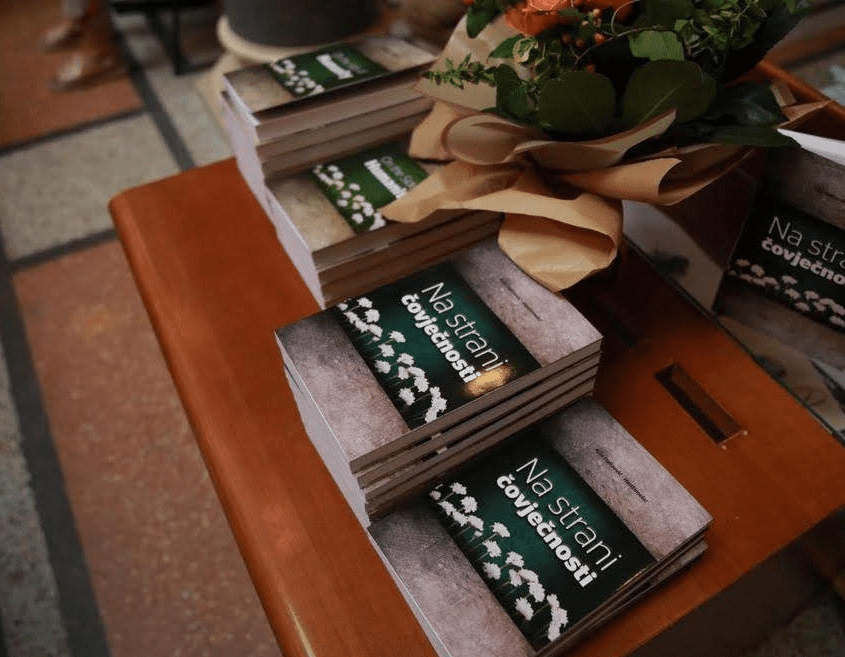
In this context, the Media Center of the Islamic Community in Bosnia and Herzegovina has issued an encyclopedic work in two volumes titled "Echoes from The Hague Courtrooms: Voices of Witnesses," by the writer and researcher Aiša Hafizović-Hadžimešić. Exceeding eight hundred pages, it documents the testimonies of witnesses before the International Criminal Tribunal for the former Yugoslavia (ICTY) and highlights the pivotal role they played in uncovering the truth and establishing justice.
Witnesses at the Heart of the Path to Justice
The author affirms that the witnesses were the essential pillar on which she relied in producing this work, despite the immense psychological burdens they bore in recalling the details of the tragedies they had lived through. Many of them repeatedly returned to the moments of losing their families, torture, detention, rape and displacement, so that the truth might come to light and the perpetrators of the crimes might receive their punishment.
She considers that every testimony made an invaluable contribution to bringing out the truth, affirming that the witnesses did not retreat from fulfilling their mission despite the harshness of the experience.
More Than Four Thousand Witnesses
The book notes that more than 4,650 witnesses gave their statements before the Hague tribunal, most of them in cases concerning war crimes committed in Bosnia and Herzegovina. These testimonies included survivors of the crimes, local and international officials, experts, journalists and investigators, all of whom contributed to documenting what took place during the wars of genocide against Muslims in the 1990s.
Documenting Genocide and Violations
The work covers testimonies from trials relating to genocide and crimes committed in Srebrenica, Prijedor, Foča, Sarajevo, Višegrad and Mostar. It also addresses cases concerning the destruction of cultural and Islamic heritage in Bosnia and Herzegovina, drawing on the archive of the international tribunal, its residual mechanism, the documents of the Sense Agency, and the texts of judicial rulings.
Fidelity to the Heroes of Truth
The author explains that the book was written in fidelity to the witnesses whom she describes as "heroes of truth," affirming that each of them deserves a separate book telling their story, and that their shared message was clear. She also stressed that the absence of the witnesses would have meant the absence of indictments, trials and verdicts.
The Author and the Publication
The book was reviewed by Mina Vidaković, Amir Ahmetović, Hasan Hasanović and Suad Omeragić, while Elvedin Sopašić served as its editor.
The first book launch event is scheduled to take place in Bihać, Bosnia and Herzegovina, on 9 July, coinciding with commemorations of the Srebrenica genocide, in which more than 8,000 Bosniak men and boys were killed by Serb militias in 1995.
Source: Media Center of the Islamic Community in Bosnia and Herzegovina


