

2026 has seen notable developments in Chinese policy towards Uyghur Muslims, with the approval of a series of laws and regulations that raise human rights concerns about the future of the religious, cultural and linguistic identity of the Indigenous population of East Turkistan, which Chinese authorities call "Xinjiang."
The concerns are not limited to the continuation of arrests and security restrictions. They extend to the incorporation into the Chinese legislative system of measures that affect freedom of religion, language and family upbringing.
In a report issued on 16 November 2026, titled "Human Rights Events in China in 2026: Selected Incidents and Analysis," the research team of the Voice of Liberty organisation reviewed 60 selected human rights incidents, including developments related to the rights of national and linguistic minorities.
The incidents concerning the Uyghurs carry particular significance when read alongside other human rights reports and the Chinese legislation issued during the current year.
The National Unity Law: Concerns Over Entrenching Cultural Assimilation Policies
On 12 March 2026, the National People's Congress of China adopted the Law on Promoting National Unity and Progress, which took effect on 1 July.
The law affirms the promotion of a shared Chinese national identity and gives Standard Chinese a fundamental place in education and public life.
Article 15 provides for the adoption of Standard Chinese as the basic language of education, and for giving the Chinese script a prominent position and order when used alongside minority languages in public places by the relevant institutions and bodies.
In a letter sent to the Chinese government on 16 April, UN experts warned of the law's implications for the educational and linguistic choices of minorities.
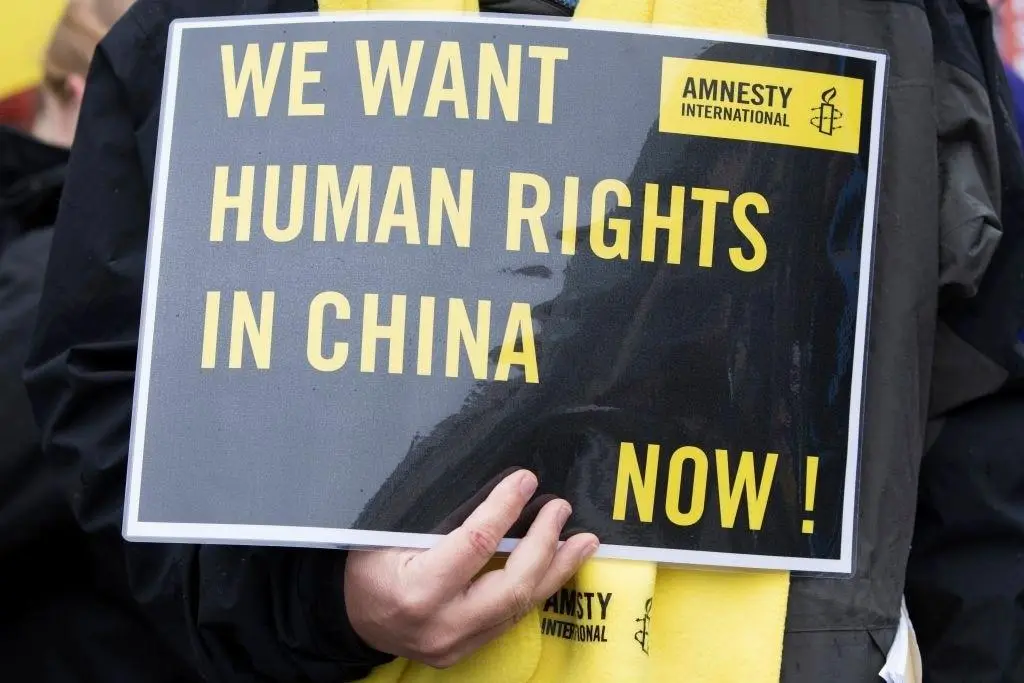
Amnesty International, in a report published on 30 June, also warned that the law may entrench policies of forced cultural assimilation and deepen restrictions on the religious and linguistic identity of Uyghurs, Tibetans and other minorities.
In response, the Chinese authorities defend the law as a legislative framework for strengthening national unity, equality, development and the protection of the rights of all nationalities, and reject accusations concerning cultural assimilation policies.
From Schools to Driving Tests: Narrowing the Use of the Uyghur Language
Among the incidents covered in the Voice of Liberty report is a change in the language of the written driving licence tests in parts of the Aksu prefecture of East Turkistan.
In February 2026, the Uyghur Times platform reported, citing a statement from local police, that applicants for the tests in areas including Kucha, Toksun and Shayar were now required to take the written test in Standard Chinese, "Mandarin."
According to the platform, the measures extended to people who had previously passed earlier tests.
These measures raise a problem of equal access to public services, as a Uyghur citizen's receipt of a driving licence becomes linked to proficiency in another language rather than to knowledge of traffic rules alone.
In a later development, Radio Free Asia reported on 13 November that it had obtained a notice issued by two local government bodies in the city of Hotan, requiring people entering public places to use Standard Chinese.
Officials at the two bodies confirmed that the notice had been issued, according to the radio, which viewed this as an extension of language restrictions into everyday social life.
According to the published text, the notice does not include an explicit ban on the Uyghur language, and the possible penalties for violating it, or its scope of application, are not clear.
The amended Language Work Regulations in East Turkistan are scheduled to take effect on 1 January 2027. They include provisions requiring public service workers to take the initiative in using Standard Chinese in public places.
These developments are significant beyond the educational sphere, as language is linked to the transmission of religious and cultural heritage between generations, and to the ability of local communities to preserve their identity and historical memory.
"Education in Atheism": Legislation Extending into the Muslim Family
Perhaps the most prominent development relating to freedom of religion in recent weeks is the approval of new regulations governing family upbringing in East Turkistan. The regional authorities adopted them on 23 September, and they are scheduled to take effect on 1 December 2026.
According to the text published by the Chinese newspaper Altay Daily on 15 October, and relayed by the Uyghur platform Kuzit, Article 20 of the regulations provides for coordination between the family, the school and the community in areas including "education in atheism" and countering separatism.
Article 30 refers parents and guardians who organise, encourage or compel minors to adopt a religion or take part in religious activities to the provisions of existing regulations on religious affairs and on combating what the authorities call "extremism."
The article does not set a separate penalty. Instead, it links legal liability to other legislation and regulations in force in the region.
In a briefing given by the regional authorities on 12 November, the regulations were described as aiming to protect the healthy development of minors and to clarify the responsibilities of the family in upbringing.
However, the Uyghur Human Rights Monitor, in a legal analysis published on 19 November, warned that some of its provisions conflict with China's international obligations, particularly those concerning children's rights, freedom of religion, and parents' right to provide religious education to their children.
The danger of these provisions for Muslim families lies in the possibility that their application may extend to customary family religious practices, such as teaching children the principles of Islam and encouraging them to perform acts of worship.
The regulations had not yet entered into force as of the date this article was prepared. The manner of their actual implementation, and the limits the authorities will set on religious practice within the family, therefore remain to be monitored and documented.
Religious and Linguistic Restrictions: Parallel Legislative Tracks
The legislation issued during 2026 reveals several legal tracks affecting different aspects of Uyghur life running in parallel:
- 12 March 2026: Adoption of the Law on Promoting National Unity and Progress at the national level.
- 1 July 2026: The law takes effect.
- 23 September 2026: Adoption of the regional family upbringing regulations and the amended Language Work Regulations in East Turkistan.
- 1 December 2026: The scheduled date for the family upbringing regulations to begin being applied.
- 1 January 2027: The scheduled date for the amended Language Work Regulations to begin being applied.
Taken together, these developments raise questions about the ability of Uyghur families to preserve their religious and cultural distinctiveness, as government regulation expands to cover education, public services and family upbringing.
From a human rights perspective, the standard is not limited to the objectives the authorities announce for these laws. It also includes their content, the way they are implemented, and their effects on the fundamental rights of the population.
Ten Years of Abuses Without Adequate Accountability
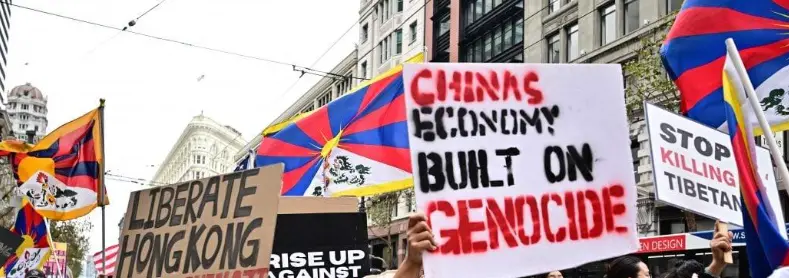
These developments come amid the continuing humanitarian consequences of the security policies that the Chinese authorities began implementing on a large scale in East Turkistan in late 2016.
In a report published by Human Rights Watch on 27 August 2026, titled "China: A Decade of Impunity for Crimes Against Uyghurs," the organisation stated that serious abuses against Uyghurs and other Muslims belonging to Turkic nationalities amount, in its assessment, to crimes against humanity.
The organisation criticised the absence of meaningful progress in addressing these abuses, four years after the publication of the UN assessment of the human rights situation in East Turkistan in August 2022.
That UN assessment had concluded that the scale of arbitrary and discriminatory detentions affecting Uyghurs and other predominantly Muslim groups may constitute international crimes, particularly crimes against humanity.
The Chinese government rejects these accusations and says its policies in the region aim to combat terrorism and extremism and to promote development and stability.
However, the continuing human rights concerns about arbitrary detention, religious restrictions and forced labour, together with the issuance of the new legislation, make the question of accountability and the protection of rights one of the most prominent issues that remain unresolved.
Pursuing Uyghurs Beyond China's Borders
The concerns about the new law are not confined to territory under Chinese control.
According to Reuters, the Law on Promoting National Unity and Progress contains provisions that allow individuals and entities outside China to be held accountable for acts that the authorities consider undermining national unity or inciting separatism.
These provisions have raised concerns about their possible use against activists and advocates for minority rights living abroad.
The Chinese Ministry of Justice, for its part, rejected describing these provisions as long-arm jurisdiction, and considered the criticism directed at them to lack an objective legal basis.
These concerns coincide with continuing pressures facing some Uyghur refugees in other countries.
On 4 November 2026, Amnesty International called on the Thai authorities to halt the possible forced deportation of two Uyghur men, warning of the risk that they would face serious abuses if returned to China.
This case reveals the challenges of legal protection facing Uyghurs fleeing persecution, even after they have left the country.
From Security Surveillance to the Shaping of Identity
Reading these developments together helps in understanding an important aspect of the transformations in the Uyghur file during 2026.
While a great deal of international attention over past years focused on detention camps and mass arrests, questions are increasingly emerging about the laws that govern daily life, the language in which a child learns, the identity in which they are raised, and the limits placed on practising religion within the family.
This does not mean that earlier security policies have ended, or that new forms of abuse have replaced them. Rather, the new legislation adds further dimensions that warrant continued monitoring.
Restrictions that affect parents' ability to pass on their beliefs to their children, or that limit the use of the mother tongue in education and public services, may leave long-term effects that cannot be measured by the number of detainees alone.
Questions Still Unresolved
- How will the Chinese authorities apply the provisions on education in atheism within Muslim families?
- Will parents' legal liability include teaching children Islam, prayer and fasting at home?
- What is the scope of the new language restrictions, and what is their impact on education, employment opportunities and public services?
- What legal guarantees are available to Uyghur families to challenge decisions that affect their religious and cultural identity?
- How will China apply the provisions of the National Unity Law to Uyghurs living outside its borders?
- Will independent international monitors be able to access East Turkistan to verify the effects of these policies?
Conclusion
Assessing the state of human rights in East Turkistan during 2026 should not be limited to tracking arrests, court rulings and the number of detainees. It must also include the legislative changes that reorganise the relationship between the state, the family, the community and identity.
Preserving language, religion and culture is not a privilege granted to the population by the authorities. It is tied to fundamental human rights and to the right of communities to safeguard their distinctiveness and pass their heritage on to future generations.
The new Chinese legislation places the international community under a responsibility to monitor its practical effects and to verify the extent to which it complies with international obligations concerning freedom of religion, minority rights and child protection.
For Uyghur Muslims, the issue is not only the fate of the generation that lived through the arrests and security restrictions of the past decade, but also extends to the future of coming generations and their ability to preserve their religion, language and identity.
References
- Voice of Liberation – Human Rights Events in China in 2026: Selected Incidents and Analysis, 16 November 2026.
- Amnesty International – New Ethnic Unity Law Set to Entrench Assimilation of Minority Groups, 30 June 2026.
- Human Rights Watch – A Decade of Impunity for Crimes Against Uyghurs, 27 August 2026.
- Uyghur Times – Mandarin Imposed on Driving Tests in Aksu, 18 February 2026.
- China Rights Record – Language Restrictions in Public Places in Hotan.
- Közet – Provisions on Education Against Atheism in the Family Education Regulation, 16 November 2026.
- Uyghur Rights Monitor – Legal Analysis of the Family Education Regulation, 19 November 2026.
- Xinjiang Government Official Website – Announcement that the Family Education Regulation Will Take Effect in December.
- Reuters – Provisions on People Outside China in the Ethnic Unity Law, 24 June 2026.
- Information Office of the State Council of China – Response to Criticism of the Ethnic Unity Law.
- Amnesty International – Calls to Halt the Forcible Return of Two Uyghur Men from Thailand, 4 November 2026.


