


Wasl News | Four years after the UN report, a human rights organisation says repression in East Turkestan has not stopped, but has become more sophisticated in concealing abuses and erasing identity
On the fourth anniversary of the UN Office of the High Commissioner for Human Rights report on the Uyghurs, the Save Uyghur campaign stated that Chinese authorities have continued systematic repression policies in East Turkestan, and that these policies have not receded but have evolved to become more complex in concealing mass detention and serious abuses, and in erasing the religious and cultural identity of the Uyghur people.
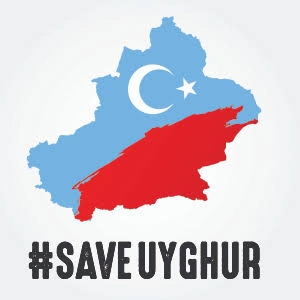
The statement was issued on 31 August, which marks four years since the UN report published in 2022, which concluded that the abuses committed "may constitute crimes against humanity." The rights organisation said Beijing has adopted more sophisticated methods to conceal the reality on the ground, whether through transferring detainees, changing detention patterns, or intensifying digital and cultural surveillance, with the aim of obliterating Uyghur identity and erasing its religious, linguistic and historical features.
Human Rights Watch, in a report issued on 27 August 2026, affirmed that the repression has continued for nearly a decade and includes mass arbitrary detention, unfair imprisonment, intensive surveillance, the erasure of culture and religion, and forced labour that infiltrates global supply chains in sectors such as automobiles, solar energy, garments and seafood. It noted that the "Promoting Ethnic Unity and Progress" law, which entered into force in July 2026, legislates forced assimilation policies, including imposing Mandarin from pre-school age and restricting cultural and religious expression.
For its part, the Chinese Human Rights Defenders network (CHRD), in a statement issued today, 31 August, called on the UN Human Rights Council to act at its upcoming session, which begins on 7 September. It stated that victim databases document more than 100,000 cases, and that a Financial Times investigation in May 2026 estimated the detention facilities' capacity in the region at around 627,000 people, making it the largest relative to population in the world. Data also showed that the average prison sentence for Uyghurs and Kazakhs reaches 15 years, more than double the national average.
In the same context, the World Uyghur Congress expressed continuing concern about the disappearance of intellectuals, academics, writers, artists and religious figures, such as Rahile Dawut, Ilham Tohti, Tashpolat Tiyip and Yalqun Rozi, in addition to reports of deaths in detention and concerns about the forced return of refugees, including the return of 40 Uyghurs from Thailand in February 2025.
Continuing demographic and cultural policies
China continues to implement what the UN report described as the "demographic and cultural plan" in East Turkestan, where forced family planning policies led to a decline in birth rates of nearly 48.7% between 2017 and 2019. These measures run in parallel with forced labour transfer programmes run by Beijing under the cover of "poverty alleviation," which UN experts warned in January 2026 could amount to forced transfer or enslavement. On the cultural front, Chinese authorities continue campaigns to demolish religious sites and impose strict restrictions on the use of the Uyghur language in education and public administration.
These developments confirm that the anniversary is not merely a symbolic occasion, but a renewed call on the international community to move from documentation to accountability, to protect Uyghur refugees, to impose broader bans on products linked to forced labour, and to monitor the situation inside East Turkestan transparently and independently.
Our dear followers, following the restrictions that affected our two previous channels, we continue to bring you the truth and breaking news as it happens through this new alternative channel.


