


The city of El Obeid, capital of North Kordofan State, has returned to the forefront of Sudan's war as Rapid Support Forces (RSF) drone attacks intensify, despite advances the Sudanese Army has made in recent weeks and its partial lifting of a siege that long encircled the city.
According to a field report published by Middle East Eye on 9 September 2026, residents of El Obeid had begun to feel some improvement after the army recovered important areas and roads in North Kordofan, coinciding with the rainy season and better access to some basic goods, before RSF drone attacks renewed fears in the city.
The outlet's correspondent recorded the air defences of the army downing at least four drones over the city, among its streets and markets, on 12 August. A young woman was injured by shrapnel from one of the drones after it fell and was taken to hospital. The attack followed losses suffered by the RSF in the city of Bara, about 60 kilometres north of El Obeid, and other areas around it.
Drone attacks are not new to El Obeid. Over the past three years, the city has seen electricity and fuel facilities, hospitals, markets and homes targeted, and the effects of shelling remain visible in a number of its neighbourhoods. Nevertheless, markets, schools, universities and some aspects of daily life have continued to operate amid the volatile security situation.
Why El Obeid Has Become So Important
El Obeid holds major military and strategic significance as the largest and most prominent city in western Sudan that remains under Sudanese Army control, and it has become one of the most important points of contact between its forces and the RSF, which controls most of Darfur in the west of the country.
The city is currently linked to Khartoum by a road passing through White Nile State, while the army seeks to secure the "Export Road", the traditional and strategic route that connects Kordofan with the capital and was, before the war, a artery for transporting the region's products, chief among them gum arabic.
The army achieved an important shift on this front when it recovered Bara and other areas along the road in July, easing pressure on El Obeid and opening better routes for delivering supplies.
A military source told Middle East Eye that control of Bara allowed the army to seize weapons and military vehicles and opened the way for more supplies to El Obeid. He noted that, after consolidating its positions in North Kordofan, government forces seek to advance westward towards areas such as En Nahud, Al-Muzrub, Al-Khuwei and Babanusa, which, if successful, could open a wider route towards Darfur.
New Army Advance West and North of El Obeid
Among the most recent field developments, the Sudanese Armed Forces and their allies announced on 6 September that they had taken control of the town of Humrat al-Waz in North Kordofan after expelling RSF forces from it.
The area lies within the road network that the warring parties use to move between western North Kordofan and the Bara and Jabra al-Sheikh axes. Military sources said that control of it expands the defensive belt around army positions and helps secure the movement of civilians and supplies on the roads leading to El Obeid. Sources also spoke of army mobilisation in preparation for an advance towards Sodari and other positions held by the RSF west of the state.
However, the army's ground advance has not halted the RSF's ability to carry out long-range strikes, which has made drones a key tool for compensating for the loss of some ground positions.
Strike on Umm Rawaba Court Kills 13 Civilians
One of the most serious recent developments came on Tuesday 8 September, when a judicial building in the city of Umm Rawaba in North Kordofan State was hit by a drone attributed to the RSF.
The Sudan Doctors Network and the Emergency Lawyers group reported that 13 people were killed and 22 others injured, after the drone struck the area around the court at a time when the vicinity was crowded with civilians visiting the institution to complete judicial and administrative procedures.
In the reports available, the RSF did not announce responsibility for the strike; the most accurate course is therefore to attribute responsibility to the medical and human rights bodies and witnesses who have accused it of carrying out the attack.
North Kordofan has become one of the Sudanese regions most exposed to drone attacks. A local report drawing on UN data noted at least 141 drone attacks recorded in the state up to 8 July 2026.
Civilians Between Displacement and Staying Put
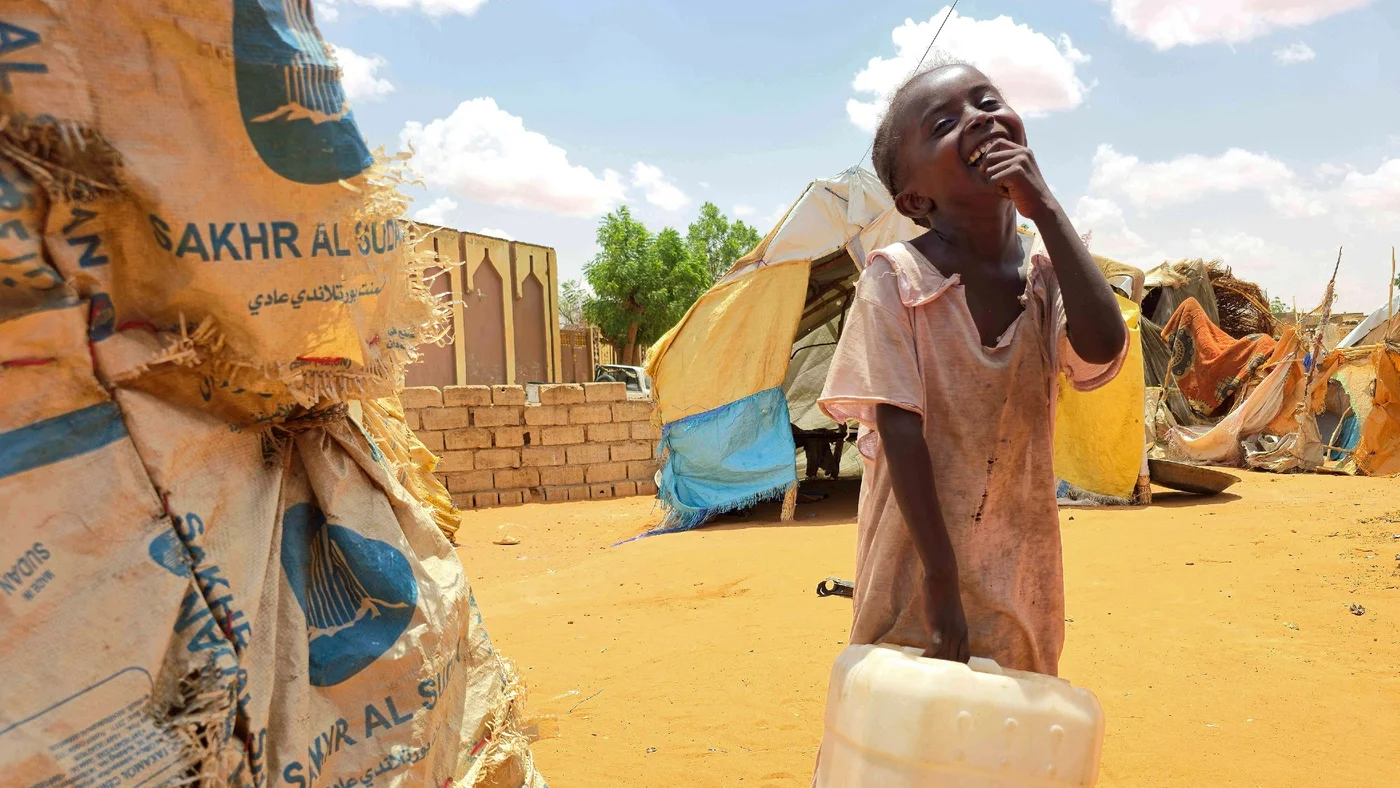
Despite the ongoing danger, some residents of El Obeid refuse to leave the city. The field report quotes residents saying they have grown accustomed to drone attacks, while some believe displacement may not offer them a safer place given the spread of fighting across Kordofan and Darfur.
Meanwhile, hundreds of thousands have fled from various areas of the region, and El Obeid itself has become a destination for displaced people from towns and villages in Kordofan and Darfur, with displacement camps spreading around it.
In August alone, attacks on villages south-west of El Obeid led to new waves of displacement. Local sources said more than 1,000 people from 215 families reached the city on foot after attacks on the villages of Umm Driesa and Al-Shaqla, while the city's camps were already under heavy pressure on food and services.
A New Front in Blue Nile
Military shifts are not confined to Kordofan. In Blue Nile State in south-eastern Sudan, the RSF and its ally, the Sudan People's Liberation Movement–North led by Abdelaziz al-Hilu, have made advances in recent weeks, seizing Kurmuk, Geissan and military positions near the Ethiopian border.
This prompted the Sudanese Army to send reinforcements from joint forces and armed movements allied with it to Ad-Damazin, the state capital, amid fighting on the routes leading to it.
A leader in the SPLM-N allied with the RSF said that control of Kurmuk, Geissan, and the Pakuri and Sarkum bases near the border gave the alliance greater ability to press towards Ad-Damazin, while government forces announced that they had repelled a number of attacks. The claims of both sides regarding control and losses cannot be independently verified in all cases.
This indicates that the war is no longer concentrated in Darfur and Kordofan alone, but now extends across a wide arc from the Ethiopian border in Blue Nile in the east to Darfur in the west.
A Health Crisis Deepens Alongside the Fighting
In the latest humanitarian developments, relief organisations warned on 9 September that cuts in international funding have forced dozens of health facilities in Sudan to close.
According to the Associated Press, services at 36 health clinics are set to be closed or suspended, threatening to deprive more than 473,000 people of care, while estimates from humanitarian organisations suggest that around 80% of medical facilities in conflict areas have gone out of service or are operating at very limited capacity.
The collapse of services coincides with the spread of malaria, cholera and measles and the displacement of millions of Sudanese. Recent international estimates indicate that the war that broke out between the army and the RSF in April 2023 has displaced about 13 million people, while the number of documented deaths exceeds tens of thousands, with humanitarian organisations believing the true figure is much higher.
In South Kordofan too, the Sudan Doctors Network recently reported at least 21 people killed, including women and children, during clashes between the SPLM-N and a local group from the Awtoro community in the Kadugli area, an additional indication of the entanglement of armed and local conflicts within the region.
Kordofan: The Battle That May Shape the Next Phase
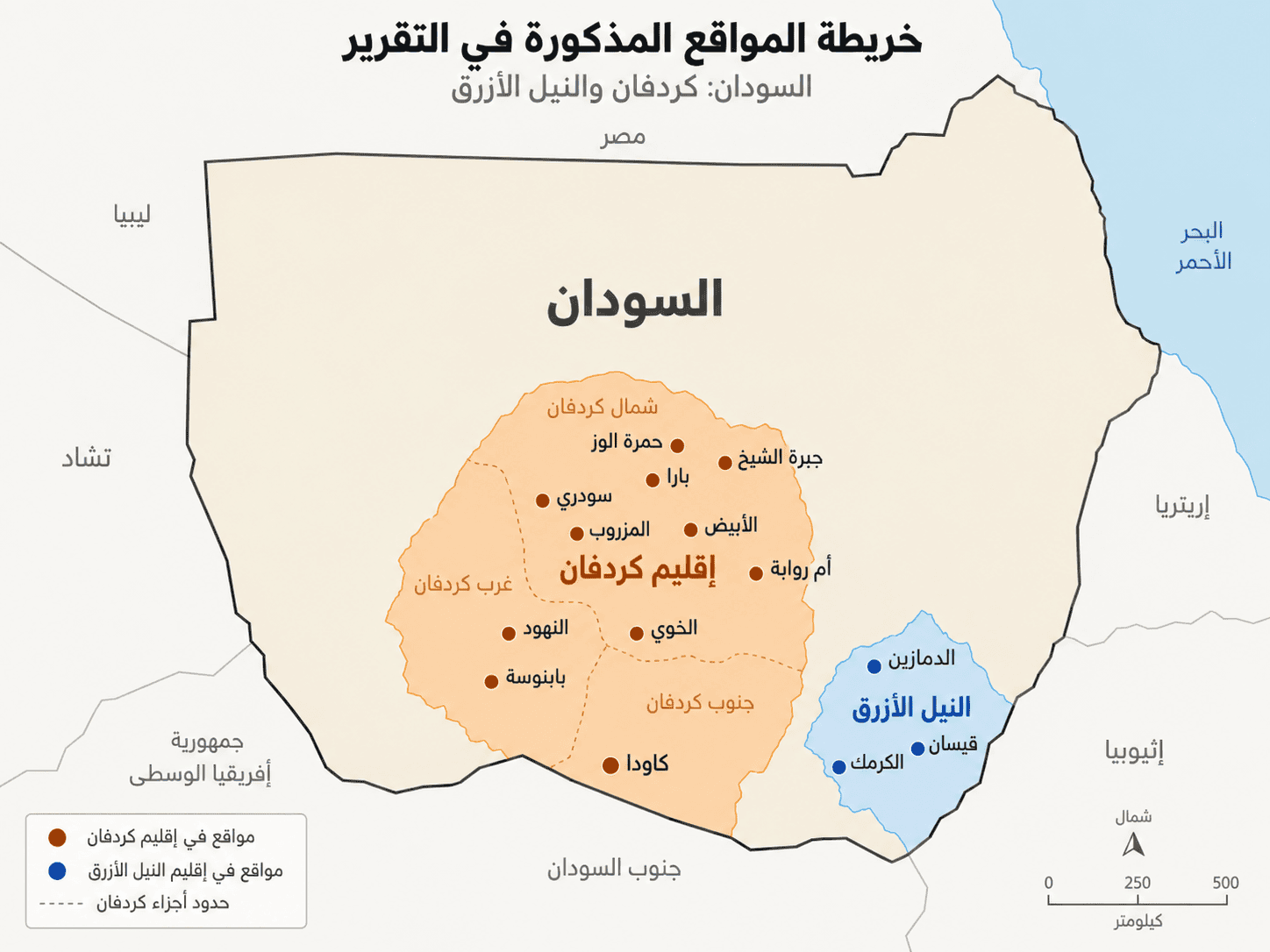
The current operational picture shows that Kordofan has become one of the most important arenas of the Sudanese war. The army seeks to expand its advance westward after securing parts of the Export Road, reaching west Kordofan and then the Darfur border, while the RSF tries to prevent the loss of this corridor and keep El Obeid under continuous military pressure.
A military expert who spoke to Middle East Eye sees both sides treating Kordofan as a decisive arena: the army wants to advance across the region to approach the RSF strongholds in Darfur and the city of Nyala, while the RSF wants to retain its capacity to threaten El Obeid and even Omdurman. Kordofan's roads are also vital for supplying both sides with fighters and weapons.
Thus, the partial lifting of the siege on El Obeid has not meant the end of the danger to the city. While control on the ground is shifting in the army's favour in parts of North Kordofan, the RSF continues to use drones to strike cities and facilities behind the front lines, at a time when the war is widening in parallel towards Blue Nile and the humanitarian crisis is deepening.
As of Thursday morning, 10 September 2026, there are no indications that the fighting is close to ending. Kordofan, particularly the area around El Obeid and the supply routes stretching west towards Darfur, appears set to remain the principal centre of military gravity in the coming phase.


