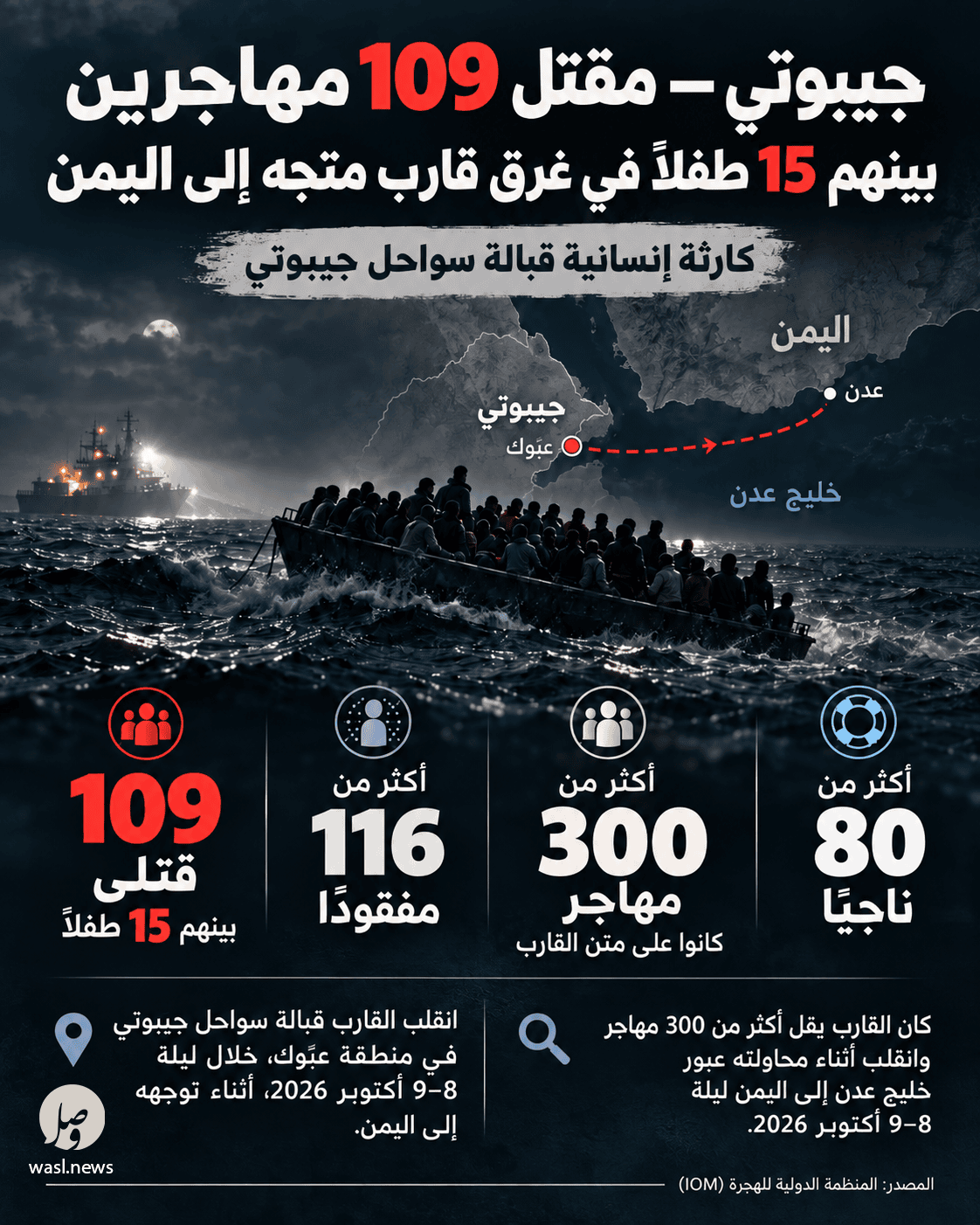
The International Organization for Migration announced today, Sunday 11 October 2026, that the boat capsized near the Gouhéri area north of the coastal city of Obock during the night of 8–9 October, while crossing the waters separating Djibouti and Yemen.
According to the organization, the bodies of 52 men, 42 women and 15 children were recovered, including nine girls and six boys, while more than 80 migrants survived, all of them Ethiopian. Djiboutian authorities are continuing search and rescue operations, amid fears that the death toll may rise.
The organization is providing medical, psychological, food and shelter assistance to 64 survivors at the Migrant Response Centre in the city of Obock.
The head of the organization's mission in Djibouti, Alexandre Cusack, described the incident as a severe loss of life, affirming that this tragedy is a harsh reminder of the risks migrants face in their search for better economic opportunities.
A route marked by death and danger
Djibouti is one of the main transit points for migrants arriving from the Horn of Africa, particularly Ethiopia and Somalia, who attempt to reach Yemen via the Bab al-Mandab strait, before continuing their journey towards the Gulf states in search of work and security.
Difficult economic conditions, insecurity and the repercussions of climate change push thousands of people to undertake this journey, despite the risks of drowning, exploitation, human trafficking and arbitrary detention, as well as the continuing armed conflict in Yemen.
According to the International Organization for Migration, more than 900 migrants died or went missing on this route during 2025, while the number of people travelling it rose by 18% compared with the previous year.
The new disaster shows that the danger does not end with surviving the sea. Migrants who manage to reach Yemen in turn face a security and humanitarian reality of great difficulty, making the journey from the Horn of Africa to the Arabian Peninsula a continuous chain of risks, paid for by the poorest and most vulnerable people.