

Different Aims: Trump and Netanyahu No Longer in Agreement on the Goal of the War on Iran
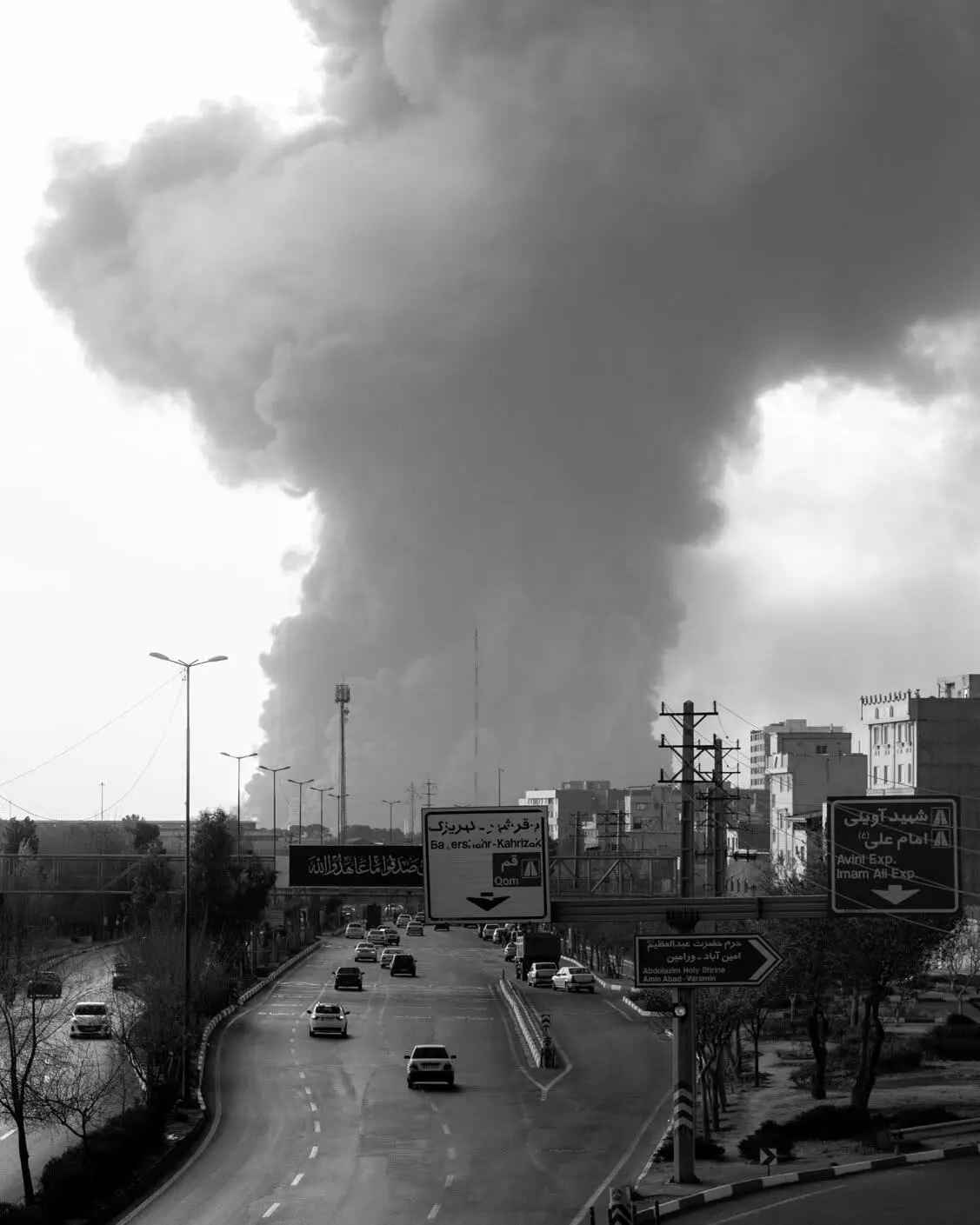
The scene was catastrophic this week as towering flames and black smoke filled Tehran's sky after Israel bombed oil storage facilities there.
As soot and black rain fell on the more than 10 million Iranians living in the city, officials in Washington had begun to feel the clear impact of the diverging ambitions in this war.
President Trump's aims in joining the air war against Iran appear to be conflicting with the long-term aims of Israeli Prime Minister Benjamin Netanyahu. While Trump said in recent days that US military objectives were nearly complete, with the clerical regime still in power, Israel seeks to end the regime and crush its regional influence.
In short, Trump wants to subdue Iran, while Netanyahu seeks to break it. The images of rising oil fires, regardless of their source, were not welcome to the Trump administration, given the sharp rise in gasoline prices in the United States. The war in Iran has caused severe damage to global energy markets, prompting countries to prepare for long-term economic repercussions from higher fuel costs.
At least three ships were attacked on Wednesday in and around the Strait of Hormuz, where fighting has cut off one of the world's most important oil trade routes. All of this poses political challenges for Trump, as a war-weary public continues to reject the arguments justifying the conflict.
For now, the leaders' interests largely coincide. As the air campaign enters its second week, the Israeli and US militaries continue to coordinate strikes on thousands of targets across Iran.
The short-term goals of the United States and Israel overlap in: destroying Iran's missiles, its nuclear program, its navy, its weapons production and its military command. Both sides agree that the Iranian regime is determined to inflict as much harm as possible on the United States and Israel, while destabilising the Middle East as a whole.
But the two conflicting visions of long-term victory — a more compliant government in Tehran versus a entirely new government — must be resolved if the United States wants to avoid another long war. Sustained strikes at multiple levels of leadership and infrastructure are the surest way to achieve the kind of protracted state-building operation that Mr Trump has so strongly criticised.
Reports said White House officials were deeply dismayed by the burning oil fields in Tehran, not only because of oil prices, but because the scene evoked the chaos that prevailed in Iraq and Afghanistan.
In recent days, Trump has hinted that the US role in the war may be nearing its end due to the destruction of a large part of Iranian military capabilities. But that is not what initially prompted him to threaten Iran with military force. The president initially cited the Iranian government's bloody suppression of protesters in January as a justification for acting.
Since then, he and his administration officials have offered a long list of shifting reasons for the campaign: the nuclear program, missile production, warships, and, most strangely of all, preempting the Iranian response to Israeli military action.
Secretary of State Marco Rubio made this statement last week, hinting that the United States moved because it knew the Israeli strike would drive Iran to attack US forces in the region. Americans are not used to hearing that their president was drawn into war by an allied leader.
Whether that is true or not, this sentiment has likely contributed to support for the conflict falling to its lowest level ever: only 41% of Americans support the conflict with Iran, compared with the overwhelming majority of Americans who supported the intervention in Iraq in 2003.
This is another reason for the divergence of Netanyahu's and Trump's interests. Most Israelis support the war, making it a political strength for Netanyahu, who faces a difficult re-election campaign expected this year. Trump, on the other hand, does not want an unpopular war that grows more unpopular as the November midterm elections approach.
It is therefore no surprise that Trump has begun to hint that he may be looking for an exit, as former senior US counterterrorism official Javed Ali said. He added: "It was expected that he would quickly run out of patience with this war. The message he wants to convey is: Iran has been stripped of its military power. And now it is time to reach a deal."
Trump has made contradictory statements about his plans for Iran's future. He has spoken of regime change, negotiations, unconditional surrender, and the need for him to personally choose a new leader.
Trump saw the scenario he had hoped for play out in Venezuela when US forces captured Nicolás Maduro and removed him from power, and Delcy Rodríguez, a more pliable figure from within the party, took control.
He told Axios last week that he wants to see that repeated in Tehran. Trump said: "I have to be involved in the appointment process, as happened with Delcy in Venezuela."
Iran has other plans. It appointed Mojtaba Khamenei, son of the recently assassinated Ali Khamenei, as Supreme Leader. There are no immediate indications that he is prepared to submit to the United States.
Two countries began this war together, and it is difficult to imagine how they can unite their efforts to end it.
So, the bombing continues..
The New York Times.


