

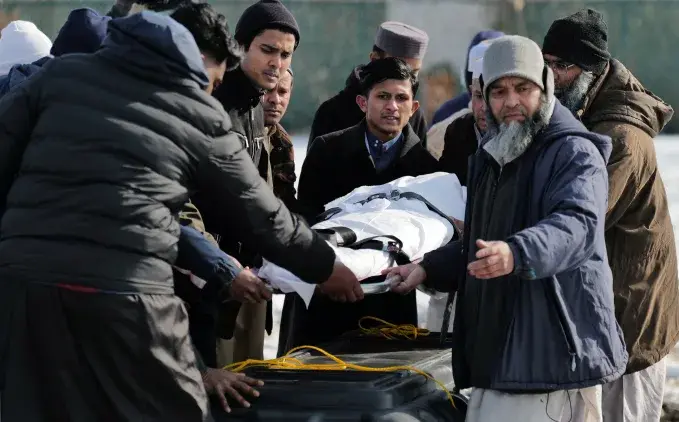
The death of a Rohingya refugee in Buffalo, New York, who was nearly blind, on 7 Ramadan 1447 AH (24 February 2026 CE) has raised pressing questions about how federal immigration officers handled his release from their custody, and what happened during the five days he was missing before his body was found.
The U.S. Customs and Border Protection (CBP) agency has defended the conduct of its officers, but local and state leaders have called for investigations into the incident.
Meanwhile, friends and family of Shah Alam gathered on Thursday at a mosque for his funeral prayer, before his body was taken to the cemetery for burial.
The incident comes amid growing concern over the constitutional protections and treatment of people who interact with federal immigration authorities, regardless of their legal status, in the context of mass deportation efforts under the Trump administration.
What we know, and what we do not know, about his death follows:
Who was Nur Alamin Shah Alam?
Shah Alam entered the United States as a refugee on 22 Jumada al-Akhirah 1446 AH (24 December 2024 CE), according to CBP. He and his family are Rohingya Arakanese, the persecuted Muslim minority in Myanmar, which the U.S. government has said has been subjected to genocide.
Shah Alam previously worked in construction in Malaysia and came to the United States with his wife and two children in search of opportunities, according to Imran Fazil, who knows the family, speaking to a reporter for CNN affiliate Spectrum News Buffalo.
Shah Alam's son, Mohammad Faisal, told CNN that he last saw his father on 19 February, before his release from jail.
Faisal also told Reuters that Shah Alam could not read or write and did not use electronic devices.
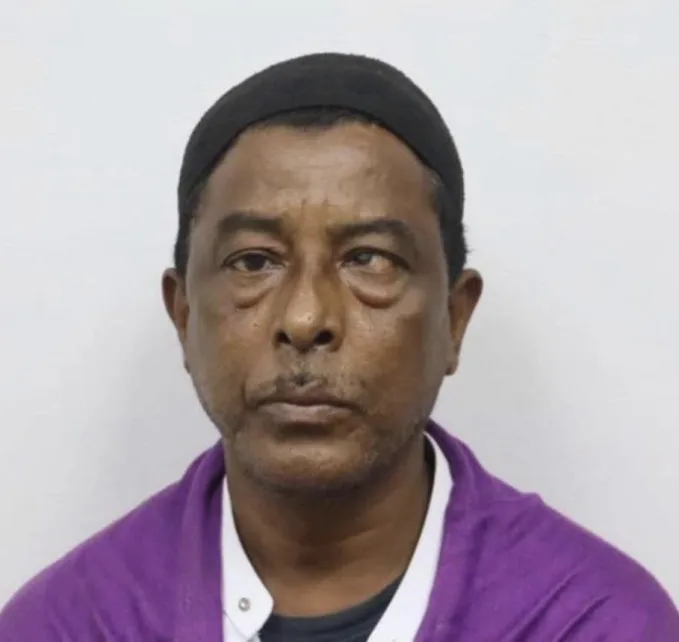
"He never raised his voice. He was a calm and steady man, who always bore responsibility for the whole family, whatever the circumstances."
She added that the couple had been separated for more than a decade while he worked hard jobs in Malaysia to save enough money to bring their children to the safety of the United States one by one.
Weeping, she said: "We were apart from each other for twelve years. And now, forever apart."
In the end, both parents were able to migrate to the United States, but with only two of their five children. The remaining three children, who are now married with children and still live in Malaysia, followed the funeral from abroad, unable to be reunited with their family because of ongoing immigration policies under the Trump administration, Faisal told reporters.
Faisal described his father as "a very calm and steady man", known for his "kindness, cheerful nature and jovial behaviour".
In recent years, Shah Alam suffered from problems with his eyesight and knees, conditions his wife said resulted from decades of "all the hard work he did". Nevertheless, he would joke: "All the strength that left this eye, God gave me in the other so that I can see."
What we do not know:
- How severe was Shah Alam's visual impairment exactly?
- What was his health condition before his release?
- Did he suffer from specific illnesses requiring treatment?
Why was he in jail?
The Erie County District Attorney's office reported that Shah Alam was arrested a year earlier following an incident that resulted in minor injuries to two Buffalo police officers. The office added that Shah Alam was released on bail this month after agreeing to a plea deal.
Shah Alam was arrested in Shaban 1446 AH (February 2025 CE) when a homeowner called police after seeing him in his backyard. Shah Alam's son told Reuters that the arrest was the result of a misunderstanding with police officers.
Faisal told Reuters that his father had been out for a walk using a curtain rod as a cane, became disoriented and wandered, and inadvertently entered private property. A police report noted that while on the property, he damaged a shed door and "allowed the homeowner's dog to escape through an open gate".
When officers arrived and ordered Shah Alam to drop the rod, he did not comply because he did not understand what they were saying, according to his son.
Body camera footage obtained by CNN shows Shah Alam holding what appear to be two long black rods in the backyard, as two female officers approached him, and one of them shouted: "Hey, what are you doing?"
Shah Alam did not say anything immediately, and one of the female officers approached him shouting "drop it" three times. As he slowly moved toward the officers, Shah Alam said "okay, sorry" several times, while the officers continued to order him to drop the rods, warning that they would use their stun guns if he did not comply.
About a minute passed before the officers deployed their stun guns, and Shah Alam is seen waving the rods in the air and speaking in another language, before the officers brought him to the ground.
Two officers sustained minor injuries according to the police report, which also noted that Shah Alam bit one officer on the arm and another on the hand while being taken into custody. The footage does not clearly show that moment, but it shows the officers struggling with Shah Alam for some time, and striking him on the head several times while attempting to restrain him.
The Erie County District Attorney's office reported that Shah Alam was subsequently charged with felony assault, robbery and criminal property damage.
Earlier this month, he pleaded guilty to two misdemeanour charges: criminal possession of a weapon in the fourth degree and criminal trespass in the third degree. Sentencing had been scheduled for 24 March.
Erie County District Attorney Michael Keane said his office reduced the charges after taking into account his medical condition, the length of his incarceration, and "the significant collateral consequences that could result from a felony conviction, including mandatory deportation".
What we do not know:
- Did Shah Alam consistently have an interpreter during his year in custody?
- Were his visual impairment or other health problems documented in internal jail records?
Why was he released from jail?
Shah Alam's bail was set at US$5,000. Initially, his family refused to pay the bail for fear that a federal detainer would lead to his transfer to immigration custody, according to the Legal Aid Bureau of Buffalo, which represented Shah Alam.
After the plea agreement, the family consulted an immigration lawyer and paid the bail after being advised that this would not expose Shah Alam to the risk of deportation, according to a statement from the Legal Aid Bureau.
As Shah Alam's release was being processed on 19 February, Erie County deputies notified Border Patrol because of the detainer, according to the Erie County Sheriff's Office.
Border Patrol agents arrived while Shah Alam's release was being processed and took him into their custody.
What we do not know:
- Was Shah Alam offered an interpreter during his release or when he was received by Border Patrol agents?
- How much communication took place between local and federal authorities before the transfer?
What happened when he was released from jail?
Later that day, immigration authorities determined that Shah Alam, as a legal refugee, was "non-removable", according to a CBP statement.
Agents attempted to communicate with Shah Alam using translation software, according to a senior federal law enforcement official. Shah Alam was offered a phone call, but declined, and asked to be taken to the place where he was later dropped off, the official said.
The statement said: "Border Patrol agents offered him a courtesy ride, which he chose to accept to a cafe, identified as a warm and safe location near his last known address, rather than being released directly from the Border Patrol facility. He showed no signs of distress, mobility issues or disabilities requiring special assistance."
According to the Legal Aid Bureau, he was dropped off at a Tim Hortons cafe near his last known address after 8 p.m., even though the cafe had already closed at 7 p.m. His family no longer lived at the previous address, and his relatives or lawyer were not notified of his release by CBP or of where he had been taken, the organisation said.
The Legal Aid Bureau's statement said: "Mr Alam was in an extremely vulnerable situation. He spoke almost no English and was unable to communicate without the assistance of an interpreter. He had severe visual impairment and other health problems."
It added: "He had been in the United States only a few months before his arrest. He did not know where he was, nor did he have the ability to contact his family or access resources or other services that could have helped him."
Buffalo Mayor Byron Brown's successor, Mayor Sean Ryan, criticised Shah Alam's release by Border Patrol, noting that agents could have contacted family members or returned him to the county jail, where his son's or lawyer's phone numbers could have been obtained, as they were active visitors during his detention, according to Ryan.
On Friday, the Department of Homeland Security responded in a post on X: "It is an exaggeration to blame Border Patrol for a person's death a week after their last interaction with them."
The agency confirmed that Shah Alam accepted a courtesy ride offered by federal agents, which "was not necessary to provide".
An immigration lawyer told WGRZ, a CNN affiliate, that courtesy rides are not uncommon. Agents are expected to ensure that the drop-off location is safe and to determine whether the person requires any special arrangements, according to Rosanna Berardi, managing partner of the Berardi Immigration Law Office.
What we do not know:
- Is there a protocol for releasing people with disabilities or limited English proficiency?
- Did the agents speak to anyone at the cafe after it had closed and before he was left there?
- How was he found?
Shah Alam's lawyers reported him missing to police three days after his release, on 22 February, telling officers they had been unable to "locate their client despite contacting federal authorities", according to police.
Police temporarily closed the case after confirming that Shah Alam had been transferred to federal custody, then reopened it when they learned he had been released.
After reopening the missing person case and issuing a public alert about his disappearance, 911 received a call at about 8:30 p.m. on 24 February reporting a man on a downtown street who appeared not to be breathing.
Police said the man, later identified as Shah Alam, was wearing a dark jacket and khaki trousers. A woman told responding officers she had seen him about three hours earlier at the same location, when he was moving.
First responders attempted life-saving measures, but he was pronounced dead at the scene.
The cause of Shah Alam's death remains unknown
A city spokesperson said on Wednesday that the death appeared to be health-related, and that exposure to weather or homicide had been ruled out. But on Thursday, Mayor Ryan said the medical examiner had not yet released the full findings of the investigation.
The Erie County Department of Health told CNN that medical examiner records are treated as confidential medical records and will only be shared with law enforcement and those legally entitled to access them.
Ryan, citing preliminary information, said Shah Alam was not wearing shoes when he was dropped off by agents, only orange slippers issued by the detention centre.
On the day he was dropped off at the cafe, the area experienced light freezing rain with temperatures in the early 30s Fahrenheit. Snow and fog prevailed over the following two days, with temperatures near freezing for at least 24 consecutive hours.
Police said in a statement on Thursday that surveillance cameras in the area had been out of service since that day "due to prior criminal damage to the infrastructure" supporting the camera network.
What we do not know:
- What was the cause of Shah Alam's death?
- Did any underlying health conditions contribute to his death?
- What happened during the days between his release and his death?
What are local and state officials saying?
Ryan strongly criticised Border Patrol's conduct in this case, describing it as "inhumane", and stating that CBP must "provide answers as to how and why this happened".
Mark Riccobono, president of the National Federation of the Blind, described Shah Alam's death as a "sobering reminder of the importance of accessible, disability-aware practices at every stage of detention and release", and urged authorities to investigate the arrangements made for Shah Alam.
The organisation said the incident highlights the urgent need to review procedures for blind people when they interact with law enforcement, immigration authorities or detention facilities.
Buffalo police said their homicide investigators are examining the timeline and circumstances that led to Shah Alam's death.
Congressman Tim Kennedy, whose district includes Buffalo, said on Thursday: "The death of Nur Alamin Shah Alam is a horrific and tragic tragedy", calling for "a full and transparent investigation at the local, state and federal levels".
New York Attorney General Letitia James said her office "is reviewing our legal options", according to a statement.
CNN has reached out to CBP for further information.
What we do not know: Have any agencies other than the Buffalo Police Department opened an investigation?
CNN.


