


When Islam in Russia is mentioned, attention usually turns to the republics of the North Caucasus, or to Tatarstan and Bashkortostan in the Volga basin. Dagestan, however, occupies a different place. It is not merely a republic with a majority population belonging to Muslim peoples; it is one of the oldest areas within the territory of the present-day Russian Federation that Islam entered, a historic centre of jurisprudence, the Arabic language and Islamic education, and it produced scholars and leaders whose influence extended beyond the borders of the Caucasus.
Dagestan's distinctiveness stems from several factors coming together in one place: Islam's arrival there from the first century AH, the continuity of religious scholarship over centuries, the spread of the Shafi'i school, the transformation of Arabic into a language of learning and authorship among peoples who did not speak Arabic at all, the role played by Sufi orders and scholars in society and political resistance, and the broad religious revival that followed the fall of the Soviet Union.
For this reason, understanding Islam in Russia is incomplete without understanding Dagestan.
Where Dagestan is and who lives there
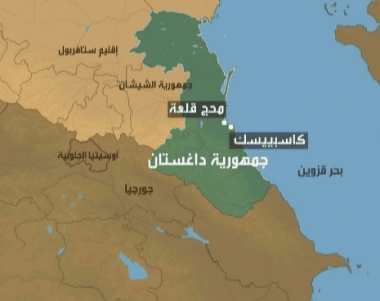
Dagestan is a federal republic of Russia located in the northeastern Caucasus, on the western coast of the Caspian Sea, and its capital is Makhachkala. It covers an area of around 50,000 square kilometres. According to official data, its population stood at 3,259,890 on 1 January 2025, which corresponds roughly to the beginning of Rajab 1446 AH.
What makes Dagestani society unique is that it does not consist of a single people. According to Russian census data, the republic is home to hundreds of thousands of Avars, Dargins, Kumyks and Lezgins, as well as Laks, Tabasarans, Azerbaijanis, Chechens, Nogais and others. An official document from the Government of Dagestan, based on the 2020 census, cites around 838,000 Avars, 491,000 Dargins, 451,000 Kumyks and 357,000 Lezgins, in addition to many other groups.
This linguistic and ethnic diversity is crucial for understanding Islam's role in the region. Dagestan has never been a linguistically homogeneous society, and so religion, Islamic sciences and Arabic have historically played a role that went beyond worship alone, becoming part of a shared cultural sphere among different groups.
A distinction must be drawn here between ethnic affiliation and religious practice. The Russian census does not provide a direct count of religious belief; its questions focus on citizenship, nationality, language, education and other matters. However, academic and official regional sources consider around 94% of the population to belong to ethnic groups that historically adopted Islam, most of them Sunni, with a Shia minority, particularly among some Azerbaijanis in southern Dagestan.
Derbent: the gateway through which Islam entered
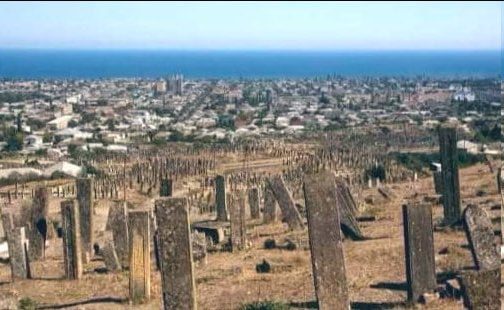
Image of the graves of 41 of the Companions of the Messenger of God ﷺ, may God be pleased with them, in the city of Derbent in the far reaches of Dagestan, who left Mecca and Medina to raise the word of God, spread His message and establish His religion.
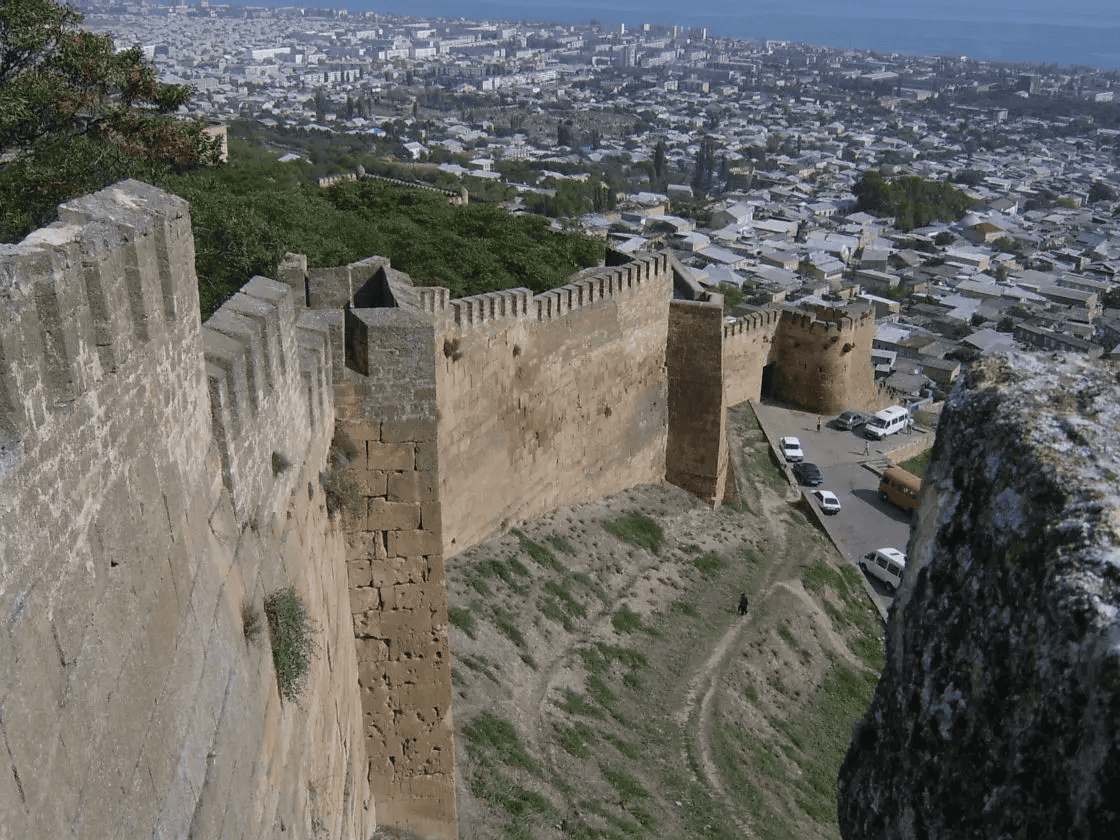
The story of Islam in Dagestan largely begins in Derbent, the historic city located between the Caucasus mountains and the Caspian Sea.
Derbent's location was not ordinary. At this point the Caucasus mountains come very close to the sea, leaving only a narrow coastal passage of around three kilometres between them. For centuries the city was therefore a strategic gateway between north and south, and between the steppes of Eurasia and Persia, Iraq and beyond. UNESCO describes it as a site of great importance on the route between Europe and the Middle East.
Arab Islamic armies reached Derbent very early. Recent historical studies date the first Arab control of it to around 643–644 CE, corresponding to roughly 22–23 AH, when Muslim forces reached the city known in Arabic sources as Bab al-Abwab. However, control of the region was not immediately stable; long wars between the Muslims and the Khazars followed, and the balance of power shifted more than once. It is therefore a mistake to imagine that all of Dagestan became Muslim as soon as the first Arab army arrived.
What happened was that Derbent gradually became a stable base for Islam in eastern Caucasus, from which religious and cultural influence extended to neighbouring areas and then to the mountains over the course of centuries.
For this reason it can be said that Dagestan was among the first gateways through which Islam entered the territory that today lies within the Russian Federation, some three centuries before the official conversion of the Volga Bulgars in 922 CE.
The Juma Mosque in Derbent: a witness from the second century AH
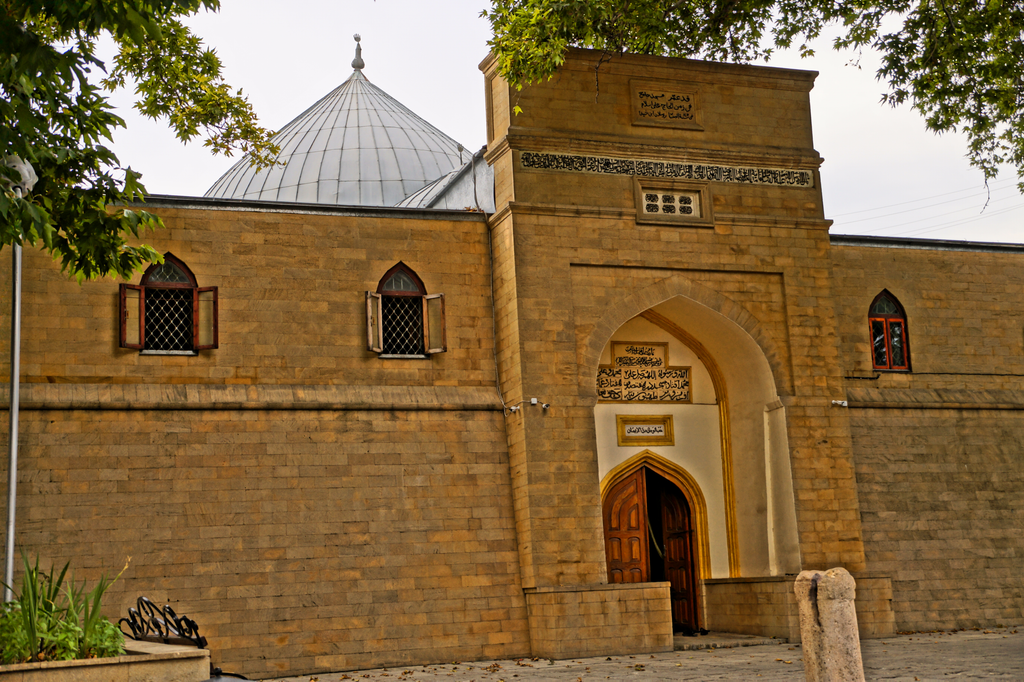
The most prominent architectural witness to this history is the Juma Mosque in Derbent.
UNESCO's management plan for the Derbent site states that the mosque is the oldest and largest historic Friday mosque in the Caucasus, and that the sources and the inscription preserved on the building date the construction of the great mosque to 733–734 CE, corresponding to the year 115 AH, during the era of the Umayyad commander Maslama ibn Abd al-Malik.
This is a point of great significance: we are speaking of a standing mosque whose origins go back to the early second century AH, in an area that today lies within Russia.
The mosque underwent restoration and reconstruction at various stages, including a rebuilding dated to around 1368–1369 CE, roughly 770 AH. UNESCO inscribed the old city of Derbent and its fortress and walls on the World Heritage List in 2003 CE, corresponding to approximately 1424 AH.
Thus, for the Muslims of Dagestan, Derbent is not merely an old city but a material proof of an Islamic presence stretching back more than thirteen centuries.
Islam did not spread in a single day
Despite the early beginning, the Islamization of Dagestan took centuries.
Derbent and the south entered the Islamic sphere first, while many mountain communities kept their earlier beliefs for varying periods. Islam then expanded through scholars, trade, political ties and missionary activity, as well as through the Seljuks and local Sufi networks.
Studies indicate that the Shafi'i school had become firmly established in Dagestan from the fifth century AH/eleventh century CE, and extensive local jurisprudential traditions developed around it. Jurisprudence in Dagestan was not a mere oral tradition; over the centuries its scholars engaged in detailed debates on the principles of jurisprudence, ijtihad and taqlid, and on the relationship between the Shari'a and local customs.
Dagestan's importance therefore derives not only from the antiquity of Islam's arrival, but from its transformation into a deeply rooted local scholarly culture.
An exceptional phenomenon: Arabic in the Caucasus mountains
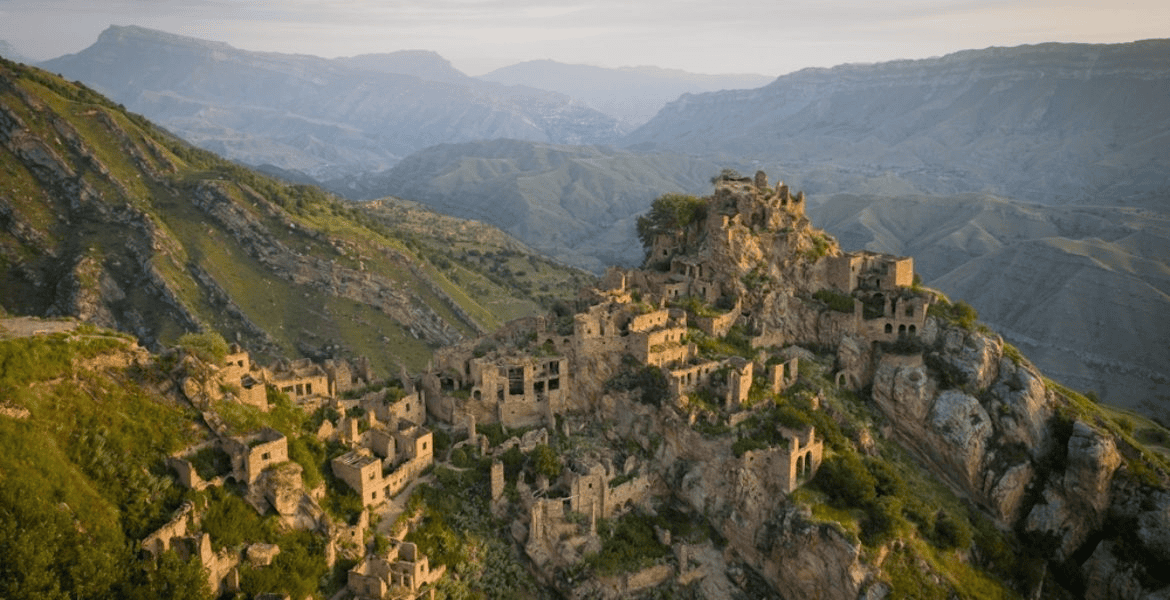
Among the most intriguing aspects of Dagestani history is the status of the Arabic language.
The peoples of Dagestan are not Arab, and they speak a large number of different local languages. Nevertheless, Arabic became for centuries the language of learning, religion and authorship, and even a means of communication among scholarly elites belonging to different linguistic groups.
The researcher Michael Kemper describes Dagestan as having an exceptional Arabic tradition in the Caucasus, and notes that Arabic remained for more than a thousand years one of the most important languages of scholarly and cultural communication among its communities, that Arabic literature flourished there in the medieval period, and that the use of Arabic continued even under Russian imperial rule.
Dagestan's scholars left thousands of manuscripts in jurisprudence and its principles, exegesis, hadith, language, logic, Sufism and other fields. Nor was the scholarly movement confined to the mountains: Dagestani scholars maintained contacts with the Hijaz, Iraq, the Ottoman state, Persia and Central Asia.
Sources further show that students of knowledge from the Volga and Ural regions travelled to Dagestan in the thirteenth century AH/nineteenth century CE specifically to improve their Arabic and study with its scholars, before some of them continued their journeys to the Islamic centres of the Ottoman state.
This makes Dagestan a relatively unique case in the history of Russian Islam: a multilingual mountain region that became a centre for teaching Arabic and Islamic sciences to students coming from other parts of the Russian Empire.
The Shafi'i school and Sufism
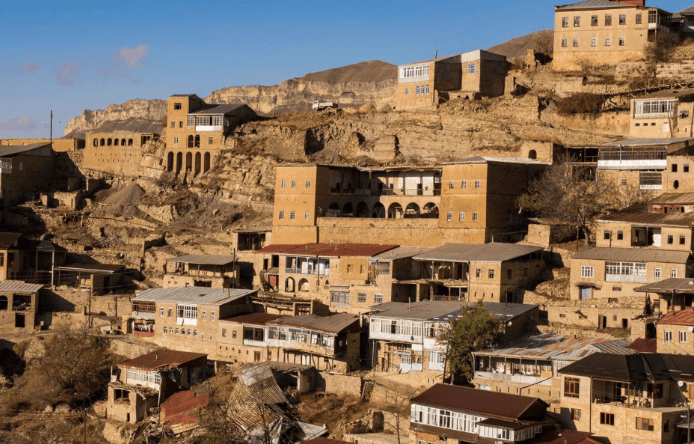
The most prominent jurisprudential feature of Dagestan remains the Shafi'i school, unlike many Muslims of the Volga basin and Central Asia, where the Hanafi school predominates. The Hanafi school is also followed by some groups in Dagestan, particularly the Nogais and Tatars, while Shia communities follow the Ja'fari school.
Sufism, for its part, left a profound mark on religious and political life. The Naqshbandiyya was among the most influential orders, particularly the Khalidi branch of the Naqshbandiyya, alongside the presence of the Shadhiliyya, the Qadiriyya and others at different periods.
Contemporary reality, however, is more complex than a simple division of the population into "Sufis" and "Salafis". A field study published in the journal Contemporary Islam found that many religious Muslims in Dagestan simply identify themselves as "Muslims", without organisational affiliation to a Sufi order or a Salafi current. This is important for avoiding the reductive picture in which Dagestani Islam is often presented in security and media studies.
Imam Shamil: when Islam became the framework of a state and of resistance
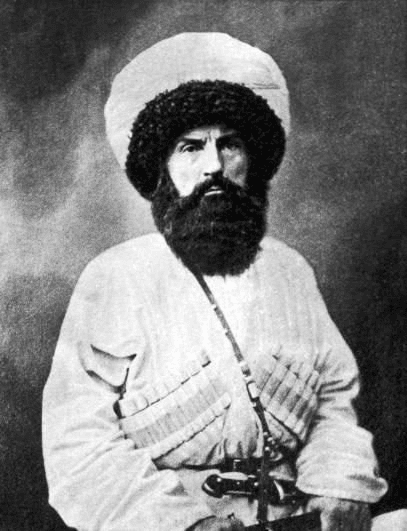
It is difficult to discuss Dagestan's Islamic history without pausing at Imam Shamil, one of the most renowned Islamic figures in the history of the Caucasus.
The Imamate of the Caucasus began in 1828 CE, roughly 1243–1244 AH, under Ghazi Muhammad and then Hamzat Bek, before Shamil became the third and last imam in 1834 CE, corresponding to about 1250 AH.
Shamil ruled until 1859 CE, corresponding to approximately 1275–1276 AH, and the Imamate at various stages extended its authority over large parts of Dagestan and Chechnya. It was a state with an Islamic frame of reference that sought to establish the provisions of the Shari'a and centralised institutions in place of part of the system of tribal and local customs.
Shamil himself was associated with the Naqshbandi order and combined religious authority with military leadership. A recent study in Slavic Review describes his Imamate as having mounted the strongest local resistance in the history of Tsarist Russian expansion, before he surrendered to Russian forces in 1859, a development that decisively paved the way for Russia's victory on the eastern front of the Caucasus War.
His figure thus became part of the Islamic memory of Dagestan and of the history of resistance to the Russian Empire in the northern Caucasus. Yet his importance is not limited to the military dimension: he was also a Naqshbandi shaykh, and after his capture letters continued to reach him from followers asking him about religious questions.
From the Tsarist era to the Soviet Union: an attempt to sever the chain
After Dagestan was subjected to the Russian Empire, Islamic institutions did not disappear. Scholars, the Arabic language and religious schools continued for a long time, although their relationship with the state changed.
The sharpest transformation, however, came after the Bolshevik revolution and the founding of the Soviet Union.
In the 1920s and 1930s, roughly 1338–1359 AH, the Soviet state entered a phase of broad hostility towards religious institutions, including the closure of mosques and schools, the confiscation of endowments, and the arrest of large numbers of clerics across the Soviet Union. In Dagestan this policy also targeted the Arabic culture linked to Islamic education.
Yet Islamic knowledge did not disappear entirely. Some scholars continued to teach Arabic and the religious sciences privately, and manuscripts continued to circulate and be preserved within families and villages. Recent studies indicate that Islamic intellectual production and debate in Dagestan continued, to varying degrees, even under Soviet rule, despite severe restrictions.
Moscow's policy then shifted relatively during the Second World War. In 1944 CE, corresponding to about 1363 AH, the Spiritual Directorate of the Muslims of the North Caucasus was established, with its seat in Buynaksk in Dagestan. It became one of the main official Islamic institutions in the Soviet Union, overseeing Muslims across a wide area of the northern Caucasus. An archival study published in 2025 shows that its founding came within Moscow's reorganisation of its relations with religious institutions during the war, while it remained under Soviet state supervision.
This reveals another aspect of Dagestan's weight: even when the Soviet Union sought to organise Islam and place it within limited official structures, Dagestan was chosen as the seat of the institution representing the Muslims of the North Caucasus.
After the fall of the Soviet Union: the return of Islam to public life
In the late 1980s and then with the collapse of the Soviet Union in 1991 CE, corresponding to 1411–1412 AH, Dagestan entered a phase of one of the fastest waves of Islamic revival in Russia.
Mosques were rebuilt, schools and religious institutes appeared, the study of Arabic and the Qur'an returned to public life, and contact with the Islamic world increased after decades of Soviet isolation. Academic studies describe this phase as a broad process of "re-Islamisation" from the social base after the fall of the Soviet Union.
The scale of the religious infrastructure today gives an idea of the depth of this transformation. According to official regional data dated 1 January 2022 CE, corresponding to late Jumada al-Ula 1443 AH, Dagestan had 2,753 Islamic religious institutions, including 1,352 Friday mosques, 1,163 local mosques and 214 prayer halls, as well as six Islamic higher education institutions, 16 religious schools and some 173 schools attached to mosques.
The significance here lies not only in the numbers but in the magnitude of the change: Islam, which in parts of the Soviet era had been pushed to the margins and into secrecy, returned within a single generation to a broad network of mosques, education and religious institutions.
Dagestan: a Muslim republic under Russian domination\
So why is Dagestan one of Russia's most important Islamic regions?
There is no single answer; several elements converge.
First, it is among the oldest areas of Islamic presence within the current borders of Russia, as Muslims reached Derbent in the first century AH/seventh century CE.
Second, it holds one of the oldest surviving material Islamic structures in the region, foremost among them the Juma Mosque in Derbent, dated to 115 AH/733–734 CE.
Third, it is a historic centre of learning, in which Shafi'i jurisprudence flourished and Arabic developed exceptionally, becoming the language of scholars, of written works and of communication among different communities.
Fourth, it is one of the most important centres of Sufism in the northern Caucasus, its history linked to Naqshbandi networks and others, and to figures such as Imam Shamil, who in the thirteenth century AH/nineteenth century CE united religion, politics and resistance.
Fifth, it played a role that went beyond its geographical boundaries: students of knowledge sought out its scholars, and networks of pilgrimage, trade and Sufism connected it with the Hijaz, the Ottoman state, Central Asia and other parts of the Islamic world. Historical studies confirm that the northern Caucasus, and Dagestan in particular, formed part of a wide network of scholars, pilgrims and merchants before imperial and Soviet borders severed many of these ties.
Its importance also continues in the modern era: the large density of mosques and religious education, and the strong presence of Islam in daily life, make it one of the most saturated of the Russian republics with Islamic institutions and culture.
Dagestan is not only a story of a "Muslim minority"
Perhaps this is the most important point. When Islam in Russia is viewed from Moscow alone, Muslims may appear to be a "religious minority" within a country with an Orthodox majority. But viewing it from Dagestan presents an entirely different picture.
There are villages and towns that have known Islam for more than a thousand years, scholarly families that passed on religious knowledge from generation to generation, Arabic manuscripts written in the Caucasus mountains, a mosque dating back to the second century AH, a firmly established school of jurisprudence, Sufi networks, and a political and military history shaped around the concepts of the imamate and Shari'ah. Then there is a community that, after seventy years of Soviet rule, managed within a few decades to rebuild thousands of religious institutions.
For this reason, Dagestan cannot be reduced to the images of mountains, wrestling and martial arts for which it became known around the world, nor to the security files that dominated its media coverage in some periods.
From the perspective of Islamic history, Dagestan is above all one of the oldest Islamic gateways into the North Caucasus, one of the most prominent homes of the Shafi'i school and of Arab-Islamic culture within Russia, and a historical link that connected the Islamic world with the Caucasus mountains over more than thirteen centuries.
For this very reason, when the question is asked, "Where are the most important historical Islamic sites within Russia?", Dagestan is not merely a name in the answer but one of the most important starting points for understanding the whole story.


