


In this episode, the map of "Civilisations of Islam Through History" travels to Iraq, to a city that at the beginning was merely a camp for Muslims, and which within a few years turned into one of the most important centres of politics, jurisprudence, hadith and language in the Islamic world.
It is Kufa, a city that arose with the conquests and then became the capital of the fourth caliph, Ali ibn Abi Talib, may God be pleased with him. It hosted scholarly schools that helped shape jurisprudence and the Arabic language, and produced scholars who had a profound impact on the Islamic heritage.
Kufa: A City Born from the Conquests
Kufa lies in Iraq, south of Baghdad, near the Euphrates. It was founded in 17 AH/638 CE by Sa'd ibn Abi Waqqas after the Muslims' victory at al-Qadisiyya, to serve as a military and administrative city for the Muslims in Iraq.
Kufa was not merely an extension of an older Iraqi town. It was one of the garrison cities (amsar) that the Muslims established during the era of the conquests to organise armies, administration and settlement.
From a Conquerors' Camp to a Major Metropolis
Kufan society differed from many emerging Islamic cities. Arab tribes from various regions gathered there, and people who had recently embraced Islam flocked to it, giving the city a growing human and economic weight.
As the Islamic state expanded, Kufa's importance grew because of its location in Iraq, a region that had been a vital economic and agricultural heart for the ancient empires.
It was therefore no surprise that Kufa quickly became a political and military centre with an influence extending beyond the borders of Iraq.
Yet this status also brought political and social tensions that made Kufa one of the most turbulent cities of the Islamic world in the early centuries.
Kufa and Ali ibn Abi Talib: Capital of the Caliphate
The most prominent moment in Kufa's history came when the caliph Ali ibn Abi Talib, may God be pleased with him, chose it as the capital of his caliphate in 36 AH/656 CE.
The seat of power moved from Medina to Iraq, and Kufa became the caliph's residence. From there Ali, may God be pleased with him, directed political and military affairs during one of the most difficult phases of Islamic history.
From Kufa, Ali's army marched to Basra, to the Battle of the Camel in 36 AH/656 CE, and then came the Battle of Siffin in 37 AH/657 CE on the borders of Syria.
The city was not politically unified, however. Various currents and tendencies emerged within it, and its people were divided in their positions on events.
This diversity was one of the sources of its scholarly strength, but it was also a constant source of its political instability.
Here Ali ibn Abi Talib Was Martyred
Kufa's history is tied to one of the most painful events in Islamic history.
On or around 17 Ramadan 40 AH/27 January 661 CE, Ali ibn Abi Talib, may God be pleased with him, was struck with a poisoned sword by Abd al-Rahman ibn Muljam, one of the Kharijites, as he went to pray in the mosque of Kufa. He died about two days later.
Yet Kufa's importance did not end with the close of its political role. Another phase began that would make its name immortal in the history of Islamic sciences.
Kufa: A School of Jurisprudence and Independent Reasoning
If the city was known for politics and wars, the greatest legacy that remained from it is knowledge.
From the first century AH, Kufa emerged as an important centre of hadith and jurisprudence, and scholars among the senior Successors (tabi'un) appeared there, including Ibrahim al-Nakha'i, al-Sha'bi and Sa'id ibn Jubayr.
The Kufan school then reached the peak of its influence with Imam Abu Hanifa al-Nu'man, who lived most of his life in Kufa and died in Baghdad in 150 AH/767 CE.
Among Abu Hanifa's prominent students were Abu Yusuf and Muhammad ibn al-Hasan al-Shaybani, who later contributed to recording and spreading the Hanafi school.
Here emerges one of Kufa's greatest paradoxes: a city that was politically turbulent became at the same time one of the greatest schools of Sunni jurisprudence.
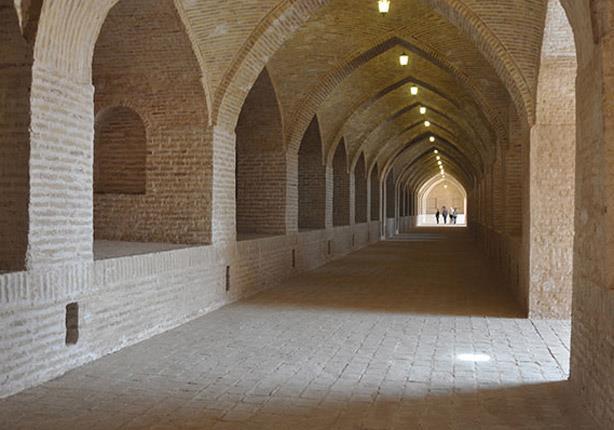
Kufa and the Arabic Language
Its contribution did not stop at jurisprudence and hadith. Alongside Basra, Kufa became one of the two main centres for the emergence and development of the sciences of the Arabic language and grammar.
Major linguistic scholars appeared there, among them al-Kisa'i and al-Farra', and the Kufan school of grammar became a principal rival of the Basran school.
The rivalry between the two schools was one of the most important phases in the formation of Arabic grammar. Kufa was known for its interest in poetic evidence, linguistic transmission and the diversity of Arabic usage.
A City of Judiciary and Learning
Among Kufa's notable figures was also Shurayh the judge, who had been linked to judicial work in the city since the time of Umar ibn al-Khattab, may God be pleased with him. The sources state that he held the judgeship of Kufa in the first century AH and remained in this post for many years, becoming a model of the judge whose name was associated with justice, rulings and jurisprudence.
Thus Kufa developed a scholarly environment combining jurisprudence, judiciary, hadith and language, and the gatherings of its scholars became a destination for seekers of knowledge.
Kufa and Politics: The Other Face of the Metropolis
Kufa's political history was not stable. After the era of the Rightly Guided Caliphs, the city became a centre of political opposition at various times, and movements against the Umayyads were linked to it, as were numerous uprisings and conflicts.
Around 66 AH/685 CE, al-Mukhtar ibn Abi Ubayd al-Thaqafi emerged there, and the city then witnessed violent struggles that ended with the suppression of his movement in 67 AH/687 CE.
During the Umayyad period Kufa was subjected to strict policies, especially under al-Hajjaj ibn Yusuf, who worked to curb its political unrest.
The city then lost part of its administrative importance when Wasit was established as a new administrative centre for Iraq around 83 AH/702 CE.
From Kufa to Baghdad: The End of the Capital and the Survival of the School
When the Abbasid state was established, Kufa was among the centres of revolt against the Umayyads, and the establishment of the Abbasid state was proclaimed there in 132 AH/749 CE.
However, the rise of Baghdad after its founding in 145 AH/762 CE changed the balance of power. Baghdad became the capital of the Abbasid state, and the major political, administrative and scholarly functions gradually moved there, while Kufa receded from its position as capital.
Nevertheless, the city did not disappear from the Islamic scene. It remained a scholarly centre, and its name stayed present in the history of jurisprudence, language and transmission.
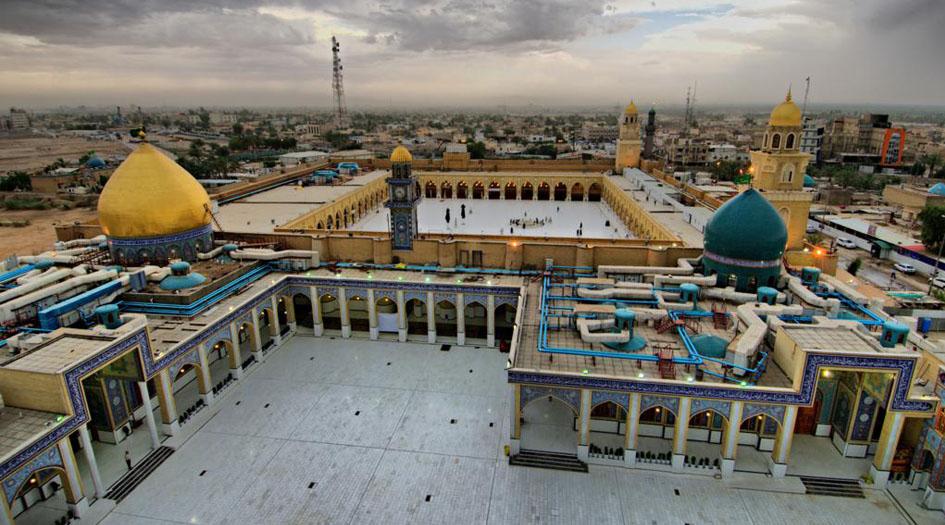
Kufa Today: The Memory of a City Shaped by the First Centuries
Kufa's political and urban standing declined over the centuries, and the city suffered unrest and attacks that weakened it, especially in the fourth century AH, after which other cities in the region rose at its expense.
Its scholarly legacy, however, did not vanish. When Muslims mention Abu Hanifa, Iraqi jurisprudence, the Kufan school of language, Ali ibn Abi Talib, and the first generation of Iraqi scholars, the name of Kufa comes back to the forefront.
It was a city that began as a camp for conquerors, then became a caliphal capital, then was transformed into a great scholarly school, before losing its political influence and remaining present in the books of jurisprudence, hadith and language.
In the next episode we move from Kufa to Basra, the city that rivalled it in learning and language, and from which emerged scholars who shaped a large part of the sciences of Arabic, hadith and thought in Islamic civilisation.


