


When Cairo first appeared, it was not an old city bearing a new name; it was a new political and civilisational project founded alongside a series of capitals that had preceded it in Islamic Egypt.
When Jawhar al-Siqilli entered it in 358 AH / 969 CE by order of the Fatimid caliph al-Mu'izz li-Din Allah, he was not founding merely a new city; he was moving the centre of power to a site that would later become one of the most important centres of the Islamic world.
Historical sources indicate that Cairo witnessed a golden age that extended especially between the ninth and fifteenth centuries CE, when it became a political, cultural and economic centre and a destination for scholars, pilgrims and merchants.
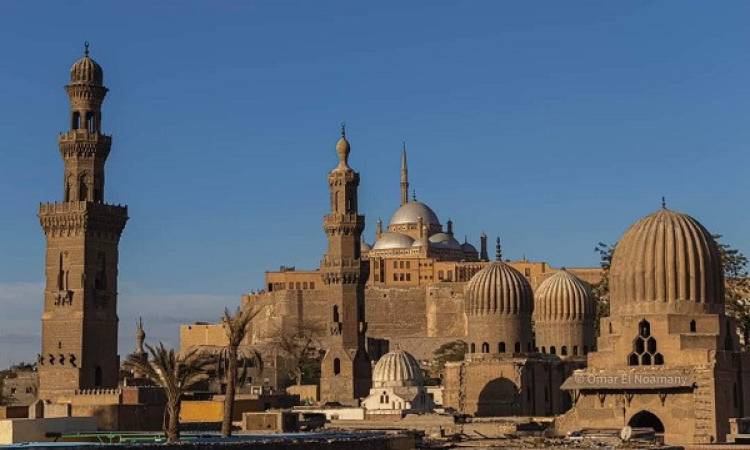
A Fourth City After Fustat, al-Askar and al-Qata'i
When Jawhar al-Siqilli founded Cairo, Egypt was not without capitals. Fustat, founded by Amr ibn al-As after the Islamic conquest, had preceded it, then al-Askar in the Abbasid era, then al-Qata'i, associated with Ahmad ibn Tulun.
Cairo thus became the fourth Islamic capital of Egypt, but it was not built as a random extension of what came before. The Fatimids chose a site north-east of the earlier capitals and established a city with a clear layout, walls, gates, palaces and institutions directly linked to authority.
In its beginnings, Cairo was a fortified city with a rectangular plan and multiple gates. It was initially a relatively enclosed royal city containing palaces, seats of government and the state's army, while Fustat to the south remained a highly important commercial and residential centre.
But this separation between the two cities did not last forever.
Fatimid Cairo Before the Liberation
Cairo was the capital of a Fatimid state with a broad political and religious project, and therefore the city's layout from its birth carried functions that went beyond construction.
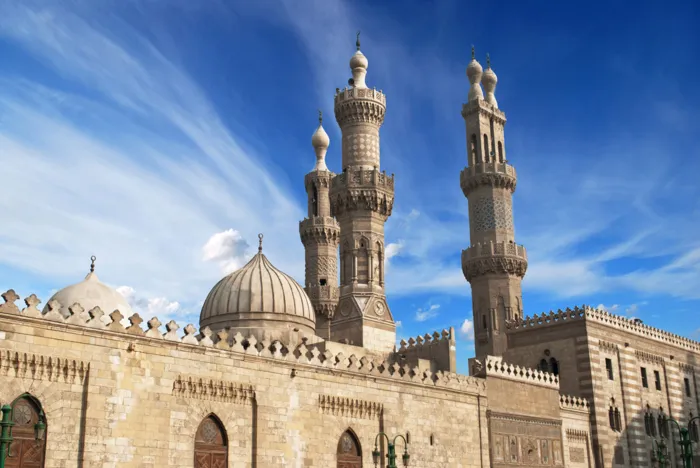
At the heart of this project came al-Azhar Mosque, whose construction began in 359 AH / 970 CE and was completed in 361 AH / 972 CE, to become the first great congregational mosque in Fatimid Cairo. In its early years it was tied to the religious institution of the Fatimid state; its role later changed after the end of Fatimid rule, before it gradually became one of the most important centres of Islamic learning in the world.
With the transfer of the Fatimid caliphate to Cairo, the city became part of a wide network extending from Egypt to North Africa, the Levant and the Hijaz, while Fustat turned into a commercial artery feeding the new capital.
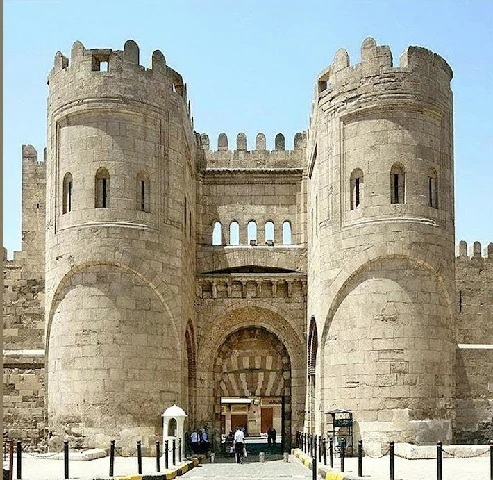
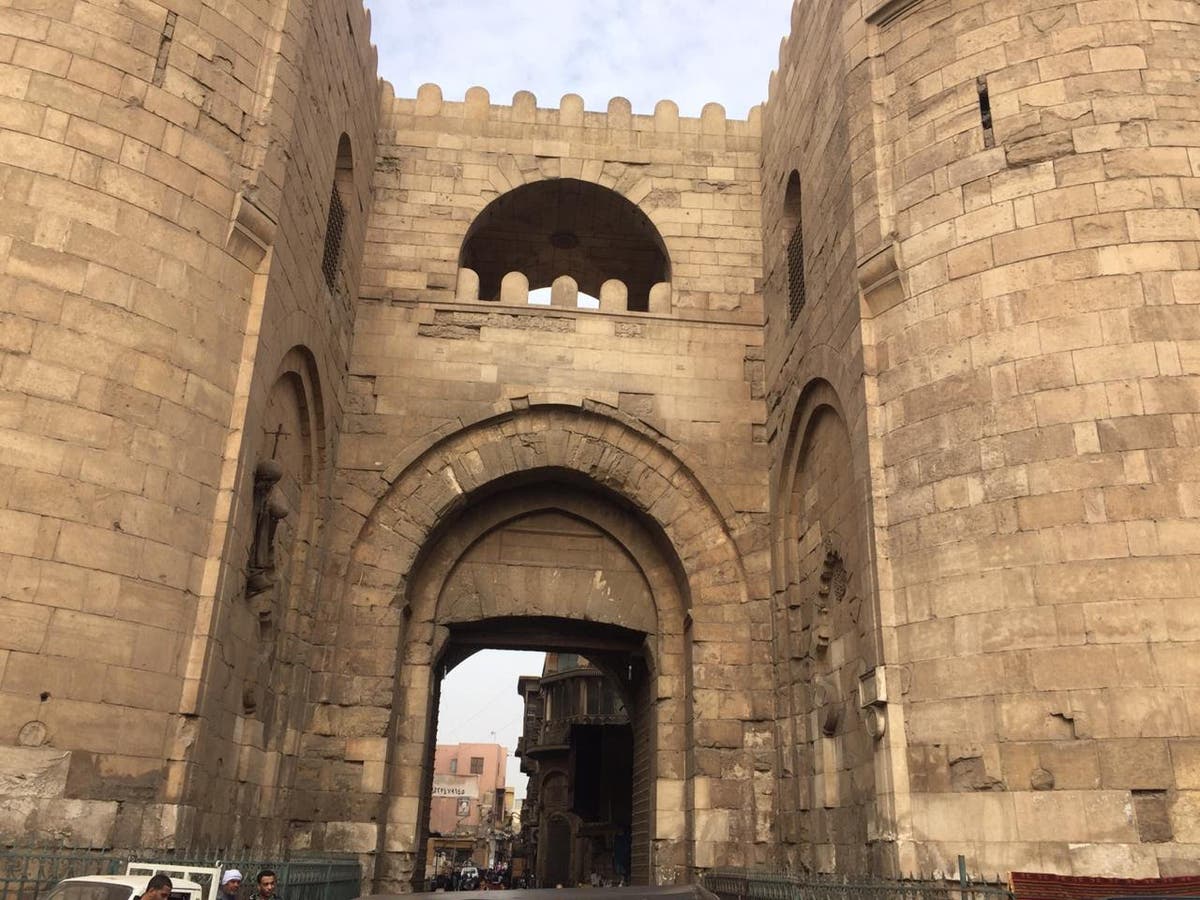
During the reign of the caliph al-Mustansir bi-Llah, the state faced harsh political and economic crises. Then Badr al-Jamali, at the end of the fifth century AH / eleventh century CE, rebuilt Cairo's walls in stone and erected its famous gates, including Bab al-Futuh, Bab al-Nasr and Bab Zuwayla, which still bear witness to Fatimid Cairo.
Salah al-Din: When the Capital Was Liberated
In 567 AH / 1171 CE, Fatimid rule ended, and Egypt came under the rule of Salah al-Din al-Ayyubi.
Here Cairo began a new phase, as the centre of the state was no longer confined to the Fatimid city; Cairo, Fustat and the surrounding areas began to draw closer to one another. The Ayyubids also introduced a new pattern of educational institutions, headed by madrasas linked to the Sunni school of thought.
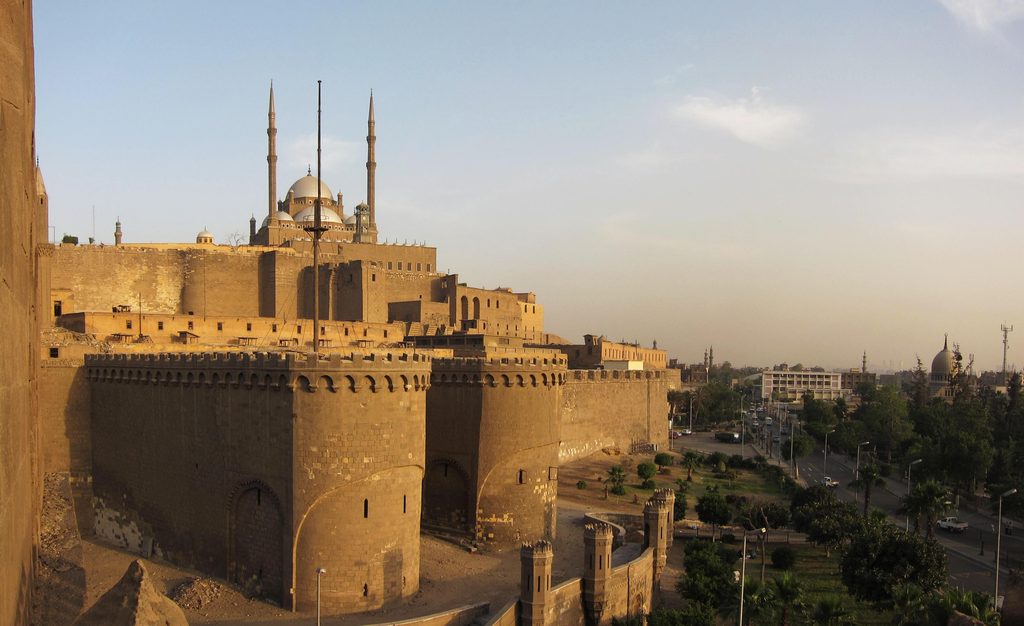
Facing the Crusader threat, Cairo also became a military centre, where the Citadel was built and became the seat of authority, linking the defensive system to the capital and its approaches.
The Mamluks: The Moment Cairo Became the Capital of the Islamic World
If the Fatimid state founded Cairo and the Ayyubids reshaped its function, the Mamluks made it one of the greatest Islamic cities of the medieval period.
In Cairo the Mamluks established the Abbasid caliphate in symbolic form, and the city became the centre of a state extending from Egypt to the Levant and the Hijaz.
The study by historian Doris Behrens-Abouseif on the Mamluk city shows that in the Mamluk era Cairo transformed from a dual settlement comprising Fustat and Fatimid Cairo into a great city, and that the Mamluks used architecture and religious and charitable institutions as a means of displaying authority and entrenching their presence in the city.
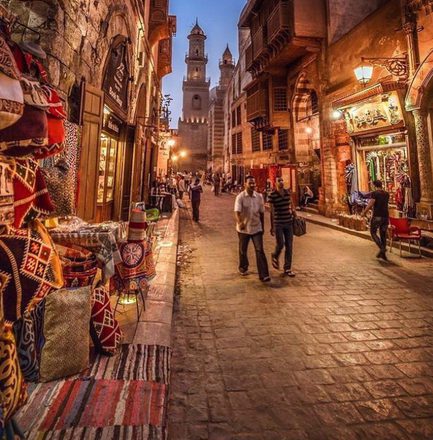
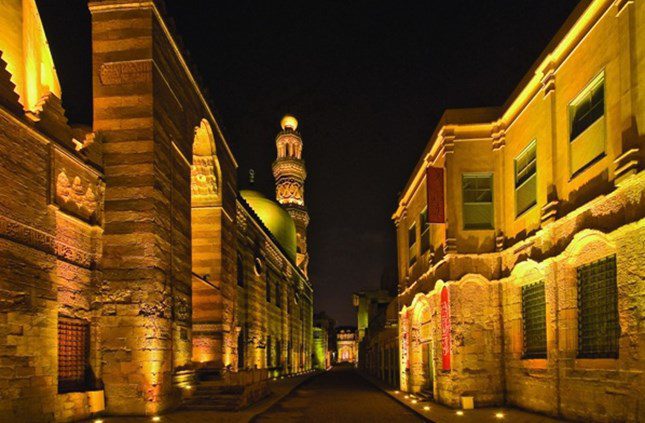
It was here that the Cairo whose historical features we know today emerged: madrasas, khanqahs, bimaristans, sabils, caravanserais, markets, and mosques with domes and soaring minarets.
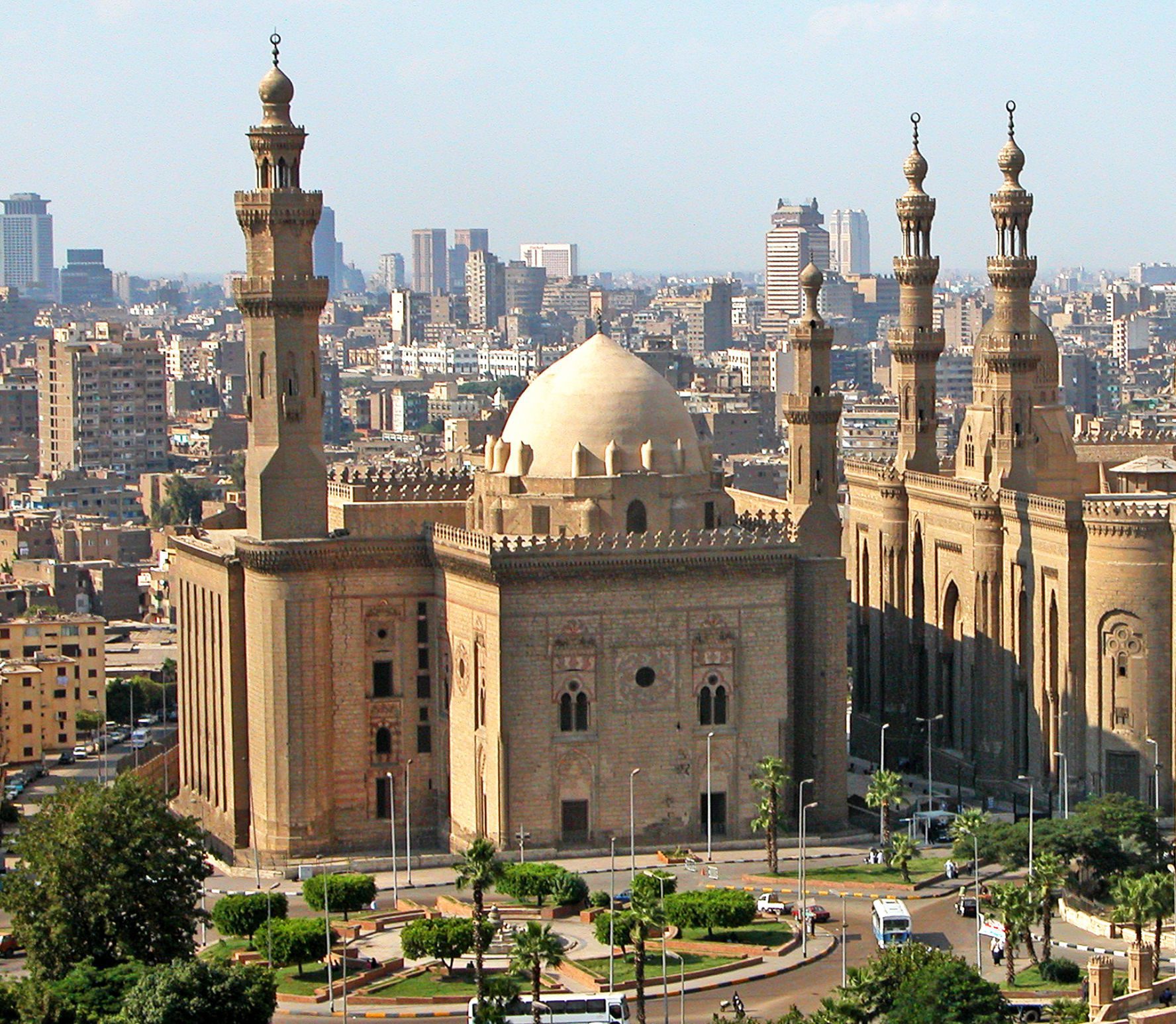
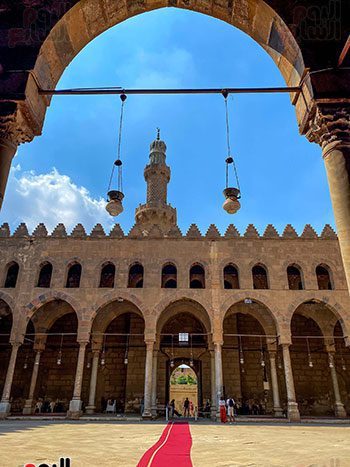
Among the most prominent monuments of this phase are the Sultan Hasan Mosque and Madrasa, the Sultan Qalawun complex, the Sultan Barquq Mosque and Madrasa, the Ghuri complex, and the Sultan Qaitbay Mosque.
This architecture was not mere ornamentation; the structures performed educational, religious, medical and social functions, which made the Islamic city an integrated system of life rather than merely a settlement.
A City of Scholars and Books
Cairo's true strength exceeded its palaces and walls. Scholars of hadith, jurisprudence, exegesis, language and history gathered there, and its madrasas, khanqahs and scholarly institutions attracted students from Egypt, the Maghreb, the Levant, the Hijaz, Anatolia and elsewhere.
Therefore historic Cairo was not only a political centre but also a destination for scholars, physicians, astronomers, jurists and writers, and the influence of its scholars extended beyond the bounds of the Islamic world.
Cairo: A City That Did Not Swallow Its History but Accumulated It
The most distinctive feature of Cairo is that it was not built all at once; it is layer upon layer. Fustat in the south, then al-Askar, then al-Qata'i, then Fatimid Cairo, then the Ayyubid and Mamluk extensions, then Ottoman and modern Cairo.
UNESCO considers this accumulated urban fabric one of the most important characteristics of historic Cairo, as not only isolated monuments have survived, but also neighbourhoods, streets, markets and interlinked institutions that reveal how the Islamic city took shape over the centuries.
From Cairo to the World
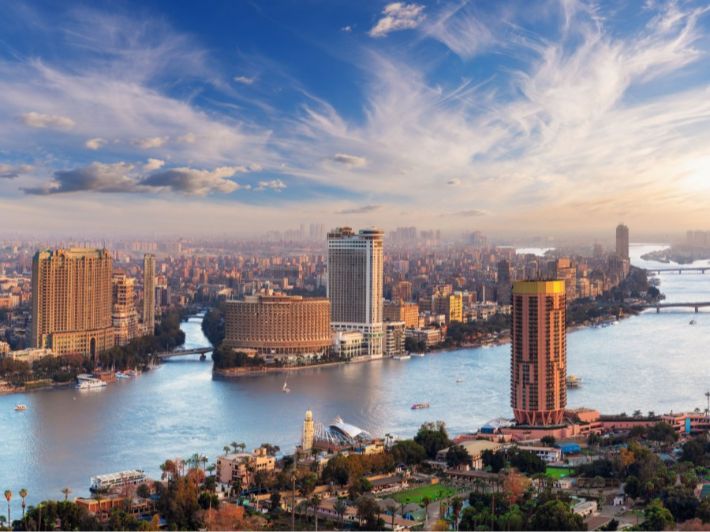
Cairo's location at the head of the Nile Delta was a decisive factor in its sustained strength; it lies between the Nile and the desert, at the meeting point of routes linking Africa with Asia and the Mediterranean.
From here trade became part of its identity, its markets turned into specialised centres, and its streets bore the names of the crafts and industries for which they were renowned.
Cairo was not a centre for Egypt alone; it was a stopping point for pilgrims heading to Mecca and Medina, a hub of exchange between the Maghreb and the East, and the seat of an authority that governed Egypt, the Levant and the Hijaz for long periods.
Hence the history of Cairo can be understood as the history of a city that combined multiple functions at once: a political capital, a military centre, an inland commercial port, a seat of learning, a city of pilgrimage, and a living museum of the evolution of Islamic architecture.
This was our journey in the ninth episode on Cairo, the great Islamic capital of Egypt, the city of the Fatimid caliphate, then the capital of the Ayyubid and Mamluk states, and one of the most important centres of learning, trade and architecture in the Islamic world, until it became, after the fall of Baghdad, one of the foremost capitals of Islamic civilisation.


