

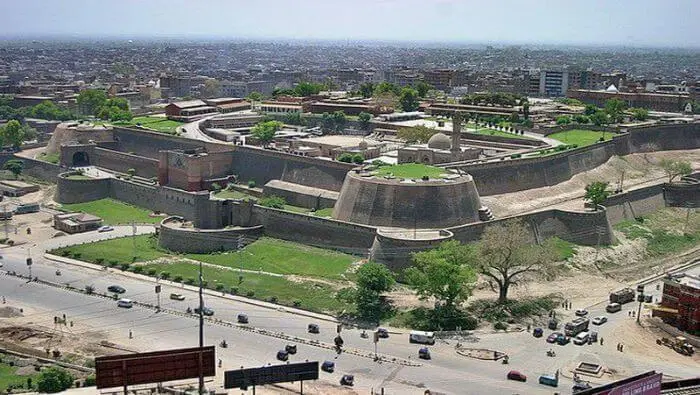
In a valley ringed by mountains, at the meeting point of the routes coming from Central Asia and Khorasan and heading toward the Indian subcontinent, Kabul grew to become one of the most important cities linking two worlds.
For most of its Islamic history, Kabul was not the capital of a great empire, as Baghdad, Damascus or Cairo were. Yet it possessed a geographic advantage that gave it exceptional strategic value: it lies at a natural gateway connecting the Iranian plateau and Central Asia with the roads to India.
Its Islamic history was therefore bound up with armies, caravans, merchants, scholars and sultans. Later, in the Timurid and Mughal eras, it developed a distinctive urban and cultural character, before becoming, in the 12th century AH/18th century CE, the capital of the emerging Afghan state.
From a Border Outpost to an Islamic City
Kabul's site was inhabited and important centuries before Islam, but the region entered the Islamic sphere beginning in the 1st century AH/7th century CE, when Islamic campaigns reached its frontiers.
Kabul did not immediately become a major Islamic centre. The area remained for a long time a border zone, contested by various local and Islamic powers.
This detail matters for understanding the city's history: Kabul did not derive its importance from being an early capital, but from its position as a strategic knot between East and West.
Kabul on the Route of the Ghaznavids
During the Ghaznavid era, between the 4th and 6th centuries AH/10th and 12th centuries CE, Kabul became an important military base and a gathering point for armies heading toward India.
The sources indicate that Sultan Mas'ud of Ghazni reviewed some 1,670 war elephants in Kabul in 423 AH/1031 CE, a scene reflecting the city's importance in preparing military campaigns headed east.
At the same time, Kabul was not merely a military encampment. It retained the commercial role imposed by its geography, and caravans passed through it between Central Asia and India.
The Muslim geographer al-Ya'qubi, in the 3rd century AH/9th century CE, notes that merchants frequented Kabul and that the city exported some local products to other areas of the Islamic world.
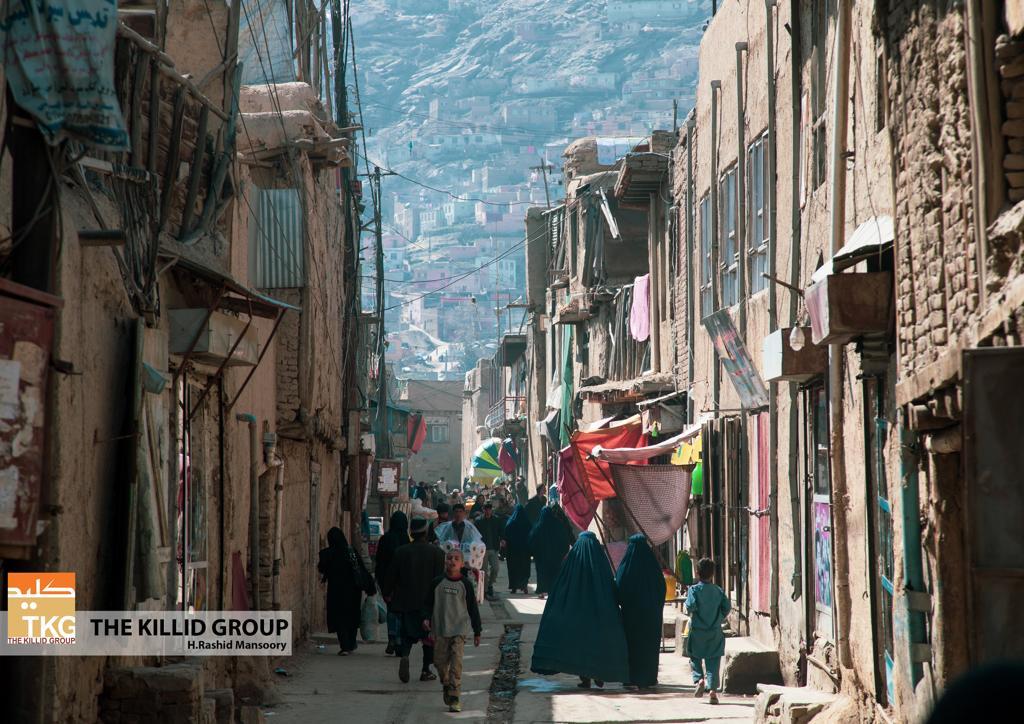
The Timurids: The Beginning of Urban Transformation
Kabul witnessed an important phase in the Timurid era, especially under Ulugh Beg, whose name was associated with learning, astronomy and urban development in the Timurid world.
Archaeological studies point to remains of Timurid structures in the city, and a canal that carried water from the Logar River to the gardens of Kabul is attributed to the time of Ulugh Beg.
But the greatest transformation in the city's history came with the rise of a man whose name would become as closely tied to Kabul as to India: Zahir al-Din Muhammad Babur.
Babur: The Prince Who Found a Homeland in Kabul
Babur entered Kabul in 910 AH/1504 CE, after years of conflict in Central Asia. From that date the city became a central pillar of his political project, and from it he began building the strength that would later carry him to India.
Babur did not regard Kabul merely as a military base. He loved its nature, climate and gardens, and in his memoirs he described the beauty of its setting and the variety of its landscape among mountains, rivers and plains.
The sources state that Babur made Kabul his capital and that the city flourished under his rule. He also laid out gardens in the Persian and Timurid style, a tradition he would carry with him to India.
Babur's Gardens: When the City Became an Architectural Landscape
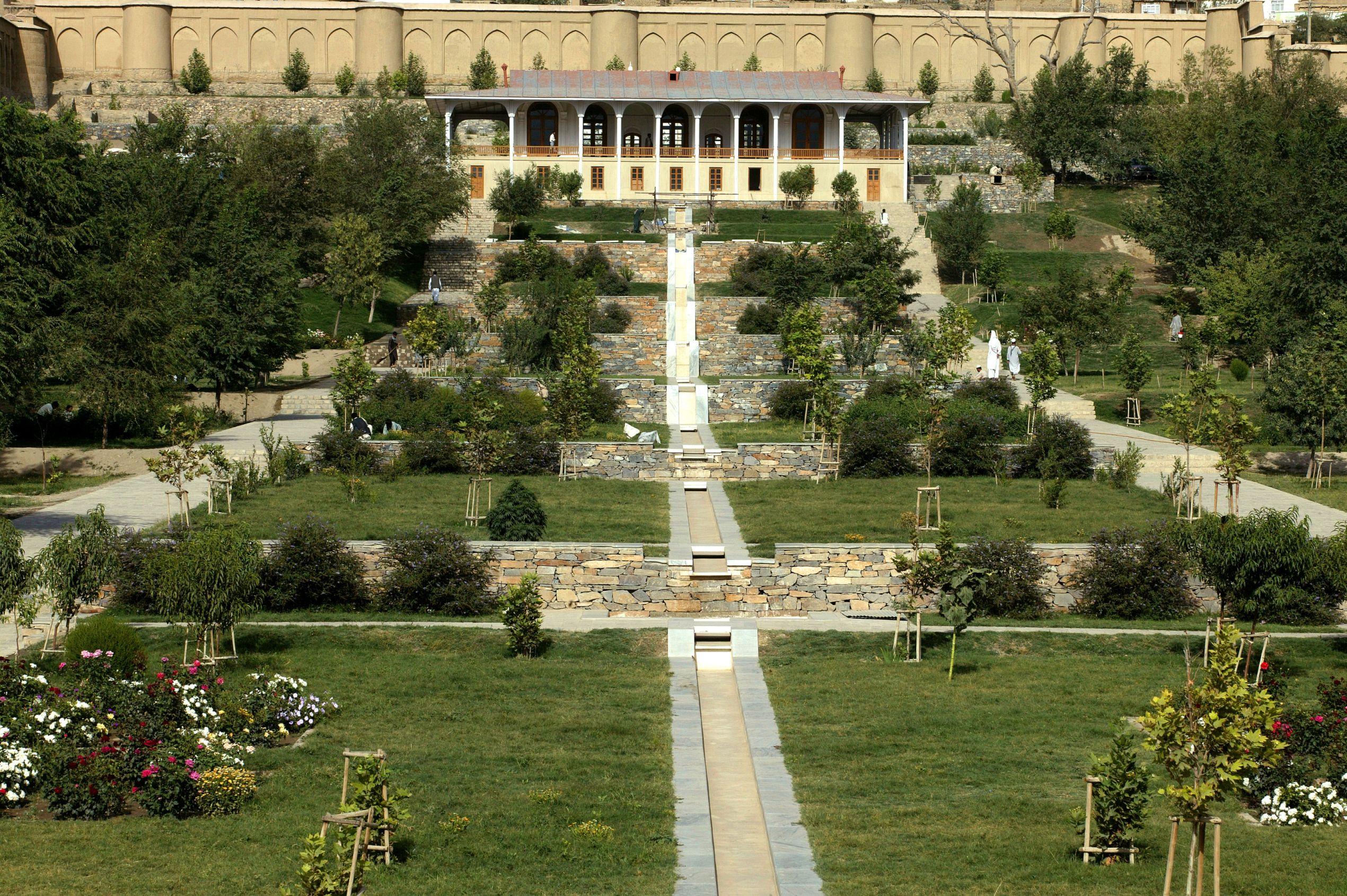
Babur was passionate about gardens. Influenced by the gardens of Timurid cities such as Samarkand and Herat, he applied this model clearly in Kabul, creating gardens based on dividing the land into four sections, with water channels, trees and geometric axes, a pattern known as the chahar bagh.
Kabul's gardens later became a model that passed to India, where Persian and Timurid gardens played a fundamental role in shaping Mughal architecture.
Babur's Tomb: The End of the Journey in the City He Loved
Babur died in 937 AH/1530 CE and was first buried in Agra; his remains were later transferred to Kabul, the city to which he was bound emotionally and politically.
In the reign of Jahangir in 1016 AH/1607 CE, marble headstones were erected around Babur's grave, and the site became part of the garden known as the Bagh-e Babur.
Thus Kabul came to house the tomb of the founder of the empire that would, within decades, become one of the greatest political powers on the Indian subcontinent.
Kabul in the Mughal State
After Babur moved to India, Kabul did not lose its importance for his successors. It retained its strategic position as an advanced base of the Mughal Empire against rival powers in Central Asia and Iran, and it also became a residence frequented by members of the Mughal family during the winter.
The sources indicate that Kabul flourished under the Mughals and was known for its covered markets and gardens, among them the Chahar Chatta bazaar built by Ali Mardan Khan in the 11th century AH/17th century CE.
Emperors also continued their interest in gardens: Jahangir had his favourite gardens, while Shah Jahan reorganised a number of gardens and structures in the city.
The Mosque of Shah Jahan: A Lasting Mughal Legacy
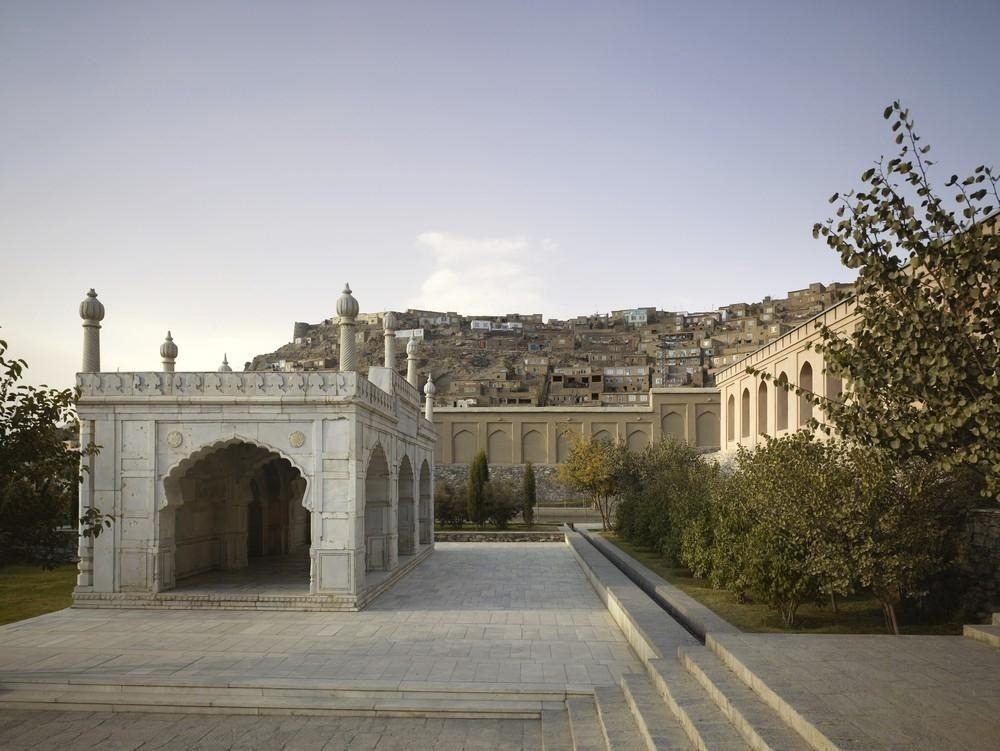
The Mughal legacy in Kabul was not limited to gardens. Among the most prominent surviving monuments of that era is a small mosque of white marble built by Shah Jahan in honour of his grandfather Babur, near his tomb.
The mosque is considered one of the finest surviving Mughal monuments in Kabul, especially since large parts of the city's older Mughal architecture disappeared or were destroyed during later conflicts.
Kabul: A City of Scholars, Merchants and Caravans
Kabul's prosperity was always tied to its commercial position. The city lies on a network of roads linking India with Central Asia, and connecting it to the regions beyond the Afghan mountain passes.
For this reason, markets, inns and caravans were an essential part of urban life there.
The traditional Islamic city structure centred on three main hubs: the congregational mosque, the citadel or seat of government, and the market. This urban pattern was present in the great Islamic cities, and Kabul was among them.
Commerce was therefore not a secondary activity; it was one of the reasons Kabul remained an influential city despite the changing states that ruled it.
From the Mughals to the Capital of the Afghan State
In the 12th century AH/18th century CE, Kabul entered an entirely new phase. After the founding of the Durrani state under Ahmad Shah Durrani in 1160 AH/1747 CE, Kandahar remained the main centre at first, but his son Timur Shah moved the capital to Kabul in approximately 1189 AH/1775 CE.
From that time, Kabul began to shift from a city of strategic and commercial importance to the political capital of an independent Afghan state.
The move of the capital led to the city's growth and an increase in its population, and to the emergence of new neighbourhoods, palaces, administrative buildings, mosques and markets.
Kabul in the Durrani Era
As Kabul became a capital, structures associated with Durrani rule appeared. The city also expanded its markets and residential quarters and became the political and administrative centre of the state.
Kabul thus passed from being a gateway to India to being the capital of a state lying between India and Central Asia.
Kabul: A City Carrying Layers of Islamic History
Kabul's distinction lies in the fact that its Islamic history was not tied to a single dynasty. It passed through the Samanids, Ghaznavids, Ghurids, Timurids and Mughals, then became the capital of the Durrani state, before entering the modern history of Afghanistan.
In each phase the ruling powers left their mark on the city, but the layers that remain most visible in its architecture are the Timurid, Mughal and Durrani.
The Bagh-e Babur remains one of the clearest testaments to that memory, as it brings together in one place the history of the city, the story of Babur and the beginnings of the Mughal Empire, reminding us that Kabul was not merely a stop on the route of conquest, but the city from which one of the most important political and architectural experiences of Islam in South Asia set out.
Kabul Today: A City Between Mountain and Memory
Despite the wars and conflicts Kabul has endured over the past two centuries, its historical image has not disappeared entirely.
Some gardens, mosques and landmarks associated with the various Islamic eras still bear witness to long stages of the city's history.
Kabul's historical value exceeds its role as the capital of Afghanistan. It is one of the cities whose geographical position shaped the course of history itself, standing for centuries between two worlds: Central Asia on one side and the Indian subcontinent on the other.
From this geography emerged caravans and armies, and languages, cultures and architectural traditions entered the city, so that Kabul became inseparable from the history of Islam in Afghanistan, India and Central Asia.


