


When the centre of Islamic power moved to the Indian subcontinent, no city became more important than Delhi. Since the establishment of the Delhi Sultanate at the beginning of the seventh century AH/thirteenth century CE, the city became a political, military and administrative centre for an Islamic state whose influence extended over large parts of northern India. It later became, in the Mughal era, one of the most important capitals of the Islamic world.
Yet Delhi was not merely a capital of sultans. It became a major Islamic city, around which mosques, madrasas, markets and khanqahs arose, and in which the sciences, literature and architecture flourished. It also contributed to shaping Islamic culture in the Indian subcontinent.
Delhi before the Islamic Sultanate
The site of Delhi had been known for centuries before the establishment of Islamic rule, and various Indian settlements and dynasties succeeded one another there.
Sources indicate that one of Delhi's oldest historical sites was linked to the Lal Kot fort, built by the Tomar rulers roughly during the third and fourth centuries AH/ninth and tenth centuries CE, after which the site expanded under later dynasties.
However, the real turning point in the city's history came with the expansion of Islamic powers in northern India, and then the establishment of the Delhi Sultanate.
The Beginning of the Delhi Sultanate
Following the victories of the Ghurids in northern India, Qutb al-Din Aibak emerged as one of the most important Muslim commanders in the region.
In 602 AH/1206 CE approximately, Aibak became the first Sultan of Delhi, beginning a period of roughly three centuries of successive Islamic rule in northern India.
From that time, Delhi became the political centre of a state that gradually expanded, and was ruled by successive dynasties, from the Mamluks to the Khaljis, then the Tughluqs, the Sayyids and the Lodis, before power passed to the Mughals in 932 AH/1526 CE.
These dynasties were not merely successive ruling families; each left a new layer of construction, institutions, markets and fortifications.
Qutb Minar: One of the First Symbols of Islamic Delhi
The Qutb Minar is among the most famous symbols of Islamic Delhi.
Qutb al-Din Aibak began building the minaret in the late sixth century AH/twelfth century CE, and his successors completed its construction and developed its complex. The minaret was part of a broad Islamic architectural complex linked to the mosque known as the Quwwat al-Islam.
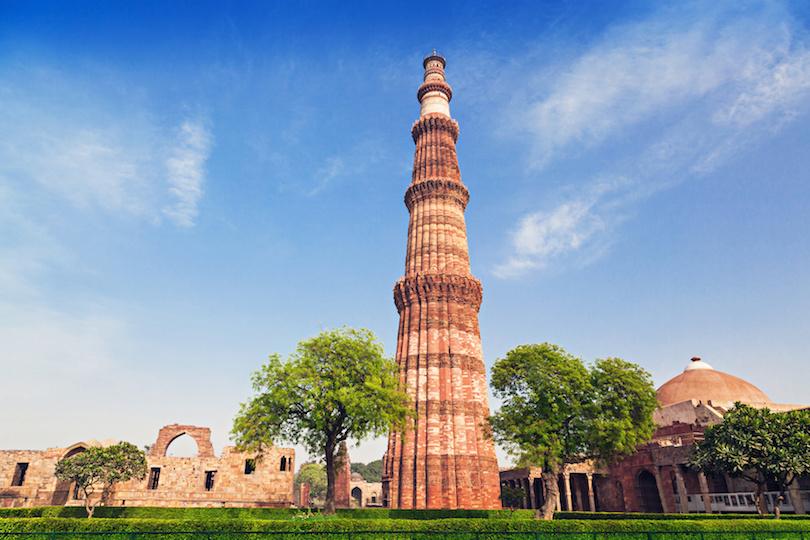
These structures reveal the beginning of the formation of an Islamic architectural style in northern India, in which architectural traditions arriving from the Islamic world merged with local elements.
From that time, Delhi became a city in which Islamic architecture appeared clearly in mosques, minarets, tombs and fortifications.
Delhi: Cities Within a City
A distinctive feature of Delhi's history is that the city was not a single, fixed urban centre. Over the centuries, the sultans built new cities alongside the older centres.
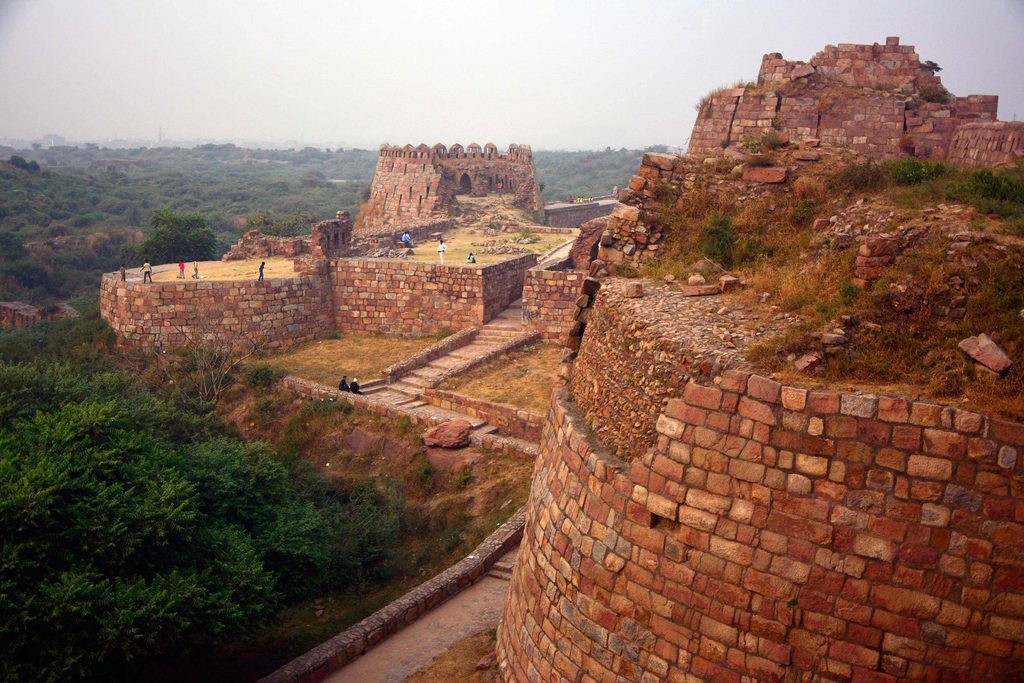
Under Alauddin Khalji, the city of Siri emerged around 703 AH/1303 CE, and the Tughluq sultans later founded new cities such as Tughlaqabad, Jahanpanah and Firozabad during the eighth century AH/fourteenth century CE.
For this reason, Delhi became historically known for the idea of the "seven cities", as nearly every political era left its own urban centre.
This reflected the city's political strength: whenever the ruling dynasty changed, the features of the capital changed with it.
Delhi and the Centres of Islamic Learning
Delhi was not only a city of sultans and armies. With the consolidation of Islamic rule, madrasas, mosques and gatherings of learning appeared, and scholars and jurists arriving from Khurasan, Central Asia, Iraq and other regions began to settle in India.
Delhi became part of a broad scholarly network linking India with the Islamic world.
In this environment, the study of jurisprudence, hadith, exegesis and the Arabic language developed, alongside the sciences and Persian literature.
Ibn Battuta arrived in India in the eighth century AH/fourteenth century CE and stayed in Delhi during the reign of Sultan Muhammad bin Tughluq. He served as a judge at the sultan's court, observed the city from within, and then continued his journey to other regions of Asia.
His travelogue provides an important testimony to the extent of the Delhi Sultanate and to the political, social and economic life of Islamic India.
According to the sources, he remained in India for about fourteen years, between approximately 733–747 AH/1333–1347 CE, before leaving on a diplomatic mission.
Delhi and the Tughluq Experiment
During the rule of the Tughluq dynasty, the city went through one of the most turbulent and ambitious phases. Ghiyath al-Din Tughluq founded the city of Tughlaqabad, while his son Muhammad bin Tughluq sought to change the centre of government and temporarily moved the capital from Delhi to Daulatabad in the Deccan.
The decision was costly, and the sultan eventually restored the centre of government to Delhi.
This experience reveals the strategic importance of the city: even when the sultan attempted to move the centre of the empire to the south, Delhi retained its political and symbolic weight.
Timur and Delhi
In 801 AH/1398 CE, Delhi suffered a major catastrophe when Timur invaded it. His forces entered the city after defeating the armies of the Tughluq sultan, and Delhi suffered extensive destruction, with a large number of its inhabitants killed.
The invasion was a turning point in the history of the Delhi Sultanate, which was already suffering from divisions and weakness.
After Timur's withdrawal, he did not establish a stable state in India, but his campaign contributed to weakening central authority in Delhi.
From the Sultanate to the Mughals
The era of the Delhi Sultanate effectively ended with the rise of the Mughals. In 932 AH/1526 CE, Zahir al-Din Muhammad Babur defeated Sultan Ibrahim Lodi at the Battle of Panipat and founded the Mughal state.
From that date, Delhi entered a new phase. The city did not always remain the seat of Mughal rule; the emperors adopted other cities as capitals at different periods, especially Agra, but Delhi retained great political and symbolic prestige.
Then came Shah Jahan, who rebuilt Delhi on a massive scale.
Shahjahanabad: A New Mughal City
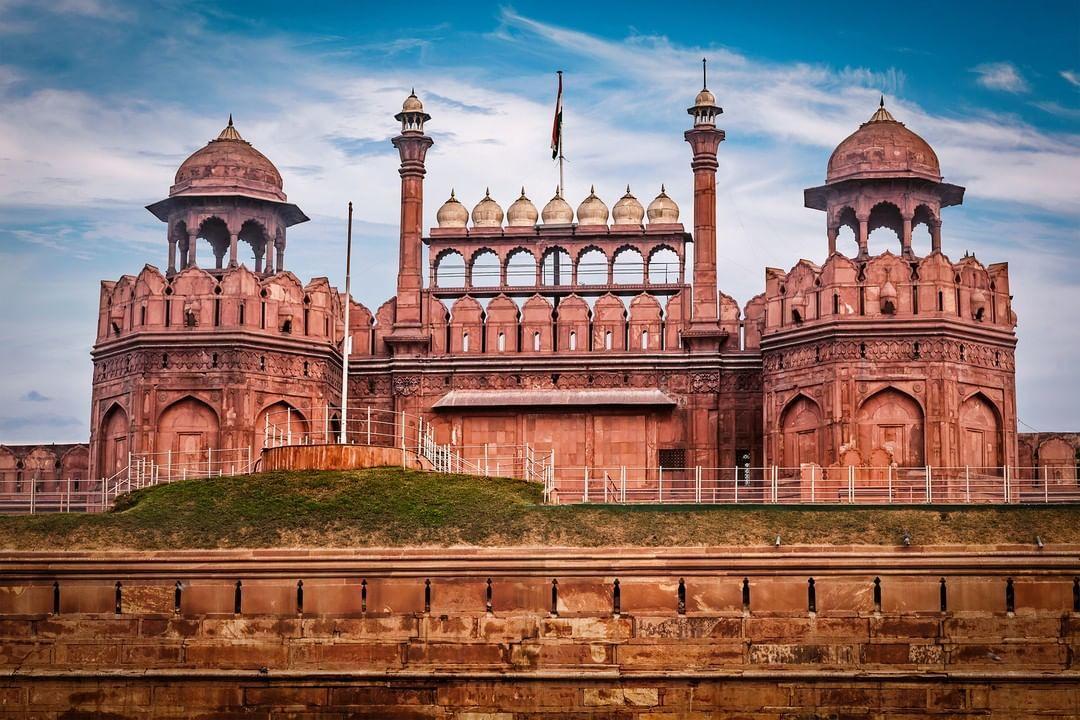
In 1058 AH/1648 CE, Shah Jahan moved his capital from Agra to Delhi and founded a new city known as Shahjahanabad, which was one of the greatest urban projects in Islamic India.
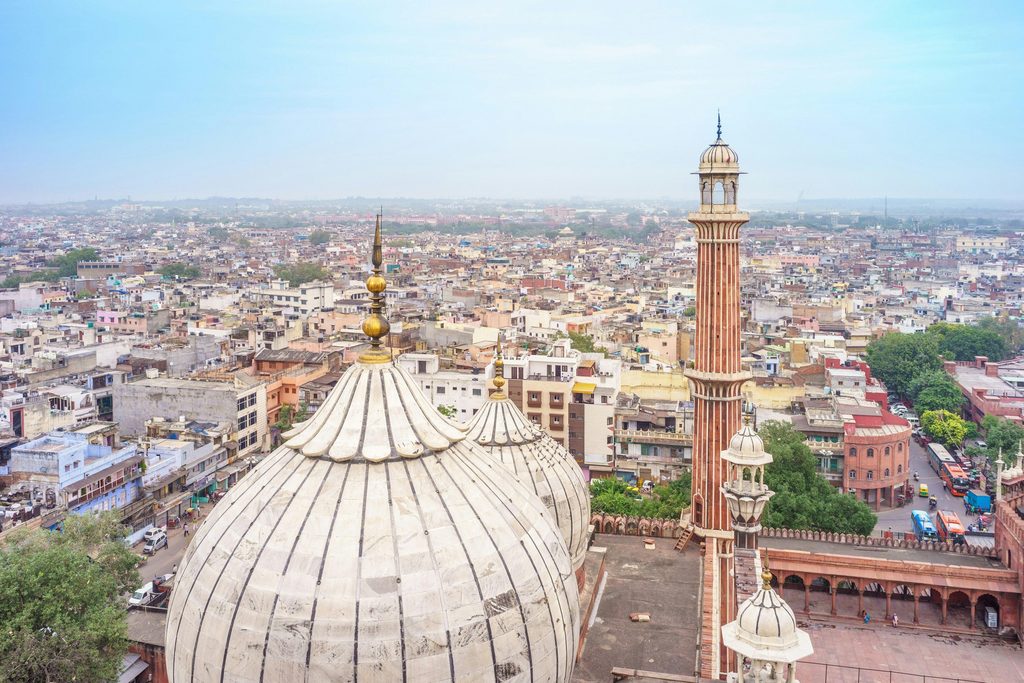
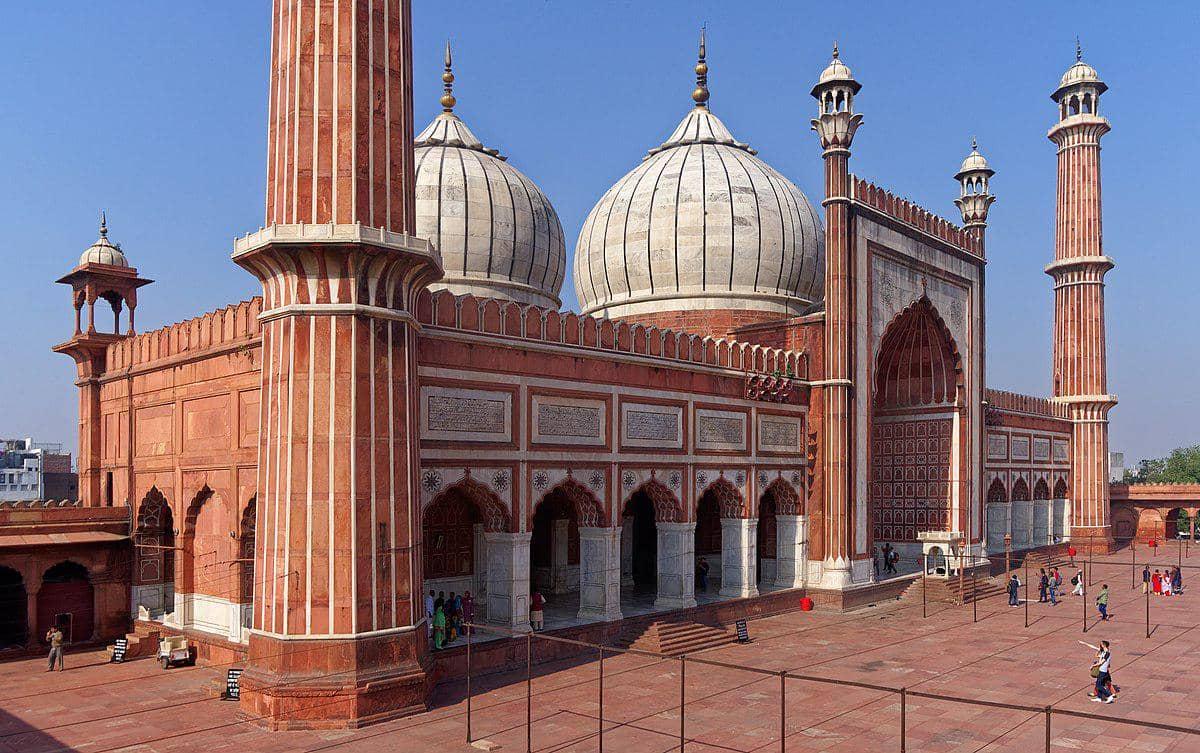
Shah Jahan built the Red Fort, and erected the Jama Masjid, whose construction began in 1060 AH/1650 CE and was completed in 1066 AH/1656 CE; it became one of the largest mosques in India.
Thus Delhi entered a new phase of prosperity, in which the Islamic heritage arriving from Central Asia and Persia merged with local Indian elements.
Delhi and the Mughal Empire
In the Mughal era, Delhi became an important centre of culture, literature and architecture.
Persian developed there as the language of administration and official culture, while a new linguistic environment emerged that contributed to the development of Urdu.
Delhi was one of the cities where Arabic, Persian, Turkish and local Indian languages interacted, an interaction that left a profound impact on Islamic culture in the subcontinent.
In the eleventh century AH/seventeenth century CE, the city was also associated with the reign of Aurangzeb Alamgir, who was known for his conservative Sunni orientation and his interest in Islamic jurisprudence.
Delhi in the Late Mughal Era
The prosperity of Delhi did not continue uninterrupted. In 1152 AH/1739 CE, Nadir Shah invaded the city, and it suffered extensive killing and plunder; a large number of its inhabitants fled, and its economic and cultural life was severely damaged.
Mughal authority then gradually weakened, and Delhi became an arena for successive regional and international conflicts.
Nevertheless, it remained the symbolic capital of the Mughals until the thirteenth century AH/nineteenth century CE.
Delhi: The Last Capital of the Mughals
Mughal rule in Delhi ended following the events of 1274 AH/1857 CE, when the Indian uprising against the British broke out, and the Mughal Empire was formally abolished.
This marked the end of a long period that began with the Delhi Sultanate in 602 AH/1206 CE and continued in various forms for more than six centuries.
Thus Delhi became a witness to one of the longest Islamic experiences in the history of the Indian subcontinent.
Delhi Today: A Memory of Islamic Civilisation
Modern Delhi still preserves a vast number of testimonies to its Islamic history, from the Qutb Minar and the Quwwat al-Islam complex, to the gates and walls of the sultanate cities, then the Red Fort, the Jama Masjid and Shahjahanabad, each monument recounting a different phase.
The Qutb Minar recalls the beginnings of the Delhi Sultanate, Tughlaqabad evokes the power of the sultans, while the Red Fort and the Jama Masjid revive the image of the Mughal capital.
Delhi: More Than a Capital
Delhi's importance in Islamic history lies not only in its role as a political capital. It was the gateway through which Islam reached a vast area of the subcontinent, and a centre of government, justice, education and trade, as well as a laboratory for cultural interaction between the Islamic world and Indian society.
From it, the institutions of Islamic government spread to wide regions, and new forms of architecture, language and literature developed there.
Delhi therefore deserves to be among the essential entries in the map of Islamic cities, not merely as an Indian city with Islamic monuments, but as one of the greatest capitals that shaped the history of Muslims in South Asia.


