


China's Surveillance Empire: Uyghur Repression Fuels Global Backlash Against Technology Now.
China's surveillance empire constitutes a vast network of AI-powered surveillance, data aggregation and predictive control, closely linked to human rights abuses targeting Uyghurs in East Turkestan (Xinjiang), and it is fuelling a growing global backlash against the technology.
This expansionist state policy, marked by sweeping crackdowns in 1447 AH (2026 CE) and the spread of the technology, goes beyond suppressing internal opposition. It extends to imposing authoritarian control on a global scale, leading to bans, divestment and ethical reviews.
This comprehensive analysis examines the system's complex structure, policy developments, human costs, export dynamics, technological tensions and future challenges, incorporating documented facts.
The Architecture of China's Surveillance State
The system began with the Golden Shield project in the early 2000s, an enormous internet firewall enforcing "cyber sovereignty", and it grew massively under Xi Jinping to include a social credit scoring system that punishes "untrustworthy" behaviour, biometric databases containing hundreds of millions of records, and predictive policing models that flag potential threats before they occur.
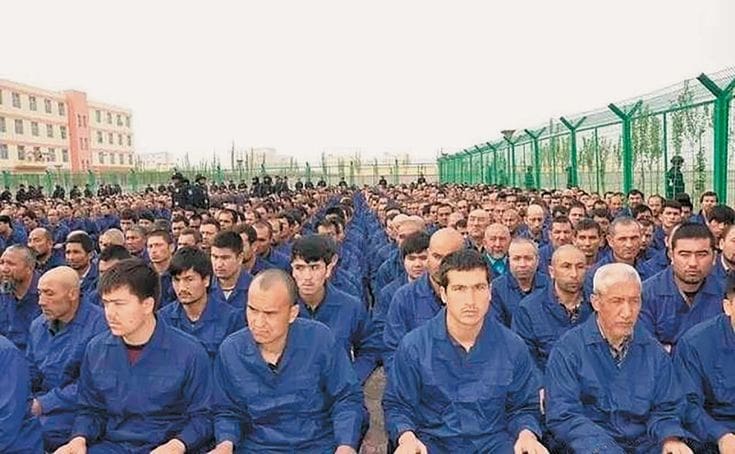
In East Turkestan (Xinjiang), this infrastructure reaches a catastrophic level of precision. High-density camera networks from state-backed companies such as Hikvision and Dahua link ethnic identifiers, prayer patterns and social connections to automate detentions. Estimates indicate more than one million Uyghurs held in re-education camps, amid forced labour programmes and campaigns to erase culture.
This state policy seamlessly blends public security justifications with private-sector innovation, allowing data from smart applications and devices, and even household appliances, to flow into centralised police databases. The Integrated Joint Operations Platform (IJOP) exemplifies this: it analyses data on up to 1.8 million Xinjiang residents daily, drawing on location data, purchase records and electricity consumption to determine "risk levels".
This extreme precision raises serious human rights concerns. Routine activities such as growing a beard or low vaccination rates trigger interventions, turning everyday life into a proactive monitoring regime.
Recent Crackdowns and Policy Shifts
The momentum of the surveillance empire grew in 1447 AH (2026 CE) through a series of state policies designed to strengthen control. On 31 March, an 18-point supply-chain security framework was revealed, granting authorities comprehensive export controls, blacklisting of entities, and punitive measures against "foreign threats". Ostensibly aimed at economic resilience, it was condemned as a shield for surveillance technology companies evading international investigation.
This built on a cybercrime bill issued in January that greatly expands police authority: it mandates tracking of users across platforms, indefinite account suspensions, compelled handover of data from technology companies, and travel bans without judicial review, institutionalising cross-border surveillance.
Parallel initiatives included an early privacy-violation campaign targeting advertising technology systems, mobile applications and facial recognition technologies which, despite resounding rhetoric about consumer protection, paradoxically strengthens state access to personal data under the cover of national security.
Influence beyond national borders is evident in reports that Chinese overseas students are being compelled to install surveillance applications, with their data routed to Beijing, undermining human rights protections such as anonymity and freedom of expression in democratic host countries.
Global Scrutiny and Its Human Rights Implications
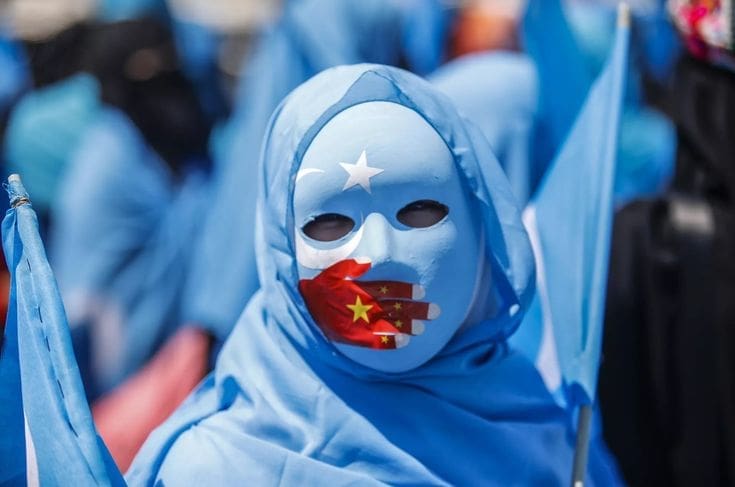
As revelations mount, global scrutiny focuses on how China's surveillance empire underpins human rights catastrophes in Xinjiang. Satellite imagery has identified more than 380 detention facilities, and the leaked "Xinjiang Papers" revealed AI-driven detention decisions based on iris scanning, DNA sampling and behavioural anomalies.
Beijing's counter-terrorism rhetoric, which insists these measures prevent extremism, conflicts with data showing unrest rising after surveillance was intensified, alongside United Nations assessments classifying these operations as potential crimes against humanity. European Parliament investigations in Sha'ban 1447 AH (early April 2026 CE) into equipment suppliers involved highlighted complicit supply chains, intensifying calls for transparency.
These consequences have been repeated through political responses. US Entity List designations since 1440 AH (2019 CE) have barred companies such as Hikvision from federal contracts, inspiring similar camera restrictions in the United Kingdom at sensitive sites, divestment from Australian universities, and ethical procurement guidelines in Canada.
European Union discussions in April signal the prospect of continent-wide import restrictions, driven by evidence linking exported technology to the genocide of the Uyghurs. The export of 80% of global facial recognition systems, deployed in Zimbabwe to suppress protests, in Venezuela to track opposition, and in African "smart cities" to control urban populations, fuels fears of repeated repression, as the adaptability of these tools turns democratic safeguards into weak points, as seen in Poland's retreat from a Huawei 5G network project in 1440 AH (2019 CE).
Exporting the Empire: Geopolitical Implications
China's Digital Silk Road initiative vigorously exports its surveillance empire, capturing 50% of the global camera industry and recording annual growth of 40% in AI patents, backed by state support that allows it to impose monopoly pricing that dominates markets. This state policy embeds vulnerabilities into the architecture of the Belt and Road Initiative, from border controls in Southeast Asia to public security networks in Latin America, reinforcing dependence on technology loyal to Beijing. The economic consequences are severe: Western sanctions have inflicted losses of billions of dollars on exporters, yet China remains able to withstand them by redirecting shipments to third countries and forging alliances with non-aligned states.
Human rights frameworks present these exports as direct enablers of Xinjiang's financing, prompting divestment driven by environmental, social and governance criteria, with BlackRock and Vanguard relinquishing stakes amid shareholder revolts, and lawsuits alleging complicity in atrocities. Multinational technology firms face dilemmas: cloud computing providers such as Microsoft attempt to navigate China's data localisation laws, provoking boycott campaigns. Geopolitically, the entity challenges US-led technological dominance, as supply-chain weaknesses are exposed in everything from port scanning equipment to urban traffic systems, highlighting the grave risks to digital infrastructure sovereignty.
Technological Backlash: Ethics Versus Dominance
The backlash against the technology has crystallised the clash between unrestrained innovation and ethical red lines. AI ethics experts have described China's output as "authoritarian AI" designed for repression rather than societal benefit. Restrictions imposed by companies such as OpenAI, Google and Anthropic limit access to models, while the European AI Act, which will take full effect in 1447 AH (2026 CE), classifies these systems as "high risk", mandating strict audits, transparency requirements and prohibitions on certain uses. In Xinjiang's harsh context, where routine profiling sustains collective persecution, the ethical risks of these tools become undeniable, shifting them from regional instruments to global threats.
The state's defences of stability crumble against measures of repression, provoking resistance: encrypted messaging such as Signal circumvents networks, decentralised VPNs pierce firewalls, and civil lawsuits in multiple jurisdictions target supporting entities.
A German review scheduled for April 2026 signals a possible EU-wide ban that would reduce market dominance, while the influx of the US CHIPS Act and the American Science Act, 52 billion dollars for semiconductors, empowers competitors such as TSMC and Intel. This ethical shift exposes the empire's weakness: over-reliance on coerced scale rather than trustworthy innovation.
Future Pathways
Projections for China's surveillance empire point to turbulent prospects, as concurrent international sanctions, mandatory ethical sourcing and sovereign technology architectures erode its foundations. Civil society tools are expanding, with zero-knowledge proof technology anonymising data and blockchain records being used to audit device sourcing, while investor flight accelerates under intensifying environmental, social and governance scrutiny.
Counter-policy measures, such as supply-chain hardening, offer temporary protection but expose companies to retaliation, from tariff wars to escalating cyberattacks. Advocacy for human rights remains central, as the plight of the Uyghurs stands as a resounding demand for dismantling the camps, halting exports and securing compensatory justice. Beijing's vision of protectionist sovereignty, which extends beyond its borders, conflicts with a growing global consensus on digital rights, reflected in the G7's commitments to "trusted technology".
In the absence of decisive multilateralism, through coordinated bans, criminal reviews and capacity-building for vulnerable states, this system is entrenched, yet the mounting fractures caused by economic isolation and counter-technological measures point to a possible collapse. Ultimately, dismantling this apparatus depends on moving beyond resounding rhetoric to build a rights-centred technological order, one that the repression of the Uyghurs should drive toward lasting reform.
Source: Impact International.


