

China's Erasure of Ethnic Minority Languages
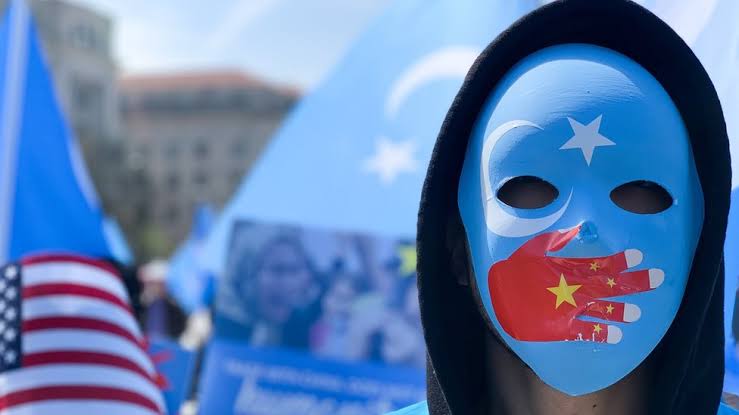
On 21 February 2026 (13 Safar 1448 AH), International Mother Language Day, the Chinese government did not celebrate linguistic diversity. Instead, it formally codified the abolition of minority languages as a medium of instruction in schools.
In December 2025 (Rabi al-Awwal 1447 AH), a standing committee of China's National People's Congress approved amendments to the Law on the Standard Spoken and Written Chinese Language. The amendments removed a provision that allowed students to be taught in their native languages, and affirmed only the teaching of Standard Chinese ("Mandarin") in all subjects, with the exception of the mother-tongue language taught separately.
Students from minority communities, such as speakers of Mongolian, Tibetan and Uyghur, will be taught all subjects exclusively in Chinese.
Their native languages will be taught as a separate subject only once, and not as a medium of learning. No evidence has emerged that the government consulted the affected minority communities before implementing this policy, although some families support bilingual education rather than an education that marginalises their native languages.
The decision of China's parliament conflicts with domestic and international laws, including:
The Chinese Constitution (such as Article 4), which provides for respect for the rights of minorities.
Regional autonomy laws that guarantee the protection of minority languages.
International laws relating to the right to education and equality, such as the Convention on the Rights of the Child and the International Convention on the Elimination of All Forms of Racial Discrimination, which oblige China to provide bilingual education and protect minority languages.
The policy is consistent with a broader approach of forced marginalisation
This policy is not isolated from wider trends:
Under Xi Jinping, the government has adopted repressive policies against ethnic communities, including mass detentions and forced changes to culture and religion.
A United Nations report in January 2026 (23 Jumada al-Akhirah 1447 AH) noted that the government's policy towards minority languages could be considered a form of "cultural genocide" and should possibly be treated as genocide by the international community.
Real examples of the effects of these policies:
In Tibet, colonial boarding schools force children to abandon their mother tongue so that they cannot speak with their grandparents in their native language.
In occupied East Turkistan, Uyghur-language textbooks have been replaced with Chinese-language books, obstructing the transmission of literature, religious heritage and poetry.
Widespread protests erupted in Inner Mongolia when the government attempted to amend the curriculum, and the authorities responded with mass arrests.
Painful political and personal consequences
Examples of punishment:
Rahile Dawut, founder of the Uyghur Folklore Research Centre, was sentenced to life imprisonment on charges of "separatism". Tashi Wangchuk, a Tibetan language-education activist, was sentenced to five years in prison in 2018 (1440 AH) and was repeatedly moved between prisons because of his activism.
The Mongolian activist Hada disappeared after a long prison term (15 years) followed by continuous surveillance after his release.
The importance of education in mother tongues
Global research shows that children learn better when education begins in their mother tongue first.
International law, such as the Convention on the Rights of the Child, also obliges states to provide education that ensures the protection of minority languages.
China is expected to undergo a review by the United Nations Committee on the Rights of the Child to assess its compliance with the conventions, but delays in the committee's schedule mean that this review has not yet taken place.
China's policies towards minority languages pose a direct threat to linguistic and cultural diversity within the country, and show that they are part of a wider strategy to assimilate minorities into the culture of the Han majority, with serious consequences for identity, culture and communities.


