

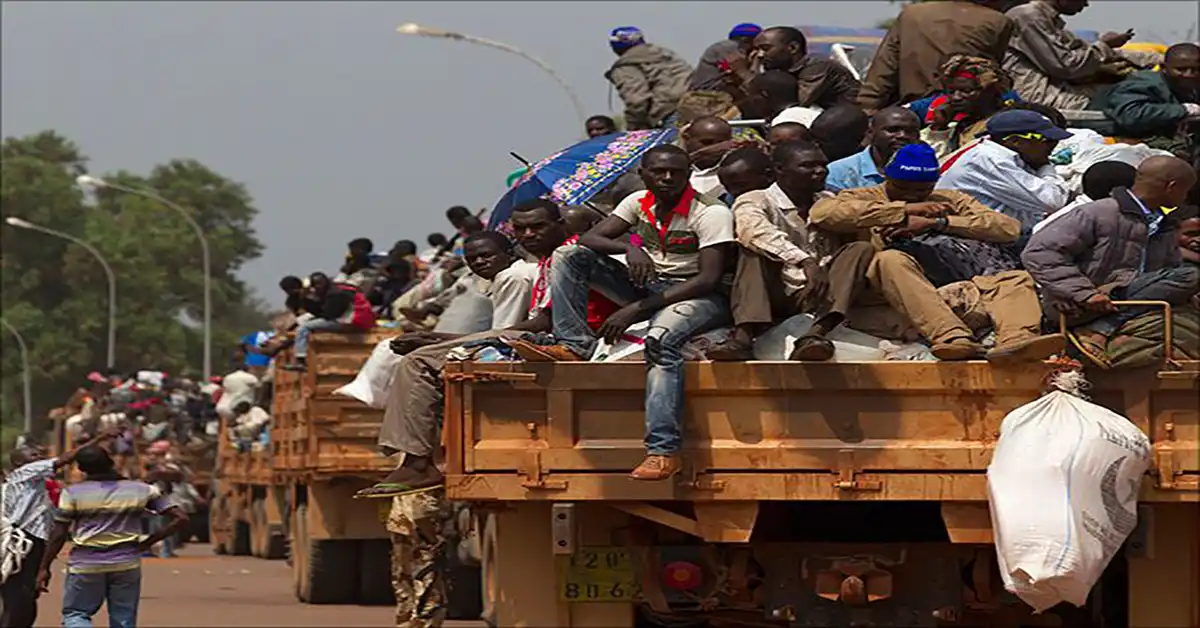
Chad and the Central African Republic, in cooperation with the United Nations High Commissioner for Refugees, have discussed arrangements for resuming the voluntary return of refugees from the Central African Republic residing in Chad, who number more than 140,000 people, the majority of whom are Muslims who fled their country because of attacks by the armed Christian militias known as "Anti-balaka."
The Central African Republic witnessed waves of sectarian violence, particularly during 2013 and 2014, in which Anti-balaka militias carried out attacks, killings and mass displacement, and a series of atrocities against Muslim civilians. This prompted large numbers of them to flee to neighbouring countries, most notably Chad. Human Rights Watch, Amnesty International and UNHCR have documented these violations and waves of displacement.
The tripartite committee, which includes representatives of Chad, the Central African Republic and UNHCR, met on 3 and 4 November 2026 in the Chadian capital, N'Djamena, to discuss practical mechanisms capable of relaunching the return programme and ensuring its implementation in safe and dignified conditions.
Security and Logistical Arrangements for the Return of Refugees
The meeting addressed the security and logistical aspects of the operation, in addition to defining the responsibilities of the participating parties, setting a timetable for the departure of the first groups of returnees, and estimating the resources needed to implement the programme.
These consultations are part of a regional process to find sustainable solutions for the situation of refugees and displaced persons, which began with the Yaoundé Declaration issued on 27 April 2022, with the participation of the Central African Republic and six host countries, including Chad. This was followed by the launch of the Solutions Platform in the capital, Bangui, in October 2023, and the adoption of an action plan in Brazzaville in February 2025.
The Central African Republic adopted a strategy for durable solutions for the period 2024–2028, aiming to facilitate the return of 300,000 refugees by 2028.
Chad, the Central African Republic and UNHCR signed a tripartite agreement on 22 October 2024 to organise the voluntary return of refugees from the Central African Republic residing in Chad. The agreement provided for the formation of a tripartite committee and a technical working group to follow up on the implementation of the operation.
According to data on intentions to return collected by UNHCR in September 2025, 61,725 refugees expressed their willingness to return to the Central African Republic.
Chad Affirms That Refugees Will Not Be Forced to Return
The Chadian Minister of Social Action, Solidarity and Humanitarian Affairs, Zahra Mohamed Issa, affirmed that the return of refugees must be voluntary, safe and dignified, stressing that her country will not force any refugee to return to their country against their will.
The minister said that "return is a right, not an obligation," affirming the continued provision of protection and assistance to refugees who do not currently wish to return, in accordance with Chadian laws and the country's international obligations.
The N'Djamena meeting came after a series of preparations, including the launch of operational activities in the Goz Beïda area on 27 March 2026, a joint field visit held between 14 and 17 September, as well as a technical meeting of experts in Bangui on 28 and 29 September 2026.


