


The Spanish city of Ceuta, on Morocco's northern coast, is living through a worsening humanitarian crisis, days after one of the largest mass crossings of migrants into Spanish territory. Hundreds of children and minors remain stranded in the city in difficult conditions, after the attempted crossing left dozens dead and hundreds of families scattered.
According to an Associated Press report, more than 800 minors remained in Ceuta after the wave of people that surged across the maritime border with Morocco, while many of them are still searching for relatives lost during the chaos that accompanied the attempt to reach the Spanish side.
The story of a girl who lost her brother and mother on the way
Among the most tragic stories is that of a 17-year-old girl from the Moroccan city of Tangier, who reached Spanish territory by sea, but lost her 8-year-old younger brother after he drowned during the crossing attempt, and lost her mother in the crush and chaos.
The girl said she saw Spanish police officers recovering her brother's body from the water, while she managed to reach the shore but found herself alone, without her family.
According to her testimony, the scene was shocking, as she said she saw people "trampling on the dead" during the stampede to reach the Spanish area.
After her arrival, some local residents helped her with food and clothing, and a woman hosted her in her home for a short period, before she headed to a youth centre, but found it full due to the large number of arriving minors.
Speaking through an interpreter, the girl said: "Now we are small children begging in the streets."
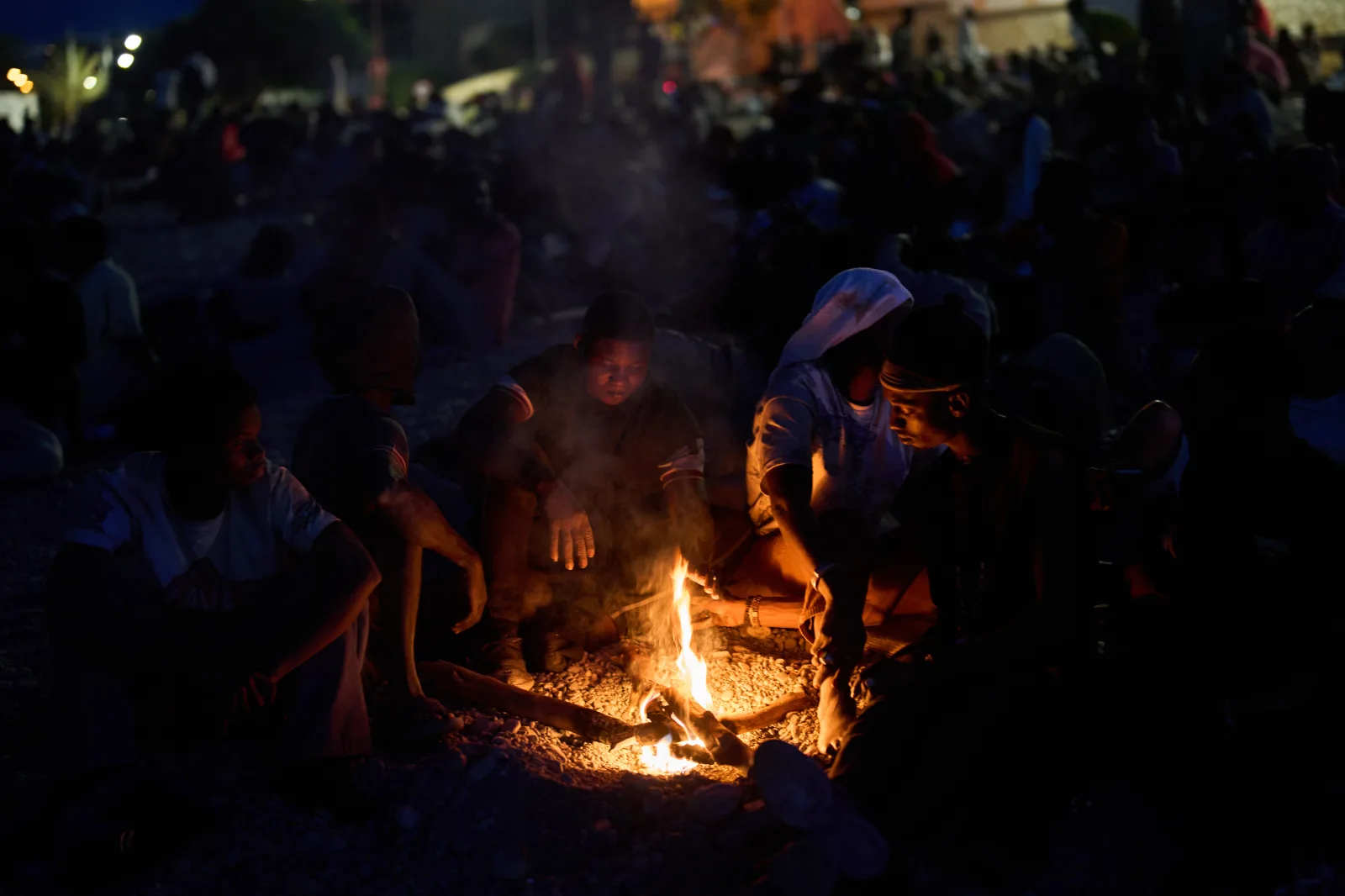
The largest wave of crossings in the recent crisis
This tragedy came after tens of thousands of people surged toward Ceuta during a collective attempt to cross the maritime and land border with Morocco.
Spanish authorities indicate that some 60,000 people took part in the crossing attempt, while the majority were able to return to Morocco voluntarily or were returned by the Spanish authorities.
However, between 3,000 and 5,000 people remained inside Ceuta after the wave of crossings ended, including large numbers of minors and migrants from various countries.
The Spanish authorities announced that 72 people died during the operation, most of them by drowning while attempting to cross the maritime barrier, while the Moroccan authorities reported 11 other deaths.
Spanish law requires the protection of minors
Spanish laws distinguish between adult migrants and minors who are unaccompanied by their families.
While adults are subject to procedures for asylum applications or deportation if the application is rejected, minors who arrive without companions are supposed to receive protection and care from the Spanish authorities.
However, the current crisis has revealed major difficulties in applying these procedures, due to the large number of children who arrived within a short period.
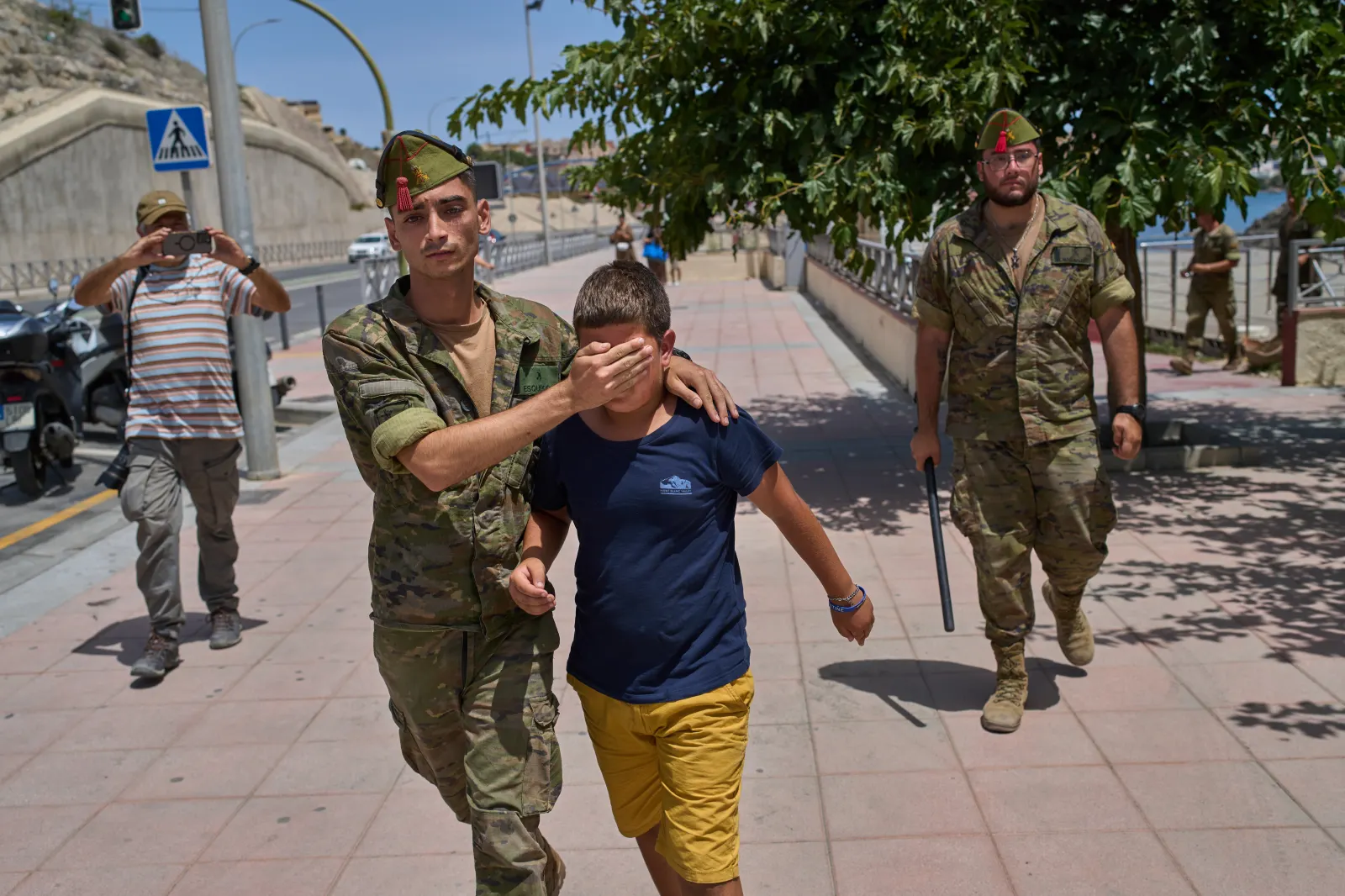
In one case, journalists saw a 12-year-old Moroccan boy crying and pleading not to be returned to Morocco, after the authorities were escorting him toward the border.
His return was halted minutes before he reached the Moroccan side, after intervention by local residents and journalists who confirmed that he was a minor, and he was transferred to the Spanish Guardia Civil.
Shelters are full and aid is scarce
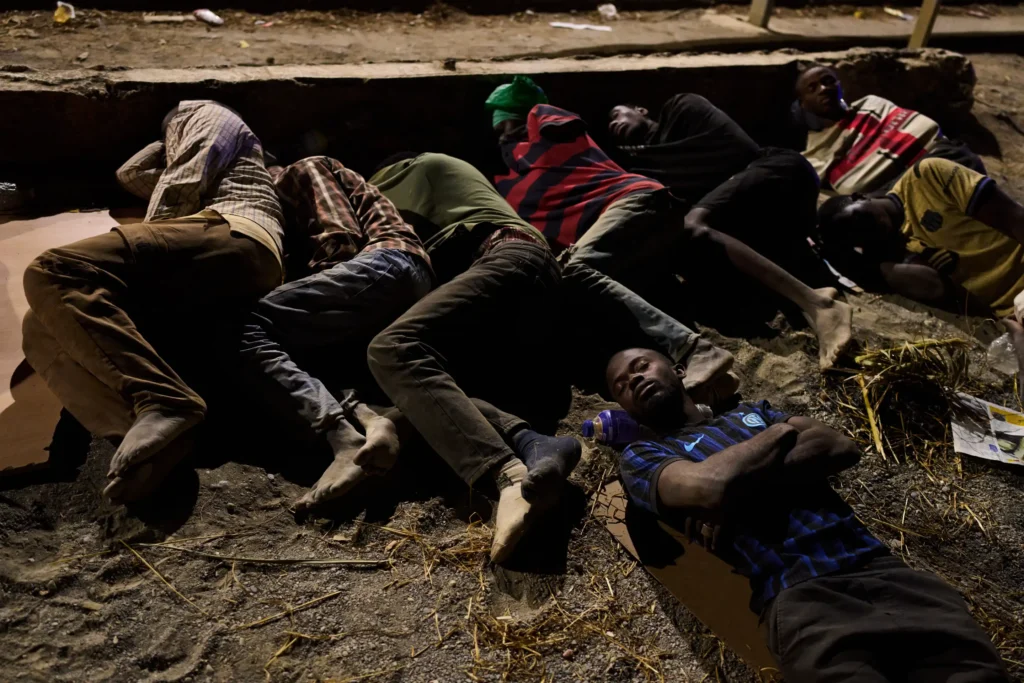
The minors' reception centre in Ceuta, which has a capacity of about 600 people, has become completely full, and many migrants have been forced to sleep on the beaches or in the high areas surrounding the city.
Associated Press journalists recorded scenes of children asking for food, at a time when pressure is mounting on local authorities who are facing a crisis beyond their absorption capacity.
A migration activist from the local association "Elin" said that some believe the pressure resulting from a shortage of food and water and exhaustion may push some migrants to voluntarily return to Morocco.
Sudan, Gaza and Afghanistan among those stranded
The wave of crossings was not limited to Moroccan migrants, as people of other nationalities also remained in Ceuta, including Sudanese who fled the ongoing war in Sudan, Palestinians from the Gaza Strip, Afghans, and migrants from other African countries.
This composition highlights that the Ceuta crisis is no longer linked only to economic migration, but has become a meeting point for people fleeing conflicts, poverty and instability in various parts of the world.
Ceuta: a small gateway into Europe and a crisis bigger than its borders
Ceuta, a Spanish enclave on Morocco's northern coast, is one of the shortest land and sea routes into the European Union for many migrants.
However, the recent incident has reopened debate in Europe over migration policies, and over the limits of states' responsibility to protect borders on the one hand, and to guarantee the rights of children and migrants on the other.
While Europe remains preoccupied with managing migration flows, hundreds of children in Ceuta remain stranded between an uncertain future and tragic memories of a journey that, for some of them, ended with the loss of family members before their new lives could begin.


