


The Spanish city of Ceuta, on Morocco's northern Mediterranean coast, witnessed one of the largest irregular migration waves in its history, after tens of thousands of migrants crossed the border from the Moroccan side within hours. The Spanish government deployed army units to support security forces and restore control over the situation.
Spanish authorities said the sudden influx of migrants caused a near-complete breakdown of border procedures. The local government of Ceuta called on Madrid to send security reinforcements and declare a state of emergency. Spanish Prime Minister Pedro Sánchez responded by sending army and Civil Guard forces, and travelled to the city together with the Minister of Interior to follow developments on the ground.
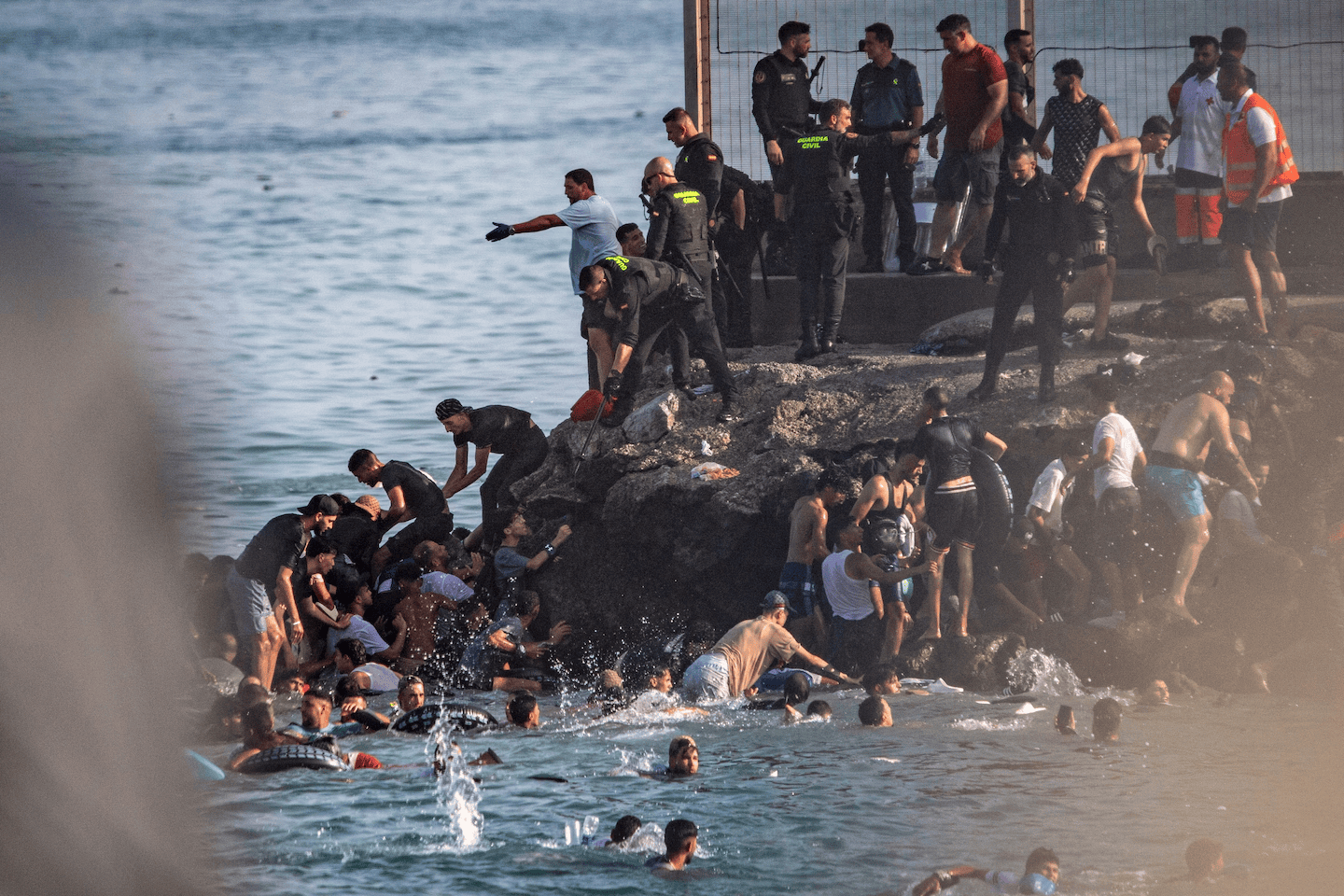
According to the authorities, thousands of people, most of them Moroccans along with migrants from sub-Saharan African countries, reached Ceuta on foot or by swimming across the sea, while video footage showed large crowds at Tarajal beach and on the roads leading to the city. Reception centres were filled with migrants, and many were forced to sleep in the open air because the numbers exceeded their capacity.
The crossing attempts resulted in dozens of deaths. In the latest toll published by the Associated Press, the number of deaths rose to 57 people, after earlier estimates had indicated lower figures. Most of the victims are believed to have died by drowning or as a result of crushing during attempts to reach the city.
In a notable development, Spanish authorities said that some 48,300 migrants voluntarily returned to Morocco within less than a day, while the total number of people who entered Ceuta during the crisis exceeded 60,000, a figure equivalent to about 70% of the city's population. This makes it one of the largest mass crossings into European territory in the region's history.
For its part, the Spanish Ministry of Interior confirmed continued coordination with the Moroccan authorities to return those who entered irregularly, while Rabat said it is cooperating with Madrid to prevent further crossing attempts. The causes of the sudden eruption of the crisis remain under discussion, with reports of human trafficking networks exploiting rumours that spread following a Spanish court ruling concerning procedures for returning migrants arriving by sea.
The crisis drew wide reactions across Europe. The Spanish Prime Minister stressed that what took place constitutes an attack on the integrity of Spain's border, while the developments prompted several European countries to tighten their border measures, and the migration crisis returned to the forefront of political debate within the European Union over protecting external borders and managing migrant flows.
Ceuta, together with Melilla, are the only two land crossings linking the European Union with the African continent, and they therefore regularly witness attempts by migrants seeking to reach Europe. However, the current wave is considered the largest since the 2021 crisis, both in terms of the number of crossers and the scale of the humanitarian and political repercussions it has left behind.


