


While Moroccan families are still waiting for news of their sons who went missing while attempting to cross from Moroccan coasts to Ceuta, questions are mounting about how the Moroccan authorities have handled one of the most cruel migration tragedies in the region.
The human dimension of the scene does not end with the victims' numbers, which change as search and recovery operations continue. Behind every missing person is a family waiting for an answer, a mother looking for news to ease her anxiety, and a father who wants to know whether his son is alive or whether the sea has taken him. According to the latest toll reported by Reuters, the number of deaths has risen to 72 people, after five additional bodies were found off the coast, while more than a thousand people received treatment since the start of the mass crossing wave.
عائلات تنتظر.. ومعلومات شحيحة
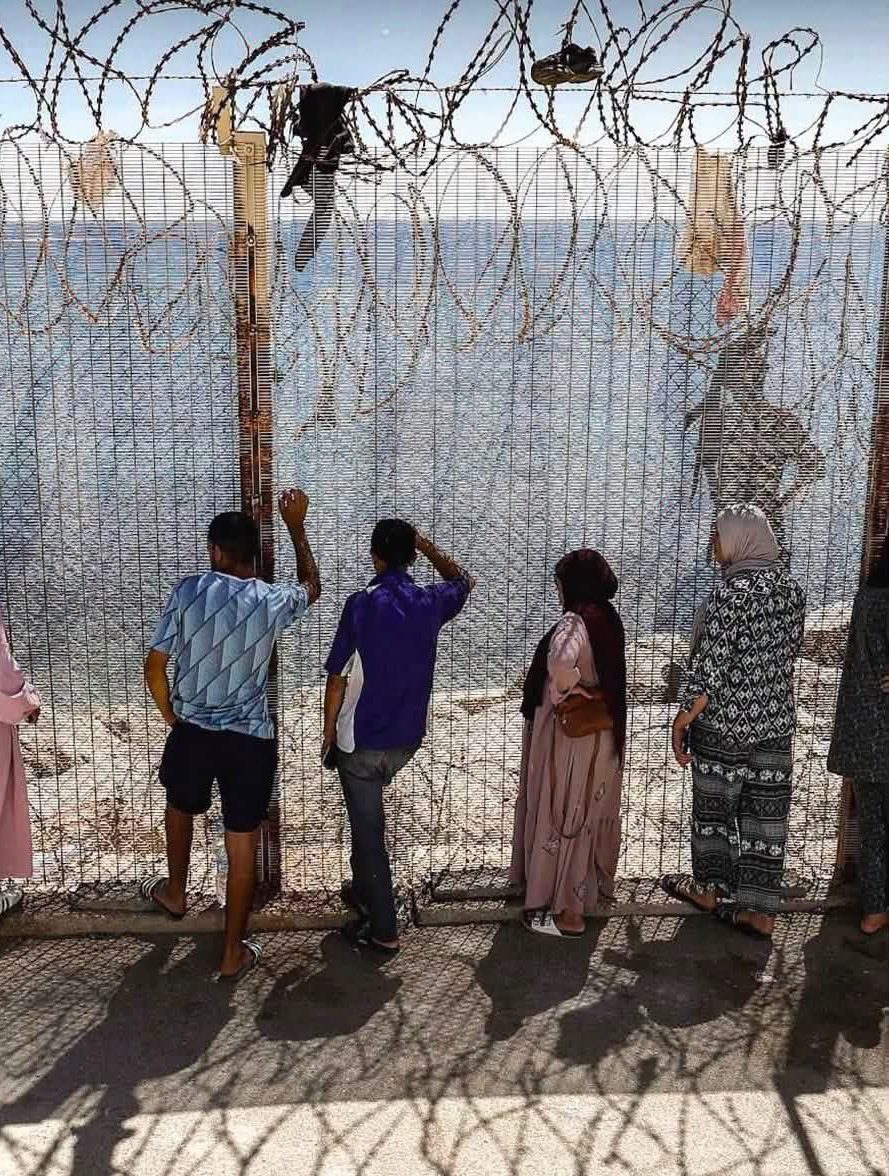
As families try to obtain any information about their sons, testimonies and reports have emerged in recent days about families searching for missing persons after attempts to cross by swimming from Morocco to Ceuta. Local reports had spoken, before the latest tragedy, of an increase in cases of disappearance among young Moroccans who had tried to reach Ceuta by swimming, and of their families resorting to publishing photos of their sons and their names in the hope of obtaining any information about their fate.
This raises the most pressing question: where is the official Moroccan communication with these families?
In such disasters, official handling should not be limited to the security side or border control. It should also include informing families of their sons' fate, clarifying the numbers of missing persons and victims, coordinating the identification of bodies and their return to their relatives, and providing support to families living in a state of waiting and anxiety.
Has the tragedy become only a border security issue?
The problem is that treating irregular migration solely as a security file may obscure the humanitarian side of the tragedy. The young men who attempted the crossing are not merely figures in migration statistics; they are citizens with families waiting for them. Even if crossing the border irregularly is against the law, that does not cancel their families' right to know their fate, nor does it exempt the authorities from their responsibility to communicate, search and respond humanitarianly. The tragedy has revealed the scale of the crisis: Reuters spoke of more than 50,000 migrants surging toward Ceuta during the events, most of whom returned to Morocco within 48 hours, while others died by drowning or in the stampede and attempts to cross.
This exceptional scale of events makes the need for accurate official information more urgent, not less.
Official silence adds to the families' suffering
The absence of a clear and detailed Moroccan government statement on the missing means the problem concerns not only media communication but also the families' right to know. In disasters, the absence of official information leaves families facing scattered sources, contradictory testimonies and images circulated on social media, which may increase anxiety and make families vulnerable to rumours. In previous cases, the Moroccan authorities have shown that they possess official mechanisms for dealing with disappearances: in March 2026, the General Directorate of National Security said the "Tfli Mkhtfi" (My Child Is Missing) system is dedicated to reporting cases of missing children. Hence, the question is not only: how many people have died? but also: how many people are still missing? Who is tasked with compiling their names? Have their families been officially informed? And what measures have been taken to identify the victims?
A tragedy that requires answers, not just numbers
Responsibility at this moment does not rest with Morocco alone. The tragedy occurred on the border between Morocco and Spain, and Spain is likewise concerned with rescue, search, identification of victims and informing their relatives.
However, Morocco's position as the departure point for most of these migrants makes it a key party in any humanitarian response, particularly regarding communication with the families of the missing and coordination on victims' identities. Moreover, the rise in the number of deaths to dozens of people in a short period calls for a transparent investigation into the circumstances of the tragedy, into how the mass crossing wave began, how the authorities on both sides of the border dealt with it, and what measures were taken to rescue the people who found themselves at sea.
The question that cannot be ignored is that the families of the missing do not need lengthy political statements as much as they need the truth. They want to know: who has been rescued? Who has been taken to hospitals? Who has died? Who is still missing? Where are the victims' bodies? And when will the families be able to learn the fate of their sons?
Leaving these families in a state of waiting, without clear and updated information, turns the tragedy from a humanitarian catastrophe into a crisis of trust between citizens and state institutions. Therefore, what is required of the Moroccan government is not only to speak about combating irregular migration, but to provide an official, transparent disclosure of the numbers of missing persons and victims, a statement of what the authorities are doing to search for them, direct communication with their families, and the opening of an investigation into the circumstances of the tragedy.
Behind every number is a name, and behind every name is a family waiting. At such moments, silence is not neutrality; it may be the most painful part of the news itself.


