


An estimated 150,000 to 200,000 Ismailis of the Aga Khani Ismaili sect live in the Islamic Emirate of Afghanistan. They belong to various ethnicities, including Tajiks and Pashtuns, while the majority belong to the Hazara ethnicity.
The Ismailis are spread across the provinces of Badakhshan, Baghlan, Bamyan, Kabul and Kandahar, and their largest gathering is in Badakhshan Province in northeastern Afghanistan.
Since the withdrawal of occupation forces from Afghanistan and the collapse of the Western-backed Kabul government, the Islamic Emirate of Afghanistan has taken several measures to call the Shia living in the country to Islam, focusing in particular on the Ismaili sect.
The first steps in calling the Ismailis were the restoration of Sunni mosques that had been taken over by Ismailis in 2001 (1421–1422 AH), so that activity could proceed according to the Sunni method prevalent in Afghanistan, the rebuilding of mosques destroyed in their areas, and the closure of what are called houses of worship in Ismaili areas, since the Aga Khanis do not build mosques but their own temples.
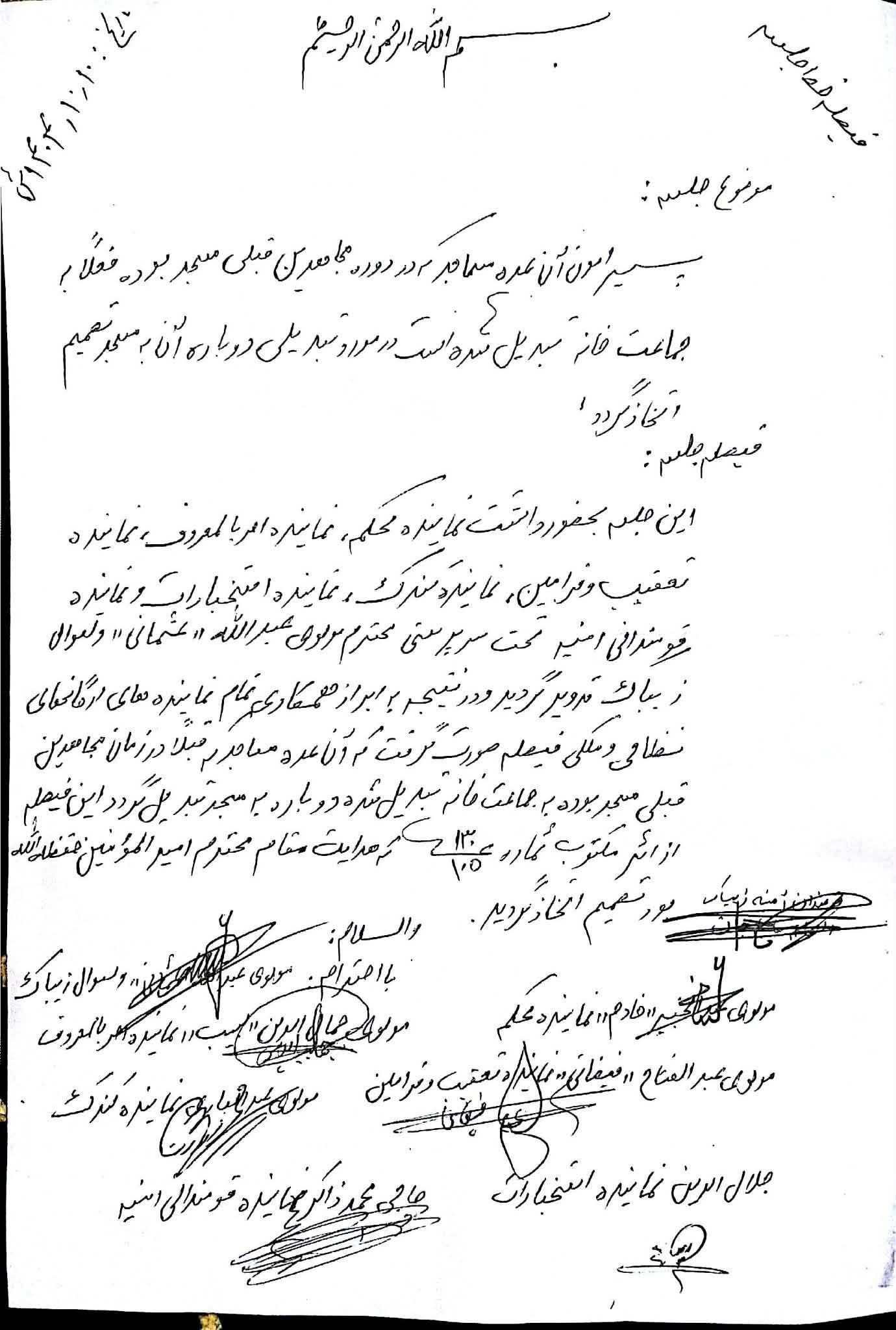
A documented letter from the governor of Badakhshan Province bearing the order to restore the activity of Sunni mosques
Calls for Ismailis to attend Afghan Sunni mosques outside Ismaili areas increased, where specialist imams are present to respond to the doubts of the Batiniyya, alongside da'wa activity inside schools, where Ismaili families are obliged to send their children to the Emirate's schools to receive Islamic education.
Conversely, any Ismaili family that refuses to send its children to schools finds itself obliged to pay a financial penalty.
The Emirate's Ministry for the Promotion of Virtue and the Prevention of Vice requires Ismailis to perform the outward rites of Islam, such as prayer and fasting.
These measures are accompanied by a ban on Muslims marrying Ismailis, a ban on burying Ismailis in Muslim cemeteries, a ban on employing them in government posts, and a ban on teaching the Ismaili doctrine even among Ismailis themselves, just as the teaching of the Twelver Shia doctrine has been fully prohibited.
The Emirate has taken measures to support new converts from among the Ismailis who have embraced Islam, by providing them with protection from harassment by Ismailis, in addition to providing employment opportunities to improve their living conditions and ensuring freedom of movement to areas outside Ismaili presence.
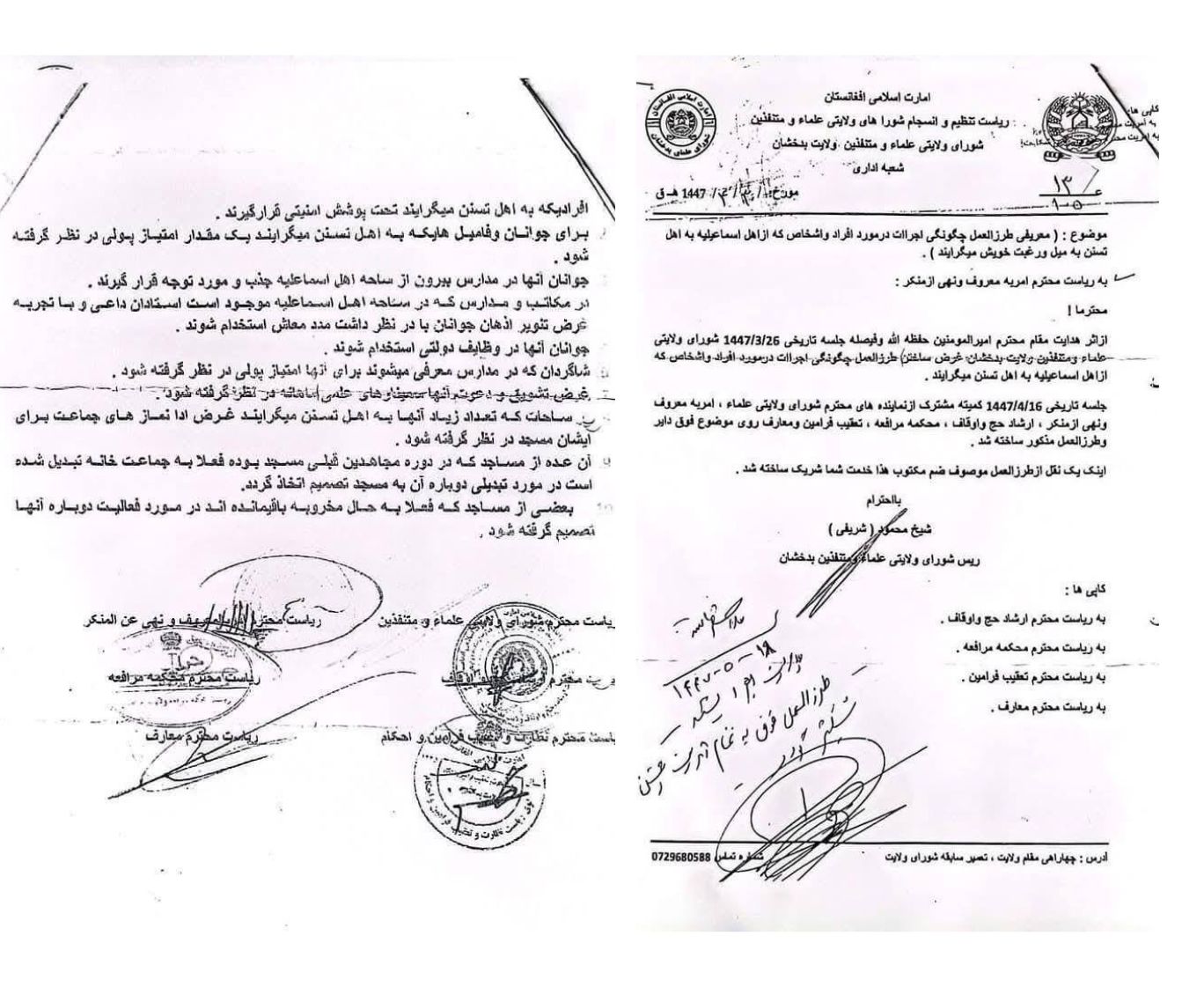
An order to support new converts
These measures have produced several results that the Emirate considers positive: many Ismailis have embraced Islam, and their numbers have declined in some areas.
It is notable in this regard that the measures the Emirate takes in calling the Ismailis closely resemble, in the opposite direction, the measures that were taken in the past to spread the Batiniyya da'wa.
This follows what Ibn Taymiyya, may God have mercy on him, said regarding dealing with the Batiniyya sects: "The way to deal with them is to be cautious about their affairs, not to leave them gathered together, not to allow them to carry weapons or to be among the fighters, to require them to observe the laws of Islam, including the five daily prayers and the recitation of the Qur'an, and to leave among them someone who teaches them the religion of Islam, and to prevent them from their teacher."
He also said: "They must be required to observe the laws of Islam until it becomes clear what good or evil they do; and whoever among their leaders of misguidance declares repentance is removed from among them and sent to the lands of the Muslims where they have no presence."
Many rulers of the Muslims in various eras applied these principles in calling the Batiniyya sects, and the most famous of these attempts was the call to the Nusayris, when Salah al-Din al-Ayyubi and Baybars of the Mamluk state, as well as the sultans of the Ottoman state, built mosques in Nusayri areas, obliged them to perform acts of worship, and displayed the rites of Islam.
Nevertheless, the most prominent reason the misguidance of the Batiniyya sects was never eliminated was the weakness and fall of Muslim states, whereupon these groups regained strength, demolished mosques, and continued in their misguided beliefs.
Observers expect that if the Islamic Emirate of Afghanistan continues in a state of strength, control and empowerment, it may be accompanied by a continuous decline in the number of Ismailis in Afghanistan.
It is worth noting that other minorities, such as Christians, Hindus and Sikhs, among others, have seen a sharp decline in their numbers, according to the latest statistics, which estimate their numbers at only tens.


