


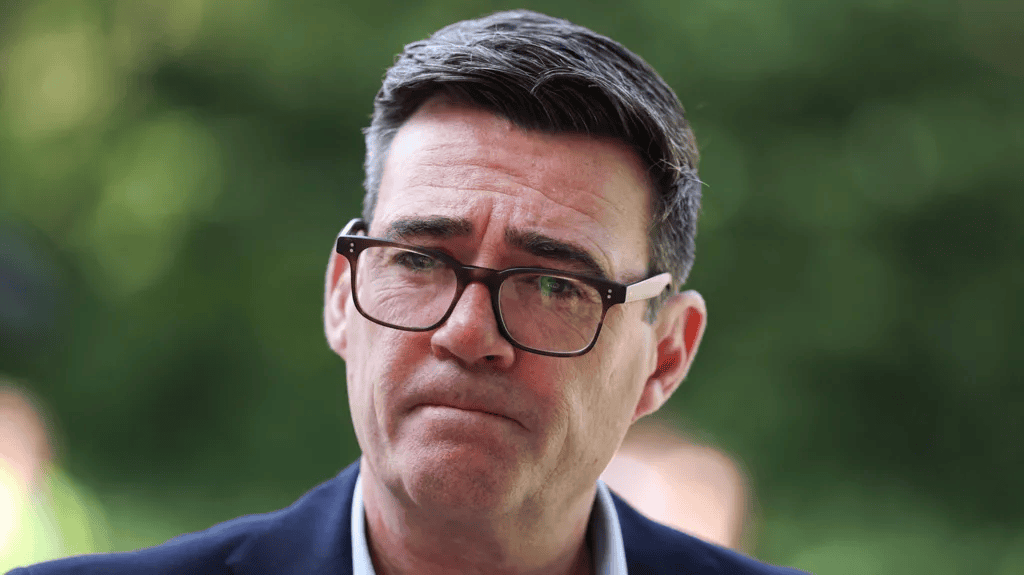
The apology by the new British Prime Minister Andy Burnham for the Labour Party's position at the start of the war on Gaza has raised wide questions about his ability to restore the trust of Muslim voters, many of whom have drifted away from the party in recent years over its stance on the Israeli war on the Strip.
Just weeks after taking office, Burnham acknowledged that the Labour Party "did not handle" the Gaza crisis properly at its outset, and apologised for the "great pain" caused by the party's position. At the same time, he affirmed his condemnation of the 7 October 2023 attack and called for a different approach in the next phase.
An apology that does not erase the loss of trust
In Bradford, which is home to one of the largest Muslim communities in Britain, many residents see the apology as a positive step, but not one sufficient to rebuild the trust damaged during the war.
A number of voters say they want to see practical policies, not just political statements, arguing that the real judgement will rest on the new government's positions on Gaza rather than on apologies.
Businessman Adel Hussain said Burnham's apology "gives cause for hope," but that he still doubts politicians' commitment to their promises, adding that parties often make promises before elections and then retreat from them once they reach power.
His wife, Jamila, who previously supported the Labour Party, confirmed that she had lost her trust in the party, describing the apology as "just words," and said the war on Gaza had changed the outlook of many Muslims and young people towards British politics.
Gaza redraws the political map
The war on Gaza has become one of the most prominent factors that have reshaped the political landscape in Bradford and a number of other British cities with dense Muslim populations.
In the last election, Labour lost part of its traditional base to independent candidates and the Green Party, after many voters felt the party had not taken a firm stance on a ceasefire in the early stages of the war.
Observers view this electoral shift as part of the decline the party faced before the departure of Keir Starmer's government, and say that regaining this base will not be an easy task.
Young people more sceptical
Independent politician Mohammed Ali Islam, who contested the 2024 parliamentary election and came close to defeating Labour MP Naz Shah, says Burnham deserves credit for the apology, but believes that "the damage has already been done."
He explained that many young Muslims formed their first impression of the Labour Party during the war on Gaza, and therefore an apology alone will not be enough to change that impression, stressing that "first impressions last."
Words alone are not enough
Narjis Kiani, a Bradford resident, says that "apologising is easy, but what matters most is taking real action," adding that restoring trust requires clear policies reflected in Britain's position on the war in Gaza.
Her husband, Mohammed Kiani, by contrast, sees the apology as a good beginning, but does not expect it to quickly persuade voters to return to supporting the Labour Party.
A real political test
Analysts see Burnham facing a complex political test, as he seeks to rebuild relations with Muslim voters at a time when the war on Gaza remains a strongly present issue in the political consciousness of many British cities.
While some voters have welcomed the change in tone of the new government, many insist that trust will not be restored unless the apologies are matched by practical steps that reflect a genuine shift in the British government's policy towards the war in Gaza and the Palestinian cause.
Agencies


