


Burkina Faso has for months witnessed rising tension between military authorities and a segment of Sunni Muslim clerics, over a new law regulating religious freedoms, the arrest of imams who criticised the government's direction, and the closure of the main Sunni mosque in the capital Ouagadougou and the detention of dozens of protesters demanding the release of one of their most prominent scholars.
The most prominent chapter of the crisis erupted on 26 May 2026, when authorities arrested Imam Mohamed Issa Kindo, one of the country's most prominent Sunni scholars and preachers, days after he criticised the draft law on religious freedoms that the government was seeking to adopt. The Union of Islamic Associations of Burkina Faso confirmed Kindo's arrest at the time, saying the reasons had not been officially communicated to him, and called on Muslims to remain calm and exercise restraint.
From a dispute over prayer to arrest
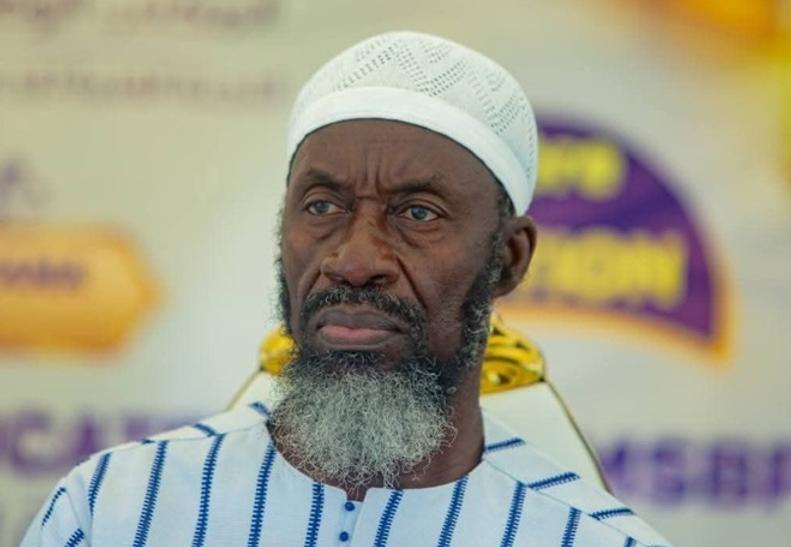
Kindo's arrest followed the circulation of an audio recording in which he criticised some provisions of the draft law, particularly restrictions relating to places of worship in public institutions. According to press reports, Kindo warned against restricting prayer in public places.
The government says the legislation was introduced to address a legal vacuum, regulate the exercise of religious freedoms, safeguard social cohesion and counter intolerance and extremism, stressing that it guarantees freedom of conscience, belief and worship. The Transitional Legislative Assembly passed the law unanimously on 20 June, and it consists of 112 articles.
However, the legislation provoked objections among Islamic circles, and the dispute widened after Kindo's arrest.
Protests and closure of the main Sunni mosque
Hundreds of the imam's supporters took to the streets after his arrest to demand his release, and some gathered in front of the main Sunni mosque in Ouagadougou, while security forces used tear gas to disperse protesters, according to press reports.
Following the protests, authorities issued a decision to close the main Sunni mosque in the capital, justifying the measure by the risk of disturbances to public order. Around 100 protesters were also arrested.
Reports citing a security source said some 100 of Kindo's supporters were transferred to a military camp for what the authorities described as "civic training." The local outlet FasoCheck also verified the authenticity of a video showing detained protesters being taken to a military barracks, while warning against the spread of fabricated videos and other misleading information about the case.
Arrest of another imam before Kindo
The Kindo case was not the first of its kind. In mid-April, Imam Mahmoud Barro was arrested in the city of Bobo-Dioulasso, in a similar context of tension between the authorities and some Sunni religious figures.
Within weeks, the dispute thus moved from a debate over regulating religious freedoms to a case involving the arrest of two prominent Muslim scholars, protests by worshippers, the detention of dozens of them, and the closure of a major mosque.
Traoré speaks of confronting "extremism"
In July, the head of the transitional authority, Ibrahim Traoré, escalated his rhetoric towards some scholars whom he accuses of spreading extremist ideas, saying the state would confront what he described as "extremist Islam," and that imams who use their sermons to spread ideas the authorities consider extremist could be detained. At the same time, he said the state would support scholars who call for what he described as peaceful Islam.
Traoré also announced a plan to bring back Burkinabe students studying Islamic sciences in Arab countries, linking this to the country's need for other academic disciplines and professional skills, a step that added the issue of Islamic education abroad to the scope of the dispute.
Two narratives
The authorities present the measures as part of regulating the religious sphere, protecting the secular character of the state and public order, and confronting violent extremism, in a country engaged in a long war against jihadist groups. The official discourse on the religious freedoms law states that it targets all religious institutions, not Muslims alone.
On the other side, the arrests, the closure of the mosque and the new restrictions have raised concerns about the limits of freedom of religious expression and the space available for Muslim scholars to object to government policies.
The case is particularly sensitive in a country where Muslims form the majority of the population, and where a number of Muslim scholars supported the military authorities after Traoré came to power in 2022, before the current disputes emerged.
With uncertainty continuing over the fate of some detainees, the cases of Mohamed Issa Kindo and Mahmoud Barro, the Sunni mosque in Ouagadougou, and the implementation of the new religious freedoms law have become key files for monitoring the situation of Muslims and religious freedoms in Burkina Faso.


