


In every age a power emerges that believes it has come close to breaking the limits that have governed humanity since the dawn of history. At times it was military empires, at others industrial revolutions, and today advanced technology stands at the forefront, promising humans what for centuries was regarded as beyond the realm of the possible.
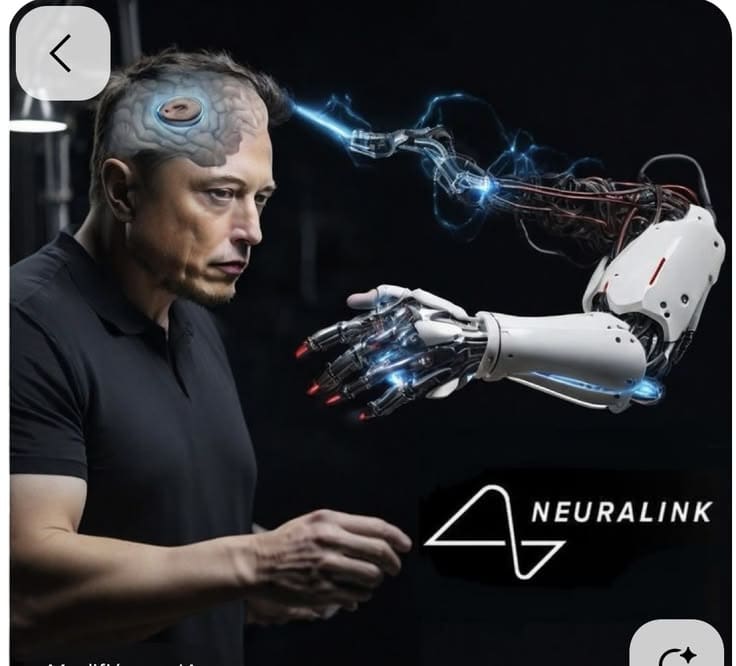
Yet what is striking is that the controversy sparked by the statements of the American billionaire Elon Musk today, Monday, was not so much about the technology itself as about the language used to describe it. In remarks about the developments achieved by the company Neuralink, which specialises in implanting brain chips, Musk said the new technologies could enable people with serious injuries to the brain and spinal cord to regain lost abilities, could help those who have lost the power of speech to speak again, and might in the future make it possible to restore sight even to those who were born blind.
Here the debate is no longer only scientific; it has turned into a larger moral and civilisational question: has modern technology begun to speak in a language that goes beyond the boundaries of science itself?
When science approaches the boundaries of the unseen
No one disputes that the medical achievements made in recent decades, by God's will, are remarkable by any measure. Brain chips have indeed helped some paralysed patients control computers and move digital cursors using neural signals alone.
Neuralink has also announced that a number of patients used the technology to interact with the digital world in ways that were not previously available to them. These developments represent a genuine scientific leap, but there is a large difference between celebrating a scientific achievement and portraying it as an approach to miracles.
For this reason, comparing scientific progress to miracles is particularly sensitive for many people, because it moves the discussion from the field of research and experimentation into a completely different space related to belief and faith. It is therefore no surprise that Musk's words provoked wide reactions, especially as they came from one of the most prominent figures of the contemporary technological revolution.
Silicon Valley and the dream of transcending the human
What Musk said cannot be separated from the intellectual culture prevailing within part of the American technological elite. For years, a number of technology pioneers have spoken of the possibility of radically extending lifespans, linking the brain to computers, uploading human consciousness digitally, overcoming old age, and perhaps reaching new forms of human existence in the future.
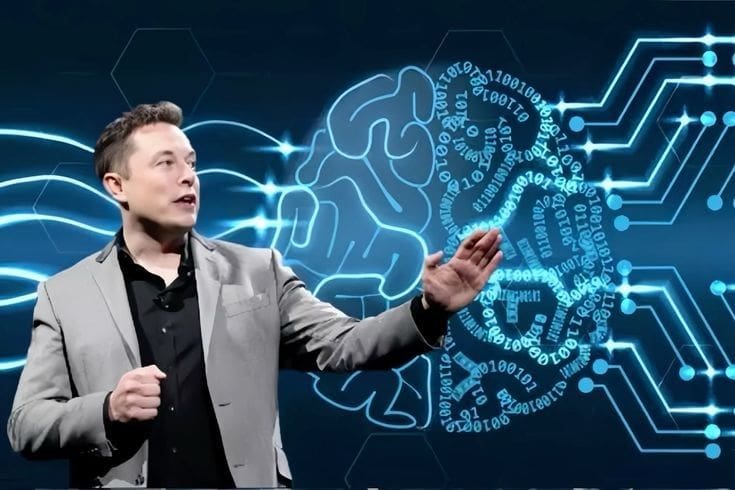
In this vision, death is no longer a final decree, illness is no longer an insurmountable ceiling, and even human capacities are no longer fixed limits. It is a philosophy that sees technology not merely as a tool for improving human life, but as a means of redefining the human being itself, and herein lies the essence of the debate.
From the ancient to the modern towers
The Holy Qur'an presents recurring examples of peoples who possessed power, wealth and great construction, yet fell into the trap of arrogance. Among the best-known of these examples is the people of 'Ad, whom the Qur'an described as having built massive structures and vast installations on the heights, making material strength the emblem of their superiority.
Despite the enormous difference between the world of the people of 'Ad and today's digital world, the common thread lies in a single idea: the belief that a human being can overcome every limit if he possesses enough power.
In the past, power was stone, palaces and walls; today it has become electronic chips, artificial intelligence and advanced algorithms. Yet the question remains the same: has the human being become a technical project?
One of the most controversial issues in the Neuralink project relates not to medical treatment but to what comes after treatment. If the chips succeed in restoring some lost abilities, will the matter stop there? And what happens when the boundary between therapy and enhancement becomes unclear?
These questions are no longer science fiction. Many researchers warn that the rapid development of brain-computer technologies could open the door to unprecedented social and ethical transformations.
The strength that precedes the fall
History holds a notable paradox: many civilisations did not begin to decline when they became weak, but when they believed they had reached a stage from which they could never fall.
The problem was never strength in itself, but the belief that strength alone is enough to guarantee survival. For this reason, some thinkers argue that the real danger lies not in technology but in the mindset that treats it as a substitute for everything else.
When technical capability becomes a source of absolute confidence, progress turns from a blessing into an illusion.
Between scientific achievement and human humility
The importance of what companies such as Neuralink are achieving cannot be denied. If technology can restore movement to the paralysed, speech to the mute, or hope to the patient, this represents a great human achievement. But the difference remains clear between celebrating science and turning it into a new creed.
Science in its essence is an ongoing process of inquiry, whereas in religious understanding a miracle is an exceptional event tied to the will of God alone.
Beyond Musk's statements
Perhaps the words of Elon Musk reveal more than he intended. They express not only a technical project or a medical vision, but the spirit of an entire age that is increasingly convinced that technology can solve every human problem.
Brain chips may succeed in restoring sight, movement or speech, and they may achieve advances that change the lives of millions. Yet they will not cancel the truth that has accompanied humanity since its beginning: that a miracle remains a miracle, and that scientific progress, however far it goes, does not make the human being master of the universe, but gives him a greater responsibility for how he uses the power in his hands.
Perhaps this is the most important message deserving reflection amid the noise surrounding the artificial intelligence revolution and brain-computer interfaces: not everything we are able to do should lead us to believe that we have become capable of doing everything.


