


Wasl News | Blockade of the Strait of Hormuz and All Iranian Ports
US Central Command (CENTCOM) announced that it will begin implementing President Donald Trump's decision to impose a naval blockade on the Strait of Hormuz and all maritime traffic entering and leaving Iranian ports located on the Arabian Gulf and the Gulf of Oman, effective today, Monday, 13 April, at 10:00 a.m. US Eastern Time (5:00 p.m. Jerusalem time).
Also read: The Strait of Hormuz: Its Importance and Impact.
Procedures and Warnings for Vessels
Central Command indicated that the blockade will include vessels arriving from all countries bound for Iranian ports.
CENTCOM stressed that it will not impede freedom of navigation for vessels transiting the Strait of Hormuz to and from non-Iranian ports.
Also read: Continued Closure of the Strait of Hormuz Threatens Higher Oil Prices Worldwide
It clarified that commercial vessel crews will be provided with additional information through an official notice before the naval blockade of the Strait of Hormuz and all Iranian ports takes effect.
It advised all seafarers to monitor the radio broadcast "Notices to Mariners" and to contact US naval forces via the direct communication channel with "Command Towers" on channel 16, when operating in the Gulf of Oman area and nearby sea lanes or those leading to the Strait of Hormuz.
The following is a list of the ports Iran possesses.
Iranian Ports
Ports of Southern Iran:
Bandar Abbas Port (Shahid Rajaee): Iran's largest commercial port; handles around 80 million tonnes of cargo annually.
Imam Khomeini Port: Located in Khuzestan Province, it is one of the main centres for importing grain and basic commodities.
Chabahar Port (Shahid Beheshti Port): Iran's only port directly overlooking the Gulf of Oman, and a strategic gateway linking India with Central Asia.
Bushehr Port: A historic and important commercial port serving the central Gulf region.
Khorramshahr Port: Located on the Shatt al-Arab, it is a major commercial port for river and sea transport.
Kharg Island Terminal: Iran's most important oil port, through which around 90% of crude oil exports pass.
Other ports in southern Iran: Asaluyeh Port (linked to the gas sector), Mahshahr Port, and Abadan Port.
Ports of Northern Iran (Caspian Sea):
Bandar Anzali Port: Iran's largest and oldest port on the Caspian Sea.
Nowshahr Port: An important commercial and tourist port in Mazandaran Province.
Astara Port: Located on the border with Azerbaijan and serving border trade.
Iran has a maritime boundary of approximately 1,600 kilometres along its southern border, and approximately 1,000 kilometres along its northern border.
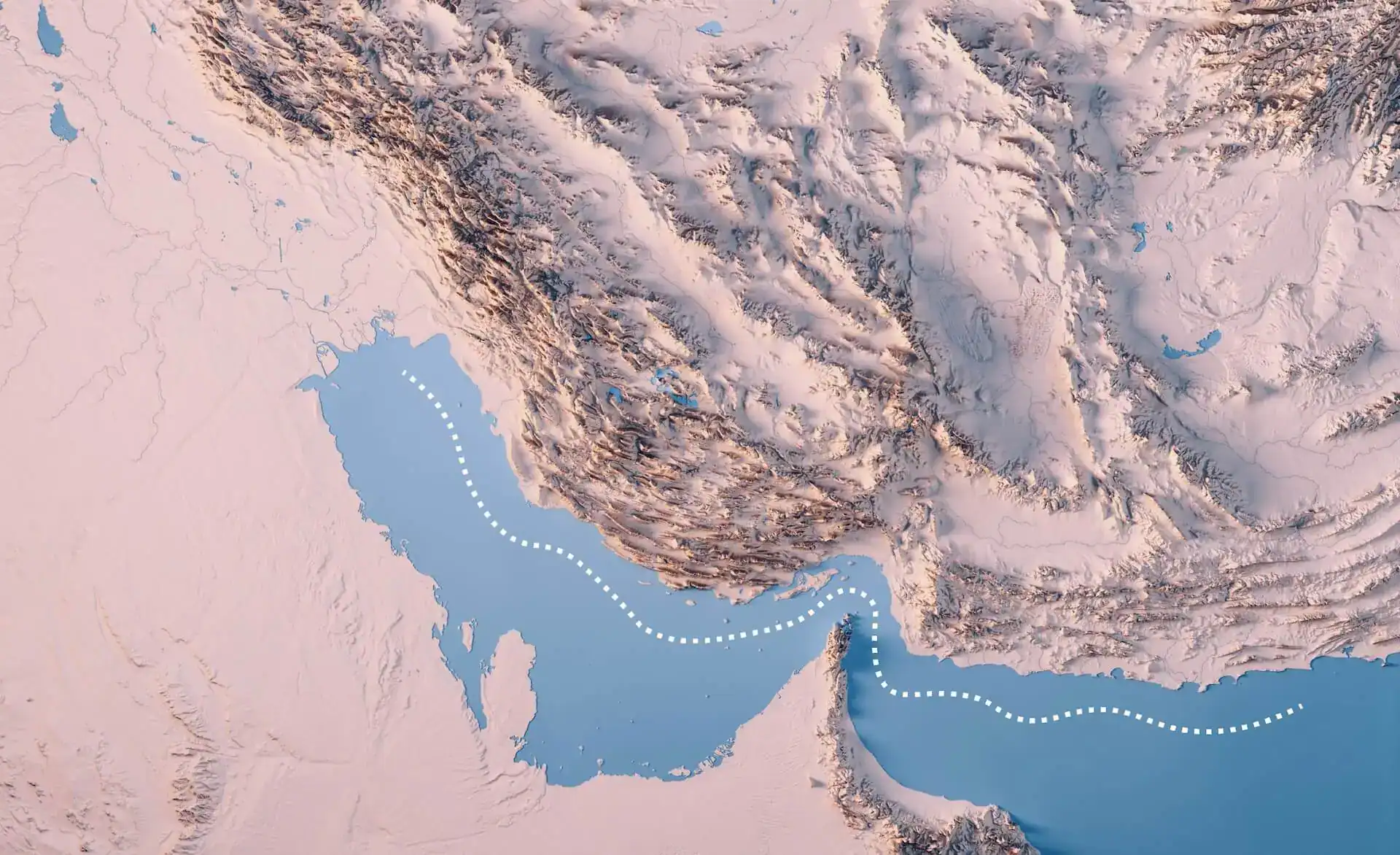
Strait of Hormuz and the Iranian coast
Military Escalation
This escalation comes after the collapse of US-Iranian negotiations in Pakistan, following Iran's refusal to fully abandon its nuclear programme and to halt funding and arming of its affiliated militias in the "Middle East." Hours later, US President Donald Trump announced that the US Navy would immediately begin a blockade of the Strait of Hormuz. Trump also revealed the launch of a military operation aimed at "clearing" the strait of naval mines.


