


Signs of the fragility of the ceasefire in the Gaza Strip are mounting, as Israeli attacks continue and Palestinians fall victim, alongside highly escalatory statements by Israeli National Security Minister Itamar Ben-Gvir, in which he called for the killing of dozens of Palestinians every night. Meanwhile, the United States and mediators are attempting to advance a political plan concerning the disarmament of Hamas and the future of the Strip, amid a clear disagreement with the government of Benjamin Netanyahu over its details.
In remarks made during a podcast interview, Ben-Gvir called for carrying out extensive assassinations in Gaza, saying he sees a need to "take out 30 to 40 people every night," and not only those whom "Israel" describes as posing a direct threat.
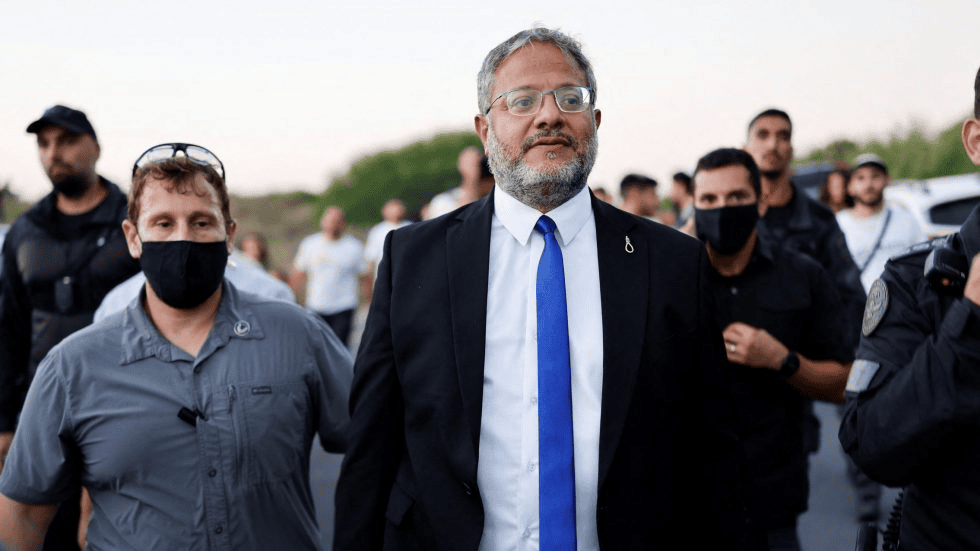
Ben-Gvir also reaffirmed his support for Israeli resettlement in Gaza and for encouraging Palestinians to leave the Strip, saying he considers "all of Gaza" to be part of "Israel," and called for establishing settlements not only in the former settlement areas of Gush Katif, but throughout the Strip.
Ben-Gvir's statements carry added significance given his position within the Israeli government. He heads the Ministry of National Security, which oversees the police and prisons, and he is one of the most prominent figures of the hard-line right-wing current in the governing coalition.
Child killed in Khan Younis
Ben-Gvir's remarks coincided with the continued fall of Palestinian victims in Gaza despite the ceasefire agreement concluded in October 2025.
The Palestinian news agency WAFA reported that on Sunday, 16 August 2026, Israeli forces killed 14-year-old Suhail Abu Shaloof by gunfire south of Khan Younis.
According to Palestinian reports, the child was gathering firewood when he was shot, before the Palestinian Red Crescent recovered his body. Reports also said that his brother had previously been killed by Israeli forces.
On the same day, one Palestinian was killed and six others were wounded in strikes targeting the Mawasi area west of Khan Younis, according to Anadolu Agency, while Palestinians were injured in another attack on the Nuseirat camp in central Gaza, and a child was injured by fire from an Israeli drone east of the Al-Bureij camp.
On Saturday, the Gaza Ministry of Health had announced that Israeli attacks over the previous 48 hours had resulted in the killing of Palestinians and the injury of 14 others.
Negotiations in Egypt and US-Israeli disagreement

Meanwhile, political tracks are witnessing new movement in an attempt to advance the agreement to a more advanced stage.
Jared Kushner, son-in-law of US President Donald Trump and one of the most prominent American envoys on the Gaza file, travelled to Egypt, where he met Hamas officials, including Khalil al-Hayya, in the presence of officials from mediating countries.
The meetings were held to discuss the future of the agreement and the Hamas disarmament plan that Trump announced reaching last month.
The US president had announced that what he described as the "Board of Peace" had reached an agreement on the complete disarmament of Hamas and the other armed factions in Gaza, considering this a preliminary step toward a new Palestinian government taking over the administration of the Strip in cooperation with the board.
However, disagreement quickly emerged over how the plan would be implemented.
Hamas says it is prepared to proceed in line with the American roadmap, but it links handing over weapons to the withdrawal of Israeli forces from Gaza and Israel's implementation of its obligations under the first phase of the agreement.
Hamas official Basem Naim said the movement expects the mediators and the United States to press Israeli Prime Minister Benjamin Netanyahu and his government to abide by the roadmap and not obstruct it for internal political and electoral reasons.
Following the Egypt meetings, the movement also called on the mediators and the "Board of Peace" to compel the Israeli occupation to halt violations, killings and incursions, and to implement the obligations of the first phase, then adopt the roadmap for the second phase and set a timetable for its implementation.
Netanyahu rejects the plan's formulation
The Israeli position, however, remains a key obstacle to these efforts.
Netanyahu announced last week that "Israel" does not accept the 15-point American document in its current form, affirming that the Israeli army will not withdraw before Hamas is fully disarmed.
Netanyahu said the aim is to disarm "heavy and light weapons and all weapons," noting that some American ideas are acceptable to Tel Aviv while others are rejected.
After his meetings in Egypt, Kushner travelled to occupied Palestine in an attempt to push the Israeli government toward implementing the understandings.
This presents a notable paradox: while Washington announces progress toward a new political agreement, Netanyahu rejects key parts of the plan, while ministers in his government, foremost among them Ben-Gvir, escalate rhetoric calling for continued killing, resettlement, and encouraging Palestinians to leave Gaza.
Ceasefire under test
The October 2025 agreement stipulated a halt to Israeli attacks on Gaza, the entry of humanitarian aid, the release of Israeli captives, and then the gradual Israeli withdrawal from the Strip.
However, subsequent months have witnessed continued bombardment and gunfire, and the killing of hundreds of Palestinians and injuries, while Tel Aviv and Hamas trade accusations over responsibility for obstructing the implementation of the agreement's provisions.
While the mediators seek to move toward arrangements concerning weapons, governance and withdrawal, recent developments reveal that the future of Gaza remains stuck between an extremely complex negotiating track and a field situation in which killing has not stopped.
Ben-Gvir's statements heighten concerns about the direction in which the most hard-line forces within the Israeli government may push, especially as he openly advances a project based on resettling Gaza and encouraging the emigration of its population, at a time when negotiations are still searching for a formula that secures the consolidation of the ceasefire and puts a permanent end to the war.


