


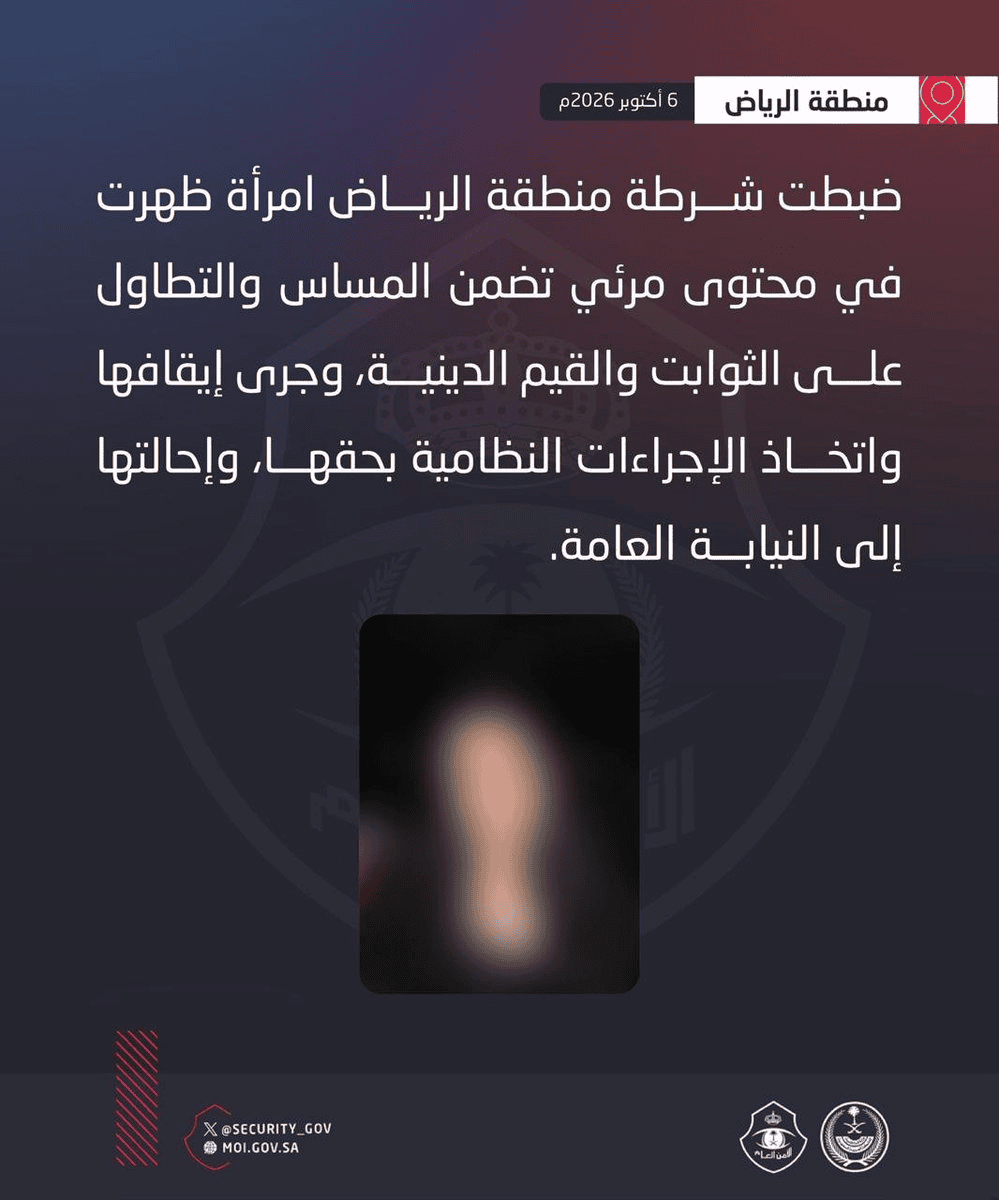
The controversy sparked by the hashtag "2030 بلا نقاب" ("2030 No Niqab") has moved beyond a debate on social media about the dress of Muslim women. Within days, one participant's rhetoric against the campaign extended to the sanctity of the Prophet Muhammad ﷺ, before the Riyadh Region Police announced the arrest of a woman over video content that it said included "المساس والتطاول على الثوابت والقيم الدينية" ("an affront to and insult of religious principles and values"), and her detention and referral to the Public Prosecution.
The incident raises a larger question than the debate over Islamic dress: when a campaign is presented to Muslim women under the banner of "liberating women," and some of its participants move from objecting to the niqab to attacking the Prophet ﷺ, whom Muslim women believe in, love and take as a model, what concept of freedom is being offered to them?
From "freedom of choice" to "2030 No Niqab"
The hashtag "2030 بلا نقاب" appeared prominently on X in late September 2026, and a monitoring body tracking discussions about the niqab said its intensive appearance dated back to around 26 September, alongside English variants such as #2030_No_Niqab and #no_more_Niqab. Arabic media outlets also covered the hashtag's trending in Saudi Arabia.
Participants in the campaign presented the issue as a confrontation with the imposition of the niqab on women, although most of those leading it did not wear the hijab, let alone the niqab, which raised questions about the motives behind the campaign.
Indeed, not all posts stopped at calling for the niqab to be banned. A review of public posts found calls to burn the niqab, offensive remarks against women who wear it, and rhetoric describing it as a symbol that must be discarded.
At this point the question began to shift: is the aim to give women the freedom to remove the niqab, or is it in fact a war against the niqab?
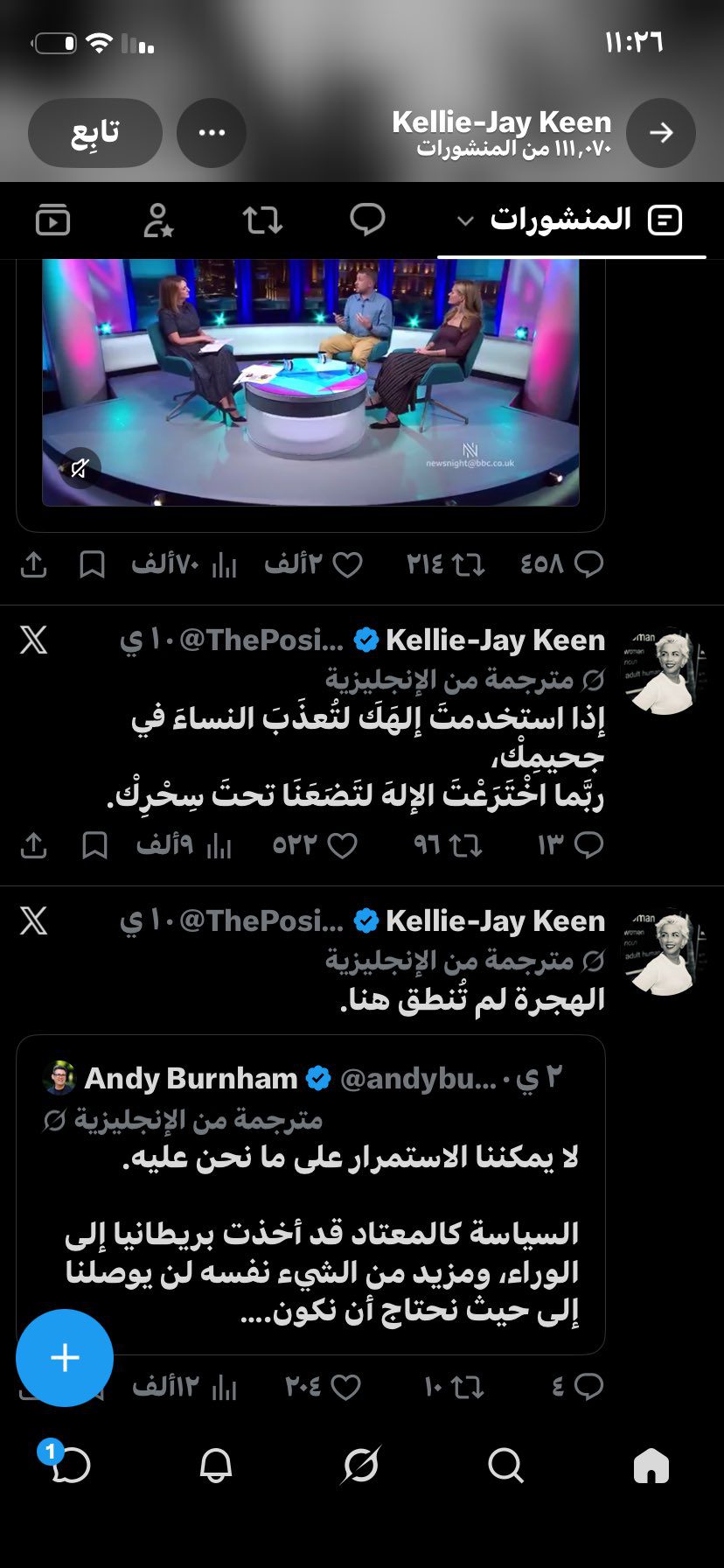
British activist Kelly-Jay Keen also joined the discussion, and it did not remain confined to Saudi Arabia.
On 1 October, the British activist Kelly-Jay Keen, known as "Posie Parker" and founder of the Let Women Speak movement, hosted a space on X titled No Niqab by 2030, in which she gave the floor in particular to women from Saudi Arabia and the Middle East to speak about the niqab and their experiences with it.
Keen's position was not merely a call to protect women from coercion. The published summary of the space records her call for banning the niqab, presenting it as a tool for subjugating women, along with her call for it to be banned in Britain as well.
Research into the background of the British activist and politician Kelly-Jay Keen, known as "Posie Parker," reveals her positions hostile to Islam and offensive to the Prophet ﷺ, which expose the real motives behind this campaign, which opposes not only the niqab but Islam as a whole.
The investigation into Kelly's background also reveals blatant support for the Israeli occupation and contempt for the blood of the people of Gaza, who have witnessed continuous genocide for more than three years. In one of her posts she wrote: "لا يهمني غزة ولو بالقدر اليسير. يربون أطفالهم ليكونوا شهداء، مستوى إنسانية أقل من البشر" ("I don't care about Gaza even slightly. They raise their children to be martyrs, a level of humanity below that of humans").
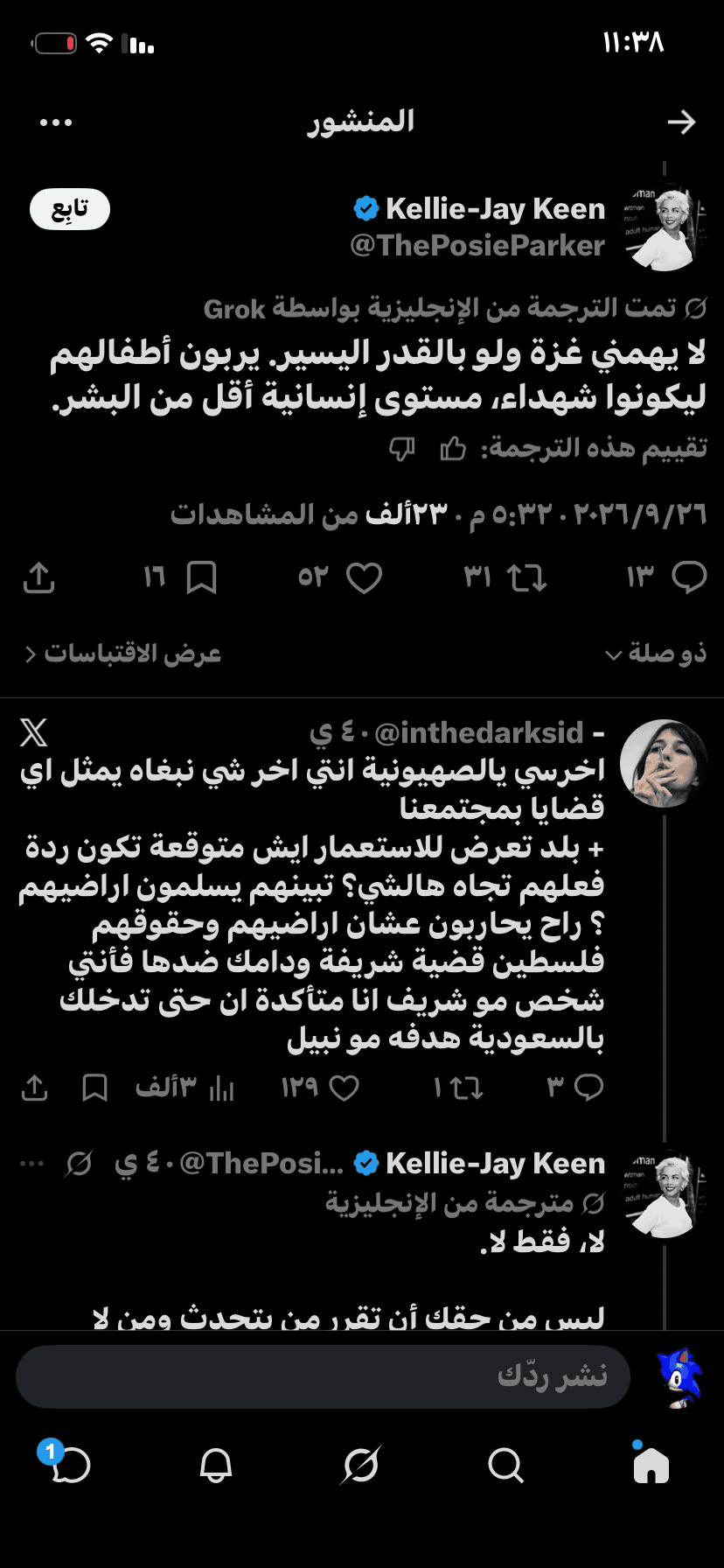
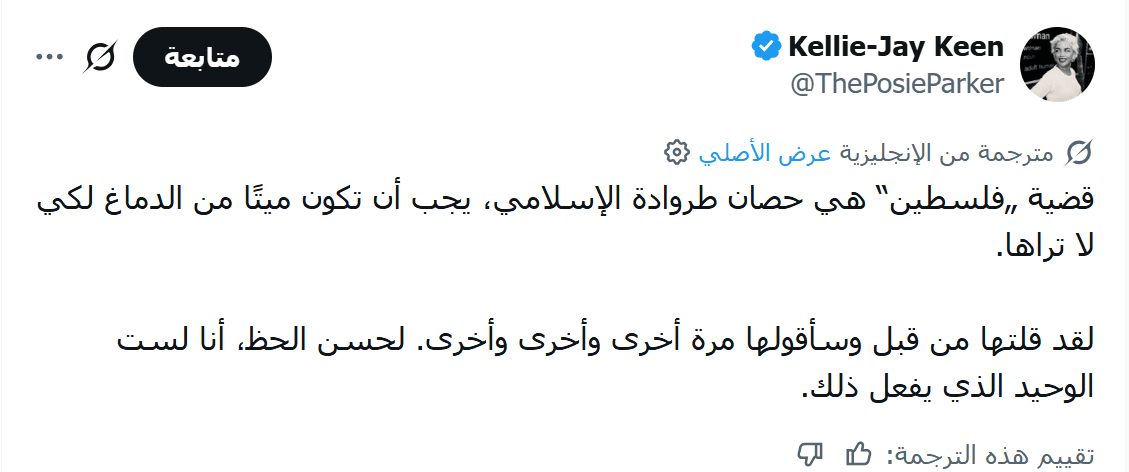
In a comment on a post by an activist on the X platform exposing her bloodthirstiness and inhumanity towards the children and women of Palestine through her defence of the Zionist occupation, she stressed that "علينا التركيز على الحجاب!" ("we must focus on the hijab!").
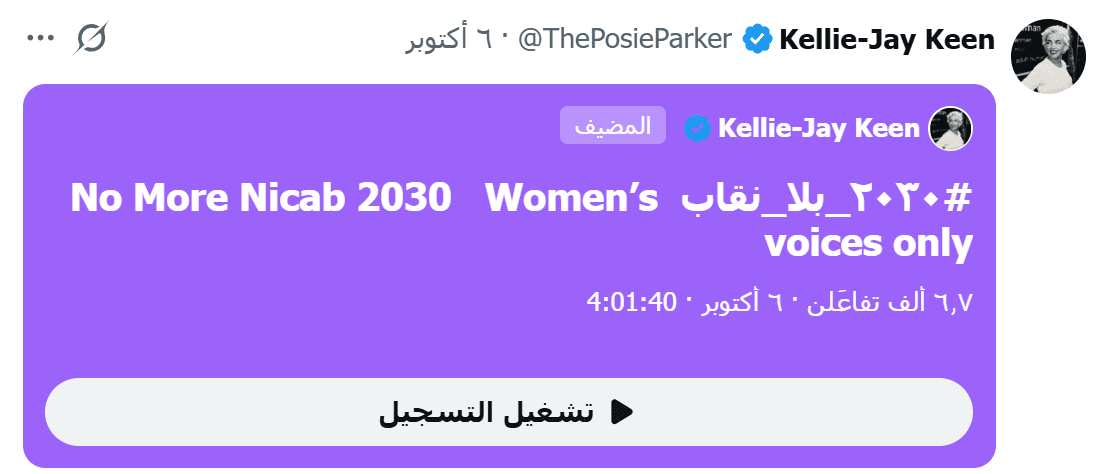
Indeed, Zionist Kelly gathered women and girls in her broadcasts and audio meetings and opened the door for every feminist and fool to cooperate in rejecting the niqab and demonizing it, and even to collude in opposing Islam and hating its laws. Here a fundamental paradox in the campaign's discourse appears: it has become a war on the religion and its principles, not on the niqab alone.
It was therefore no surprise that the most dangerous development accompanying the campaign, and which undermined its hopes, was the emergence of one of its leading figures, a feminist who was already unveiled and does not wear the hijab. In the campaign she moved in her speech from the issue of the niqab to words touching the sanctity of the Prophet Muhammad ﷺ. She accused him of male chauvinism and, in a brazen manner, denied him ﷺ the right to issue rulings on women's affairs! Here the nature of the matter changes entirely.
For the Muslim, Muhammad ﷺ is not a social figure to be used as a tool in a quarrel on social media, nor merely a historical personality who can be separated from the faith of Muslims. He is the Messenger of God, about whom God the Exalted said: ﴿النَّبِيُّ أَوْلَىٰ بِالْمُؤْمِنِينَ مِنْ أَنْفُسِهِمْ﴾ ("The Prophet is closer to the believers than their own selves").
Therefore, moving from discussing the ruling on the niqab to attacking the sanctity of the Prophet ﷺ does not constitute an "argument" against the niqab at all; rather, it reveals the shift of the discussion from war on the niqab to an assault on one of the greatest sanctities of Muslims, the Messenger of God ﷺ. This exposes the nature and aims of the campaign.
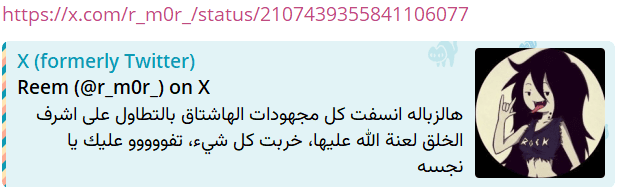
Notably, this transgression by the woman named Sara Diva drew objection even within the circle supporting the campaign. In a screenshot of a post on X seen by Wasl, one supporter commented with a clear statement to the effect that the offending woman had "نسفت كل مجهودات الهاشتاق" ("destroyed all the efforts of the hashtag") through her insult to "أشرف الخلق" ("the noblest of creation").
This remark is important because it reveals the organised work of the campaign and shows that its leading figures were not all on the same level of understanding of what was happening. It also shows that folly and foolishness carry their price.
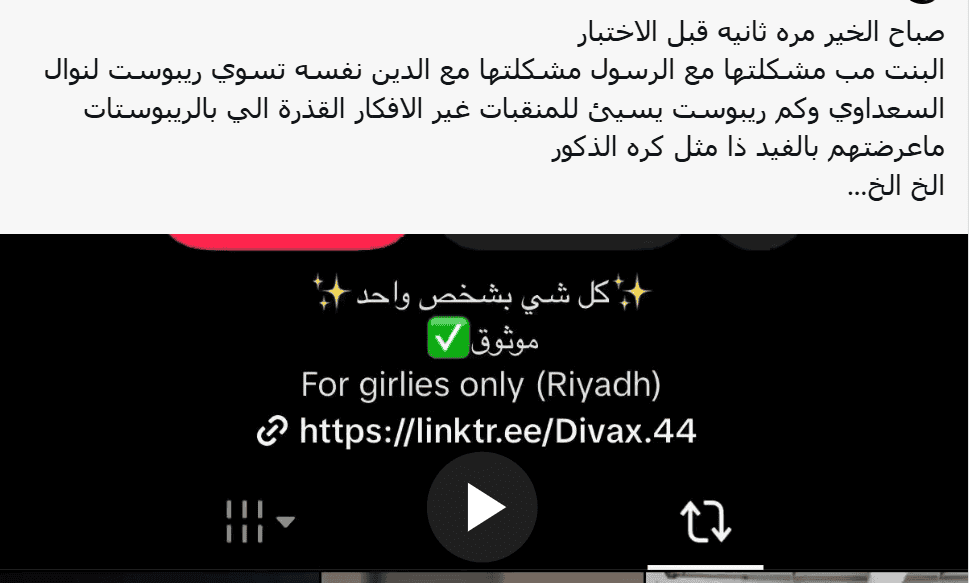
The recording by the activist Sara, which insulted the Prophet ﷺ, provoked wide anger on social media and calls for her to be held accountable. Tracing her posts revealed her brazenly hostile positions towards the rites of Islam: she republishes clips that throw the niqab in the rubbish and promotes filthy feminist discourse hostile to Islam. On the evening of 6 October, the Riyadh Region Police announced the arrest of the woman who appeared in video content that it said included "المساس والتطاول على الثوابت والقيم الدينية" ("an affront to and insult of religious principles and values").
The police said she had been detained, that legal measures had been taken against her, and that she had been referred to the Public Prosecution. Saudi media outlets carried the same statement.
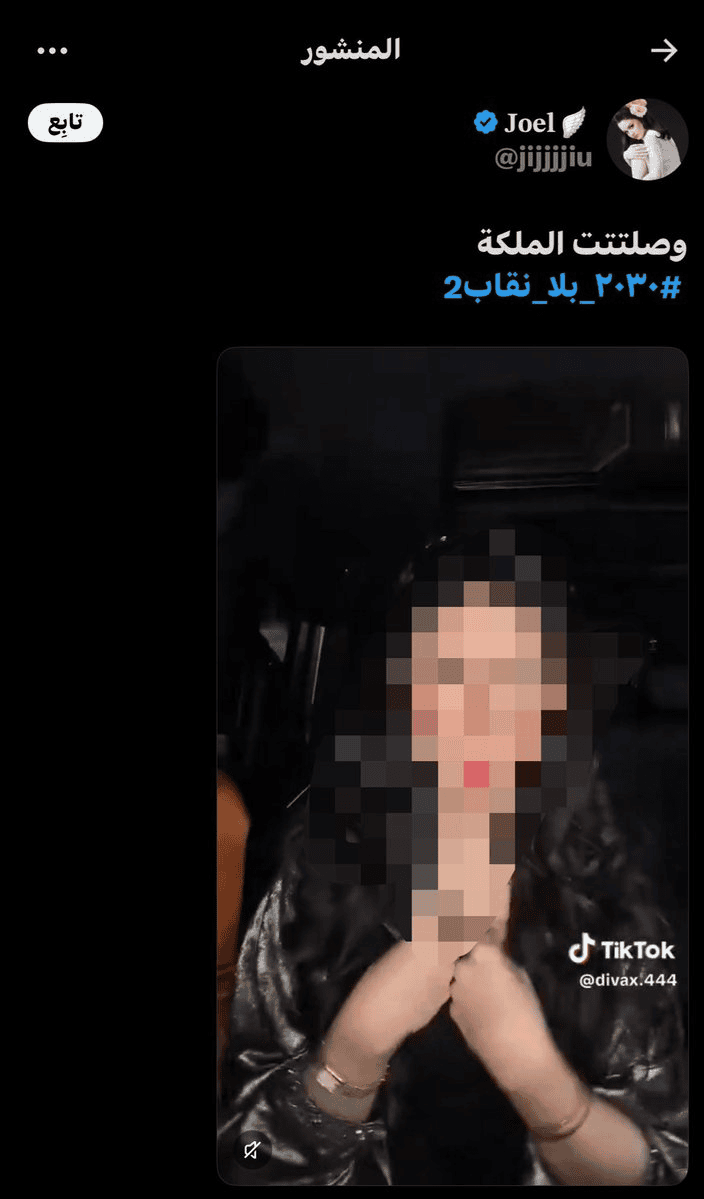
Sara, who insulted the sanctity of the Prophet ﷺ, was not the only one afflicted with the disease of feminism. A large number of feminists accompanied this campaign, for whom Islam means nothing, yet who try to impose their deviant and sick views on Muslim women. Their war was against everything connected with Islam, from legal texts to shaykhs and preachers, to the Mothers of the Believers and the female Companions, may God be pleased with them all.
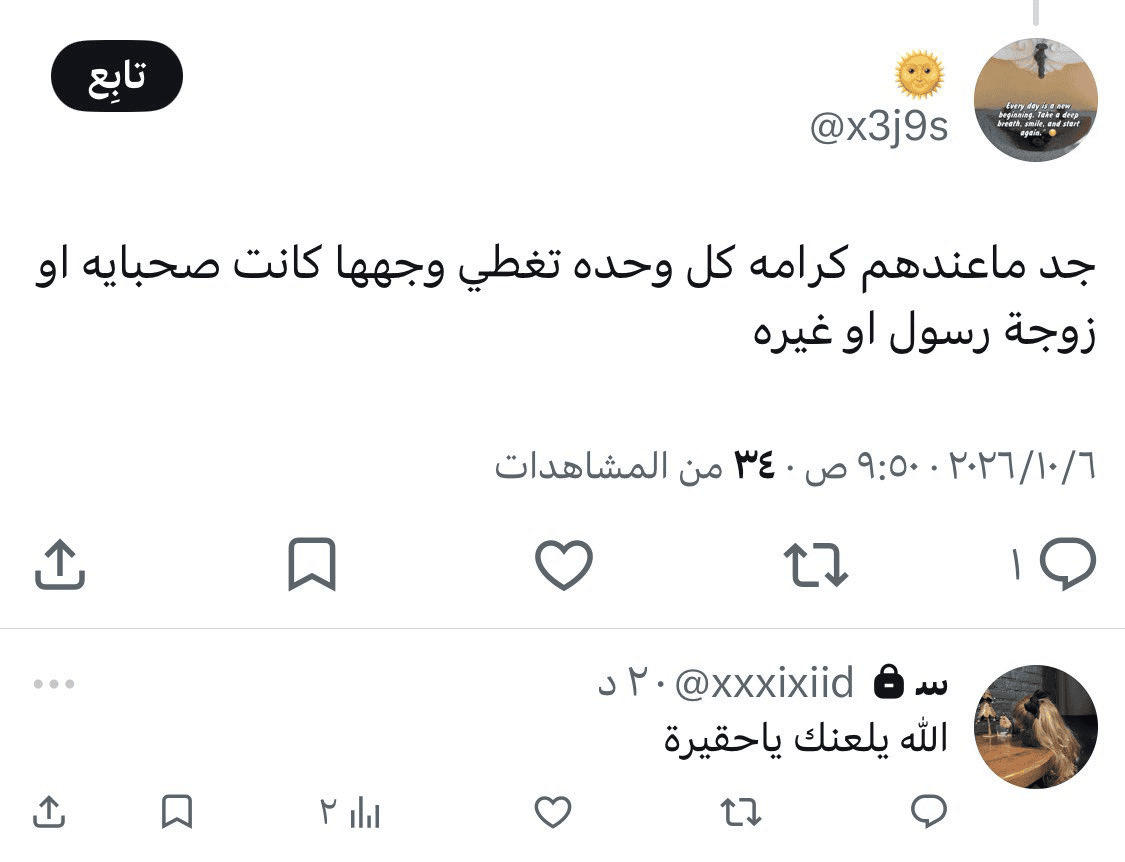
Remarkably, after the strong condemnation she received, Sara, who had insulted the Prophet ﷺ, came out in another recording, affirmed that what she had said was not wrong, insisted that she still believed it, and continued the recording by insulting her critics and threatening and cursing them. She thereby provided fresh evidence of her guilt.
The sanctity of the Prophet ﷺ is greater and reveals something great
The problem here is not that a woman disagreed with a jurisprudential opinion on covering the face; jurisprudential disagreement is discussed through knowledge and evidence. The issue lies in an extremely great hostility towards the niqab and its demonization, mockery of women who wear it, including the Mothers of the Believers and the female Companions, may God be pleased with them, and the ugly face of the feminists who could not conceal their malice in the campaign appeared. Through their dullness they lost the opportunity to make their voices heard to the public. No personal experience with the niqab, however painful it may be claimed to be, gives its holder the right to insult the sanctity of the Prophet ﷺ, the Mothers of the Believers and the female Companions, may God be pleased with them.
Within the jurisprudential arena, the disagreement over the niqab does not go beyond the disagreement between obligation and recommendation, and both are a rank of honour and merit. But declaring war on the niqab is undertaken only by one who is hostile to Islam and its laws.
Viewing the matter from this offensive angle towards the master of all creation, and in the leadership of a campaign openly hostile to Islam and spitefully offensive to the Prophet ﷺ, reveals the truth that this campaign has no connection to Muslim women. A Muslim woman cannot lower her manners and insult the sanctity of her Prophet ﷺ, let alone agree to remain in a campaign that insults her Prophet, for whom souls and lives were sacrificed. He ﷺ enjoined good treatment of women, saying: «استوصوا بالنساء خيرًا» ("Treat women well").
How much more so when it becomes clear that the campaign is run by unbridled feminist women, enemies of God's religion and the Messenger of God ﷺ, and directed by a British Zionist woman extremely hostile to the Prophet ﷺ and to Islam. What kind of campaign is this, which cooperates in disbelief, sin and transgression under the pretext of liberating the niqab-wearing woman?
Arresting the offender deters those who transgress
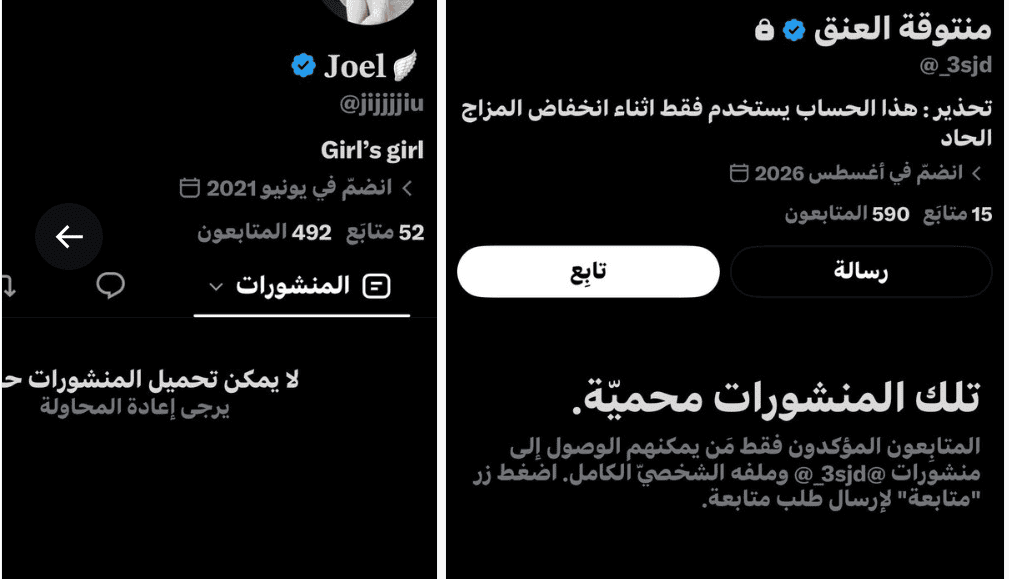
The strong and swift condemnation of the offender and the news of her arrest led to fear and flight among the feminists colluding in the campaign against the niqab and modesty, those calling for licentiousness and foolish antagonism towards men. They closed their accounts or hid them, fearing the consequences.
Notably, most accounts of girls and women using pseudonyms show defeatism before feminism and susceptibility to its discourse. This makes engagement in the online arena extremely important. Correcting concepts and responding to doubts and aggression is a duty for every Muslim activist on these platforms.
Here the paradox becomes clearer: a campaign addressing Muslim women in the name of their dignity cannot ignore that among the greatest components of the identity of millions of Muslim women is their faith in God and love of His Messenger ﷺ.
It is not logical to present contempt for the sanctities of Muslim women as an extension of "liberating" them.
Other responses have appeared defending the offender against the Prophet ﷺ and minimising her ugly words and compound ignorance. Most of them come from girls and women saturated with Western and feminist ideas, seeking to break the bonds of modesty in a Muslim country. They are led by unveiled women with licentious feminist accounts, who fight the niqab while they themselves do not wear the hijab. The matter is not a disagreement with the niqab; it is a disagreement with the whole religion.
Yet the incident makes it legitimate to examine the discursive environment forming around the campaign: where does the defence of exposing women end, and where does hostility to what women themselves believe begin?
When a British Zionist activist seizes upon a Saudi campaign and demands a global ban on the niqab, while the discourse of one participant in the same wave reaches the sanctity of the Prophet ﷺ, do Muslim women not have the right to ask who speaks in the name of their supposed "freedom"?
Is the real aim to ban the niqab, or to reshape the Muslim woman's relationship with her religion until she becomes more acceptable to those who view the niqab and Islam with hostility from outside them?
The offence against the sanctity of our Prophet Muhammad ﷺ is not a step on the ladder of a social campaign, nor propaganda material to score a point in a dispute on the X platform. It is a matter of life or death.
Muslims have known their Prophet ﷺ for more than fourteen centuries before these hashtags appeared, knowing him as mercy, guidance and a model. God the Exalted said of him: ﴿وَمَا أَرْسَلْنَاكَ إِلَّا رَحْمَةً لِلْعَالَمِينَ﴾ ("We have not sent you, [O Muhammad], except as a mercy to the worlds").
The noise of the hashtags may fade within days, and the campaigns will end as many defeated campaigns ended before them, while the name of Muhammad ﷺ remains with Muslims in the call to prayer, in the prayer and in the Quran, and in the hearts of a nation for whom loving him is part of its faith.
It is precisely here that the foolish campaign went wrong: the dispute began with the niqab, but when it reached the sanctity of the Prophet ﷺ it was no longer discussing a woman's dress; it touched something greater and deeper in the conscience of Muslims, and it will pay the price for this without fail.
To touch the rites of Islam and the Prophet of Islam ﷺ is not a matter of personal freedom; it is a matter of faith and existence. Will the lobby of feminists backed by British Zionism accept defeat, or will more confrontation and exposure of their malice be required before their greed subsides?
The guardians of the frontiers of communication now bear the duty of deterring those who transgress and offend, of raising the word of God the Exalted and protecting the sanctities of religion, so that the enemies of Islam refrain from their brazen attempts and occupy themselves with liberating the Western woman, who bears enough suffering to fill the broadcasts of their media channels for years on end.
As for the knights of preaching and upbringing, this is a struggle that requires patience and the clarification of truths with wisdom and insight, so that misguided calls do not lure young girls through ignorance and folly.
God prevails over His affair, but most people do not know.


