

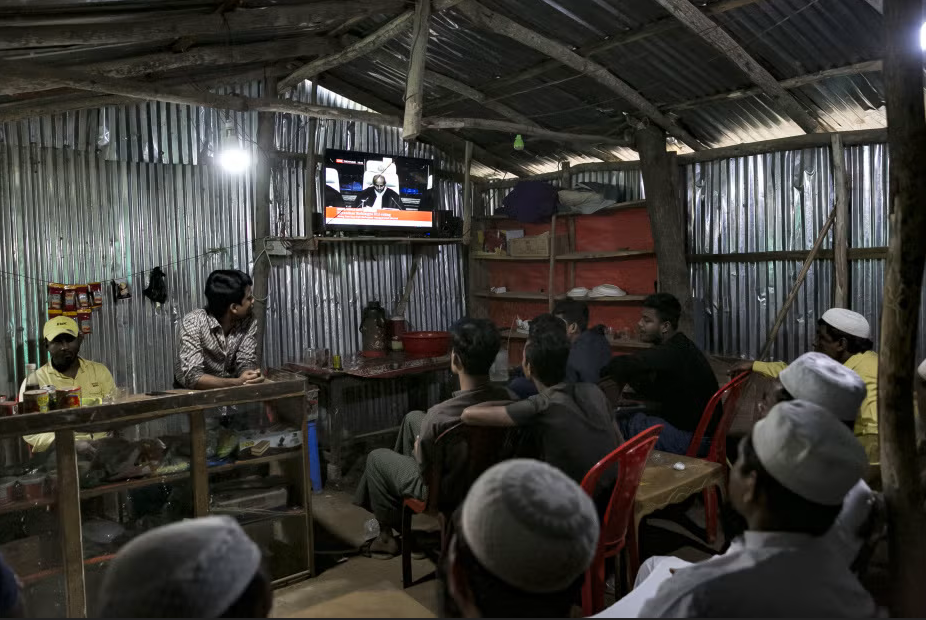
The Muslim Rohingya minority is awaiting a highly consequential ruling from the International Court of Justice, due on 19 November 2026, in the case brought by The Gambia against Myanmar for alleged violations of the Convention on the Prevention and Punishment of the Crime of Genocide. In a new legal briefing, Human Rights Watch sets out the nature of the charges and the evidence submitted to the court, the reparation demands made on behalf of victims, and the obstacles that may face implementation of the anticipated ruling.
The rights organisation published on Tuesday, 3 November 2026, a detailed question-and-answer study covering eight main themes related to the case, which the International Court of Justice in The Hague has been hearing since 2019. It described the forthcoming ruling as a pivotal milestone in the Rohingya's pursuit of justice after years of killings, displacement and persecution.
The court announced that it will deliver its final judgment on Thursday, 19 November, after concluding oral proceedings on the merits of the case in January 2026.
From the Rakhine Massacres to the International Court of Justice
The case dates back to August 2017, when the Myanmar military launched a large-scale military campaign in northern Rakhine State, involving mass killings, rape and the burning of villages, and forcing more than 700,000 Rohingya to flee to Bangladesh.
In November 2019, The Gambia, backed by the Organisation of Islamic Cooperation, filed a case against Myanmar before the International Court of Justice, accusing the authorities of violating the Genocide Convention of 1948.
Human Rights Watch explained that the case does not seek to prosecute army leaders in their personal capacity, but rather to determine the legal responsibility of the State of Myanmar for acts attributed to its forces, and the extent to which it breached the obligations imposed by the Genocide Convention.
The case carries additional significance because The Gambia is not a state whose own citizens were directly exposed to the alleged crimes; it based its standing on its membership in the Convention, on the premise that preventing genocide is a shared legal obligation among States Parties.
What Is The Gambia Asking For?
The Gambia asks the court to establish Myanmar's responsibility for committing acts of genocide against the Rohingya, conspiring to commit them, failing to prevent them, and failing to prosecute those responsible.
It also demands that Myanmar be required to take legislative and judicial measures to prevent the recurrence of crimes, to halt direct and public incitement to genocide, and to provide guarantees against the repetition of violations.
The demands are not limited to legal condemnation; they also include reparation for the harm suffered by victims, among them guaranteeing the safe and dignified return of displaced persons and refugees, restitution or compensation for property, family reunification, and physical and psychological rehabilitation for those affected.
The demands also include the search for missing persons, assistance in identifying the dead and re-burying them in accordance with Rohingya religious and cultural practices, guaranteeing freedom of movement, work and residence, protecting them from discrimination and persecution, and recognising their right to identify themselves as Rohingya.
According to the study, these demands make the case broader than merely establishing that crimes were committed, as they relate to victims' rights to return and to regain their lives and dignity.
How Is The Gambia Seeking to Prove Intent to Commit Genocide?
Among the most important legal questions on which the court will rule is proof of the specific intent required for the crime of genocide, namely the existence of an intention to destroy a protected group, in whole or in part, as such.
The Gambia relies on the patterns of attacks on Rohingya villages, the scale of violence used, inflammatory statements expressing hatred, and the failure to investigate serious violations.
During the proceedings, The Gambia's representatives focused on attacks targeting three villages in Rakhine, namely Min Gyi, Chut Pyin and Maung Nu, as examples of the nature of the military operations carried out by Myanmar's forces.
For its part, Myanmar rejects the genocide allegations, saying its military operations in 2016 and 2017 targeted armed groups, chiefly the "Arakan Rohingya Salvation Army."
It also challenges the evidentiary value of a number of international reports, and rejects the conclusion that the pattern of military operations demonstrates an intent to destroy the Rohingya as a group.
The court's judges will have to assess the evidence and legal arguments presented by both parties according to the standards applied to proving the crime of genocide.
Earlier Orders Did Not End the Violations
In January 2020, the International Court of Justice issued binding provisional measures ordering Myanmar to prevent acts of genocide, to protect the Rohingya, and to preserve evidence relevant to the case.
It also required Myanmar to submit periodic reports on the implementation of those measures.
According to Human Rights Watch, Myanmar submitted twelve reports on the steps it had taken, while The Gambia objected to their adequacy, arguing that they did not demonstrate actual compliance with the court's orders.
In July 2022, the court rejected Myanmar's preliminary objections and affirmed The Gambia's entitlement to proceed with the case despite not having been directly affected by the alleged crimes.
Judicial proceedings continued until oral hearings on the merits took place in January 2026, with the participation of representatives of both parties, witnesses and experts.
Eleven states were also permitted to intervene on legal questions concerning the interpretation of the Genocide Convention.
Persecution of the Rohingya Has Not Stopped
The organisation warned that the court case is taking place at a time when the Rohingya minority continues to face serious violations inside Myanmar.
Since fighting resumed in Rakhine State in late 2023, Rohingya civilians have found themselves caught between the forces of Myanmar's military council and the "Arakan Army," which has taken control of most of the state.
Human Rights Watch accused both sides of committing serious violations, including extrajudicial killings, the burning of property and unlawful conscription.
It also said the Arakan Army had tightened restrictions on Rohingya in areas under its control, including forced labour and arbitrary detention.
It stressed that the ongoing crimes and violations make achieving justice, protecting residents and enabling their safe return issues no less important than the judicial ruling itself.
Can the Anticipated Ruling Be Implemented?
The study explained that rulings of the International Court of Justice are final and legally binding on the parties, and are not subject to appeal.
However, their implementation faces political and practical challenges, particularly when the State concerned refuses to comply with its obligations.
Under the United Nations Charter, a State harmed by non-compliance may resort to the United Nations Security Council, which has the power to issue recommendations or take measures to enforce the judgment.
The organisation noted, however, that the Security Council has never before used this power to enforce a judgment of the International Court of Justice.
The United Nations General Assembly and individual States may also contribute by increasing diplomatic pressure on Myanmar to implement the court's decision.
Other Avenues for Holding Those Responsible to Account
Alongside The Gambia's case, other legal proceedings are under way targeting the criminal responsibility of individuals accused of committing crimes against the Rohingya.
The International Criminal Court has opened an investigation into certain crimes linked to the displacement of the Rohingya to Bangladesh, based on its jurisdiction over crimes part of which were completed on the territory of a State Party to the Court.
In November 2024, the Court's Prosecutor requested an arrest warrant against the commander of the Myanmar military, Min Aung Hlaing, on charges of crimes against humanity relating to the deportation and persecution of the Rohingya.
In February 2025, arrest warrants were also issued in Argentina against twenty-five people within an investigation based on the principle of universal jurisdiction.
These proceedings differ from the case before the International Court of Justice, as they concern the criminal responsibility of individuals, not only the responsibility of the State.
A Ruling That May Reach Beyond Myanmar
Human Rights Watch believes that the 19 November ruling may carry legal implications extending beyond the Rohingya case, given other cases before the court relating to the Genocide Convention, including the case brought by South Africa against Israel concerning alleged violations in the Gaza Strip.
The way the court handles evidence, proof of specific genocidal intent and the determination of State responsibility may influence the interpretation of the Convention in other cases.
Nevertheless, a ruling in The Gambia's favour, if it occurs, would not automatically mean the return of refugees or the prosecution of all those responsible for the crimes, as achieving these outcomes depends on the implementation of judicial obligations and the continuation of criminal and diplomatic avenues.
Nine years after the major displacement campaign of 2017, the Rohingya face a judicial moment that could mark a decisive stage in their long march toward justice. Yet the real test will not lie in the wording of the ruling alone, but in the international community's ability to turn what the court decides into effective protection for victims, guarantees preventing the recurrence of crimes, and a safe and dignified return for those who have been deprived of their homes.


