


The Muslim-majority Bangsamoro region in the southern Philippines has entered a new political phase following its first regular parliamentary elections in its history, as the winning parties began negotiations to form a coalition able to secure a parliamentary majority, elect the chief minister, and form the region's first elected government since the establishment of the autonomous government system.
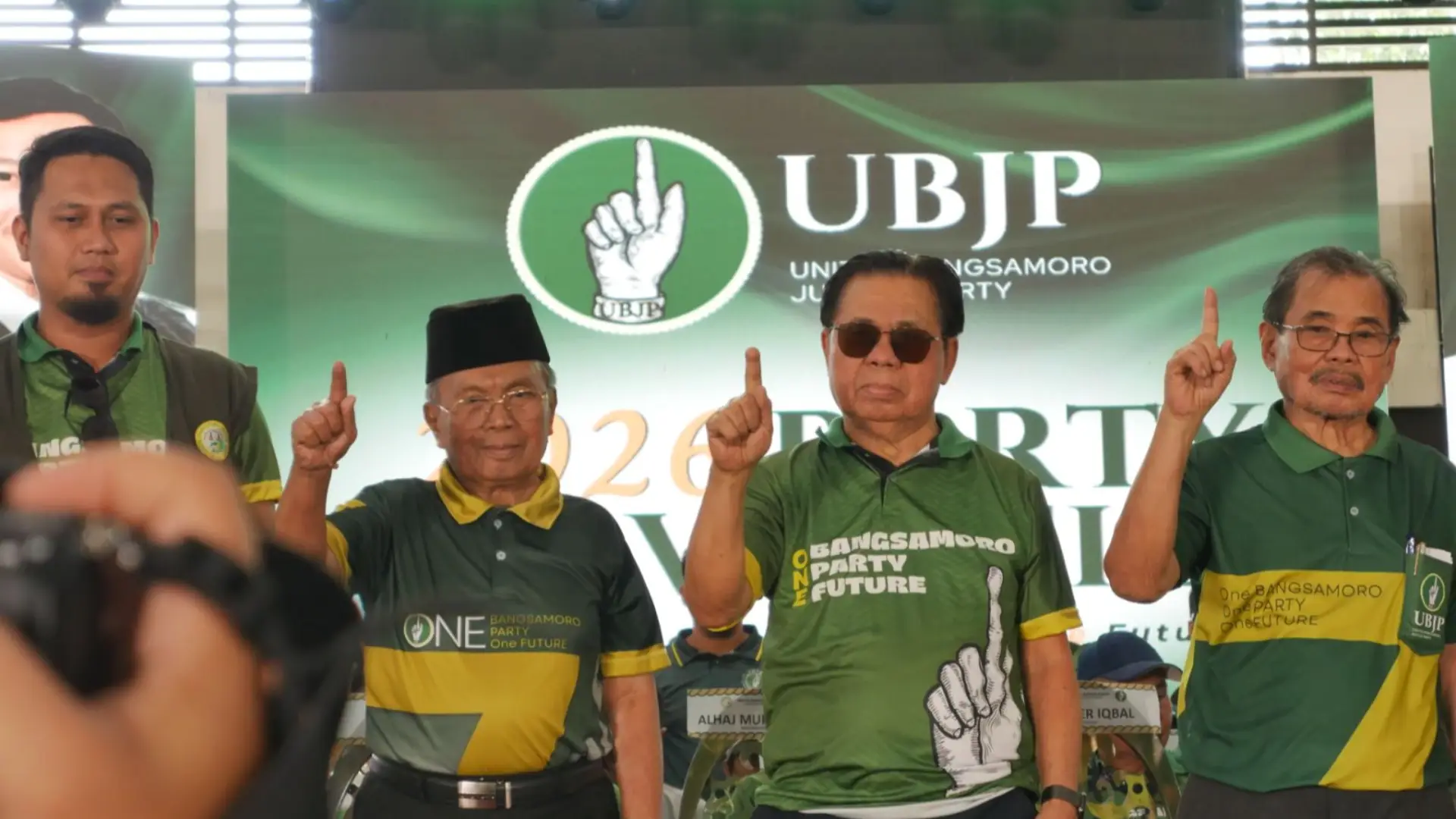
The Bangsamoro Grand Coalition (BGC) announced on Tuesday, 22 September 2026 (11 Rabi al-Akhir 1448 AH), its readiness to work with the United Bangsamoro Justice Party (UBJP) and the Bangsamoro Federal Party (BFP), a step that opens the door to new alliances after the elections held on 14 September.
The coalition said the elections were over, and that the current stage requires moving beyond electoral competition and working to build a united front for Bangsamoro, noting that the priority has become convening the new parliament, electing the chief minister, and forming the government.
These moves carry particular significance because the election results did not give any party or alliance the majority needed to control the parliament alone, making negotiations between political forces decisive in determining the shape of the next government.
No One Holds a Majority
The new Bangsamoro Parliament consists of 80 members, meaning that forming a majority requires the support of at least 41 lawmakers.
The final results showed the Bangsamoro Federal Party (BFP) winning 31 seats, making it the largest single bloc in the parliament, followed by the United Bangsamoro Justice Party (UBJP) with 30 seats, then the Bangsamoro Grand Coalition (BGC) with 15 seats.
The Rayat Democratic Party won one seat, along with one seat for the Pro-Bangsamoro party, while representatives of non-Moro indigenous peoples hold two seats.
As a result, neither of the two major parties can form the government alone.
This configuration gives the Bangsamoro Grand Coalition, which holds 15 seats, an important role in government-formation negotiations, as its alliance with either of the two major blocs could surpass the required majority threshold.
From Competition to Building Alliances
The Bangsamoro Grand Coalition said it is open to cooperation with the two main parties, stressing that the next stage should focus on uniting political forces after the end of electoral competition.
This came alongside calls from elected lawmakers to move beyond the divisions that emerged during the election campaign and to work to ensure a stable political transition.
This means that the center of political gravity in Bangsamoro has quickly shifted from the ballot boxes to negotiations between parliamentary blocs, as the agreement among them will determine the identity of the chief minister and the composition of the government that will run the region in the coming period.
Elections Ending a Transitional Phase Lasting Years
The parliamentary elections were held on 14 September 2026, the first such vote since the establishment of the Bangsamoro Autonomous Region in Muslim Mindanao (BARMM).
All 80 members of parliament were proclaimed by 16 September, and the elected parliament is to assume its duties on 30 October, coinciding with the end of the Bangsamoro Transition Authority, which has governed the region since 2019 with appointed rather than elected members.
The transfer of authority to an elected parliament marks a key stage in implementing the peace agreement between the Philippine government and the Moro Islamic Liberation Front (MILF), which paved the way for the establishment of the current autonomous government system.
The Front had waged an armed insurgency for decades to demand the rights of the Moro Muslim people before signing the Comprehensive Agreement on the Bangsamoro with Manila in 2014.
The movement later increasingly turned to political work, and the United Bangsamoro Justice Party is regarded as the political arm associated with the Moro Islamic Liberation Front.
94 Laws During the Transitional Period
As the transitional period nears its end, the Bangsamoro authority announced that the interim parliament has enacted 94 laws since the transitional phase began in 2019.
Parliamentary records show that the legislation included the basic laws needed to build the institutions of self-government, along with laws relating to administration, elections, local governance, education, development, and reconciliation.
The most recent was the "Bangsamoro Autonomy Act No. 94," which grants employees and officials of the Bangsamoro government special leave for performing the Hajj, and was approved in July 2026.
A New Test for the Autonomy Experiment
The importance of the government-formation negotiations is not limited to determining who will head the government, as the elections and transfer of authority represent a test of a political path that began after decades of armed conflict in the southern Philippines.
The elected government will have to address complex security and development files, in addition to completing the peace process, reintegrating former combatants, and strengthening the institutions of self-government in one of the poorest regions of the Philippines.
With the ballot boxes having been decided without any party gaining a single-party majority, the next stage depends on the ability of political forces in Bangsamoro to build a coalition capable of running the region's first elected government in its history.


