


The Philippine government and the Moro Islamic Liberation Front have activated joint security and peace mechanisms in the Bangsamoro Autonomous Region, in an attempt to prevent armed tensions from escalating in the special geographic area, days after the region held its first parliamentary elections.
The government panel tasked with implementing the peace agreement said on Sunday, 20 September 2026, that the Coordinating Committee on the Cessation of Hostilities, the Joint Task Force, and the Joint Peace and Security Teams have been working since 16 September, in coordination with local authorities and MILF leaders, to contain a local dispute and prevent it from spreading. It added that the intensity of tensions has declined since the intervention began.
The Joint Peace and Security Teams include elements of government forces and former members of the Moro Islamic Liberation Front, and are one of the mechanisms established under the peace process between Manila and the Front after decades of conflict in the southern Philippines.
The President's Adviser on Peace and chairman of the government panel implementing the agreement, Mil Sinين Sarmiento, said the joint ceasefire mechanisms between the government and the Front "remain strongly in place," and that they are helping local authorities reduce tensions within the special geographic area.
Deadly Clashes in Tugunan
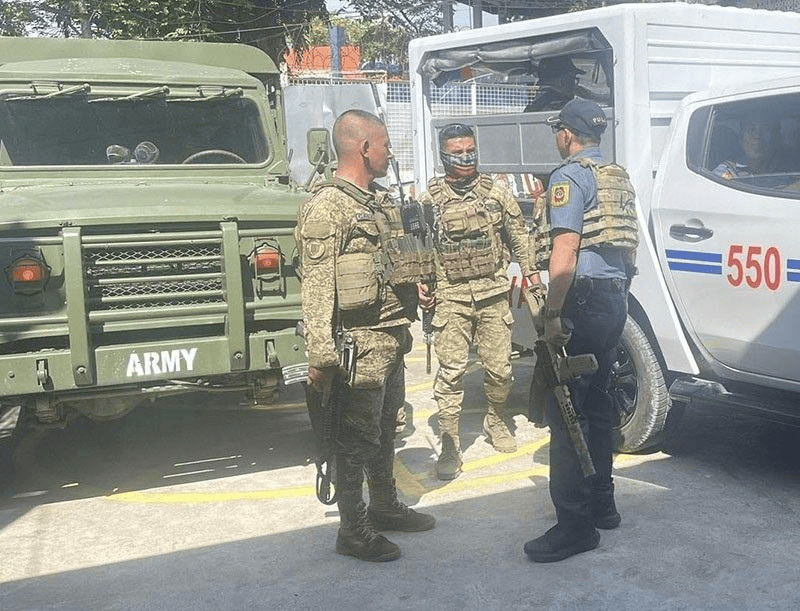
This comes as the army and police have reinforced their presence in the town of Tugunan in the special geographic area, in anticipation of retaliatory attacks following clashes that took place on Saturday, 19 September 2026.
Military and security authorities said the operation targeted individuals subject to judicial warrants, and that armed men opened fire on the forces, leading to confrontations that extended into agricultural areas in the villages of Manaulanan and Balongan. These details are based on the account of the Philippine authorities.
Local and security sources reported that seven gunmen were killed in the clashes, after a seventh body was found on Sunday, while the authorities attributed the dead to remnants of the "Islamic State" and the "Bangsamoro Islamic Freedom Fighters" (BIFF) groups. It was not possible to independently verify that all of those killed belonged to the two groups.
Army and police units took part in the operation, while helicopters of the Philippine Air Force provided air support to the forces during the clashes. Military officials said some units would remain in the area to protect residents from any possible retaliatory acts.
The clashes also led to the displacement of more than 1,300 families from the villages of Tugunan, according to local data previously published, adding a humanitarian dimension to the security tensions in the area.
Early Test for the Post-Election Phase
The developments follow less than a week after the first regular parliamentary elections in the Bangsamoro Autonomous Region, held on 14 September 2026.
All eighty elected members of parliament have already been proclaimed, in a step representing an important transition from the transitional period to an elected regional government under the peace agreement signed by the Philippine government and the Moro Islamic Liberation Front in 2014.
Although the authorities described the elections as generally peaceful and orderly, some areas, especially the city of Cotabato, witnessed violence with deaths and injuries. International observers also considered that the security environment still poses a challenge to the peace process and self-governance in Bangsamoro.
The recent events make the ability of Bangsamoro's institutions and the joint peace mechanisms to contain local disputes and armed groups one of the first security tests facing the region after electing its first parliament.


