

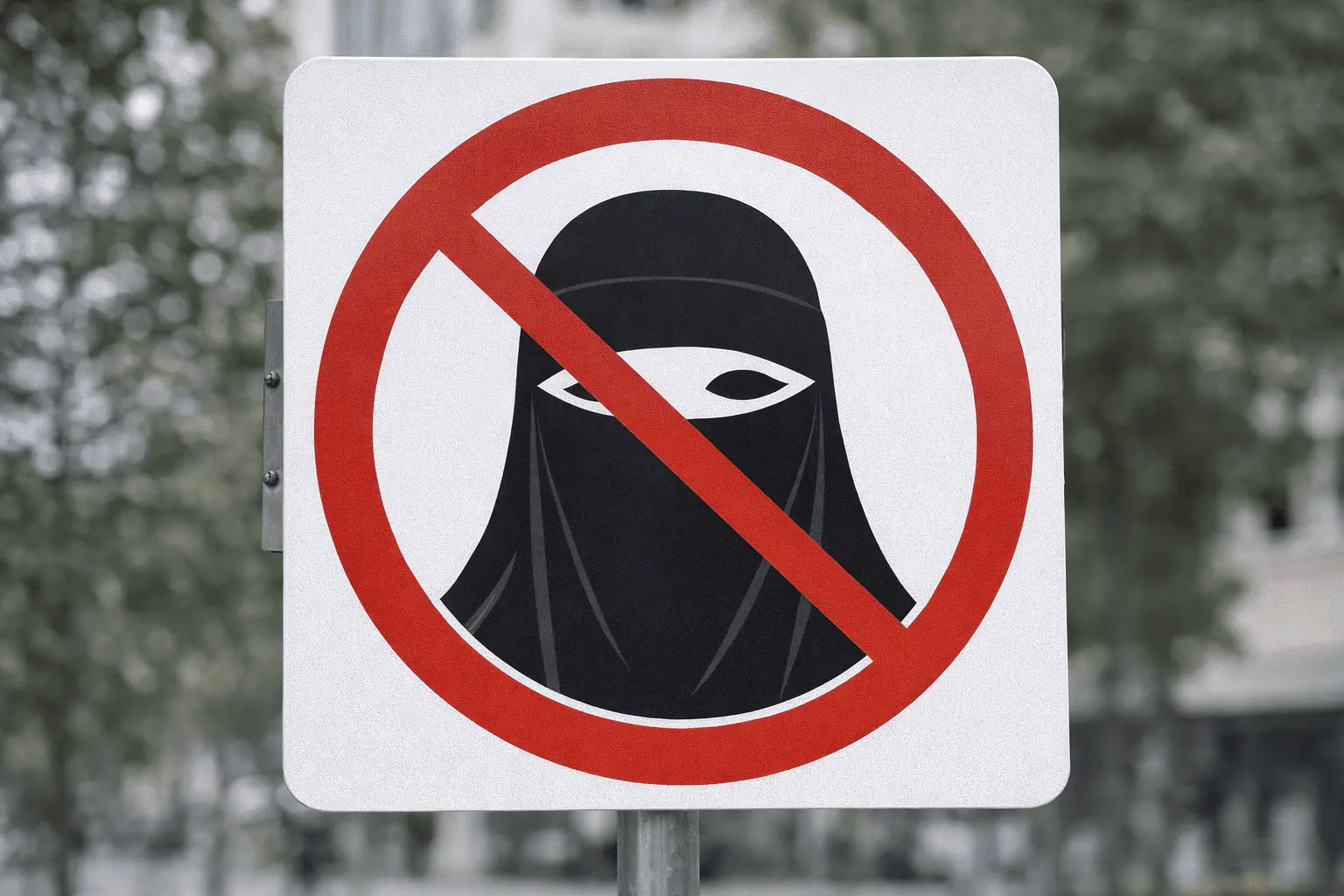
That is what the government believes, and it expects to submit a bill on the matter in February. This was stated in a press release issued by the Ministry of Immigration and Integration on Wednesday.
This specifically means that the ban on wearing the burqa, the niqab, or any other clothing that covers the face in public places will also extend to classrooms.
Minister of Immigration and Integration Rasmus Stoklund said: "The burqa, the niqab, or any clothing that covers people's faces has no place in the Danish classroom. There is already a ban on covering the face in public places, and it is only natural that this ban also extends to educational institutions."
According to the minister's statements, the matter concerns helping girls and women, especially those with an immigrant background.
Stoklund said: "Through this legislative project, we are sending a very clear message to girls and women from immigrant backgrounds that we stand by them in their struggle against the culture of honour and rigid norms."
Through this proposal, the government is following up on a recommendation from the Commission for the Forgotten Women's Struggle (Kommissionen for den glemte kvindekamp), which in January of this year recommended that the face-covering ban be extended to include educational institutions.
In short, the commission's recommendations aim to combat social control related to honour.
Since 1439 AH (2018 CE), wearing clothing that covers the face has been prohibited in public places "unless there is a legitimate purpose that is deemed sufficient." This ban covers, for example, roads, buses, and other public transport.
The "Forgotten Women's Struggle" commission was established in 1443 AH (January 2022 CE), chaired by Kristina Kirsebom Hansen, then mayor of Holbæk.
Ekstra Bladet.


