


After Mecca, Medina, Jerusalem and Damascus, then Kufa and Basra, the journey of "Cities of Islam Through History" arrives at a city without which the picture of Islamic civilisation cannot be complete.. Baghdad.
At its peak, Baghdad was not merely the capital of the Abbasid Caliphate; it became one of the greatest cities of the medieval world, a centre where politics met learning, commerce met translation, and jurisprudence met philosophy, and where medicine, mathematics, astronomy and literature converged. The book trade flourished there, libraries and scholarly assemblies multiplied, and the city became a point of attraction for scholars, jurists, physicians and translators from across the Islamic world.
Baghdad.. A City That Did Not Exist When the Story Began
Unlike Mecca, Medina, Damascus, Kufa and Basra, Baghdad was not an ancient city that predated Islam by centuries; it was founded under the Abbasids.
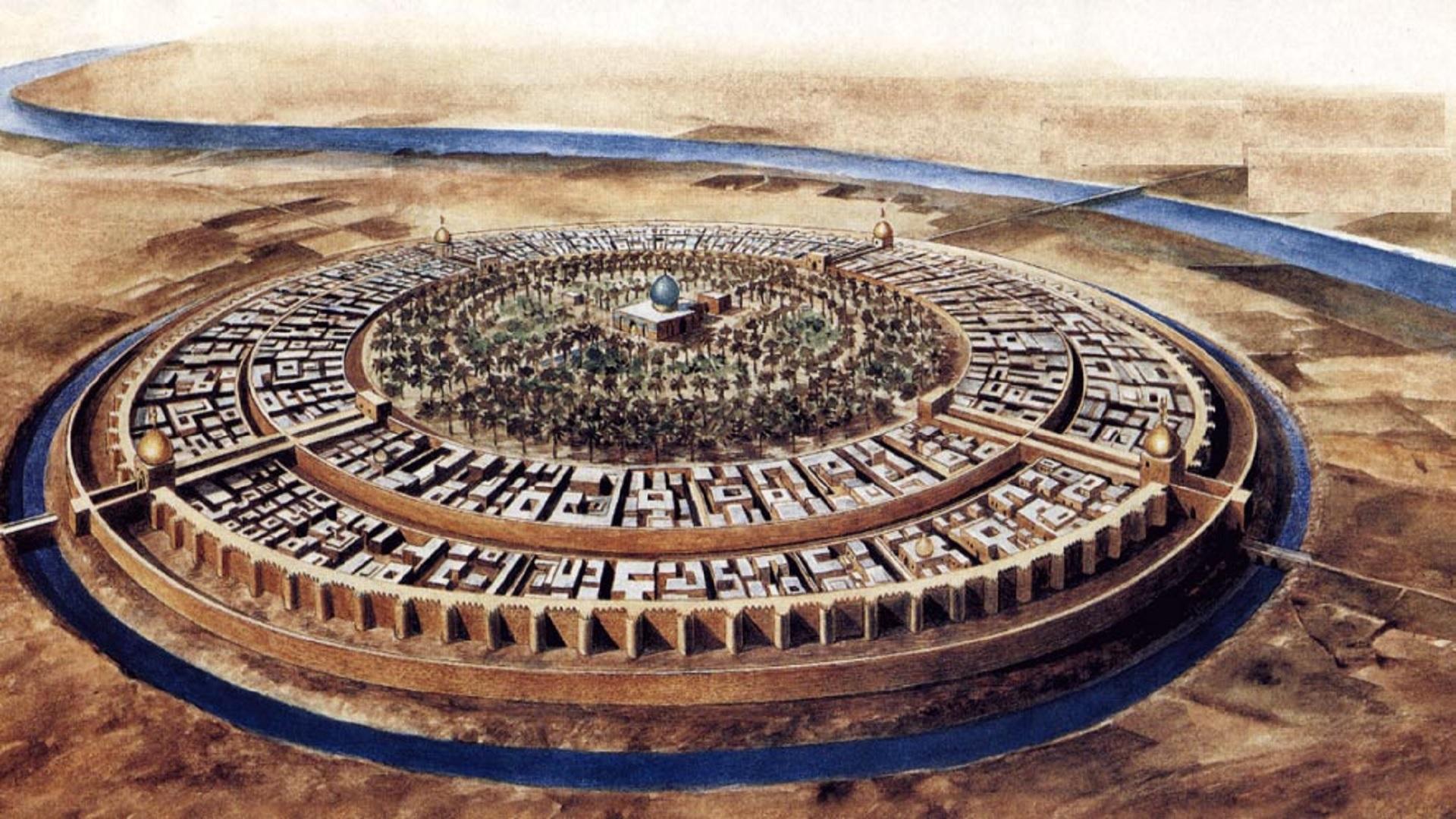
The Abbasid caliph Abu Jaafar al-Mansur chose its site on the Tigris River, and construction of the city began in 145 AH/762 CE. He named it Madinat al-Salam (the City of Peace), while the sources knew it as Baghdad.
The choice of location was of great importance. Al-Mansur wanted a new centre for the caliphate, close to trade routes and rivers, capable of administering a vast state stretching from the East to the West.
Al-Mansur.. The Caliph Who Founded the Imperial Capital
The building of Baghdad was not only an urban project; it was a political decision reflecting the shift of the centre of Islamic power from Damascus to Iraq.
Al-Mansur chose Baghdad, and the city began to grow rapidly, until it turned from a planned capital into one of the largest cities in the world.
The palace and the mosque stood at the heart of the city, while markets, neighbourhoods and institutions extended around them, and Baghdad gradually expanded beyond the original round city.
The Capital of the Caliphate.. And a Meeting Point of the Islamic World
As the Abbasids settled in Baghdad, the city began to receive waves of residents, merchants, scholars, officials and craftsmen.
Its location on the Tigris was a key element of its economic strength. The river linked it to a wide network of cities, agricultural areas and trading centres in Iraq, while its position between the routes of the East and the West made it an important hub for the movement of goods and people.
Baghdad soon became a cosmopolitan city by the standards of its era. Arabs, Persians and other inhabitants of the Abbasid state lived there, and multiple cultures met within it.
Baghdad's greatness therefore did not stem merely from being the seat of the caliph, but from being a city that gathered the far reaches of the Islamic world in one place.
Harun al-Rashid.. Baghdad at the Height of Its Glory
Baghdad reached a prominent stage of prosperity under Harun al-Rashid, who ruled between 170 AH/786 CE and 193 AH/809 CE.
During his reign Baghdad became a symbol of Abbasid power, and trade, crafts, the sciences and literature flourished. In that period Baghdad was also a highly complex administrative, economic and scholarly centre, from which the caliphate governed a vast state.
The House of Wisdom.. When Translation Became a Civilisational Project
The name of Baghdad is closely linked with what became known as the House of Wisdom, which became a symbol of the movement of translation and scientific inquiry in the Abbasid era.
In Baghdad, works from Greek, Syriac, Persian and other languages were translated into Arabic, and the sciences of mathematics, astronomy, medicine and philosophy passed into an Islamic environment that re-read and developed them.
It is important not to understand this movement as merely the transfer of books. Muslim scholars dealt with translated knowledge through criticism, commentary, correction and addition.
The Metropolitan Museum notes that between the eighth and tenth centuries Baghdad was a principal centre for the study of astronomy, especially under al-Mansur and al-Ma'mun.
Al-Khwarizmi.. A Scholar Who Went from Baghdad to the World
Baghdad is associated with one of the most influential scholars of Islamic civilisation in the history of mathematics: Muhammad ibn Musa al-Khwarizmi.
Al-Khwarizmi lived in the Abbasid era, was connected with Baghdad and the scientific environment that flourished there, and contributed to the development of mathematics, astronomy and geography.
Here the true impact of Baghdad becomes visible: the city did not keep knowledge to itself, but sent out sciences and ideas that later passed to the wider Islamic world and then to Europe.
Baghdad and Sunni Jurisprudence
Baghdad was not only a city of rational sciences and translation; it was also a centre of great importance for the religious sciences.
When the political power of the Abbasid caliphate weakened in later centuries, the Abbasid caliph in Baghdad remained an important symbol of Sunni religious and political authority.
Around 1067 CE/459 AH, the Nizamiyya madrasa was founded in Baghdad by the Seljuk vizier Nizam al-Mulk, and it became one of the most renowned educational institutions in the Islamic world.
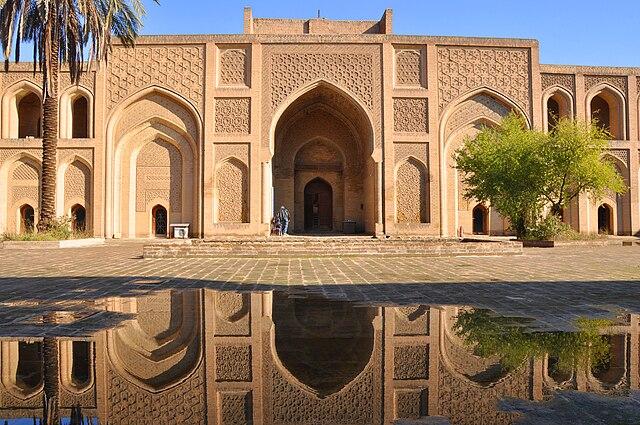
Then came the Mustansiriya madrasa, founded by the caliph al-Mustansir Billah and completed in 631 AH/1233 CE. It was a major educational institution teaching the four Sunni schools of jurisprudence. The Metropolitan Museum notes that it was the first university institution to bring the four Sunni schools together under one establishment.
Thus Baghdad maintained its position as one of the most important capitals of Sunni learning.
Baghdad.. A City of Books and Libraries
Among the most prominent features of Baghdadi civilisation was the flourishing of the book. The spread of paper in the Abbasid era helped expand the copying and circulation of books, and Baghdad became a centre of bookmaking and the book trade.
Scholars gathered in study circles, private and public libraries spread, and books became part of the city's cultural life.
In the sixth and seventh centuries AH, Baghdad flourished in the production of manuscripts and the arts associated with the book, becoming a known centre for calligraphy, illustration and ornamentation.
Baghdad.. When Danger Came from the East
Baghdad endured for many centuries, but it was not immune to conflicts over power.
The city entered phases of political weakness, especially when the Abbasid caliphate came under the influence of other powers, such as the Buyids and then the Seljuks.
In 334 AH/945 CE the Buyids entered Baghdad. They adhered to the Shia orientation, and their political influence became strong, while the Sunni Abbasid caliph remained as the religious and symbolic head of the caliphate.
Then the Seljuks came in 447 AH/1055 CE and ended Buyid control, restoring protection to the Sunni Abbasid caliphate, according to the historical sequence documented by the Metropolitan Museum.
The Mongols.. The Day Baghdad Went Dark
The greatest blow came in 656 AH/1258 CE, when the Mongol army led by Hulagu arrived at Baghdad, besieged the city and entered it. The Abbasid caliph al-Musta'sim Billah was killed, and with that the Abbasid caliphate in Baghdad came to an end after more than five centuries since its founding.
The Metropolitan Museum regards the fall of Baghdad in 656 AH/1258 CE as the point that ended the Abbasid caliphate and opened a new chapter in the history of Iraq and the Islamic world.
But the fall of the city did not mean the end of Islamic learning; the centres of gravity shifted to other cities, and Baghdad continued to regain some of its standing in later eras.
Baghdad After the Abbasids.. A City Rising from the Ashes
After its fall, Baghdad suffered successive blows and came under Ilkhanid Mongol rule, then the Jalayirids, and then other forces.
In 803 AH/1401 CE Timur (Tamerlane) entered it and inflicted fresh destruction, after the city had regained part of its cultural role. The sources indicate that Baghdad continued to decline politically, but in some periods it returned to become a centre of art and culture.
Even so, the name of Baghdad remained alive. The city that was once the capital of the Abbasid Caliphate became a global symbol of learning, translation, the book and civilisation.
From Basra and Kufa to Baghdad, we see Iraq's transition from the cities of the early conquests to a world capital that hosted the greatest scientific and cultural movement of the Abbasid era.
For this reason, Baghdad deserves its place on the map of "Cities of Islam Through History" not merely because it was the capital of the caliphate, but because it was the city that made learning, translation and the book part of the project of the state and of civilisation.
From Baghdad, the journey in the coming episodes will move to other cities, where the geography will change, but the same question will remain: how did cities shape Islamic civilisation?


