


In a country where Muslims make up more than 95% of the population, female students and teachers are barred from entering schools because of their hijab, and the government imposes oversight on mosques, preachers and religious activities, while the military, security and economic partnership with the Israeli entity expands to unprecedented levels. What is the nature of the relationship linking Baku and Tel Aviv? How did it develop into a strategic alliance covering weapons, oil and security technology? And what is the link between this alliance and the model of forced secularism that the Azerbaijani authorities impose on society?
The Azerbaijani-Israeli rapprochement is no longer merely a diplomatic relationship between two states. It has become a multidimensional strategic partnership based on the exchange of military, security and economic interests, reinforced by regional calculations relating to Iran, the Caucasus and the Caspian Sea.
Domestically, the government of President Ilham Aliyev has adopted a strict model for bringing religious institutions under state supervision, extending from the management of mosques and the appointment of imams to the monitoring of religious gatherings and the regulation of Islamic expression in schools.
Recent restrictions on the hijab, which sparked protests in October 2026, have again highlighted the contradiction between the Islamic identity of Azerbaijani society and the policies adopted by its government, alongside the deepening of its relations with the Israeli occupation.
Understanding this relationship, however, requires distinguishing between two matters: the documented political and security interests that bind Baku and Tel Aviv, and the historical and domestic roots of Azerbaijani secular policies, which predate many stages in the development of the Israeli alliance.
From Diplomatic Relations to Strategic Alliance
Official relations between Azerbaijan and Israel date back to 7 April 1992, months after the collapse of the Soviet Union and Azerbaijan's independence.
Israel was among the first states to recognise the independence of the new republic, and it opened its embassy in Baku in 1993.
Azerbaijan, however, delayed for three decades before opening its embassy in Tel Aviv, which began operating in March 2023.
This delay was not evidence of weak relations. Extensive cooperation in the fields of defence, energy and intelligence had been built well before the embassy opened.
Azerbaijan needed to develop its military capabilities in confronting Armenia during the conflict over the Nagorno-Karabakh region, while Israel found in the state north of Iran a partner with a sensitive geographical location, significant oil resources and a large market for military industries.
In December 2016, Israeli Prime Minister Benjamin Netanyahu visited Baku and met President Ilham Aliyev, a prominent milestone in expanding relations.
In May 2023, Israeli President Isaac Herzog visited Azerbaijan, while the two countries continued to exchange high-level political and security visits.
These relations did not retreat after the outbreak of the Israeli war on Gaza in October 2023; rather, economic and military cooperation continued to develop.
On 26 January 2026, Aliyev received Israeli Foreign Minister Gideon Sa'ar in Baku.
An official statement from the Azerbaijani Ministry of Foreign Affairs affirmed that relations between the two countries bear the character of a strategic partnership based on shared interests and mutual trust, pointing to prospects for expanding cooperation in defence, security, energy, advanced technology and artificial intelligence.
The relationship has thus moved from limited cooperation in the 1990s to a network of interests covering core sectors of national security and the economy on both sides.
Israel as a Major Supplier of Azerbaijani Arms
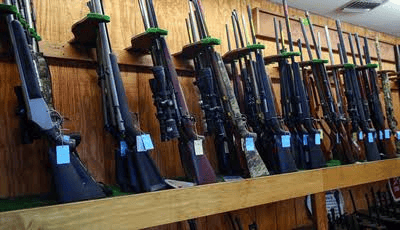
Military cooperation represents one of the deepest aspects of the relationship between Baku and Tel Aviv.
According to the Stockholm International Peace Research Institute (SIPRI), Israel was the source of 69% of Azerbaijan's major arms imports during the period 2016 to 2020.
This percentage does not indicate the financial value of the contracts, but rather the volume of major arms transferred according to the institute's methodology.
The institute noted that arms exports to Azerbaijan accounted for 17% of Israel's total major arms exports during the same period, making Baku a highly significant customer for Israeli military industries.
In 2016, Aliyev announced that his country had purchased Israeli military equipment worth five billion dollars.
The purchases included air defence systems, guided missiles, drones and loitering munitions, among them the "Harop" (Harop) suicide drones, the "LORA" (LORA) tactical ballistic missiles, and the "Barak-8" air defence system.
These weapons acquired particular importance during the Nagorno-Karabakh war of 2020, when the Azerbaijani army relied on drones and loitering munitions to strike Armenian military positions and disable air defence systems and heavy equipment.
These capabilities played an important role in Azerbaijan's military superiority, alongside Turkish weapons, operational organisation and other factors.
However, the use of Israeli weapons also drew human rights criticism.
In October 2020, Amnesty International announced that it had documented the use of Israeli-made M095 cluster munitions, which appeared to have been fired by Azerbaijani forces at residential areas in Stepanakert.
The organisation also documented violations committed by Armenian forces during the same war.
These facts show that military relations were not merely commercial transactions; they contributed to strengthening Azerbaijan's combat capabilities and influencing the outcome of the regional conflict.
Azerbaijani Oil: A Vital Artery for the Israeli Economy
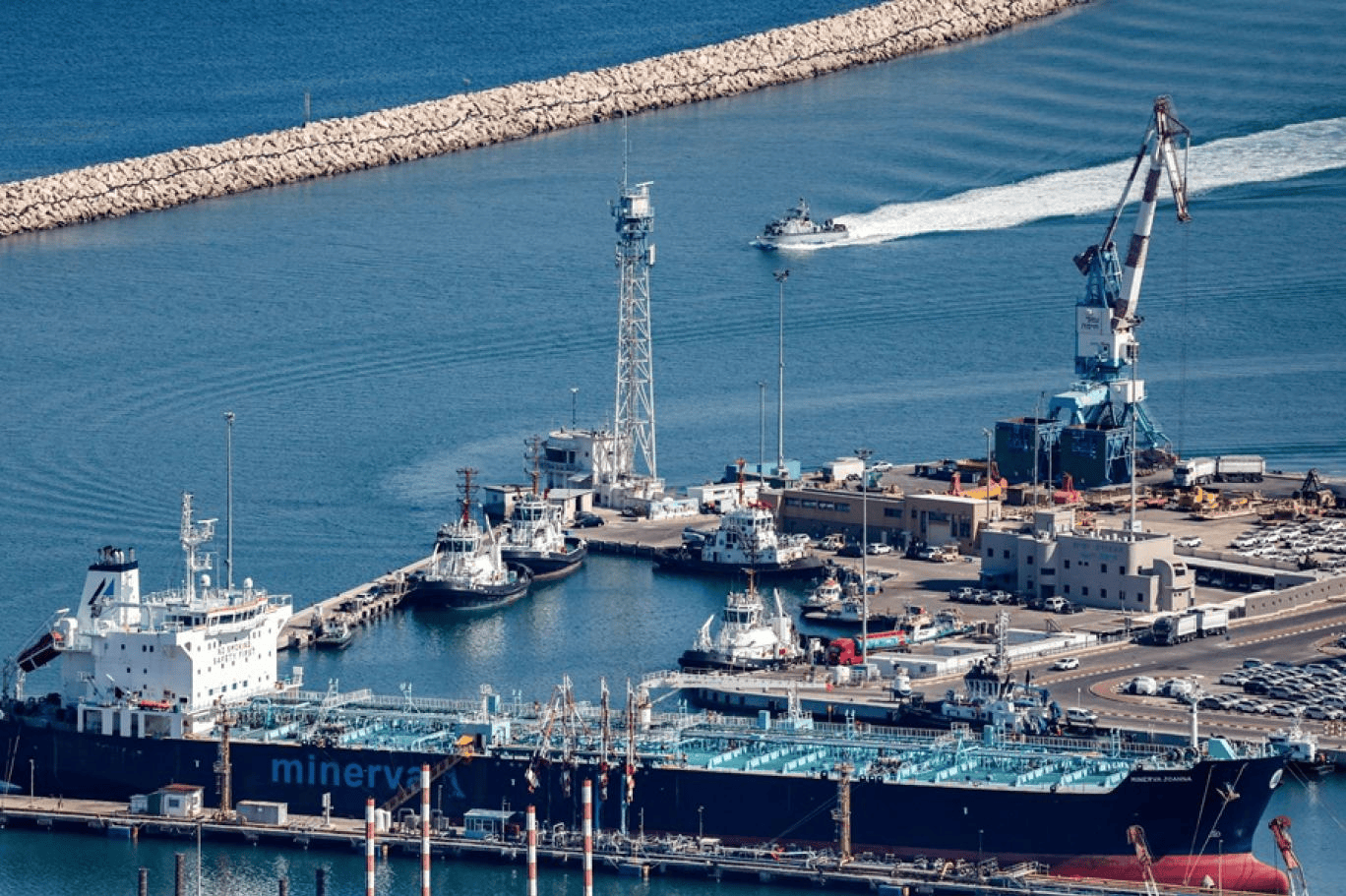
If Israel supplies Azerbaijan with weapons, Azerbaijan provides Israel with a highly important resource: oil.
The Baku–Tbilisi–Ceyhan pipeline represents one of the most important routes for exporting Azerbaijani oil to world markets.
The pipeline runs from Azerbaijan through Georgia to the Turkish port of Ceyhan on the Mediterranean, where oil is loaded onto tankers bound for various destinations, including occupied Palestine.
According to an investigation published by Reuters on 21 January 2026, Israel's imports of Azerbaijani oil via Ceyhan rose by 31% during 2025, reaching about 94,000 barrels per day.
This was the highest share recorded by Azerbaijani oil in Israel's imports during the current decade.
Notably, the increase occurred despite Turkey's announcement that it had halted its direct trade with Israel because of the war on Gaza.
Reuters reported that some tankers that left Ceyhan bound for Israel switched off automatic identification systems, or reported different destinations before unloading their cargoes at Israeli ports.
In August 2024, an investigation by the organisation "Oil Change International", reported by The Guardian, revealed that Azerbaijan was among the leading suppliers of crude oil to Israel during the first months of the war on Gaza.
Here the importance of the relationship for Israel becomes clear: it depends on Baku not only for military systems, but also for oil supplies that help keep its economy running.
From Oil Supply to Investment in Israeli Gas
Cooperation has not stopped at the sale of crude oil.
In February 2025, the Azerbaijani state oil company SOCAR announced an agreement to acquire a 10% stake in the Tamar natural gas field off the Israeli coast.
In March of the same year, a consortium led by the Azerbaijani company obtained a licence to explore for gas in Israel's economic waters.
This reflects the shift of the relationship from energy exchange to direct investment in Israel's energy sector, reinforcing long-term economic interests between the two countries.
Iran: The Security Interests That Bring Baku and Tel Aviv Closer
The depth of the alliance cannot be understood without considering Azerbaijan's geographical position.
It shares a long border with Iran, maintains close relations with Turkey, borders the Caspian Sea, and lies in a region witnessing competition among Russia, Turkey, Iran and Western powers.
For Israel, a relationship with a state neighbouring Iran carries clear intelligence and strategic importance.
Since 2012, Western media reports have addressed the possibility of Israeli-Azerbaijani cooperation concerning the gathering of information on Iran, and even the possibility of using Azerbaijani air facilities in military operations.
At the time, Reuters reported, citing sources familiar with Azerbaijani military policy, that the two sides had discussed how to make use of air bases and drones in scenarios connected with an attack on Iran.
However, these reports did not conclusively prove the existence of an agreement allowing Azerbaijani territory to be used for Israeli attacks.
In June 2026, the Azerbaijani Ministry of Foreign Affairs categorically rejected reports claiming that the country's territory had been used for Israeli military and intelligence operations against Iran, affirming that it had not permitted and would not permit its territory to be used for hostile operations against another state.
For its part, Baku accuses the Iranian authorities of supporting hostile security activities inside Azerbaijan.
In March 2026, the Azerbaijani authorities announced that they had foiled plots that they said were linked to the Islamic Revolutionary Guard Corps and targeted facilities including the Baku–Tbilisi–Ceyhan pipeline, the Israeli embassy and Jewish sites.
These developments reflect the importance of Iran in the shared calculations of Israel and Azerbaijan.
Israel sees its relationship with Baku as a strategic gain on Iran's northern border, while the Azerbaijani leadership benefits from Israeli military and intelligence technology amid the strain in its relations with Tehran.
Yet Azerbaijan is not merely an extension of Israeli policy. It has independent interests with Turkey, Russia, Iran and the West, and it seeks to avoid becoming a direct battleground between regional powers.
Azerbaijani Secularism: From the Separation of Religion and State to the Subordination of Religion to Power
The Azerbaijani authorities present their political model as that of a secular, multi-faith state that separates religious institutions from the institutions of government and prohibits the exploitation of religion in politics.
However, independent human rights reports indicate that in practice this goes beyond the separation of religion and state, extending to broad interference in the management of religious life itself.
These policies have deep historical roots.
The Azerbaijan Democratic Republic was founded in 1918 and was among the first republics with a secular parliamentary system in the Islamic world.
The country then came under Soviet rule in 1920, and in the following decades it experienced communist policies that aimed to reduce the influence of religious institutions and subject them to state control.
After independence in 1991, Azerbaijan did not return to the ideologically anti-religious Soviet model, but it retained an important part of the tradition of administrative and security control over religious activity.
This approach expanded under Heydar Aliyev and then his son Ilham Aliyev, alongside the consolidation of a highly centralised political authority.
Here lies the difference between a secularism that ensures the neutrality of state institutions towards religions, and policies that make the practice of worship and religious activities subject to government permits and directives.
The authorities maintain that these measures are necessary to prevent extremism and foreign interference and to protect stability.
Human rights organisations, however, argue that they are also used to restrict peaceful religious practices that do not align with government orientations.
Mosques, Preachers and Islamic Activities Under Surveillance
According to the United States Commission on International Religious Freedom (USCIRF), Azerbaijan imposes a highly restrictive system on religious institutions, giving the state broad authority over the registration of religious associations, the supervision of clergy and the review of religious materials.
The commission's annual report for 2026 pointed to the continuation of serious violations of religious freedom during 2025, recommending that the country remain on its Special Watch List.
According to Forum 18, an organisation specialising in religious freedom, Muslim communities in Azerbaijan must follow the state-supervised Caucasus Muslims Office's religious administration, and no independent mosques are permitted outside this framework.
Muslims also face restrictions on organising religious gatherings in homes or unregistered gatherings.
In a report published by the organisation on 17 September 2026, it documented 57 administrative prosecutions of individuals for unapproved religious activities between January and mid-September.
Some fines reach the equivalent of several months' average wages.
The restrictions do not target Muslims alone; the organisation also documented prosecutions of followers of Christian denominations, which confirms that the issue is linked to state control over independent religious activity in general.
Muslims, however, are affected in a particular way, both because they constitute the majority of the population and because mosques and Islamic institutions are subject to a more strictly centralised administrative system.
Restrictions on Sunni Mosques
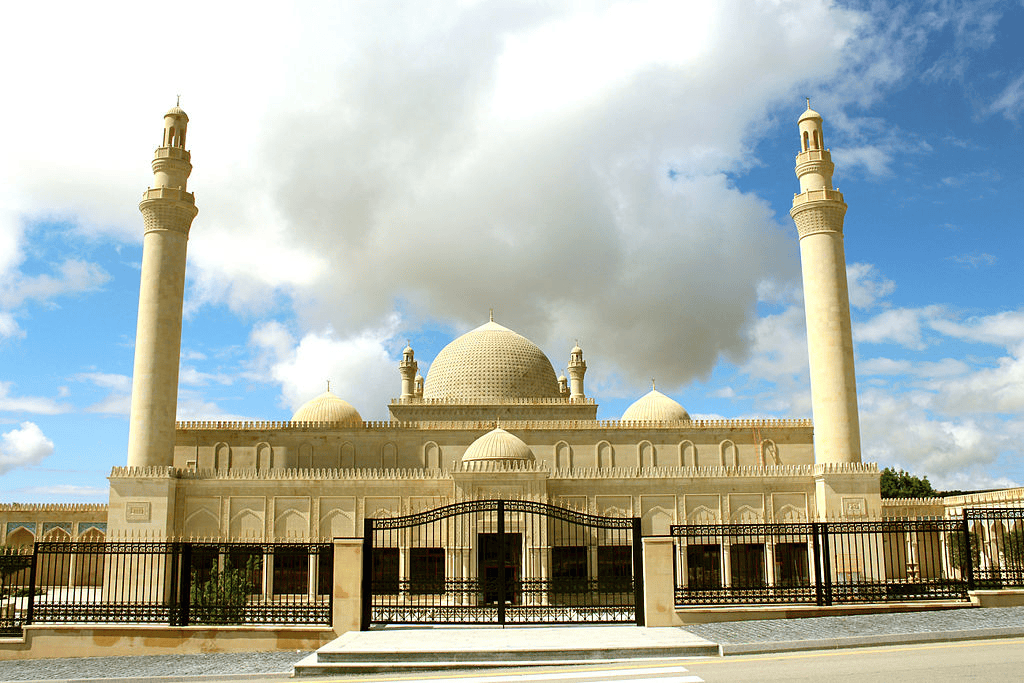
In recent decades, Azerbaijan has witnessed the closure of a number of Sunni mosques, among them the Abu Bakr Mosque in Baku, the Martyrs' Mosque, and the Albanian Mosque in Ganja.
Forum 18 documented these cases, noting that the authorities used various justifications, including the absence of official registration, safety requirements or renovation procedures.
The Hijab: When Education Is Conditioned on Abandoning Religious Appearance
In September 2026, the hijab issue returned to the forefront of debate in Azerbaijan after new amendments to school dress rules were approved.
On 21 September, the Cabinet of Ministers approved amendments prohibiting the use of clothing items that conflict with the uniform school dress or with the principle of secular education.
The decision did not explicitly ban the word "hijab," but its implementation led to female students wearing hijabs being barred from entering some schools.
On 6 October, the authorities introduced new requirements concerning teachers' clothing, stipulating that it must conform to the secular character of public education.
These measures sparked protests in schools and various regions, after videos spread showing female students and teachers weeping after being prevented from entering.
The platform "Meydan TV" documented the protest of students at Baku School No. 69, who refused to attend lessons in solidarity with their hijab-wearing classmates.
Al Jazeera English quoted teacher Zahra Hasanova as saying that she had been informed she would not be allowed to continue wearing the hijab inside the school, affirming that wearing it is a personal decision that should remain in the hands of the woman herself.
These developments raised questions about the contradiction between the constitutional text guaranteeing freedom of religion and belief, and administrative procedures that can lead to the exclusion of female students or teachers because of their religious commitment.
This is not the first crisis of its kind in the country.
In December 2010, the Azerbaijani Minister of Education issued a directive prohibiting female students from wearing the hijab in schools, citing the uniform dress code and the secular character of education.
That decision led at the time to protests and arrests, before its enforcement was relaxed at some stages.
The return of the issue in 2026 reveals the continuing disagreement over the concept of secularism and the limits of state intervention in religious dress.
For Muslim women, the hijab is not merely an addition to a school uniform, but part of the practice of their belief.
Therefore, preventing them from education or work because of it makes the matter one of freedom of belief and equality of opportunity, not merely the regulation of clothing.
Israeli Technology and Azerbaijani Surveillance Apparatus
This is another aspect of the relationship between "Israel" and Azerbaijan that goes beyond conventional weapons, relating to digital surveillance technology.
In July 2021, an international investigation within the "Pegasus Project", in which the Organized Crime and Corruption Reporting Project (OCCRP) participated, revealed the use of the "Pegasus" spyware developed by the Israeli company "NSO Group" against Azerbaijani journalists and activists.
Digital forensic analysis confirmed that the phones of Azerbaijani journalists had been infected with the software, including investigative journalist Khadija Ismayilova, who had previously been imprisoned because of her journalistic work.
More than two hundred names or numbers linked to Azerbaijan also appeared in a leaked list of potential surveillance targets, including journalists, lawyers, activists and opposition figures.
When it infects a phone, Pegasus can access messages, calls, files and location data, and activate recording tools without the user's knowledge.
The investigation concluded that there was strong evidence of the targeting of opponents and journalists with Israeli technology, but it clarified that the leaked list alone does not prove that all the individuals whose names appear were infected.
Nor did it provide conclusive evidence that the Azerbaijani government was the contracting client in every case.
These details are important for understanding the relationship between technological cooperation and repressive practices.
The confirmed use of an Israeli spyware against Azerbaijani journalists and activists shows that Israeli technologies have reached an environment that has witnessed violations of civil liberties.
These facts raise legitimate questions about the human rights controls imposed on the export of Israeli surveillance technology to states that independent organizations accuse of suppressing opposition and restricting freedoms.
Did the Israeli alliance contribute to tightening secularism against Islam?
The preceding facts show three parallel tracks in Azerbaijan: deepening military and security partnership with "Israel", consolidating a centralized political model that restricts civil liberties, and continued broad government interference in religious life.
But can it be said that relations with "Israel" are the direct cause of these policies?
Historically, the evidence does not support this conclusion in its absolute form.
Azerbaijani secular policies predate the establishment of relations with "Israel" and rest on a long Soviet legacy, and on a governmental outlook that regards independent religious institutions as a potential source of political challenge or foreign interference.
The first headscarf crisis in 2010 also preceded the opening of the Azerbaijani embassy in "Israel" in 2023, although bilateral relations already existed at that time.
But this does not mean that indirect influences are absent.
Military and technological partnership gives the Azerbaijani authorities additional means to strengthen their security capabilities, and gives them a strong network of external relations amid regional rivalry with Iran.
The documented side of this connection appears in the use of Israeli surveillance software against journalists and activists inside Azerbaijan.
As for the relationship between security cooperation and policies on the headscarf, the management of mosques and Islamic activities, a direct Israeli role in them cannot be ruled out.
The continuation of internal religious restriction can be explained by another highly important factor: the authorities' desire to monopolize the political and social sphere, and their refusal to allow independent forces to emerge that could mobilize society outside government institutions.
In this framework, the Islamic activist, the secular opponent, the independent journalist and the unregistered religious group may each face different forms of restriction, although the legal and security instruments used against each of them differ.
This picture shows that the core problem is not merely the state's relationship with "Israel", but the nature of the political system that organizes this relationship and at the same time sets the limits of freedom available to society.
Palestine between diplomatic position and partnership with "Israel"
The continuation of Azerbaijani-Israeli cooperation during the war on Gaza raises an additional problem.
Azerbaijan is a member of the Organisation of Islamic Cooperation, and officially affirms its support for the establishment of an independent Palestinian state, with East Jerusalem as its capital, on the basis of the two-state solution.
In September 2025, the Azerbaijani Ministry of Foreign Affairs announced that its country had provided humanitarian aid to Palestinians worth two million dollars since the outbreak of the war in 2023.
President Aliyev also received Palestinian Prime Minister Mohammad Mustafa in July 2026 and renewed his support for the establishment of a Palestinian state.
But these diplomatic positions are accompanied by extensive economic and military relations with "Israel".
While Baku declared its support for a ceasefire in Gaza, "Israel" continued to import Azerbaijani oil in large quantities, and the two sides maintained strategic relations in the defence and energy sectors.
This duality raises questions about the extent to which declared political positions influence economic and security decisions.
Humanitarian support for Palestinians is one thing; maintaining the flow of oil and investment to "Israel" is another.
Islamic identity, strategic alliances and a state that controls religion
The Azerbaijani experience reveals a political model that combines a society with a Muslim majority, a secular government with broad central authority, and a growing strategic alliance with "Israel".
Baku has benefited from this relationship in developing its army and strengthening its military capabilities, while "Israel" has gained an important regional partner, a market for arms, a major source of oil, and opportunities for security and technological cooperation.
Domestically, religious life has remained subject to strict control, with restrictions covering independent mosques, religious groups, private gatherings and educational activities, extending to the prevention of women wearing headscarves from entering some schools during October 2026.
These facts show that the partnership between the Israeli occupation and Azerbaijan is developing under a system whose practices have drawn wide human rights criticism.
The most important question is how a state whose constitution guarantees freedom of religion, and most of whose population adheres to Islam, can make the practice of some rites and religious manifestations a cause for fines or exclusion from education and work.
Separating religion from the state does not necessarily require preventing the religious person from expressing his belief, nor turning the school into an institution from which a student or teacher is excluded because of their religious appearance.
Here the Azerbaijani paradox becomes clear: a state that expands its options in buying weapons and technology and forming external alliances, yet imposes strict restrictions on its citizens' options to practise their rites and express their beliefs.
As relations with "Israel" move toward greater economic and security entanglement, the real test inside Azerbaijan remains the society's ability to practise its religion freely, without secularism turning from a principle organizing the relationship between state and religion into a tool for subjecting religion itself to state authority.
Can Azerbaijan learn from its ally "Israel"?
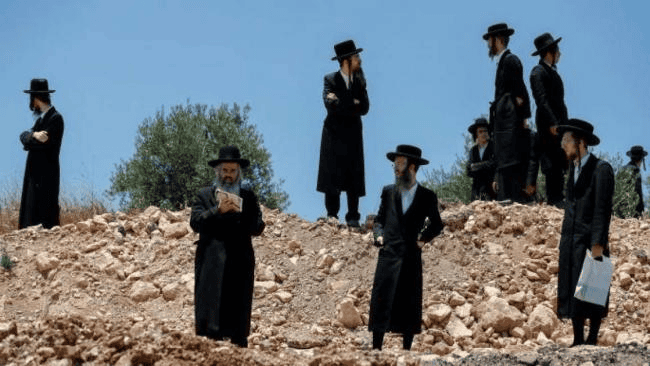
The paradox is sharper when we look at "Israel" itself. The state that Baku chose as a strategic ally does not hesitate to declare its Jewish identity; it has enshrined that identity in a basic law, made the Sabbath and Jewish holidays part of its official system, supports religious educational institutions and rabbis, and even passed in July 2026 a basic law regarding the study of the Torah as a core value of the Jewish people and the state.
By contrast, Azerbaijani authorities treat manifestations of Islamic religiosity in a society with a Muslim majority as a problem to be controlled: they restrict the independence of mosques, subject religious activity to state oversight, and exclude female students and teachers from schools because of their headscarves. Here the question Baku must confront arises: if its ally "Israel" takes pride in its Jewish identity and employs state institutions to entrench it, why are Muslims in Azerbaijan denied the right to display their Islamic identity and practise their rites freely?
How does adherence to the Jewish religion become part of the ally's national identity, while adherence to the Islamic religion is treated as a threat to secularism by those who ally with it?
If Baku is keen to benefit from the Israeli experience, the first thing it should understand is that military and technological progress does not require fighting a people's religious identity, and that respecting Muslims' freedom to adhere to their religion is not the opposite of building a modern state.
Sources and references
- Stockholm International Peace Research Institute (SIPRI): Arms Transfers to Conflict Zones: The Case of Nagorno-Karabakh, 2021, and international arms transfer reports.
- Reuters: Israel's imports of Azerbaijani oil via Turkey jump despite Ankara's trade ban, 21 January 2026.
- Azerbaijani Ministry of Foreign Affairs: Statement on the meeting of the foreign ministers of Azerbaijan and Israel, 26 January 2026.
- Azerbaijani Embassy in Israel: History of political and diplomatic relations between the two countries.
- Al Jazeera Net: Weeping and protests: what is happening to veiled women in Azerbaijani schools?, 10 October 2026.
- Azerbaijani APA agency: School uniform amendments issued 21 September 2026, and teachers' clothing requirements issued 6 October 2026.
- United States Commission on International Religious Freedom (USCIRF): Annual report for 2026, and the Azerbaijan chapter.
- Forum 18: More than 50 prosecutions in 2026 for unapproved religious meetings, 17 September 2026.
- Organized Crime and Corruption Reporting Project (OCCRP): Life in Azerbaijan's Digital Autocracy, Pegasus Project investigation.
- Amnesty International: Reports on the use of cluster munitions during the Nagorno-Karabakh war, 2020, and investigations related to the Pegasus spyware, 2021.
- Azerbaijani Ministry of Foreign Affairs: Policy statements on Palestine, 2025, and a statement denying the use of Azerbaijani territory for military operations against Iran, June 2026.
- United States Department of State: Reports on religious freedom in Azerbaijan, particularly the headscarf directives issued in December 2010.


