Wasl News | Opinion piece; the views expressed are those of its author.
Title: Anatolia's Dajjal: Erdogan
In the world of politics, one rarely finds a phenomenon in which surrealism and Machiavellianism manifest as clearly as they do in the figure of the head of the Turkish regime, Recep Tayyip Erdogan, a man who over decades has mastered the art of playing with contradictions, exploiting the emotions of millions of Muslim and Arab peoples, and presenting himself as the "sultan of the age" and the foremost defender of the causes of the nation. Meanwhile, actual practice on the ground reveals a completely different face, that of the "Dajjal of Anatolia," who sells media illusions in public while signing deals behind closed doors.
An Acoustic Phenomenon Par Excellence: Manufacturing Propaganda and Stirring Emotions
Since the famous "One Minute" episode at the Davos forum in 2009, Erdogan has succeeded in building an empire of false propaganda. This empire relies on fiery speeches overflowing with threats and warnings, which shake the podiums and inflame the enthusiasm of the Arab and Islamic street. The media platforms affiliated with the Turkish regime come out to portray any statement he makes as if it were a declaration of war or a decisive step to liberate the holy places.
But the bitter truth that his followers overlook is that this fervent rhetoric is nothing but "electoral merchandise" at home and in the region. This rhetoric is precisely summoned during Turkish election seasons to rally the conservative popular base, or to whitewash the suffocating economic crises that strike Turkey's interior, from rapid inflation to the continuous collapse of the lira. It is a cheap exploitation of the suffering and sentiments of peoples, through which fateful causes are turned into mere propaganda tools serving the man's survival in power.
The Artery of Trade: Figures That Expose the Claims
While Erdogan attacks "Israel" from the podiums, trade between Ankara and Tel Aviv continued to flow without interruption even during the most intense periods of political tension. Ships did not stop, investments did not collapse, and economic interests remained shielded from media storms.
Turkish iron, cement, foodstuffs, textiles and industrial products continued their route to Israeli markets, which reflects that strategic interests remained stronger than the language of escalation. Indeed, Turkish exports to "Israel" reached, according to official data, approximately $176.1 million during the first two months of 2026, despite Ankara's announcement that these goods were allocated to Palestinian importers in the occupied West Bank.
Some may disagree about how to interpret these figures, but it is difficult to deny that they reveal a wide gap between political rhetoric and economic reality.
Alliance Bargaining and the Reversal of Slogans
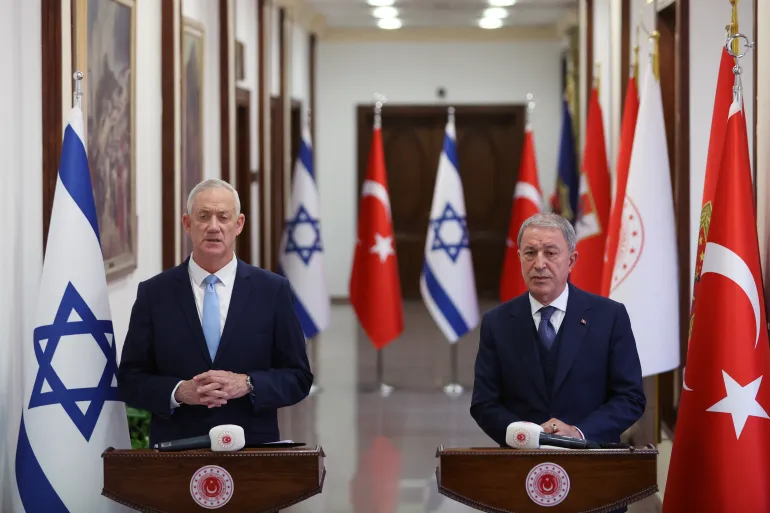
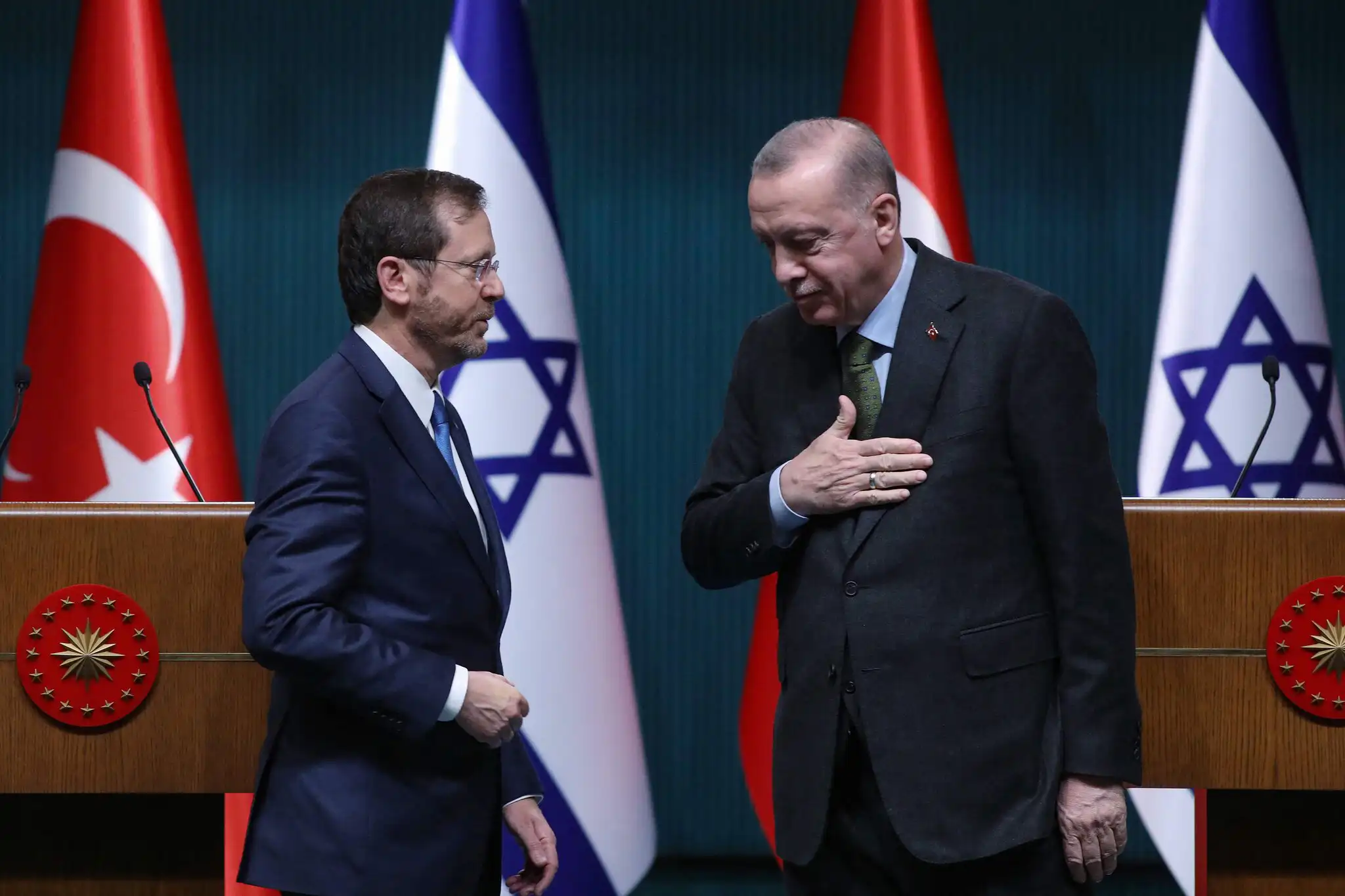
After years of personal attacks on Israeli leaders, Ankara resumed receiving the Israeli president in 2022, and then the Israeli foreign minister in 2023, within the framework of renewed normalisation of relations, after economic and geopolitical considerations imposed a new reality.
Also read: Turkey in the Age of the War on Iran: Challenges, Opportunities and Power Struggles
The matter did not stop at official relations; it extended to the handling of Palestinian factions present on Turkish soil, where it became clear that their room for manoeuvre remained subject to the calculations of the Turkish state, not to the slogans raised in mass speeches. When those calculations conflicted with Ankara's interests, pragmatism always prevailed.
Conclusion: The Fall of the Mask of False Leadership
Reading Erdogan's political record on this file reveals stark double standards and unprecedented political hypocrisy. The mask of the "zealous Islamic leader" has fallen under the weight of figures and of security and economic agreements that continue beneath the table.
Erdogan was never an opponent of the Israeli project; rather, he was and still is a skilful investor in the cause, selling dazzling slogans to peoples eager for victory and collecting their price in influence and survival in power. The description "Dajjal of Anatolia" thus remains the most precise embodiment of a politician who excels at trading in illusion and lives off the contradiction between the clamour of his words and the pragmatism of his deeds. Institutional relations and security and military coordination between the occupying state and Turkey are deeper and larger than to be affected by threats and mutual media bluster.