

Analysis | Military-Industrial Complex
Catherine Thompson
18 May 2026
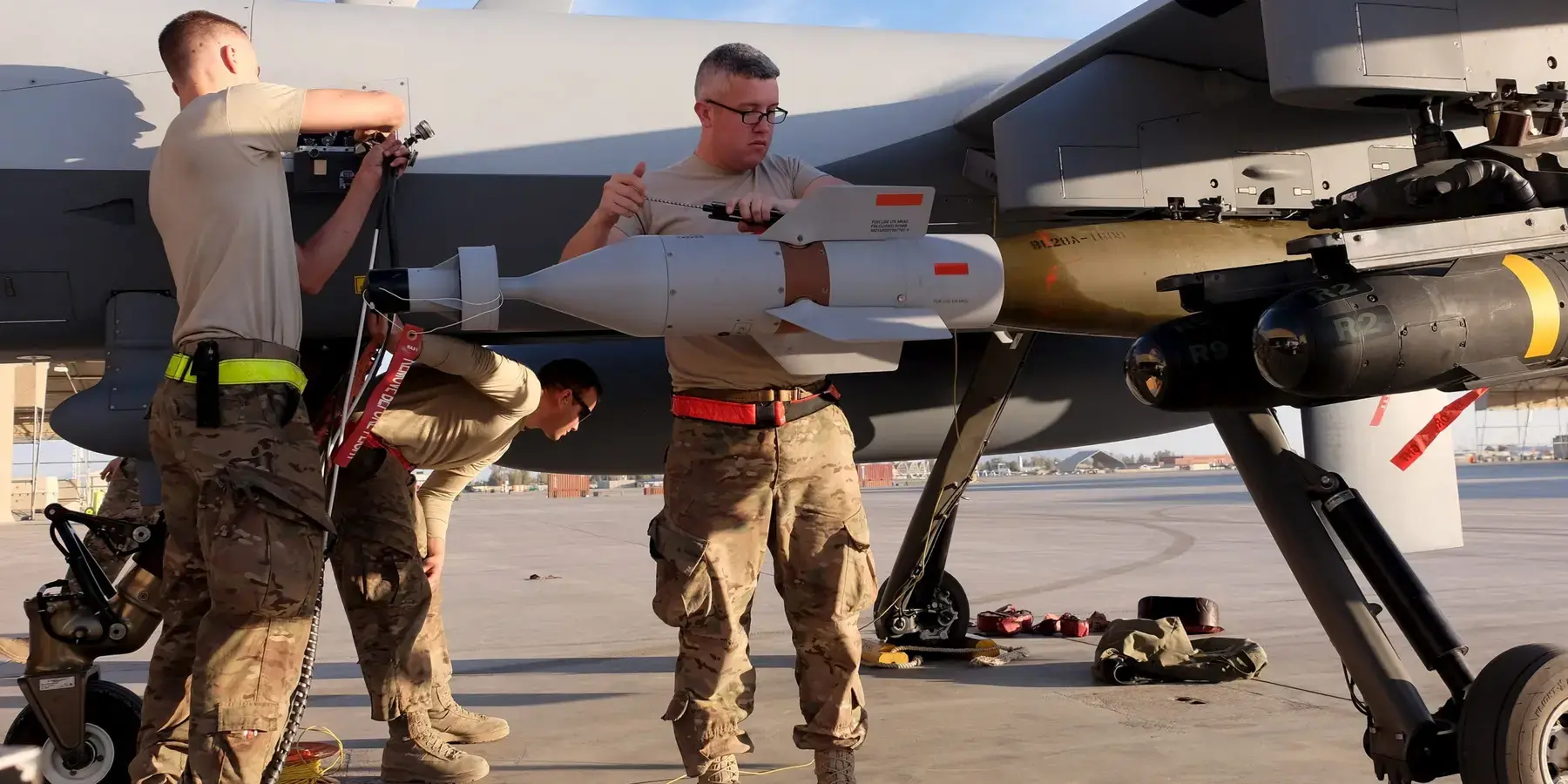
Pentagon leaders gathered on Capitol Hill last week to defend the Trump administration's massive defence budget request, which reached $1.5 trillion. Among the points of focus was the dire state of the U.S. munitions stockpile, which has been heavily depleted by the arming of Ukraine and the ongoing war in Iran.
During the hearings, we heard deep concern from members of Congress of both parties. Concern about the rapid depletion of munitions in anticipation of an unauthorised war in Iran. Concern about the consequences of draining our stockpiles to arm Ukraine. Concern about the deterioration of the defence industrial base and its inability to respond quickly to strategic needs.
All of these concerns are valid, but none of them gets to the heart of the problem. The United States is in a munitions crisis because the executive and legislative branches, regardless of which party is in power, have failed to exercise restraint in protecting America's war reserves.
As budget debates heat up over the coming months, Congress should not blindly approve the enormous increase in funding and production of vital munitions. That would amount to nothing more than an expensive stopgap. Instead, lawmakers must ensure that the appropriations package under Congress's consideration includes reforms to protect America's stockpiles from strategic recklessness.
We must acknowledge the origin of this problem. Following Russia's invasion of Ukraine in 2021, Congress and the Biden administration jointly endorsed an unprecedented use of a tool known as the "Presidential Drawdown Authority" (PDA) to provide weapons to Ukraine urgently from U.S. weapons stocks.
Legally, however, this authority was supposed to be used in a limited way in cases of "unforeseen emergencies" to provide support to a foreign country to protect U.S. national interests. Even in such circumstances, the law does not permit unrestricted access or the disbursement of U.S. weapons on a blank cheque. Before 2021, Congress set an annual ceiling for this authority at $100 million in the value of weapons. In a series of decisions that reflected a major failure of judgement, Congress approved three separate increases to this ceiling in supplemental appropriations bills for Ukraine. This greatly expanded the scope of the authority, allowing up to $14.5 billion in drawdowns for Ukraine.
In this way, Congress and the Biden administration together caused significant depletion of the U.S. weapons arsenal by providing military support to Ukraine. They did so with no regard for the long-term consequences, specifically how this rapid depletion without swift replenishment would reduce America's readiness and its capacity to respond to conflicts elsewhere in the world.
The Trump administration inherited U.S. weapons stockpiles in a state of deficit. The president himself has acknowledged the significance of the grave strategic error committed by Biden. But he in turn committed a serious mistake by waging war on Iran, despite knowing the enormous demand it would place on U.S. weapons stockpiles while the deficit caused by the war in Ukraine persisted.
The figures relating to the war with Iran so far are staggering. A recent report by the Center for Strategic and International Studies (CSIS) estimates that spending on some of our most valuable weapons, such as Tomahawk, JASSM and Patriot missiles, amounts to thousands of dollars each. The report indicates that this is likely to amount to a depletion of more than half of the pre-war stock of some of these weapons.
These estimates help explain why the Trump administration's budget includes huge increases in the quantities requested. Take Tomahawk missiles as an example. Last year, the Navy bought only 55 missiles. This year, the new procurement target is 785 missiles, an increase of more than 1,000%. (It is worth noting that even if the Trump administration were granted its full requested budget, delivery of these high-value munitions would take at least three to five years.)
Tracing the causes of how we arrived at this munitions crisis points to a problem in strategic planning. American leaders are eager to arm a needy foreign country or to engage in a war, but they neglect to look beyond that, and do not consider what the United States loses or how it limits its strategic capabilities.
Congress has this opportunity now.
The budget cycle can benefit from past mistakes. Congress can tie munitions funding to the receipt of a strategy and timetable from the administration regarding the war in Iran; impose limits on the quantity of high-value munitions that must be held and maintained to ensure U.S. readiness at all times; and even proactively reform the Presidential Drawdown Authority to prevent its being used again on a broad and reckless scale, as happened in Ukraine.
Regrettably, however, the political will to carry out such necessary reforms is very weak in Congress. Despite the growing influence of the "America First" foreign policy, it remains taboo in Washington to prioritise sound defence strategy over political risk, defence lobbying groups and foreign influence.
This indifference may have grave consequences. Amid the munitions shortage, the United States is balancing a hot war in Iran, a military campaign in the Western Hemisphere, a proxy war in Ukraine, and the imminent threat of war with China in the Indo-Pacific region.
The United States is not invincible, and it cannot successfully fight or manage multiple conflicts at once. There is no quick fix that places the American munitions arsenal beyond scarcity, trade-offs and mathematical reality.
There is no doubt that the budget request prioritises vital munitions in terms of quantity and value. However, unless Congress recognises the strategic failures that led to the worsening stockpile deficit, and enacts the reforms needed to protect war reserves in future, we will soon return to the same problem in the same budget.
Catherine Thompson is a senior fellow for defence and foreign policy at the Cato Institute. She has recently held senior positions at the U.S. Department of Defense, including Assistant Secretary of Defense for International Security Affairs, where she oversaw policy on Europe, the Middle East and Africa. She also spent a long period on Capitol Hill as national security adviser to Senator Mike Lee (R-Utah).


