


Amnesty International has called on the authorities in Kazakhstan to provide urgent medical care to three imprisoned activists from the movement «Nagyz Atajurt», part of a group of 19 activists convicted after a protest against abuses suffered by Kazakhs, Uyghurs and other Muslim Turkic minorities in East Turkestan.
The organisation issued an urgent action on the case on 8 September 2026, warning that three of the imprisoned members of the movement are suffering serious health conditions and need appropriate and urgent medical care.
The new development brings back into focus a case that drew wide human rights criticism months ago, after a Kazakh court issued sentences against 19 activists who took part in a protest against China's policies in East Turkestan. Human rights organisations saw the case as an indication of pressure linked to Beijing extending beyond China's borders.
A protest that began with the case of a Kazakh citizen detained in China
The case dates back to 13 November 2025, when members of «Nagyz Atajurt» staged a protest near the border between Kazakhstan and China.
Among the protesters' main demands was the release of Alimnur Turganbay, a Kazakh citizen of East Turkestani origin whom Chinese authorities detained during a visit to China in 2025.
According to Human Rights Watch, Turganbay had been detained since July 2025, though the reasons for his detention had not been announced at the time.
The activists also protested against abuses that international organisations and human rights groups accuse the Chinese authorities of committing against Uyghurs, Kazakhs and other Turkic peoples in East Turkestan.
During the action, some participants burned Chinese flags and a picture of Chinese President Xi Jinping, chanting slogans directed against the Chinese government.
Although Amnesty International and Human Rights Watch described the action as a peaceful protest, the Kazakh authorities prosecuted the participants on charges of «inciting discord» or «incitement to dissension», a charge that human rights groups say has previously been used in vague terms against dissenting and critical voices in the country.
Beijing requests «appropriate measures»
One of the most striking details of the case concerns what happened directly after the protest.
According to Human Rights Watch, the Chinese Consulate in Almaty asked the Kazakh authorities, on the day after the protest, to take «appropriate measures».
Afterwards, local authorities opened a criminal investigation against the activists.
This sequence led Human Rights Watch to regard the sentences as part of what it described as Chinese «transnational repression», and it considered the prosecutions to be a message to those who protest inside Kazakhstan against human rights violations in China.
19 activists before the courts
On 13 April 2026, a Kazakh court convicted the 19 activists.
According to Amnesty International, 11 activists were sentenced to five years in prison, while the other eight received non-custodial penalties and restrictions on their freedom.
Other reports indicate that two of the women who were sentenced to prison were granted a deferral of the sentence because they have young children.
According to Human Rights Watch, the court also barred all defendants from engaging in public or political activities for three years.
The charge was linked to «inciting discord», while the activists say their protest was directed against the Chinese government and its policies, not against the Chinese people or any ethnic group.
Human Rights Watch described the sentences as harsh and said the Kazakh authorities are using a vaguely worded legal provision to suppress critical voices.
Three prisoners in serious health conditions
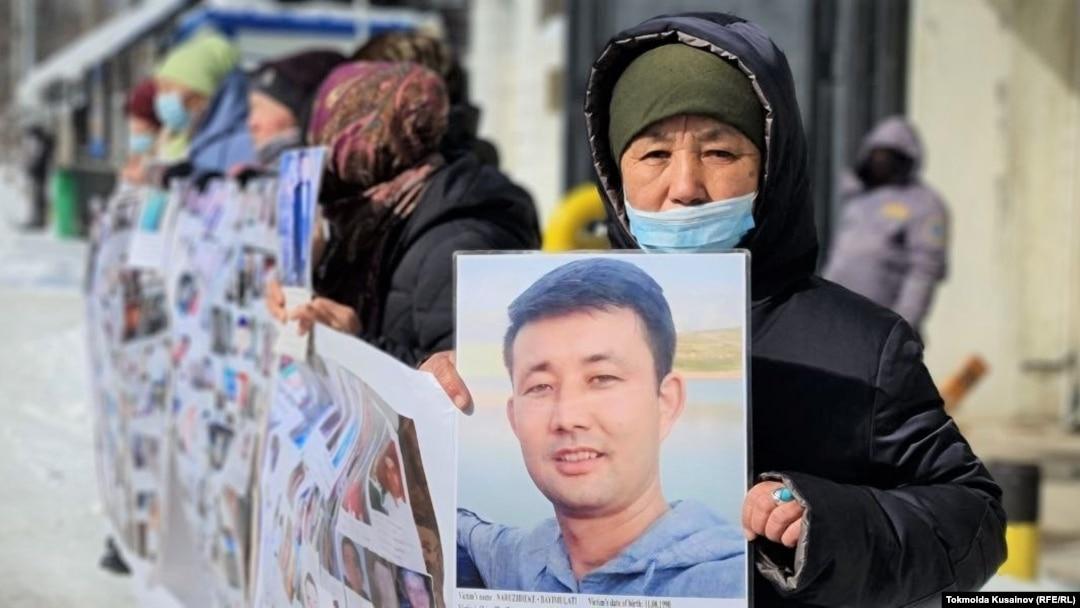
About five months after the sentences, the case returned to the spotlight with Amnesty International's new urgent action.
On 8 September, the organisation said three imprisoned members of «Nagyz Atajurt» are suffering serious health conditions, calling for appropriate and urgent medical care to be provided to them.
Who is «Nagyz Atajurt»?
«Nagyz Atajurt» works to document abuses affecting Kazakhs and other Turkic peoples in East Turkestan. Its activists have played a role in conveying the testimonies of families and individuals who say their relatives were arrested, disappeared or subjected to repression inside China.
The movement is of particular significance because of the large Kazakh community whose family and historical ties connect it to the people of East Turkestan.
Kazakhstan shares a long border with China, and Uyghurs and Kazakhs who moved from East Turkestan live in the country, which has made it one of the most important places where direct testimonies about China's policies towards Turkic Muslim minorities have emerged.
For years, Kazakh activists working on this issue have faced pressure, arrests and prosecutions.
Human Rights Watch says the April 2026 case represents the first time the Kazakh authorities have imprisoned such a large number of activists defending the rights of the people of East Turkestan in a single case.
East Turkestan beyond the border
The case reveals an aspect of the East Turkestan issue that often remains far from media coverage.
Discussion of China's policies towards Uyghurs and Kazakhs concerns not only what happens inside China's borders, but also the ability of members of these communities in neighbouring countries to speak publicly about what is happening to their relatives.
Human Rights Watch says China has in recent years escalated the harassment of its critics outside the country, in what is known in human rights circles as «transnational repression».
Kazakhstan has a particular sensitivity in this context because of its close economic and political relations with China, alongside deep ethnic and family ties between part of its citizens and Kazakhs in East Turkestan.
Human Rights Watch has noted that since 2016 Chinese authorities have punished Uyghurs and Kazakhs for their foreign connections, including having relatives in countries that Beijing considers «sensitive», among them Kazakhstan.
A case that goes beyond 19 activists
The importance of the «Nagyz Atajurt» case therefore does not stop at the fate of 19 people prosecuted for a single protest.
For Amnesty International, the urgent priority now is the health of the detainees and the provision of the medical care they need.
For Human Rights Watch, the case carries a broader political significance, as it sees the sentences as sending a frightening message to anyone considering protest inside Kazakhstan against Beijing's policies.
Between these two positions emerges a wider picture of the East Turkestan issue: China's borders may end geographically at Kazakhstan, but the fear of speaking about what happens beyond those borders, according to human rights organisations, may extend far beyond them.


