


Human rights and media reports have sparked a wave of debate in India after security forces were accused of using pellet guns to disperse student protests in the capital, New Delhi. Activists described the move as a shift toward security methods that have been used for years in the Indian-administered region of Kashmir. The police initially denied using this type of weapon, before the Rapid Action Force acknowledged excessive use of force during the operation.
Student protests demanding education reforms
The protests broke out at Jantar Mantar in central New Delhi, where thousands of students gathered to demand reforms to the education system and accountability for officials over the National Eligibility cum Entrance Test (NEET) crisis, which saw allegations of exam paper leaks and corruption, in addition to calls for the resignation of Education Minister Dharmendra Pradhan.
The protests gradually expanded to include broader political demands relating to transparency and accountability. The government then announced the resignation of the education minister, but the protest organisers affirmed that their activities would continue until the remainder of their demands were met, including an investigation into the violence that accompanied the dispersal of the sit-in.
Reports of pellet gun use
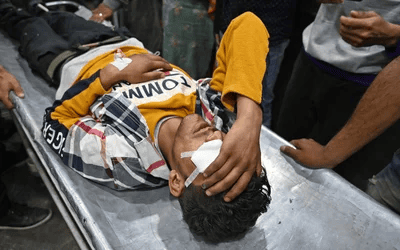
According to a report published by Middle East Eye, medical records at Safdarjung Hospital in New Delhi showed injuries consistent with the effects of pellet gun shots in one journalist who was injured while covering the protests, after he was examined in three different medical departments of the hospital.
Reports also indicated that other victims sustained similar injuries, while human rights organisations called for an independent investigation into the use of force against protesters.
For its part, the Delhi Police initially denied using pellet guns and described these allegations as "misleading and untrue." The Rapid Action Force (RAF) later announced, following an internal inquiry, that excessive force had been used during the operation to disperse the protests, without officially confirming the use of pellet guns.
Human rights criticism
Human Rights Watch condemned the way security forces dealt with protesters, saying that police and riot control forces used batons, electric shock devices and tear gas. It also pointed to restrictions imposed on communications and the internet during the protests, considering that these measures raise concerns related to freedom of assembly and expression.
Civil society organisations called for a transparent investigation to determine the extent to which security forces complied with the rules governing the use of force when dealing with protests.
Comparison with Kashmir
A number of activists and researchers believe that what happened in New Delhi reflects the transfer of some security tactics previously used in Kashmir to other parts of India.
Pellet guns are among the most controversial means in the region. International human rights organisations have documented their use during protests in Kashmir, noting that they caused serious injuries, including cases of loss of sight and permanent injuries.
A 2018 report by the Office of the United Nations High Commissioner for Human Rights described pellet guns as among the most dangerous weapons used against protesters in Kashmir.
Some activists argue that security measures applied in Kashmir, such as internet shutdowns and mass arrests, are increasingly appearing in the handling of protests in other Indian states.
In contrast, Indian authorities maintain that security forces act in accordance with the law to preserve public order and prevent protests from turning into violence, stressing that any individual excesses are subject to review and investigation.
Continuing debate
These events have renewed discussion within India about the balance between maintaining security and respecting civil rights, particularly as criticism grows over the use of force against protesters.
While activists see what took place as an extension of security policies previously applied in Kashmir, the government maintains that security measures aim to protect public order, with internal investigations into the circumstances of the dispersal of the protests ongoing.
These developments indicate that the question of the use of force against protests will remain the subject of wide debate in India, amid continuing demands for independent investigations and for guaranteeing respect for the rights of protesters and journalists covering events.


