

The Sahel region of Africa is undergoing rapid shifts in the balance of regional and international influence, amid a declining French presence, expanding Russian influence, and the rise of regional powers seeking to advance their security and economic interests in a region rich in natural resources but suffering from chronic political and security instability.
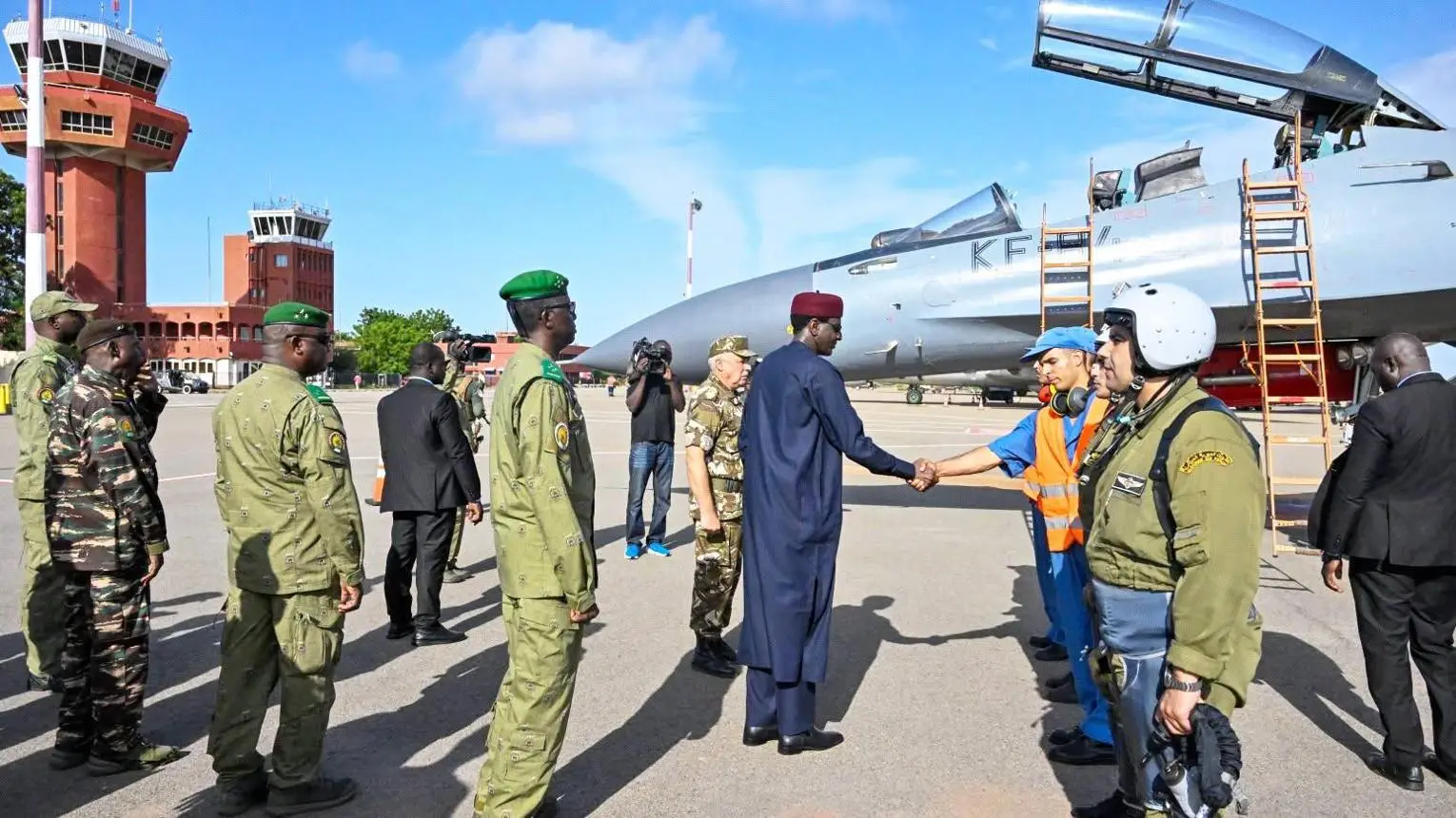
Amid these shifts, Algeria has taken an unprecedented decision for the first time in more than half a century: to send units of its army to Niger, a step that reflects a significant change in its defence policy and its relationship with its southern neighbours.
In its regional assessment of North Africa, the Mediterranean and the Sahel for November 2026, the US-based Stimson Center highlighted this development, alongside the end of the mandate of the United Nations mission in Western Sahara, the continuation of international competition in the Sahel, and mounting economic pressures and an energy crisis in Egypt.
Reading these developments, together with assessments from other research centres, helps in understanding the transformations in Algerian foreign policy and the motives behind its return to direct engagement in the Sahel's security files.
First Overseas Military Deployment Since the October 1973 War
On 25 October 2026, the Algerian parliament approved the deployment of military units to Niger. The following day, President Abdelmadjid Tebboune announced his approval of sending the forces at the request of the Nigerien authorities.
According to a statement from the Algerian presidency, the mission aims to protect shared interests in the fields of energy and the economy and to strengthen security cooperation between the two countries.
The decision represents Algeria's first overseas military deployment since it sent its forces to support Egypt during the October 1973 War against Israel.
On 30 October, Reuters reported that the first Algerian forces had arrived in Niger, while the Algerian authorities did not announce the size of the force or the defined duration of the military mission.
This step is significant given the defence policy Algeria has pursued for decades, based on avoiding direct military intervention in other states and preferring political mediation, security cooperation and the protection of national borders.
However, the 2020 constitutional amendment permitted the deployment of army units abroad under constitutional controls and with parliamentary approval, providing the legal framework for the latest decision.
A military deployment does not necessarily mean that Algeria has abandoned the principle of non-interference in the internal affairs of states, particularly as it came at the request of the Nigerien authorities. However, it reveals the widening range of tools Algeria is now prepared to use to protect its interests beyond its borders.
From Dispute with Niamey to Military Partnership
Algerian-Nigerien relations did not move toward increasing cooperation throughout the past years.
After the military coup that overthrew President Mohamed Bazoum in July 2023, Algeria opposed the military seizure of power, while also rejecting the option of military intervention that the Economic Community of West African States (ECOWAS) had threatened.
Algeria then sought to put forward a political initiative leading to the restoration of constitutional order, but the new authorities in Niger did not accept the Algerian proposals, and relations between the two countries saw growing tensions in the following period.
However, 2026 witnessed a notable shift, with a visit by Nigerien President Abdourahamane Tiani to Algeria in February, the conclusion of economic agreements, and the revival of joint energy projects.
Cooperation expanded to include the military field, especially following the coup attempt in Niger in late August.
In October, the two countries signed a military cooperation protocol, days before the Algerian parliament approved the deployment of forces.
This course reveals Algeria's shift toward a more pragmatic approach in dealing with the military authorities in power in the Sahel, after their continued rule became a political reality that cannot be ignored when addressing regional security issues.
Energy: The Economic Dimension of the Military Deployment
Economic interests are among the most prominent declared motives behind the Algerian decision, particularly the investments managed by the state-owned company Sonatrach in Niger's energy sector.
The company works in hydrocarbon exploration, and among its most important projects is the Kafra oil field in northern Niger, in addition to its participation in the Trans-Saharan gas pipeline project.
The project aims to transport natural gas from Nigeria through Niger to Algeria, and from there to international markets, including European markets.
Given Europe's efforts to diversify its energy sources, and the disruptions in oil and gas markets resulting from regional conflicts, the strategic importance of corridors linking African resources to global markets is growing.
However, implementing these projects faces challenges related to financing, political and security stability, as well as the difficult geographical conditions characterising the region.
From this standpoint, the Algerian military deployment can be understood as an attempt to reduce the risks surrounding its investments and to strengthen the prospects for implementing cross-border economic projects.
The growing link between defence policy and energy security is evident here, as the protection of resources is no longer limited to facilities located within national borders, but extends to a regional environment with which the state's economic interests are connected.
Mali: Restoring Influence After Years of Decline
Algeria's engagement in Niger cannot be separated from developments in Algeria's relations with Mali over recent years.
Algeria played a central mediating role between the Malian government and armed movements in the north of the country, and its efforts culminated in the 2015 Peace and Reconciliation Agreement, known as the Algiers Agreement.
However, the rise of military authorities in Bamako, their strengthened cooperation with Russia and the Wagner Group, which was later succeeded by the Russian Africa Corps, and the Malian authorities' abandonment of the Algiers Agreement weakened Algeria's role in managing the crisis.
Tensions between the two countries escalated in April 2025, following Algeria's downing of a Malian drone near the border, amid a dispute over the location of the incident and the violation of airspace.
According to an analysis published by the Polish Institute of International Affairs on 5 November 2026, Algerian-Malian relations saw a thaw during July of this year, with the restoration of diplomatic representation and the reopening of airspace, mediated by Niger with Russian participation.
The analysis indicates that Algeria seeks to restore its presence in Mali and Niger, after its influence declined as a result of the political and military transformations that the Sahel states have undergone.
However, restoring relations with Bamako poses a challenge concerning Algeria's ability to reconcile cooperation with the Malian authorities and its historical relations with local communities in northern Mali, particularly the Tuareg.
This issue gains further importance amid continuing armed confrontations and abuses affecting civilians, and the impact these have on communities spanning the Algerian-Malian border.
Competition with the UAE and Its Allies in the Region
Algeria's renewed engagement in the Sahel raises questions about its repercussions for regional competition, especially in light of growing ties between the UAE and the military leadership in eastern Libya led by Khalifa Haftar.
Researcher Yndjé Tcheripe, head of the Middle East and Africa programme at the Polish Institute of International Affairs, believes that Algeria's return to the Sahel is partly linked to its attempt to contain the expanding influence of Haftar and his regional allies.
According to his reading, Algeria views the expansion of influence by forces linked to the UAE in Libya and the Sahel, alongside Moroccan relations with Israel, as a strategic challenge to its regional position.
The researcher refers to Algerian accusations that parties linked to the UAE and Haftar were behind the coup attempt in Niger in August, accusations that should not be treated as established facts without independent evidence.
This reading shows that competition in the Sahel is not limited to traditional international powers, but also includes Arab and African powers whose interests and relations with governments and local armed actors differ.
If this competition widens, it could place the Sahel states before additional challenges, should security and economic partnerships turn into tools of regional polarisation or fuel conflicts that already exist.
Russia and Algeria: Cooperation or Competition in the Sahel?
A notable aspect of the current landscape is that Algeria's return to security engagement in the Sahel does not necessarily coincide with a direct confrontation with Russian influence.
Despite the disagreements caused by Russian support for the military authorities in Mali, Algeria maintains historic political and military relations with Moscow.
At the same time, Russia has security partnerships with the authorities in power in Mali, Niger and Burkina Faso, the three states that form the Alliance of Sahel States.
The Polish Institute of International Affairs considers that Algeria's rapprochement with Mali and Niger does not, at the present stage, necessarily weaken the Russian presence, and may even intersect with some of Moscow's interests in maintaining its relations with the region's governments.
This situation highlights the complexity of contemporary alliances, as two states may cooperate on certain files while their interests diverge on others.
Moreover, the decline of French influence does not mean the region is shifting entirely to the influence of a single power; rather, it opens the way for more diverse relations, in which Russia, China, Turkey, European and Gulf powers, and African neighbours compete.
Western Sahara: The End of a UN Mission and Fears of Rising Tensions
The renewed Algerian presence in the Sahel coincides with another highly significant development for North Africa: the end of the mandate of the United Nations Mission for the Referendum in Western Sahara (MINURSO).
The mission was established in 1991 within the framework of UN efforts to settle the conflict between Morocco and the Polisario Front.
According to sources cited by the Stimson Center, the United Nations began procedures to wind up the mission on 1 November 2026, after the Security Council failed to renew its mandate.
This comes amid continuing disagreement over the final status of the territory: Morocco defends its sovereignty over it and proposes autonomy as a solution to the conflict, while the Polisario Front demands independence, and Algeria supports the right of the Sahrawi people to self-determination.
The end of the mission's work does not mean the legal and political status of Western Sahara has been settled, nor that the United Nations' diplomatic efforts have ended.
However, the absence of a UN monitoring mechanism raises concerns about the future stability of the territory, especially amid strained relations between Algeria and Morocco.
An analysis published by the Washington Institute for Near East Policy warned of the risks of escalation following the end of the mission, calling for diplomatic steps to prevent renewed confrontations on a wider scale.
This file is also significant for the Sahel, given Morocco's Atlantic Initiative, which seeks to provide a sea outlet for landlocked Sahel states, at a time when Algeria is working to strengthen these states' ties to its economic and energy projects.
This reveals a competition that goes beyond the political dispute between the two countries to encompass differing visions of the future economic connection of Sahel states with North Africa.
Egypt and the Energy Crisis: Another Face of Regional Transformations
Alongside the security developments in Algeria, Niger and Western Sahara, the Stimson Center's assessment addressed the growing economic pressures facing Egypt, particularly in the energy sector.
With declining domestic gas production and rising costs of importing liquefied natural gas, Cairo faces challenges in securing domestic market needs and maintaining the capacity of industrial sectors to produce and export.
The bulletin reported that gas supplies to fertiliser and methanol plants were reduced by around 33%, as part of measures to address rising import costs.
It also highlighted the launch of new investment rounds in oil and gas exploration, and the start of production at the offshore Mina West field, as part of efforts to increase local supplies.
These developments coincided with the decision of the Central Bank of Egypt to raise interest rates in October, for the first time since March 2024, in response to inflationary pressures and pressure on the local currency.
Although Egypt's circumstances differ from Algeria's, both cases reveal the growing importance of energy security in shaping the economic and foreign policies of North African states.
While Algeria, as an energy-exporting state, seeks to expand its supply sources and trade corridors, Egypt is trying to reduce import costs and strengthen its domestic production, in an international environment affected by wars and disrupted trade routes.
Peoples at the Heart of the Security Equation
Amid the growing attention paid to troop movements, alliances and energy projects, the conditions of local communities in the Sahel remain among the most important criteria for assessing regional transformations.
The region includes communities suffering from poverty, displacement and declining basic services, in addition to abuses linked to armed conflicts and the multiplicity of military actors active there.
Regional cooperation may help improve energy and fuel supplies, revitalise trade and develop infrastructure, but these benefits remain tied to governments' ability to direct investment toward serving the population, protect their rights and ensure their participation in decisions concerning their lands and resources.
Accordingly, the success of Algeria's new role should not be measured by the scale of its military deployment or the breadth of its political influence alone, but by the extent of its contribution to building stable relations with neighbouring states, easing the suffering of civilians, promoting development and reducing cross-border conflicts.
Relying on military approaches without addressing the causes of political, economic and social instability may reduce some risks, but it does not guarantee lasting stability.
Conclusion: Is Algeria Reshaping Its Regional Position?
Algeria's decision to deploy forces in Niger marks a significant shift in its defence policy and reveals its readiness to use new tools to protect its economic and security interests and to restore its role in the Sahel region.
This return coincides with regional transformations related to the future of Western Sahara, the competition for influence in Libya, Mali and Niger, and the growing importance of energy resources and trade corridors.
The current phase, however, carries both opportunities and challenges. The Algerian presence may help strengthen cooperation among neighbouring states and implement joint economic projects, but it may also face complications arising from the competition of regional and international powers and the overlap of local conflicts.
It remains premature to conclude that the Algerian military deployment in Niger represents the beginning of a new defence doctrine covering the entire Sahel region, as the limits of the military mission, its duration and the nature of Algeria's future commitments have not yet become clear.
However, what is certain is that Algeria no longer relies solely on traditional diplomatic tools in its handling of regional challenges, and that security in the Sahel has come to occupy a prominent place in its strategic calculations.
References
- Stimson Center – North Africa Regional Outlook, 18 November 2026.
- Polish Institute of International Affairs – Algeria Returns to the Sahel, 5 November 2026.
- The Soufan Center – Algeria Seeks to Strengthen Its Position in the Sahel, 3 November 2026.
- Reuters – Algeria Deploys Military Units in Niger to Protect Energy and Economic Interests, 26 October 2026.
- Al Jazeera – Algeria's Military Deployment in Niger and Its Motives, 26 October 2026.
- Washington Institute – After MINURSO: Managing Tension, Preventing Conflict.
- EnterpriseAM – Gas Supplies to Egyptian Factories Reduced as Import Costs Rise.
- Reuters – Egypt's Central Bank Raises Interest Rates for the First Time Since March 2024.


