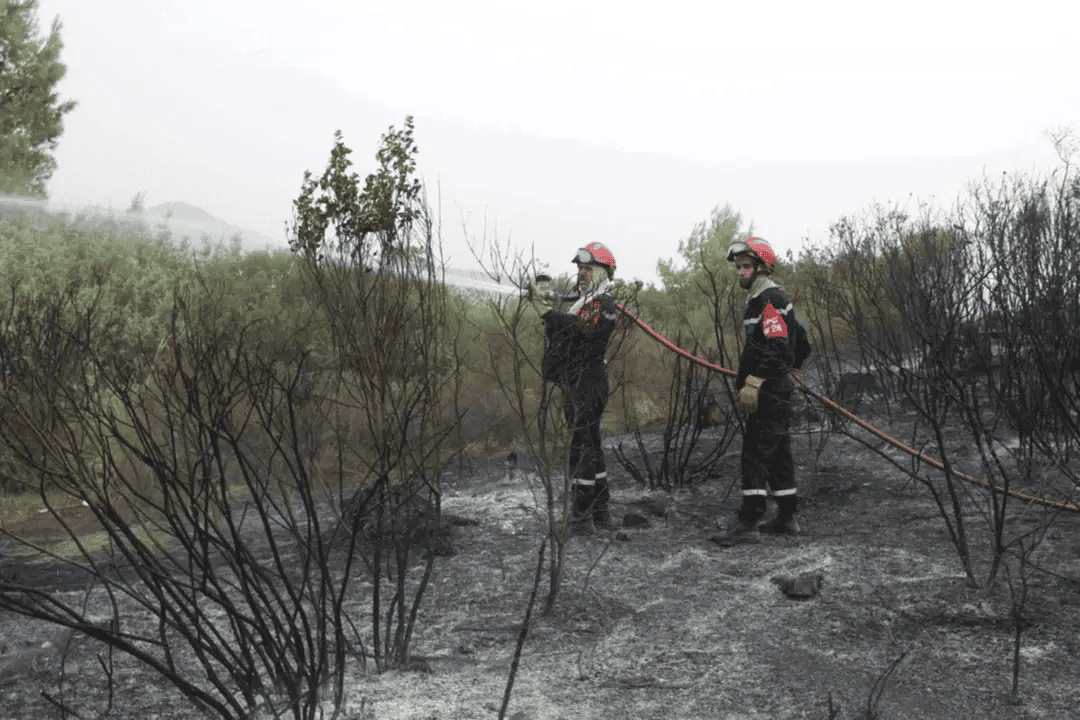
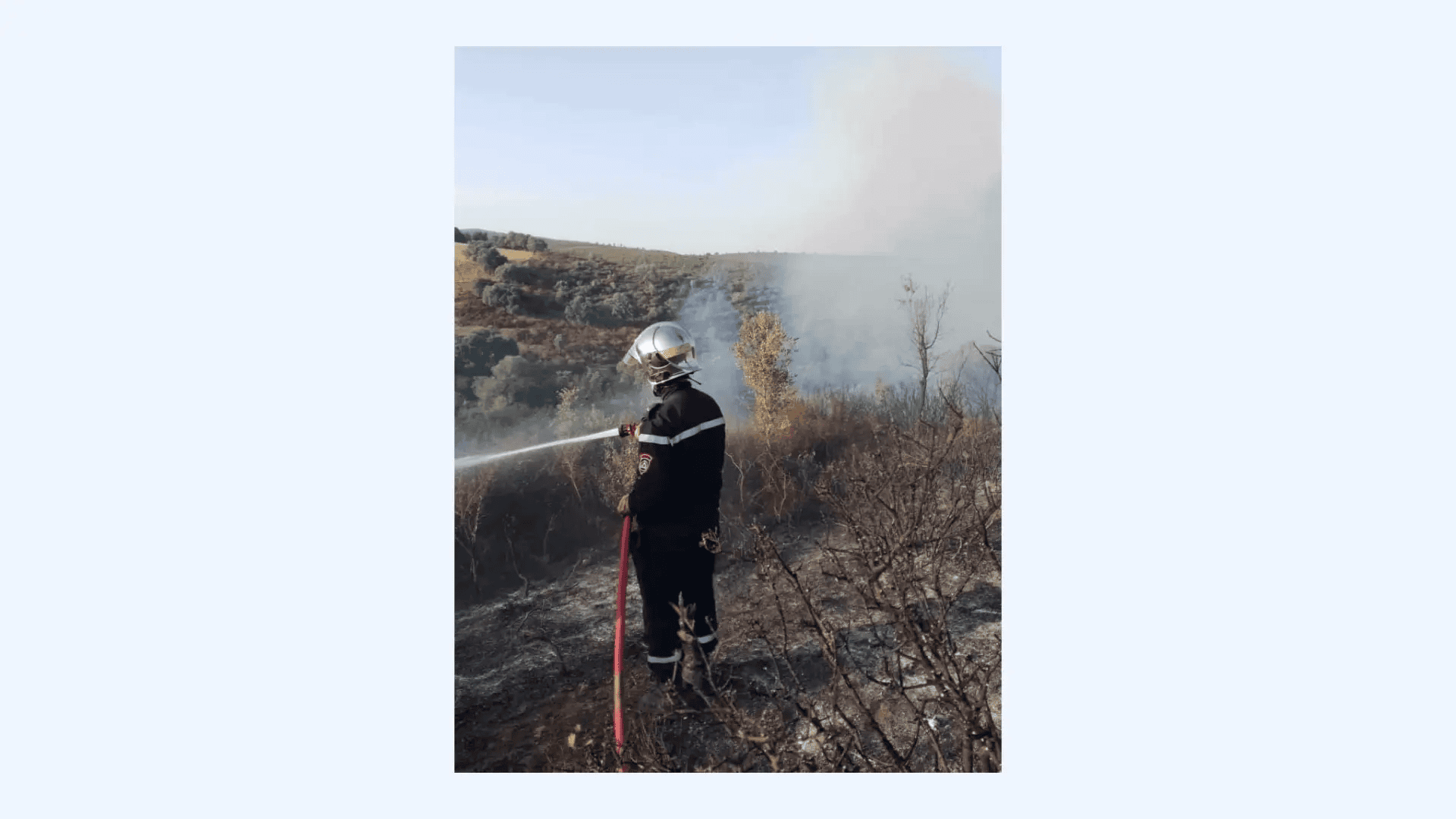
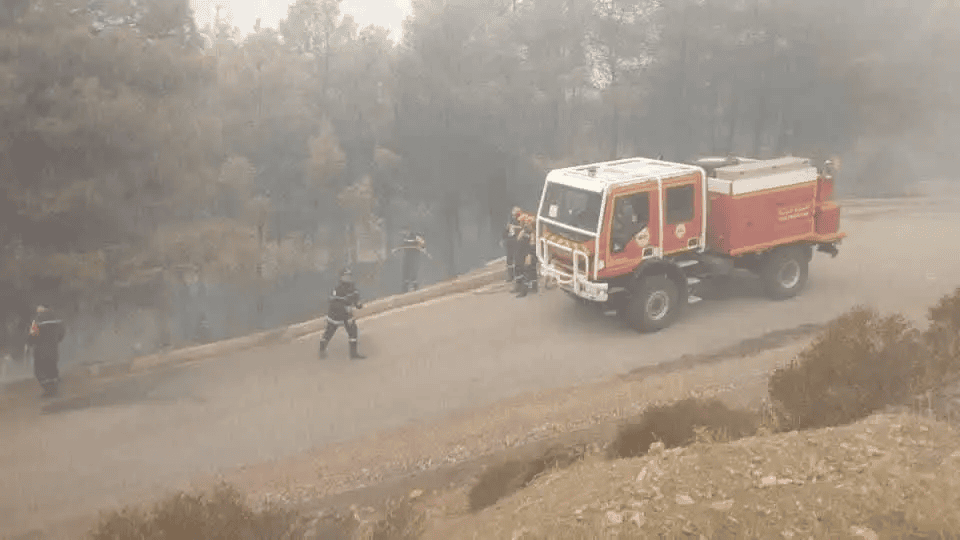
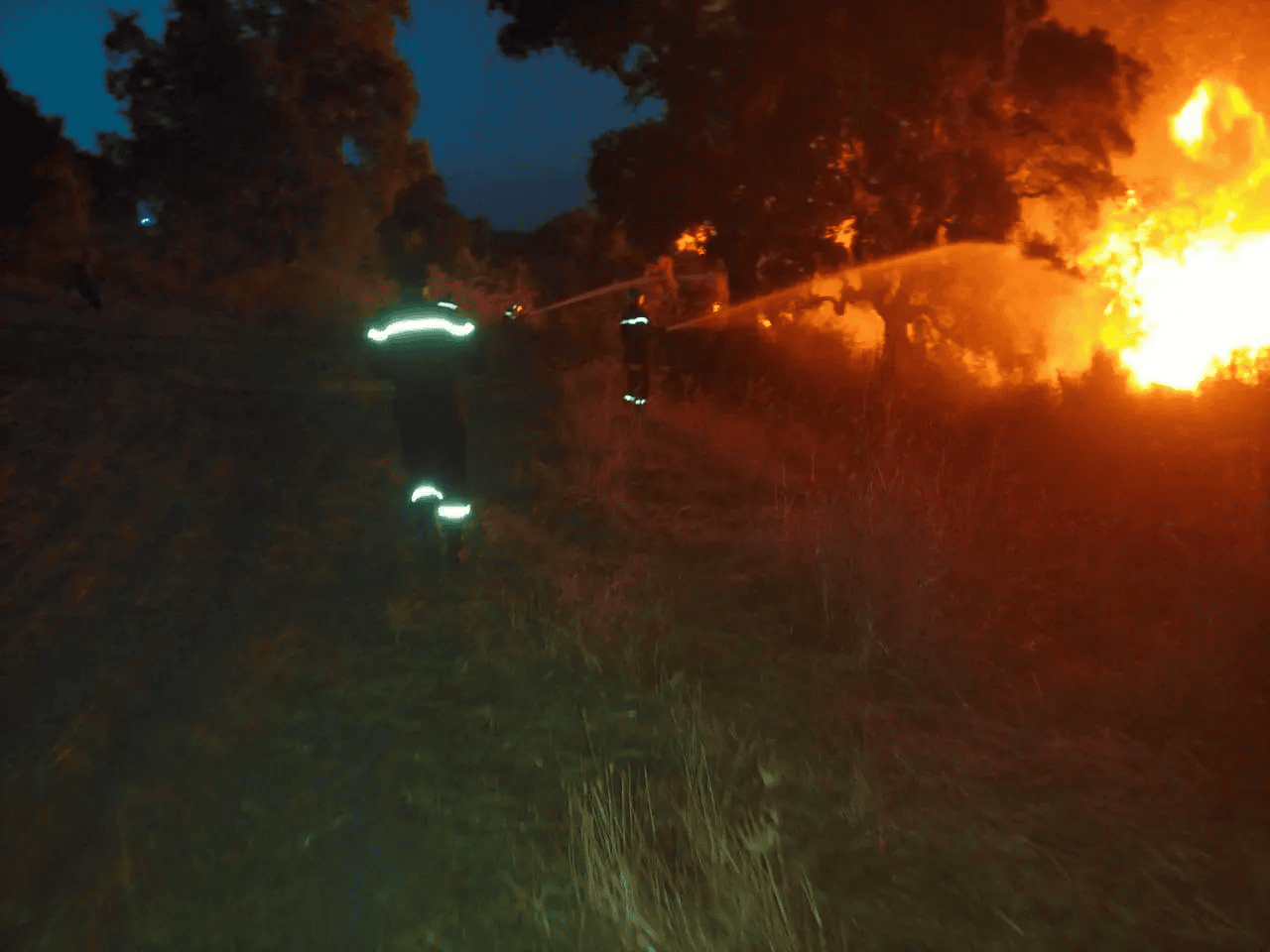
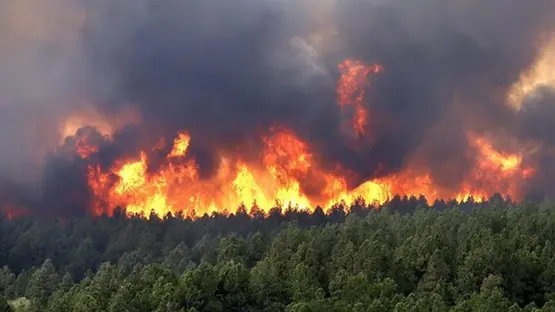
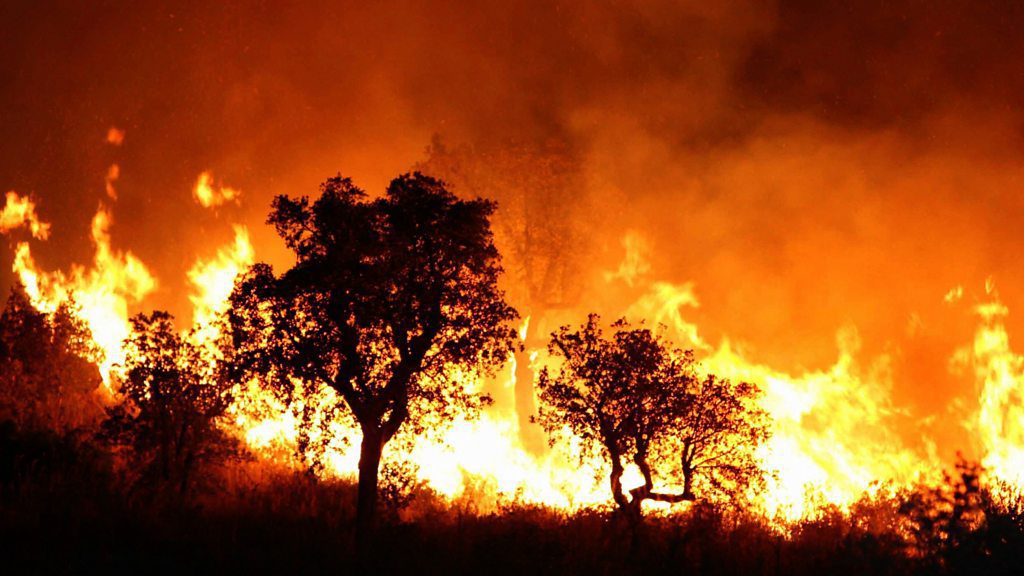
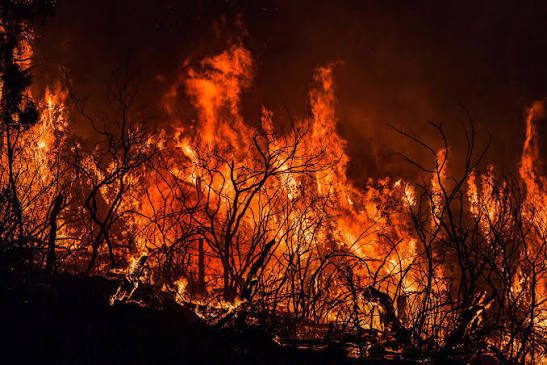
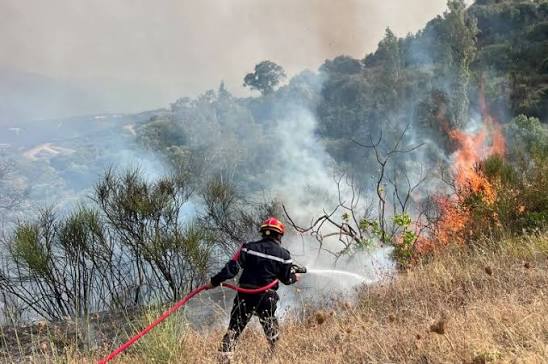
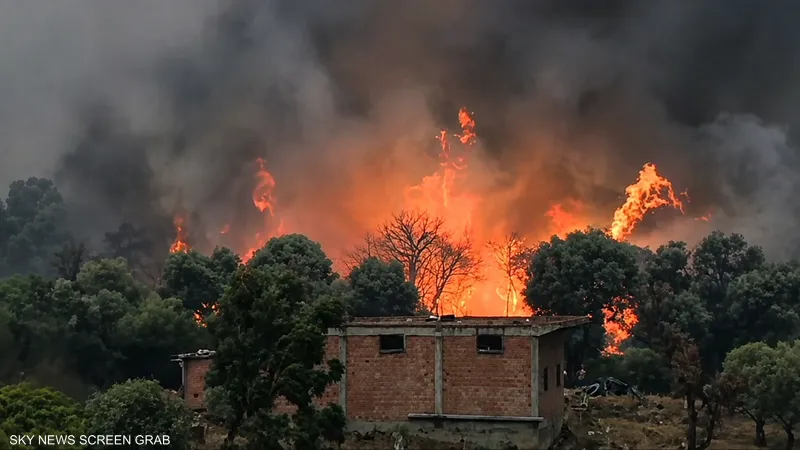
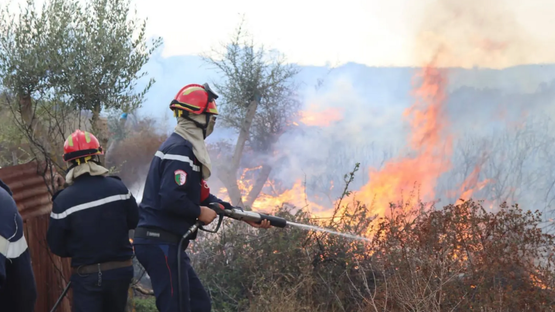
Fires have once again swept across wide areas of northeastern Algeria in a new, rapid wave of forest fires, leaving dead and dozens injured, and prompting the authorities to carry out evacuations and close main roads. Meanwhile, a circulating video of flames taking a striking form resembling a map of Algeria has raised wide questions on social media about the causes of the fires, and whether the country faces a natural disaster alone or whether some of the fires were deliberately set.
As of the morning of Thursday, 27 August 2026, the death toll had risen to 12: five in Jijel province, four in Béjaïa, and three in Tizi Ouzou. Interior Minister Saïd Sayoud also announced that 54 people had been recorded with burn injuries in Béjaïa, including six in critical condition receiving intensive care.
The figures reveal the exceptional scale of the wave. On Wednesday alone, Civil Protection reports came in as new outbreaks emerged; the latest data circulating in the evening recorded 159 vegetation fires, 90 of which had been extinguished while 69 remained under control. Béjaïa was at the forefront of the affected areas, followed by Skikda, Tizi Ouzou and Jijel, while Reuters reported a total of 154 fires during the same day, including 36 in Béjaïa alone.
A night of fire in Béjaïa and Jijel
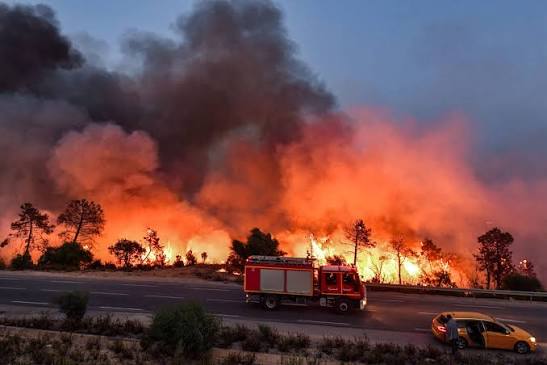
In eastern Béjaïa, a few hours turned into a scene that Algerian media described as frightening. Fires spread quickly in the areas of Tamridjet and Derguina and elsewhere under the influence of strong winds and high temperatures, reaching the surroundings of homes in mountain villages. Families were forced to flee toward Souk el Litnine, while National Road 9 was temporarily closed as the flames approached it. At one point on Wednesday, Béjaïa alone recorded around 20 fire outbreaks according to one Civil Protection report.
Authorities also carried out evacuations in Jijel and other areas after flames came close to residential communities. The gendarmerie announced the closure of three major national roads linking eastern regions because of the fires, while aircraft, helicopters and ground firefighting equipment were used to confront the blazes, whose spread was accelerated by strong winds.
The disaster coincided with an intense heatwave that meteorological services had previously warned of, with temperatures expected to reach 49 degrees Celsius in some provinces on Wednesday and Thursday. Such conditions make vegetation extremely dry and flammable, giving any fire, whatever its cause, a far greater capacity to spread.
The "map of Algeria": a scene that cannot be ignored
Amid the images of the fires, a circulating scene drew attention in which the flames or the burning area take a striking shape resembling a map of Algeria, so that to some it appeared as though the country's borders were drawn in fire.
The scene, if its authenticity and link to the current August fires are confirmed, does deserve pause; the visual resemblance to a known geographic shape, particularly when its outline appears distinct, naturally prompts viewers to ask whether it is coincidence or the result of deliberate action.
Suspicion of arson is not new
What makes the current questions more serious is that the hypothesis of deliberate arson in Algeria is not merely a theory that emerged on social media.
Only weeks ago, during the wave of fires in July, Algerian authorities opened official investigations into the causes of the fires. On 22 July, the investigating judge at the National Criminal Pole for Counter-Terrorism and Transnational Organised Crime at the Sidi M'hamed court ordered four people to be provisionally detained in three cases relating to the deliberate setting of fires on forest property.
Four days later, the same criminal pole announced that it was handling five other cases linked to what the prosecution statement described as "criminal groups behind forest fires" in a number of provinces, with seven other people placed in provisional detention. The number of people detained in the two cases published during that wave thus reached 11.
Following the July fires, the interior minister also stated that investigations had shown some fires bore a criminal character, while other causes were due to various factors, affirming that investigations would continue and their results would be announced to the public once completed.
This is a central point: the question of possible deliberate ignition is not a "conspiracy theory" plucked from nothing. Algerian justice itself has already dealt with deliberately set and suspected fires linked to criminal groups during the current summer.
"99% of fires are caused by humans": what does that mean?
Another piece of information helps clarify the picture beyond reducing it to "the heatwave."
In July 2026, an official at the General Directorate of Forests in Algeria said that around 99% of fires originally stem from human activity, stressing that the heatwave is a factor that increases their danger and spread but is not in itself the cause of ignition. He explained that human origin includes negligence, lack of caution and misuse of fire, not only deliberate criminal acts.
Here it is necessary to distinguish between two issues that are often confused: a fire being of human origin does not necessarily mean there is a criminal plan behind it; the spark may stem from burning agricultural waste, negligence or other human activity. Conversely, the confirmed existence of deliberately set fires during July means that dismissing a criminal factor in advance is also not scientific.
The Algerian Ministry of the Interior itself affirms that forest risks are linked to a set of intertwined elements: extreme weather conditions, wind and drought, the accumulation of combustible material, human activities, as well as the nature of the terrain, slopes and valleys.
Simultaneous outbreaks: the question investigations must answer
The most important issue is not that the fire resembles a map of Algeria, but rather how dozens of outbreaks began, when, and where the first spark appeared in each one.
If civil protection data and satellite imagery show that geographically distant outbreaks ignited at very close times with no fire connection between them, the question of sources of ignition becomes far more legitimate. If investigations reveal accelerants, traces of deliberate ignition, camera recordings, individuals seen at starting points, or links between suspects in more than one province, the discussion moves from the level of suspicion to the level of evidence.
For this reason, a serious investigation into the August wave should not be limited to counting burned areas. It needs to publish the locations and timings of the first ignition points, compare them with satellite imagery, and then announce the technical causes of each fire to the extent investigations allow.
An exceptional summer, and the fires returned within weeks
The current crisis is not an isolated incident. At the end of July, Algeria's Civil Protection announced that it had extinguished all 1,968 fires recorded since 8 July, before a new wave began at the end of August.
World Bank data indicate that Algeria recorded more than 75,000 forest fires between 1985 and 2022, with an average of nearly 35,000 hectares burned annually, while rising temperatures, drought and soil degradation have contributed to making some fires faster and more destructive.
However, the recurrence of the climatic phenomenon does not eliminate the need to investigate each source of ignition; climate can explain why a small fire becomes a massive disaster, but it alone does not always determine who lit the first spark.
This distinction is very important in the Algerian case.
Between climate and crime: neither pre-empting the investigation nor closing the door on questions
Algeria's current fires are a disaster confirmed by the numbers before any other discussion: 12 dead, dozens injured, families evacuated from their homes, roads closed, and forests and property consumed by flames within hours.
As for what lies behind these fires, the picture is still incomplete.
Heat, wind and drought are clear and established factors in amplifying the flames. At the same time, official investigations into earlier fires during the same summer established cases of deliberate arson, and some files reached the national criminal pole specialised in counter-terrorism and organised crime.
Against this background, the scene in which the fire appears to draw the map of Algeria adds a striking visual question.
The most responsible position is to call for a transparent and detailed investigation into the starting points of the simultaneous fires, and to publish the results of technical and security analyses to the public.
Heat may prepare the forest to ignite and wind may turn a spark into an inferno, but there remains a question that temperatures alone cannot answer: where did the spark come from?